Story code: ST-000741
Part 1: The Eyesore on Elmwood
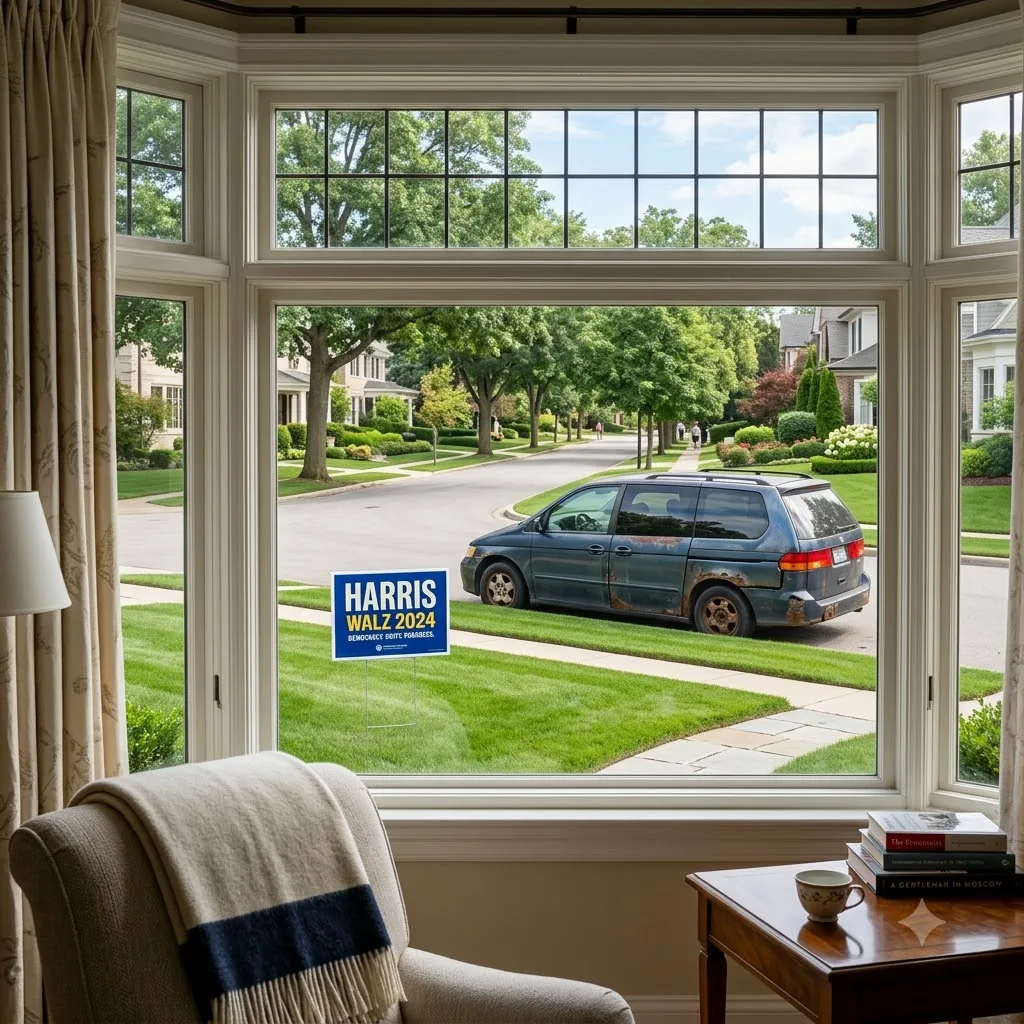
Elaine pressed her manicured fingernail against the living room glass, tracking the streak of rust that ran along the passenger side of the Honda Odyssey parked directly across from her driveway. The vehicle had not moved an inch since nine o’clock that morning. It was now past three in the afternoon, and the sheer audacity of its presence gnawed at her nerves. The van was a jarring, dented eyesore against the manicured backdrop of Elmwood Avenue, sitting heavy and tilted on a nearly flat rear tire. The bumper was held together with strips of silver duct tape that fluttered slightly in the crisp autumn breeze.
She turned her attention briefly to her own front lawn. Her vibrant ‘In This House We Believe’ sign stood perfectly straight, its bold letters a testament to her upstanding civic values. Just beyond it, Marcus, the tireless and endlessly irritating local housing advocate, was making his way up her neighbor’s walkway. He carried a heavy stack of neon-green flyers that clashed aggressively with the neighborhood’s muted, tasteful seasonal decor. Elaine watched him wedge a bright paper into the Millers’ doorframe. He was always pushing for high-density zoning or affordable units, disrupting the quiet sanctity of their historic district. She had smiled at him at the last town hall meeting, nodded enthusiastically at the right moments, and then promptly voted against every single one of his proposals.
The Odyssey sat there, mocking her pristine view. The windows were heavily tinted, caked with a thick film of highway grime that made it completely impossible to see inside. Elaine felt a tight, uncomfortable knot of righteous indignation forming in her chest. Elmwood Avenue was a community that required relentless upkeep, a standard of living that everyone had implicitly agreed upon when they purchased these expensive homes. A derelict vehicle idling for six hours was not just an aesthetic offense. It was a blatant breach of their unspoken social contract.
She paced away from the window, her heels clicking sharply against the polished hardwood floor. She picked up her phone from the marble kitchen island. She prided herself on being a deeply compassionate person, a woman who understood the complex socioeconomic realities of the wider world. But compassion did not mean allowing her immediate neighborhood to turn into an unmonitored parking lot for transients. The property values alone were too fragile to risk such a careless gamble. Someone had to be brave enough to maintain the boundary.
She dialed the non-emergency number. The dispatcher answered with a flat, bureaucratic tone that grated against Elaine’s urgent mood. Elaine pitched her voice to convey the exact right blend of civic concern and mild alarm, ensuring she sounded like a responsible homeowner rather than a frantic busybody.
She reported a suspicious, abandoned vehicle that looked entirely out of place. She used the word vagrant once, then quickly corrected herself to unauthorized occupant, letting the bored dispatcher fill in the blanks. She described the rusted side panels, the sagging back tire, and the heavily tinted windows that could be hiding absolutely anything. She mentioned that local children played freely on this street, a slight exaggeration since the youngest resident on her block was a high school sophomore, but it added the necessary weight to her request. The dispatcher calmly took down her address and promised to send a patrol car out to investigate the disturbance.
Elaine hung up, feeling a profound sense of accomplishment. She had handled the uncomfortable situation through the proper, civilized channels. She returned to her self-appointed sentry post at the front window. Marcus was now three houses down, completely oblivious to the real, tangible problems infiltrating their street. He was so busy handing out pamphlets about imaginary structural crises that he could not even see the glaring blight parked right under his own nose.
The wait felt agonizingly slow. The shadows stretched longer and darker across the perfectly edged lawns. The Odyssey remained perfectly still. No exhaust fumes plumed from the rusted tailpipe. No movement rocked the heavy metal frame. It was like a dead beast dropped unceremoniously onto the asphalt. Elaine stared intently at the dark glass, trying to pierce the gloom inside. The sheer lack of activity was almost worse than loud music or littering. It felt like a deliberate, calculated provocation aimed directly at her front door.
Finally, the distinct flashing blue and red lights of a police cruiser swept across her living room walls. The patrol car rolled smoothly to a halt directly behind the rusted van, blocking it in. Two uniformed officers stepped out, their heavy boots hitting the pavement with a reassuring, authoritative thud. They adjusted their duty belts, looking the suspect vehicle over with professional detachment.
Elaine leaned closer to the glass, her breath fogging the cold pane. This was the exact accountability the neighborhood needed. She watched the officers flank the Odyssey, taking their time. The taller one approached the driver’s side, shining a heavy flashlight against the grimy, tinted window despite the lingering afternoon daylight. He knocked loudly on the thick glass. The sound carried all the way across the street, sharp and demanding.
Nothing happened for a long, incredibly tense moment. The officer knocked again, significantly harder this time, resting his other hand casually on his belt equipment.
The heavy, rusted side door of the van suddenly unlocked with a loud mechanical clunk.
The metal door slid violently open on its track.
Elaine pressed her manicured fingernail against the living room glass, tracking the streak of rust that ran along the passenger side of the Honda Odyssey parked directly across from her driveway. The vehicle had not moved an inch since nine o’clock that morning. It was now past three in the afternoon, and the sheer audacity of its presence gnawed at her nerves. The van was a jarring, dented eyesore against the manicured backdrop of Elmwood Avenue, sitting heavy and tilted on a nearly flat rear tire. The bumper was held together with strips of silver duct tape that fluttered slightly in the crisp autumn breeze.
She turned her attention briefly to her own front lawn. Her vibrant ‘In This House We Believe’ sign stood perfectly straight, its bold letters a testament to her upstanding civic values. Just beyond it, Marcus, the tireless and endlessly irritating local housing advocate, was making his way up her neighbor’s walkway. He carried a heavy stack of neon-green flyers that clashed aggressively with the neighborhood’s muted, tasteful seasonal decor. Elaine watched him wedge a bright paper into the Millers’ doorframe. He was always pushing for high-density zoning or affordable units, disrupting the quiet sanctity of their historic district. She had smiled at him at the last town hall meeting, nodded enthusiastically at the right moments, and then promptly voted against every single one of his proposals.
The Odyssey sat there, mocking her pristine view. The windows were heavily tinted, caked with a thick film of highway grime that made it completely impossible to see inside. Elaine felt a tight, uncomfortable knot of righteous indignation forming in her chest. Elmwood Avenue was a community that required relentless upkeep, a standard of living that everyone had implicitly agreed upon when they purchased these expensive homes. A derelict vehicle idling for six hours was not just an aesthetic offense. It was a blatant breach of their unspoken social contract.
She paced away from the window, her heels clicking sharply against the polished hardwood floor. She picked up her phone from the marble kitchen island. She prided herself on being a deeply compassionate person, a woman who understood the complex socioeconomic realities of the wider world. But compassion did not mean allowing her immediate neighborhood to turn into an unmonitored parking lot for transients. The property values alone were too fragile to risk such a careless gamble. Someone had to be brave enough to maintain the boundary.
She dialed the non-emergency number. The dispatcher answered with a flat, bureaucratic tone that grated against Elaine’s urgent mood. Elaine pitched her voice to convey the exact right blend of civic concern and mild alarm, ensuring she sounded like a responsible homeowner rather than a frantic busybody.
She reported a suspicious, abandoned vehicle that looked entirely out of place. She used the word vagrant once, then quickly corrected herself to unauthorized occupant, letting the bored dispatcher fill in the blanks. She described the rusted side panels, the sagging back tire, and the heavily tinted windows that could be hiding absolutely anything. She mentioned that local children played freely on this street, a slight exaggeration since the youngest resident on her block was a high school sophomore, but it added the necessary weight to her request. The dispatcher calmly took down her address and promised to send a patrol car out to investigate the disturbance.
Elaine hung up, feeling a profound sense of accomplishment. She had handled the uncomfortable situation through the proper, civilized channels. She returned to her self-appointed sentry post at the front window. Marcus was now three houses down, completely oblivious to the real, tangible problems infiltrating their street. He was so busy handing out pamphlets about imaginary structural crises that he could not even see the glaring blight parked right under his own nose.
The wait felt agonizingly slow. The shadows stretched longer and darker across the perfectly edged lawns. The Odyssey remained perfectly still. No exhaust fumes plumed from the rusted tailpipe. No movement rocked the heavy metal frame. It was like a dead beast dropped unceremoniously onto the asphalt. Elaine stared intently at the dark glass, trying to pierce the gloom inside. The sheer lack of activity was almost worse than loud music or littering. It felt like a deliberate, calculated provocation aimed directly at her front door.
Finally, the distinct flashing blue and red lights of a police cruiser swept across her living room walls. The patrol car rolled smoothly to a halt directly behind the rusted van, blocking it in. Two uniformed officers stepped out, their heavy boots hitting the pavement with a reassuring, authoritative thud. They adjusted their duty belts, looking the suspect vehicle over with professional detachment.
Elaine leaned closer to the glass, her breath fogging the cold pane. This was the exact accountability the neighborhood needed. She watched the officers flank the Odyssey, taking their time. The taller one approached the driver’s side, shining a heavy flashlight against the grimy, tinted window despite the lingering afternoon daylight. He knocked loudly on the thick glass. The sound carried all the way across the street, sharp and demanding.
Nothing happened for a long, incredibly tense moment. The officer knocked again, significantly harder this time, resting his other hand casually on his belt equipment.
The heavy, rusted side door of the van suddenly unlocked with a loud mechanical clunk.
The metal door slid violently open on its track.