Story code: ST-000741
Part 4: The Glass House
The silence in the gymnasium stretched into a suffocating vacuum, broken only by the rapid-fire clicks of camera shutters. Elaine stared at the sea of unblinking lenses. She desperately needed a pivot. She needed to explain about the property taxes, the historic district guidelines, the delicate, fragile fabric of their community that she had sworn to uphold.
“You don’t understand,” she croaked, the microphone on the podium picking up the pathetic, reedy sound of her failing voice.
Marcus didn’t blink. He didn’t offer her an inch of grace. “We understand perfectly, Elaine.”
Something inside her perfectly curated facade violently cracked. Decades of maintaining the delicate balance between immense, insulated wealth and performative empathy instantly shattered under the sheer weight of public exposure. She looked at District Attorney Vance, hoping for some shred of bureaucratic solidarity, but the politician was actively shrinking away, physically distancing his own brand from her sudden toxicity.
“I have a right to my neighborhood!” Elaine shrieked, the sudden, jagged volume shocking even herself. Her hands flew up, trembling uncontrollably. “Do you think we pay two million dollars a house to look at rusted garbage? To have vagrants doing drugs where our children walk?”
The press corps erupted. A wave of cell phones and heavy cameras thrust higher into the air.
“You all agree with me!” Elaine screamed, her voice tearing, pointing a shaking, manicured finger blindly at the reporters, at Marcus, at the retreating DA. “Every single one of you! You put your little yard signs up, you preach about compassion, but you’d call the police too! You don’t want them on your streets either! I just actually had the nerve to do it! I protected my home!”
She was sobbing now, a raw, ugly, entirely unhinged meltdown. Her voice echoed off the harsh cinderblock walls, stripping away the final, protective layers of her progressive veneer. She sounded exactly like the terrifying, reactionary zealots she had spent her entire adult life mocking at high-dollar fundraising dinners.
Three days later, the internet proved it did not care about her past zoning board accomplishments or her generous donations to public radio. The video of her screaming over the revelation that she had personally doomed a pregnant woman to freeze in a van blanketed social media. She was a viral sensation, a digital effigy burning brightly across every platform.
Elaine sat at her massive marble kitchen island, the house oppressively silent around her. Her tablet screen glowed with the local morning news. The young woman from the Odyssey-whose name was Maya, Elaine had finally learned from a chyron-was currently sitting in the county jail. Vance, desperate to salvage his own catastrophic PR disaster, had doubled down. He used Maya’s lack of a permanent address to declare her a flight risk, denying her bail on the fetal endangerment charge. Maya was locked in a concrete cell, eight months pregnant, subjected to the jail’s notoriously bleak medical care, entirely because Elaine couldn’t tolerate the sight of a rusted fender.
Elaine tapped the screen with a trembling finger, shutting off the news. The black screen reflected her pale, exhausted face. She reached for her phone. She needed to talk to someone, anyone, who could validate her panic. She dialed Patricia, the co-chair of their local book club, a woman who had enthusiastically voted the exact same way in that closed-door zoning meeting.
The call went straight to voicemail.
Elaine opened her text messages. Her group chats, usually a steady, vibrant stream of complaints about local caterers and links to opinion columns, were dead. The silence was absolute and intentional. Finally, a single, sterile email arrived on her phone from the homeowner’s association board.
*In light of recent media attention, the executive board has accepted your immediate resignation. We believe a transition in leadership is best for the aesthetic and moral character of Elmwood Avenue. Please do not attend Tuesday’s mixer.*
They were cutting her out. Her friends, her peers, the women who drank her imported wine-they weren’t abandoning her because they disagreed with her actions. They were abandoning her because she had said the quiet part out loud into a microphone. She had shattered their collective illusion. By becoming the viral, screaming face of their shared hypocrisy, she had become a profound liability. They were throwing her to the wolves to protect their own pristine, carefully managed reputations.
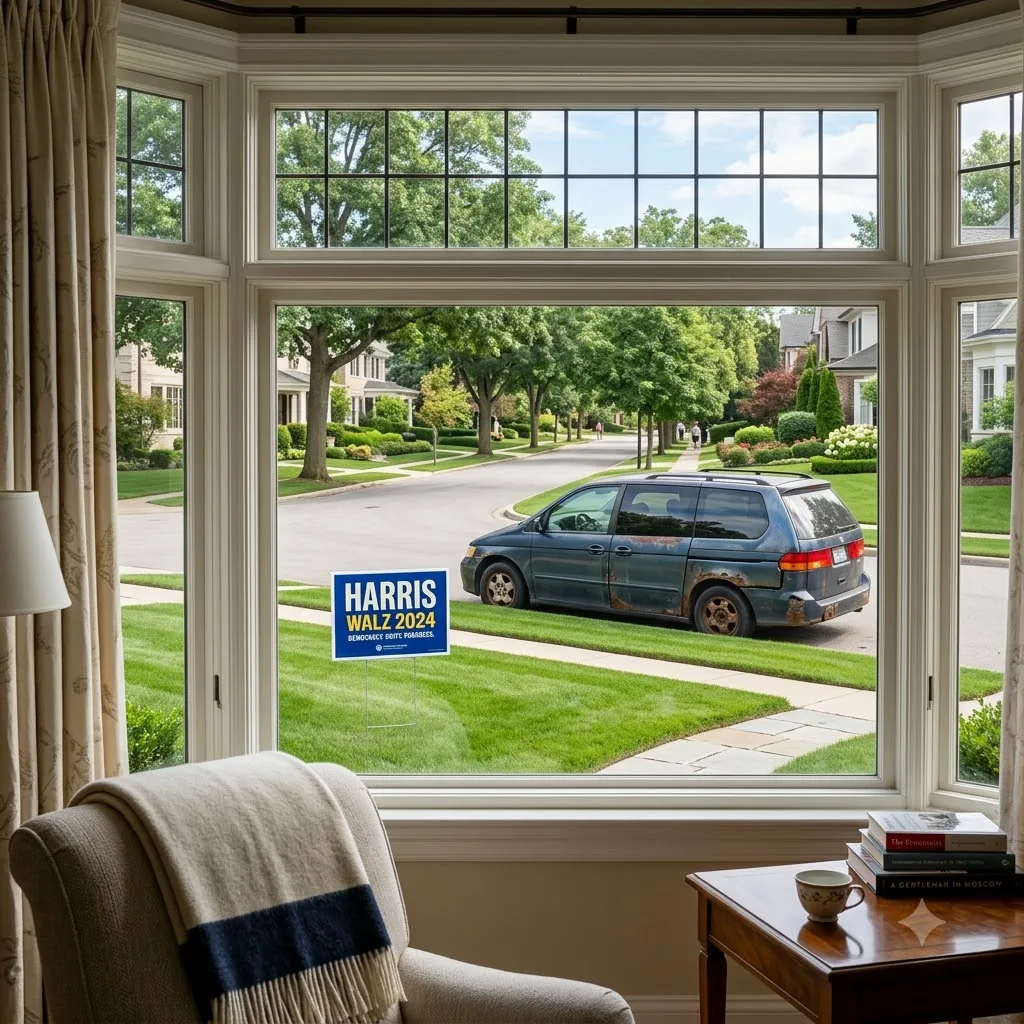
Elaine stood up, her legs feeling hollow, disconnected from her body. She walked slowly into the grand living room. Her heels clicked sharply against the polished hardwood floor, the sound echoing miserably in the massive, empty space. She stopped at the front window, pressing her perfectly manicured fingernail against the cold glass.
Elmwood Avenue was picture-perfect. The crisp autumn wind blew a few stray, golden leaves across the immaculate asphalt. There were no dented vans. No neon-green flyers. No unhoused pregnant women seeking a moment of refuge. The street was a flawless, undisturbed sanctuary, exactly as she had demanded.
She looked down at her own front lawn. Her vibrant ‘In This House We Believe’ sign still stood perfectly straight, its bold, colorful letters declaring her unwavering commitment to justice, equality, and compassion.
Elaine stared at the sign, feeling a suffocating, freezing weight press down onto her chest. There was no misunderstanding left to hide behind. No complex socioeconomic realities to debate. She had weaponized the police against a desperate mother to protect a view, and in doing so, she had built her own permanent isolation. She was entirely alone in her beautiful, silent home, staring out at the world through a thick glass pane, intimately and inescapably aware that she had become the exact oppressive monster she thought she had been voting against.