Story code: ST-000743
Part 1: The Algorithmic Shield
The progress bar on Elena’s secondary monitor ticked past ninety percent, turning a crisp, sterile green as it wiped three hundred hopeful futures from the university’s active database. She rested her index finger on the mouse wheel, scrolling through the software’s recommended denial list in a blur of grayed-out names and assigned sub-metrics. She did not read the names. She only checked for the system’s red confidence badge before clicking the master approve button at the bottom of the column. This was the mechanical rhythm of the modern admissions department. The software flagged the financial risks and the subtle academic anomalies, wrapping its calculations in a proprietary black box, leaving Elena to simply rubber-stamp the massacre from the safety of her quiet office.
A shadow fell across the frosted glass of her door just before the brass handle turned. Elena did not look up immediately, assuming it was a junior clerk bringing the afternoon coffee order. Then a heavy, solid mass slammed down directly onto her open laptop keyboard.
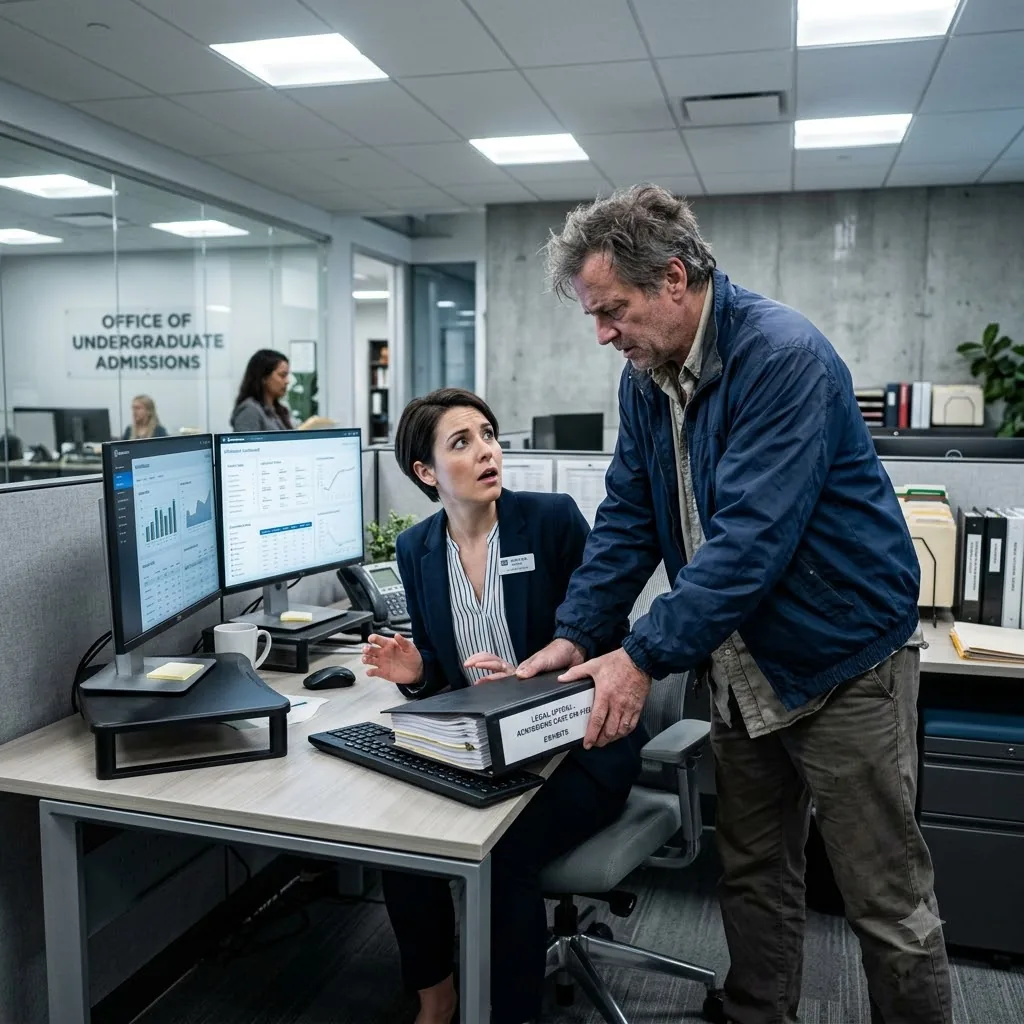
The impact snapped the spacebar in half and sent a painful shockwave up her forearms. Elena flinched back, her rolling chair hitting the steel filing cabinet with a sharp metallic bang. The object on her desk was a massive legal binder, its black spine easily four inches thick, bursting with tabbed paper.
Standing over her desk was a man in his late fifties. His raincoat was dry but deeply wrinkled, as though he had slept in his car for a week. He kept his large, calloused hands planted on top of the binder, pinning it to the ruined keyboard of her machine. He was breathing heavily, his eyes locked on her face with a terrifying, unblinking intensity. Elena pressed her back against her leather chair. The automated system on her monitor flickered behind the bulk of the binder, a string of chaotic characters typing themselves into the search bar from the crushed keys beneath the weight.
He stated his son’s name was David. He spoke in a low, gravelly rasp that filled the small office. He told her his son had a perfect score, the district championship, and impeccable recommendations.
Elena swallowed hard, her institutional training kicking in. She raised a hand, palm outward, attempting to establish distance. She told him he was not allowed in this restricted sector of the administration building. She informed him campus security was stationed just at the end of the hall. The man did not shift his gaze. He patted the heavy binder once. He declared that this was a formal filing for an emergency injunction against the university. He stated he was legally dismantling the black box that had ruined his son’s life.
Elena stared at the thick stack of paper. The university’s legal team had assured the admissions department that the new algorithmic shield was impenetrable. The software vendor had promised total liability protection. The machine made the choices, and the staff merely facilitated the processing. But looking at the sheer volume of printed material, Elena felt a cold knot tighten in her stomach.
She recited the standard department script, stating that all admissions decisions were final and that the university did not discuss proprietary evaluation metrics with the public. The words felt hollow in the physical presence of the furious father.
He leaned over the desk, invading her personal space, smelling of stale coffee and nervous sweat. He told her the automated system was nothing but a convenient wall. He said he knew the administration used the software to quietly filter out the applicants who required too much financial aid, masking it behind an impenetrable AI score. He tapped the binder again, declaring that every single financial record, every hidden asset, and every line of debt his family held was documented inside.
He told her he had completely liquidated his small business and drained his retirement accounts just to fund the discovery phase of this litigation. He was committing financial suicide to force the university into a public courtroom. He intended to drag the algorithm into the light.
Elena looked from his desperate, hollowed eyes down to the broken keyboard. The screen was still glitching, the automated batch-denial process frozen midway through its cycle. The system was supposed to protect her from these exact moments. It was supposed to reduce shattered dreams to a neat row of zeroes and ones, safely contained behind a glowing LCD panel.
The man dragged a chair from the corner of the room, the rubber feet squealing sharply against the linoleum floor. He planted it directly in front of her desk and sat down. He unclasped the metal rings of the massive binder with a loud, aggressive snap. Hundreds of pages shifted at once. He told her she was going to sit there and look at the human cost of her batch approvals. He stated he was not leaving until she read the first fifty pages of his filing. Elena felt her fingers trembling as she reached blindly under the lip of the desk, searching for the recessed plastic ridge of the silent alarm.
The man reached across the desk and firmly grabbed her wrist.
The progress bar on Elena’s secondary monitor ticked past ninety percent, turning a crisp, sterile green as it wiped three hundred hopeful futures from the university’s active database. She rested her index finger on the mouse wheel, scrolling through the software’s recommended denial list in a blur of grayed-out names and assigned sub-metrics. She did not read the names. She only checked for the system’s red confidence badge before clicking the master approve button at the bottom of the column. This was the mechanical rhythm of the modern admissions department. The software flagged the financial risks and the subtle academic anomalies, wrapping its calculations in a proprietary black box, leaving Elena to simply rubber-stamp the massacre from the safety of her quiet office.
A shadow fell across the frosted glass of her door just before the brass handle turned. Elena did not look up immediately, assuming it was a junior clerk bringing the afternoon coffee order. Then a heavy, solid mass slammed down directly onto her open laptop keyboard.
The impact snapped the spacebar in half and sent a painful shockwave up her forearms. Elena flinched back, her rolling chair hitting the steel filing cabinet with a sharp metallic bang. The object on her desk was a massive legal binder, its black spine easily four inches thick, bursting with tabbed paper.
Standing over her desk was a man in his late fifties. His raincoat was dry but deeply wrinkled, as though he had slept in his car for a week. He kept his large, calloused hands planted on top of the binder, pinning it to the ruined keyboard of her machine. He was breathing heavily, his eyes locked on her face with a terrifying, unblinking intensity. Elena pressed her back against her leather chair. The automated system on her monitor flickered behind the bulk of the binder, a string of chaotic characters typing themselves into the search bar from the crushed keys beneath the weight.
He stated his son’s name was David. He spoke in a low, gravelly rasp that filled the small office. He told her his son had a perfect score, the district championship, and impeccable recommendations.
Elena swallowed hard, her institutional training kicking in. She raised a hand, palm outward, attempting to establish distance. She told him he was not allowed in this restricted sector of the administration building. She informed him campus security was stationed just at the end of the hall. The man did not shift his gaze. He patted the heavy binder once. He declared that this was a formal filing for an emergency injunction against the university. He stated he was legally dismantling the black box that had ruined his son’s life.
Elena stared at the thick stack of paper. The university’s legal team had assured the admissions department that the new algorithmic shield was impenetrable. The software vendor had promised total liability protection. The machine made the choices, and the staff merely facilitated the processing. But looking at the sheer volume of printed material, Elena felt a cold knot tighten in her stomach.
She recited the standard department script, stating that all admissions decisions were final and that the university did not discuss proprietary evaluation metrics with the public. The words felt hollow in the physical presence of the furious father.
He leaned over the desk, invading her personal space, smelling of stale coffee and nervous sweat. He told her the automated system was nothing but a convenient wall. He said he knew the administration used the software to quietly filter out the applicants who required too much financial aid, masking it behind an impenetrable AI score. He tapped the binder again, declaring that every single financial record, every hidden asset, and every line of debt his family held was documented inside.
He told her he had completely liquidated his small business and drained his retirement accounts just to fund the discovery phase of this litigation. He was committing financial suicide to force the university into a public courtroom. He intended to drag the algorithm into the light.
Elena looked from his desperate, hollowed eyes down to the broken keyboard. The screen was still glitching, the automated batch-denial process frozen midway through its cycle. The system was supposed to protect her from these exact moments. It was supposed to reduce shattered dreams to a neat row of zeroes and ones, safely contained behind a glowing LCD panel.
The man dragged a chair from the corner of the room, the rubber feet squealing sharply against the linoleum floor. He planted it directly in front of her desk and sat down. He unclasped the metal rings of the massive binder with a loud, aggressive snap. Hundreds of pages shifted at once. He told her she was going to sit there and look at the human cost of her batch approvals. He stated he was not leaving until she read the first fifty pages of his filing. Elena felt her fingers trembling as she reached blindly under the lip of the desk, searching for the recessed plastic ridge of the silent alarm.
The man reached across the desk and firmly grabbed her wrist.