Story code: ST-000756
Part 1: The Oakbridge Dossier
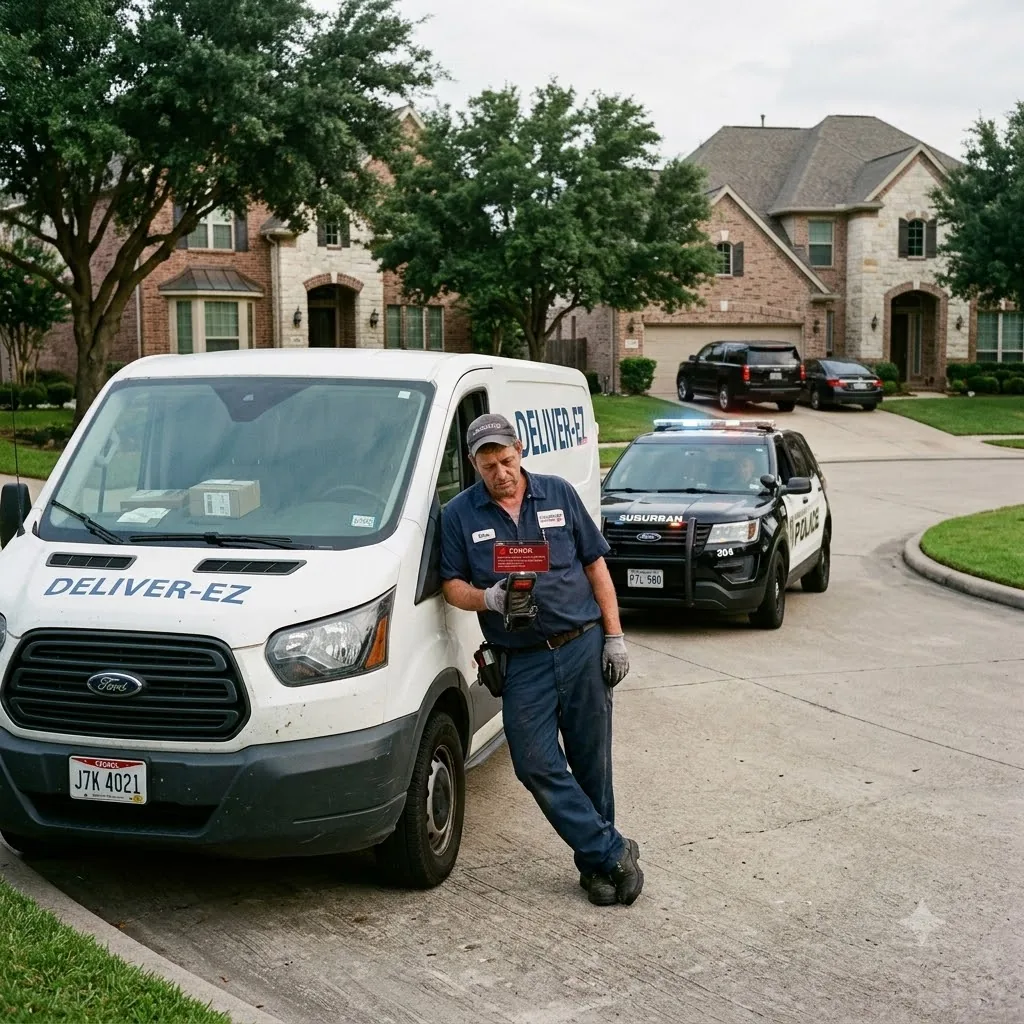
Red and blue lights bounced off the manicured hedges of Oakbridge Estates, trapping my battered delivery van against the curb. My company scanner vibrated against my sweaty thigh, the screen flashing a solid, angry red to signal my route metrics were officially dead. I let my exhausted forehead rest against the steering wheel, my shoulders screaming from fourteen hours of hauling patio furniture and dog food, as the police cruiser’s spotlight blinded my rearview mirror.
I kept my hands visible on the top of the steering wheel. That was the absolute rule you learned on day one of this job. A shadow separated from the blinding glare of the cruiser and crunched over the pristine crushed-quartz gravel of the cul-de-sac. The heavy thud of a flashlight tapped against my driver-side glass. I rolled the manual window down, letting in the crisp, jasmine-scented evening air that belonged to people who did not work three jobs to make rent.
The officer leaned in, his flashlight beam slicing through the dark cab. The harsh light swept over the dashboard, illuminating the empty energy drink cans, the stack of delivery manifests, and the blue vest of my corporate uniform.
He told me to hand over my license and registration. I moved with agonizing slowness, narrating my actions aloud so he knew I was just reaching for my wallet. My lower back flared with a sharp pinch as I twisted in the worn seat. The scanner on my leg let out a high-pitched digital shriek. I was three stops behind. In five minutes, the automated routing algorithm would flag my account for suspension. In ten minutes, the regional manager would get an automated alert to terminate my contract.
I tried to explain I was just trying to finish my shift. I pointed to the towering stacks of cardboard boxes filling the back of the van. The officer did not look at the boxes. He took my laminated ID, shining his light directly into my eyes, and told me to keep my hands on the wheel. He walked back to his cruiser without another word.
The silence in the van felt suffocating. I rubbed the grit from my eyes. My right leg bounced nervously, shaking the still-flashing scanner. The neighborhood around me was dead quiet, lined with enormous houses sitting far back from the road on rolling green lawns. Someone in one of those mansions had called this in. I was driving a clearly marked commercial van, wearing a corporate uniform, dropping off packages with bright smiling arrows on the side. There was no valid reason for a traffic stop, no broken taillight, no speeding on a dead-end street.
The crunch of boots returned. This time, the officer was not alone. His partner flanked the passenger side of my van, a hand resting on his utility belt. The first officer stepped back up to my window. He did not hand back my license. Instead, he slapped a thick, stapled stack of printed papers against the edge of my door frame.
I stared at the top sheet. It was a high-resolution photograph of my van. The license plate was circled in thick red marker. Beneath the photo was a grid of dates and times, meticulously typed out and color-coded.
The officer tapped the paper. He stated that a resident had been tracking my vehicle for three weeks. He read aloud from the printout, detailing severe accusations of casing properties, photographing security systems, and loitering near back gates. The words felt completely disconnected from reality. The dates he read were the exact days I had the heaviest routes. The so-called loitering was just me struggling to drag eighty-pound oversized boxes up steep, winding driveways. The photographing was the mandatory proof-of-delivery pictures I had to take on my scanner to get paid.
I told him the accusations were completely fabricated. I offered to unlock my scanner and show him the delivery logs to match every single date and time printed on his paper.
The officer ignored the device buzzing on my leg. He flipped to the second page of his dossier. It was another photograph, this time of my face, taken through the windshield from a distance, accompanied by a chillingly detailed physical description and a note branding me a severe threat to the neighborhood. The document had a bold header. It stated the report was compiled by the Oakbridge Estates HOA Watch Captain.
My chest tightened. The police were not here to check my license or write a ticket. They had been handed a complete, fabricated profile designed to get me arrested or worse. The scanner on my leg buzzed again, flashing the exact address of my very next mandatory stop. I looked down at the glowing digital screen, then back up at the name and address printed at the top of the officer’s dossier.
They matched perfectly.
The officer unclasped his holster and ordered me to step out of the vehicle.
Red and blue lights bounced off the manicured hedges of Oakbridge Estates, trapping my battered delivery van against the curb. My company scanner vibrated against my sweaty thigh, the screen flashing a solid, angry red to signal my route metrics were officially dead. I let my exhausted forehead rest against the steering wheel, my shoulders screaming from fourteen hours of hauling patio furniture and dog food, as the police cruiser’s spotlight blinded my rearview mirror.
I kept my hands visible on the top of the steering wheel. That was the absolute rule you learned on day one of this job. A shadow separated from the blinding glare of the cruiser and crunched over the pristine crushed-quartz gravel of the cul-de-sac. The heavy thud of a flashlight tapped against my driver-side glass. I rolled the manual window down, letting in the crisp, jasmine-scented evening air that belonged to people who did not work three jobs to make rent.
The officer leaned in, his flashlight beam slicing through the dark cab. The harsh light swept over the dashboard, illuminating the empty energy drink cans, the stack of delivery manifests, and the blue vest of my corporate uniform.
He told me to hand over my license and registration. I moved with agonizing slowness, narrating my actions aloud so he knew I was just reaching for my wallet. My lower back flared with a sharp pinch as I twisted in the worn seat. The scanner on my leg let out a high-pitched digital shriek. I was three stops behind. In five minutes, the automated routing algorithm would flag my account for suspension. In ten minutes, the regional manager would get an automated alert to terminate my contract.
I tried to explain I was just trying to finish my shift. I pointed to the towering stacks of cardboard boxes filling the back of the van. The officer did not look at the boxes. He took my laminated ID, shining his light directly into my eyes, and told me to keep my hands on the wheel. He walked back to his cruiser without another word.
The silence in the van felt suffocating. I rubbed the grit from my eyes. My right leg bounced nervously, shaking the still-flashing scanner. The neighborhood around me was dead quiet, lined with enormous houses sitting far back from the road on rolling green lawns. Someone in one of those mansions had called this in. I was driving a clearly marked commercial van, wearing a corporate uniform, dropping off packages with bright smiling arrows on the side. There was no valid reason for a traffic stop, no broken taillight, no speeding on a dead-end street.
The crunch of boots returned. This time, the officer was not alone. His partner flanked the passenger side of my van, a hand resting on his utility belt. The first officer stepped back up to my window. He did not hand back my license. Instead, he slapped a thick, stapled stack of printed papers against the edge of my door frame.
I stared at the top sheet. It was a high-resolution photograph of my van. The license plate was circled in thick red marker. Beneath the photo was a grid of dates and times, meticulously typed out and color-coded.
The officer tapped the paper. He stated that a resident had been tracking my vehicle for three weeks. He read aloud from the printout, detailing severe accusations of casing properties, photographing security systems, and loitering near back gates. The words felt completely disconnected from reality. The dates he read were the exact days I had the heaviest routes. The so-called loitering was just me struggling to drag eighty-pound oversized boxes up steep, winding driveways. The photographing was the mandatory proof-of-delivery pictures I had to take on my scanner to get paid.
I told him the accusations were completely fabricated. I offered to unlock my scanner and show him the delivery logs to match every single date and time printed on his paper.
The officer ignored the device buzzing on my leg. He flipped to the second page of his dossier. It was another photograph, this time of my face, taken through the windshield from a distance, accompanied by a chillingly detailed physical description and a note branding me a severe threat to the neighborhood. The document had a bold header. It stated the report was compiled by the Oakbridge Estates HOA Watch Captain.
My chest tightened. The police were not here to check my license or write a ticket. They had been handed a complete, fabricated profile designed to get me arrested or worse. The scanner on my leg buzzed again, flashing the exact address of my very next mandatory stop. I looked down at the glowing digital screen, then back up at the name and address printed at the top of the officer’s dossier.
They matched perfectly.
The officer unclasped his holster and ordered me to step out of the vehicle.