Story code: ST-000771
Part 4: The Machine
The red glow of the laptop screen bathed the sedan’s interior in a blood-colored light. Elias stared at the glowing text, the words blurring as another wave of searing pain ripped through his lower abdomen. *Level 4 Biometric Supervisor Authorization Required.* The machine didn’t care about his pain. It didn’t care about the heavy aluminum flashlight resting in the cupholder, or the desperate terror radiating from the woman trembling beside him.
Jenkins kept tapping the trackpad, her breath coming in short, panicked hiccups. She pressed her index finger against the small black square beneath the keyboard. A harsh, digitized double-beep echoed in the cabin, followed by a new pop-up window: *Fingerprint Mismatch. Incident Logged.*
“No,” she whimpered, hitting the escape key. She swiped her thumb across her coat to dry the sweat, then pressed it to the scanner again. *Incident Logged. Supervisor Alert Triggered.*
Elias watched her frantic, useless movements. He saw the way her shoulders hitched with every failed attempt. Ten minutes ago, she had been the faceless enemy, the cruel architect of his suffering. Now, illuminated by the merciless red light of a government server, she just looked small. She was another hostage, fighting for the life of a dying husband she could never actually save, tethered to a system designed to slowly crush them both.
The anger that had propelled Elias through the freezing streets, the fury that had given him the strength to force his way into this car, simply evaporated. It left behind a hollow, echoing void, instantly filled by the relentless agony of his failing organs.
He had brought a flashlight to smash a machine made of algorithms and profit margins. It was a ridiculous joke.
“I’ll call them,” Jenkins babbled, her voice cracking as she fumbled for her cell phone in the center console. “I know the IT director. If I can just get him on the line, maybe I can authorize a temporary-”
“Stop,” Elias rasped.
The single word was quiet, lacking any of the menace he had commanded earlier, but it made her freeze. She looked up at him, the phone clutched to her chest, her mascara ruined, her eyes wide with a pathetic, broken kind of hope that mirrored his own from three weeks ago.
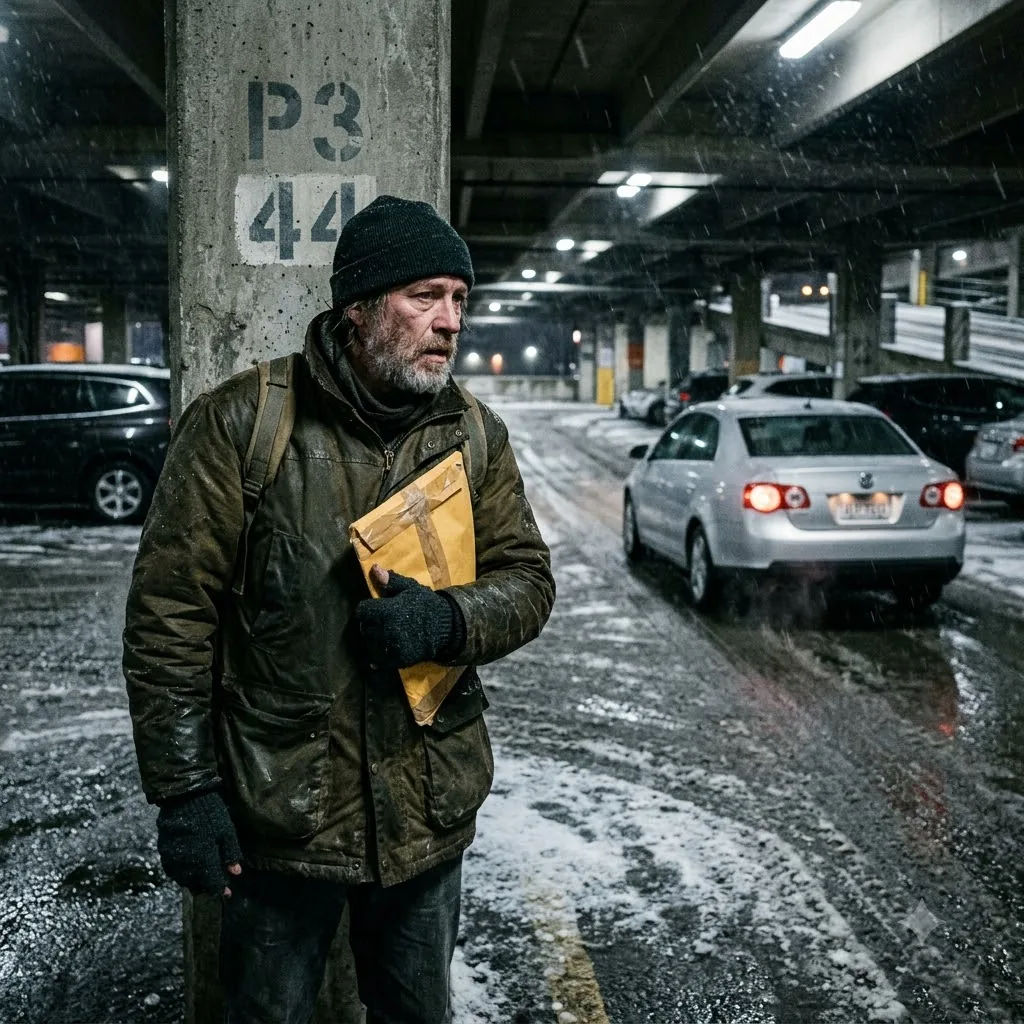
Elias reached out, his hand trembling so violently he could barely direct it. He didn’t reach for her, or the laptop, or the weapon. His thick, calloused fingers brushed against the leather console and closed over the frayed edges of his manila envelope.
“Elias, please,” Jenkins whispered. “I can try.”
“They logged the incident,” Elias said, his voice flat, exhausted. He pulled the crinkled VA authorization form off the gearshift, carefully slipping it back inside the envelope. “If you make the call, they’ll audit you. They’ll take your husband’s insurance.”
“But you’ll die,” she said. It wasn’t a question. It was the stark, undeniable truth hanging in the frigid air between them.
Elias folded the metal clasp on the envelope. He leaned heavily against the passenger door, gathering whatever fragments of strength remained in his trembling legs. “We’re all dying, Director Jenkins,” he said, his breath fogging the cold glass of the window. “Some of us just have a head start.”
He didn’t take the flashlight. He left it sitting in the cupholder, a useless lump of metal, a monument to the monster the bureaucracy had expected him to be. He reached for the door handle, pulled it, and shoved the heavy door open.
The ambient cold of the parking garage rushed in, biting at his sweat-dampened clothes, but it was nothing compared to the ice in his veins. He dragged his heavy frame out of the leather seat, his boots hitting the concrete with a dull thud. He didn’t look back as he pushed the door shut. The latch clicked softly, severing the connection between them.
Elias walked away, his left boot dragging slightly, every step a monumental battle against the twisting knives in his side. He navigated the rows of parked cars, slipping back into the shadows of the concrete pillars, leaving the red glow of the laptop far behind.
By the time he reached the exit ramp, the weather had turned. The frigid wind had brought freezing sleet, the tiny shards of ice blowing sideways across the asphalt. Elias pulled his thin coat tighter around his shoulders, bowing his head against the onslaught.
The walk back to the interstate overpass felt like a lifetime. The roar of the eighteen-wheelers grew louder, vibrating through the pavement, indifferent to the small, broken figure dragging himself through the dark. When he finally reached the line of flapping blue tarps and nylon domes, he didn’t stop to look at the scattered remnants of his neighbors’ lives.
He unzipped the flap of his weather-beaten tent, crawled inside, and pulled the zipper shut, sealing himself in the dark. He lay down on his thin foam pad, pulling his damp sleeping bag over his chest. He clutched the manila envelope against his heart, feeling the rough paper through his shirt. The pain was absolute now, a roaring fire consuming him from the inside out, but as he closed his eyes and listened to the sleet battering the nylon roof, Elias found a strange, terrible peace. He was dying in the cold, but he was dying as himself.