Story code: ST-000775
Part 1: The Red Screen
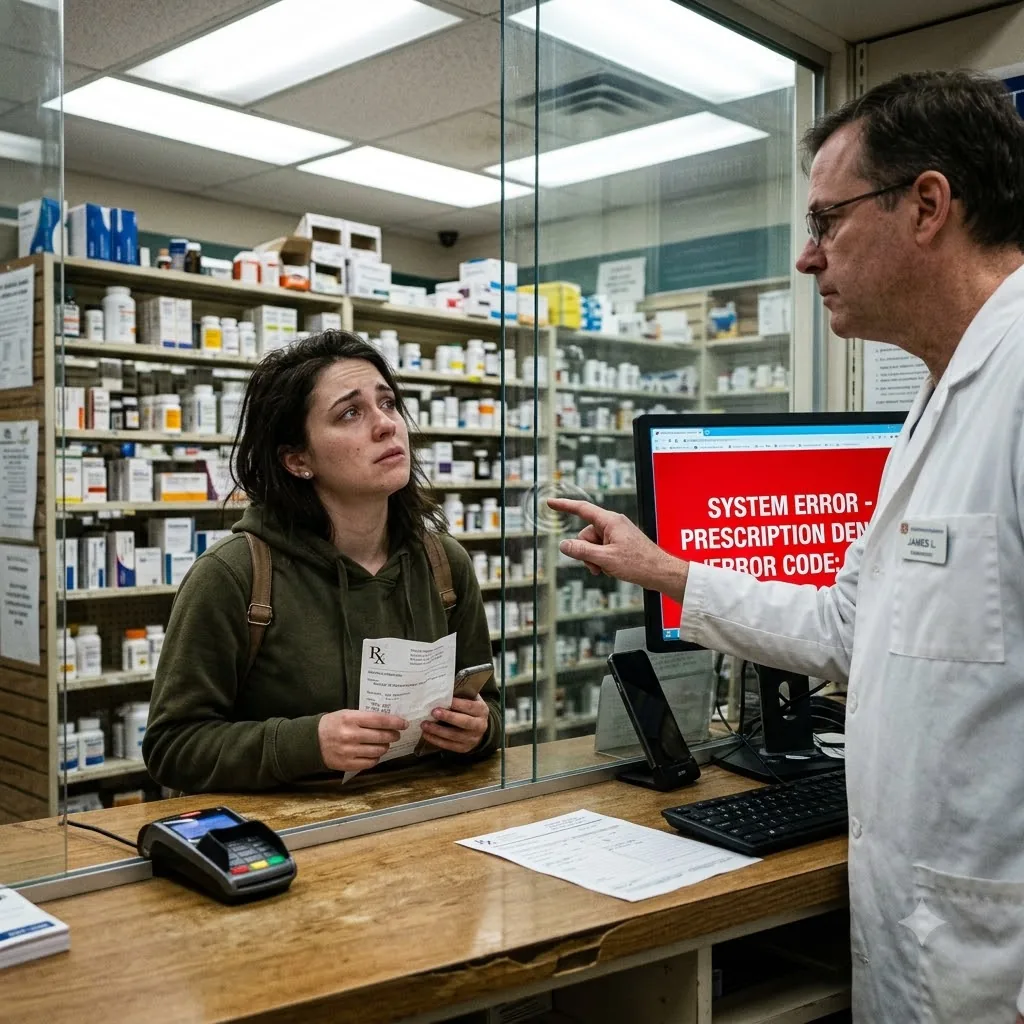
A high-pitched, synthetic beep echoed against the fluorescent lights of the pharmacy, flat and repetitive. Maya stood on her toes, trying to see over the raised laminate counter that separated her from the man in the white coat. The physical barrier was deliberate, designed to keep patients down and professionals up. The pharmacist did not look down at her. He stared exclusively at his monitor, establishing the algorithm as an impenetrable third party in the room. The register beeped again, a double-tone that sounded like a locked door. He rested his hand on the mouse, letting the silence stretch.
Her chest was tight with a slow, creeping panic. The seventy-two-hour window was a hard medical boundary, and the clock in her head was much louder than the register. Sixty-eight hours had already passed since Friday night. The cardboard box of the emergency contraceptive sat on the counter between them, agonizingly close, yet barricaded behind an invisible wall of store policy and silicon. She shifted her weight, the linoleum squeaking under her sneakers, hoping the noise would force him to acknowledge her existence.
He picked up her out-of-state driver’s license. He held the barcode scanner over the plastic card. Instead of a smooth, fluid swipe, he angled it awkwardly. The red beam hit the shiny holographic overlay on the Texas ID. The register shrieked its two-tone rejection again. The monitor flashed red, illuminating his impassive face.
“Corporate tech,” he stated, his voice devoid of inflection. He slid the ID back across the counter with the tip of his pen. “System will not accept it. The network is probably having trouble verifying the out-of-state registry.”
Maya looked at the ID. The barcode was pristine. She had used it to board a plane three days ago. She had used it to buy cold medicine in this exact state yesterday without any network issues.
“It is a valid ID,” she said, keeping her voice level. Anger would only give him a reason to call security. “I am over eighteen. I have cash. Ring it up as a general item.”
The pharmacist adjusted his rectangular glasses. He clicked the mouse twice. Another sterile beep rejected the command.
“The algorithm requires a verified scan,” he said. “I cannot override a red screen.”
He finally looked at her, but his gaze dropped immediately to her collarbone, then back to the monitor. He was treating the computer as the actual authority in the room, acting as a mere helpless translator for a machine that had already made its ruling. The pharmacy was at the back of a massive chain drugstore. A teenager was restocking shampoo three aisles over, oblivious to the standoff. The overhead speakers played a cheerful pop song reduced to tinny static.
Maya pulled her phone from her pocket. The time read 4:12 PM. The clinic downtown closed at five. If she left now, she might make it, but the bus took forty minutes and the schedule was unreliable. This was the only pharmacy within walking distance of her motel. The window was closing rapidly. Every minute the man spent staring at his frozen screen was a minute she could not get back.
“Then call the manager,” she told him. “There has to be a manager override key. I see the physical lock on the register.”
The pharmacist folded his hands over the keyboard. “Manager is on lunch.”
“It is four in the afternoon.”
“Late lunch.”
The absolute stillness of the man was infuriating. Retail workers under pressure moved with frantic, stressed energy. They apologized. They complained about the slow registers. They typed aggressively. This man was perfectly calm. He was an island of tranquility in the middle of her personal medical emergency. He tapped the spacebar once every ten seconds, just enough to keep the terminal from timing out, but not enough to actually input any data.
Maya stared at the back of the screen facing away from her. She could see the edge of the monitor casing. The red glare reflecting on his white coat was completely static. Most error screens had a blinking cursor or a moving prompt. This light just sat there, unchanging.
She placed a twenty-dollar bill on the counter. “Take the cash. Give me the box. Let the manager sort out the inventory variance when they get back.”
“That is theft,” he said mildly. “I would have to call loss prevention.”
He did not move his hand toward the phone. He just let the threat hang in the air, a polite hostage situation negotiated over a linoleum counter. Maya calculated the distance to the box. She calculated the speed of the security guard she had seen by the automatic doors up front. She looked back at the pharmacist. His eyes flicked to the clock in the bottom corner of his monitor, then back to the center of the screen. He was watching the time.
He was not trying to fix the error. He was waiting for something.
Maya leaned over the counter, bracing her weight on her forearms, stretching her neck to get an angle on the monitor. The pharmacist immediately shifted his body, rolling his stool to the left to block her line of sight. As he moved, his elbow bumped the edge of the keyboard tray. The solid red glare on his glasses vanished, replaced instantly by the bright, neutral white of a standard point-of-sale entry screen.
He quickly slammed his palm down on a specific cluster of keys to bring the red light back, but his hand slipped, sending the computer mouse clattering off the desk and ripping its cord out of the USB port.
A high-pitched, synthetic beep echoed against the fluorescent lights of the pharmacy, flat and repetitive. Maya stood on her toes, trying to see over the raised laminate counter that separated her from the man in the white coat. The physical barrier was deliberate, designed to keep patients down and professionals up. The pharmacist did not look down at her. He stared exclusively at his monitor, establishing the algorithm as an impenetrable third party in the room. The register beeped again, a double-tone that sounded like a locked door. He rested his hand on the mouse, letting the silence stretch.
Her chest was tight with a slow, creeping panic. The seventy-two-hour window was a hard medical boundary, and the clock in her head was much louder than the register. Sixty-eight hours had already passed since Friday night. The cardboard box of the emergency contraceptive sat on the counter between them, agonizingly close, yet barricaded behind an invisible wall of store policy and silicon. She shifted her weight, the linoleum squeaking under her sneakers, hoping the noise would force him to acknowledge her existence.
He picked up her out-of-state driver’s license. He held the barcode scanner over the plastic card. Instead of a smooth, fluid swipe, he angled it awkwardly. The red beam hit the shiny holographic overlay on the Texas ID. The register shrieked its two-tone rejection again. The monitor flashed red, illuminating his impassive face.
“Corporate tech,” he stated, his voice devoid of inflection. He slid the ID back across the counter with the tip of his pen. “System will not accept it. The network is probably having trouble verifying the out-of-state registry.”
Maya looked at the ID. The barcode was pristine. She had used it to board a plane three days ago. She had used it to buy cold medicine in this exact state yesterday without any network issues.
“It is a valid ID,” she said, keeping her voice level. Anger would only give him a reason to call security. “I am over eighteen. I have cash. Ring it up as a general item.”
The pharmacist adjusted his rectangular glasses. He clicked the mouse twice. Another sterile beep rejected the command.
“The algorithm requires a verified scan,” he said. “I cannot override a red screen.”
He finally looked at her, but his gaze dropped immediately to her collarbone, then back to the monitor. He was treating the computer as the actual authority in the room, acting as a mere helpless translator for a machine that had already made its ruling. The pharmacy was at the back of a massive chain drugstore. A teenager was restocking shampoo three aisles over, oblivious to the standoff. The overhead speakers played a cheerful pop song reduced to tinny static.
Maya pulled her phone from her pocket. The time read 4:12 PM. The clinic downtown closed at five. If she left now, she might make it, but the bus took forty minutes and the schedule was unreliable. This was the only pharmacy within walking distance of her motel. The window was closing rapidly. Every minute the man spent staring at his frozen screen was a minute she could not get back.
“Then call the manager,” she told him. “There has to be a manager override key. I see the physical lock on the register.”
The pharmacist folded his hands over the keyboard. “Manager is on lunch.”
“It is four in the afternoon.”
“Late lunch.”
The absolute stillness of the man was infuriating. Retail workers under pressure moved with frantic, stressed energy. They apologized. They complained about the slow registers. They typed aggressively. This man was perfectly calm. He was an island of tranquility in the middle of her personal medical emergency. He tapped the spacebar once every ten seconds, just enough to keep the terminal from timing out, but not enough to actually input any data.
Maya stared at the back of the screen facing away from her. She could see the edge of the monitor casing. The red glare reflecting on his white coat was completely static. Most error screens had a blinking cursor or a moving prompt. This light just sat there, unchanging.
She placed a twenty-dollar bill on the counter. “Take the cash. Give me the box. Let the manager sort out the inventory variance when they get back.”
“That is theft,” he said mildly. “I would have to call loss prevention.”
He did not move his hand toward the phone. He just let the threat hang in the air, a polite hostage situation negotiated over a linoleum counter. Maya calculated the distance to the box. She calculated the speed of the security guard she had seen by the automatic doors up front. She looked back at the pharmacist. His eyes flicked to the clock in the bottom corner of his monitor, then back to the center of the screen. He was watching the time.
He was not trying to fix the error. He was waiting for something.
Maya leaned over the counter, bracing her weight on her forearms, stretching her neck to get an angle on the monitor. The pharmacist immediately shifted his body, rolling his stool to the left to block her line of sight. As he moved, his elbow bumped the edge of the keyboard tray. The solid red glare on his glasses vanished, replaced instantly by the bright, neutral white of a standard point-of-sale entry screen.
He quickly slammed his palm down on a specific cluster of keys to bring the red light back, but his hand slipped, sending the computer mouse clattering off the desk and ripping its cord out of the USB port.