Story code: ST-000778
Part 2: The Missing Time
Elias turned his back to the truck. He didn’t need the vehicle. He needed the man whose name was printed on the top left corner of the envelope.
He walked toward the far wall of the parking level, where the ambient light faded into deep shadow. A heavy floor-to-ceiling chain-link enclosure blocked off the subterranean utility corridors. He gripped the knurled steel barrel of his flashlight, sliding the heavy, flared tail-cap through the steel mesh. He wedged it firmly against the shackle of the cheap brass padlock securing the gate. He didn’t hesitate. He leaned his entire body weight into the makeshift lever, driving the steel handle downward. The brass yielded with a sharp, violent crack that echoed off the damp concrete.
He pulled the broken lock free, eased the gate open, and stepped into the darkness. He clicked the flashlight on. A tight, blinding beam cut through the airborne dust, illuminating a narrow concrete tunnel filled with electrical conduits and steam pipes.
Part of his now-canceled cognitive mapping therapy involved strict spatial memorization to combat his short-term memory loss. Over the past eight months, as a grounding exercise, Elias had mentally mapped the structural layout of the entire VA complex. He knew this service tunnel bypassed the main lobby’s security checkpoints. It led directly to the executive tower’s freight elevator.
He moved quickly, the heavy rubber soles of his boots absorbing the sound of his footsteps. The rhythmic hum of the high-voltage lines running along the ceiling began to resonate in his jaw. It felt exactly like the vibrating fluorescent tubes in Waiting Room B.
His vision stuttered. A single frame of white light flashed across his optic nerve.
*Grounding technique,* he told himself, tightening his grip on the flashlight. *Five things I can see. Four things I can-*
The tunnel vanished.
Elias blinked, gasping as a rush of cold, conditioned air hit his face. He stumbled, his shoulder slamming hard against a wood-paneled wall to keep from falling. The dust and the smell of ozone were gone. He was standing in a brightly lit, carpeted hallway. He stared at the polished brass numbers on the wall opposite him. *Level 5. Executive Administration.*
Panic, cold and sharp, flooded his chest. He looked down at his watch. Twenty-two minutes had passed.
He had no memory of reaching the end of the tunnel. No memory of the elevator. No memory of ascending five floors. The terror of the missing time was a physical weight pressing down on his lungs. This was the abyss. This was the terrifying slide his therapy had held at bay. Without the rigid framework of the mapping sessions, his mind was already fracturing, dropping him into new locations with no connective tissue to explain how he got there. He was becoming a danger to himself.
He forced his breathing to slow, pushing the panic down. He was here now. The gold lettering on the glass double doors ten yards down the hall read: *Office of the Regional Director.*
Elias clicked his flashlight off and slid it back into his jacket. He still carried the manila envelope in his left hand. He approached the glass doors and pushed gently. They were unlocked.
He slipped into the plush reception area. The front desk was abandoned. The computer monitor was dark. From the inner office, spilling through a partially open mahogany door, he heard the distinct sound of heavy packing tape unspooling from a dispenser.
Elias crept closer, positioning himself at the edge of the doorframe.
Inside the expansive office, he did not see the overweight bureaucrat he had expected. Instead, two men in tactical civilian clothing-unmarked dark shirts, heavy cargo pants, and sidearms strapped to their belts-were systematically packing thick stacks of blue patient files into reinforced plastic transit cases.
Sitting rigidly in a leather guest chair was Dr. Aris, his cognitive therapist. Her face was pale, her hands trembling as she held a single sheet of paper.
“The directive is clear, Doctor,” one of the armed men said, tossing another stack of files into a crate. He didn’t sound like a medical administrator; he sounded like a soldier coordinating an extraction. “The cognitive frameworks you were teaching are now classified under prohibited ideological restructuring. The program is erased. All patient data is being transferred to the compliance board.”
“They are traumatic brain injury patients,” Dr. Aris said, her voice tight with suppressed fear. “They are combat veterans. If you take away their mapping routines, they will lose their grip on reality. They won’t be able to function. You are destroying their minds.”
“Their mental instability makes them a high-risk cohort under the new mandate,” the second man replied, slamming a transit case shut and latching it. “They aren’t patients anymore, Doctor. They are flagged security risks. Warrants for their compulsory relocation are already active.”
Elias felt a cold spike of adrenaline punch through his exhaustion. *Compulsory relocation.*
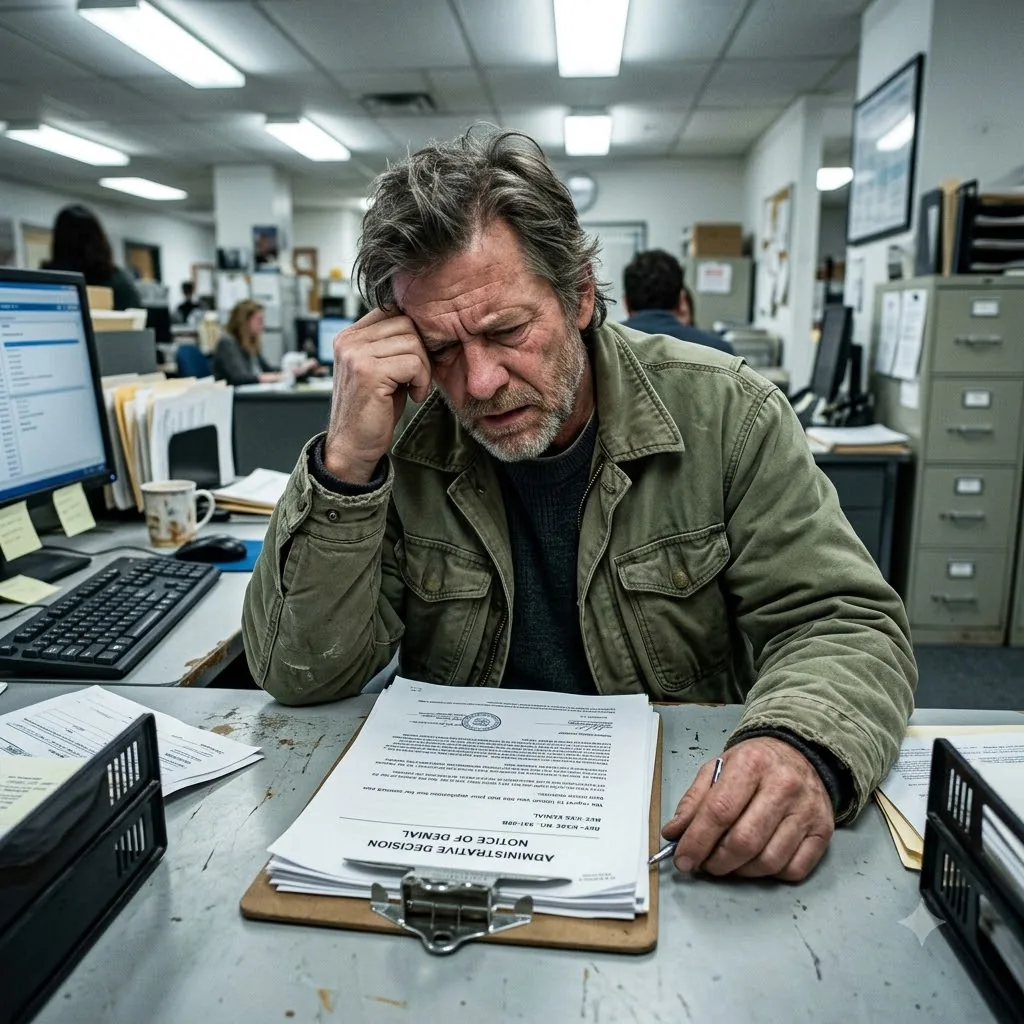
He looked down at the heavy manila envelope in his hand. He realized the package had felt too thick for a single-page denial letter. Moving with agonizing slowness, he slid his thumb under the metal clasp, opening the flap. He pulled out the crisp white page he had read in the waiting room, revealing a second, heavier sheet stapled securely behind it.
It was a localized detention warrant. The text was stark, ordering his immediate and involuntary transfer to a secure compliance center. The execution time printed at the bottom of the order was 17:00 hours.
Elias looked at his watch. It was 16:54.
“We have a list of twenty names to round up tonight,” the first man inside the office said, turning toward the open doorway. “You’re going to tell us exactly where they usually go when their memory slips.”
Elias took a slow step backward. As he shifted his weight, the edge of his combat boot caught the heavy brass base of a standing coat rack. It wobbled, the metal hooks clattering loudly against the wood-paneled wall.
The voices inside the office stopped instantly.
The sharp, distinct sound of a holster snap echoed through the mahogany door. Footsteps moved quickly toward the reception area. Elias stood frozen in the hallway, his mind threatening to skip again, with exactly six minutes left before he officially became a hunted fugitive.