Story code: ST-000792
Part 3: Standard Boilerplate
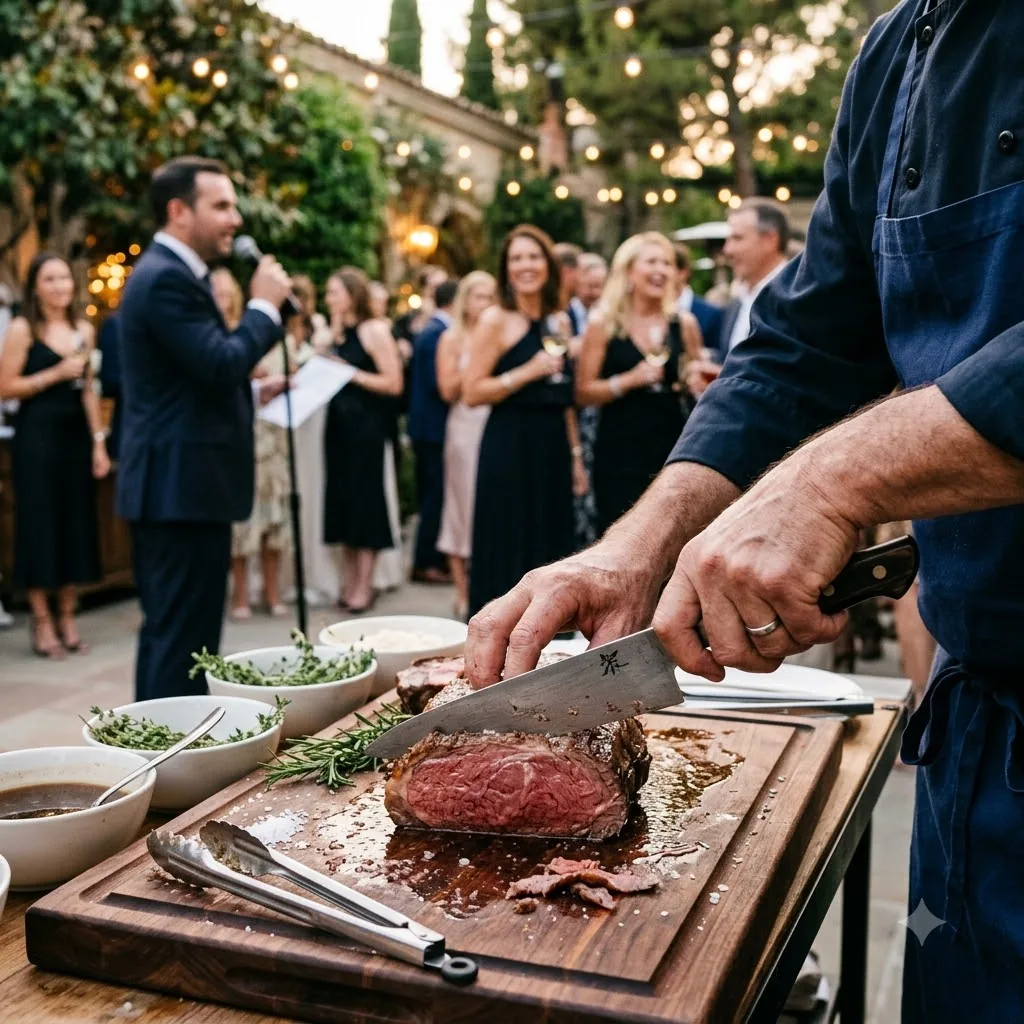
Marcus’s rubber-soled catering shoes sank into the manicured lawn. He walked away from the safety of the carving station, the titanium drive heavy in his hand. A hundred pairs of eyes followed him. The jazz quartet stopped playing, leaving only the crashing Atlantic and the crunch of his footsteps. He passed tables draped in white linen, weaving through guests who smelled of jasmine and old money. They leaned back in their bamboo chairs as he approached, as if his parole status were contagious.
Vance stood at the head table with the three bespoke-suited investors. The billionaire beamed, holding his hands out in a gesture of magnanimous welcome. Marcus stopped a foot away, his pulse hammering against his eardrums. He extended his hand, offering the scratched metal drive.
Vance didn’t take it. Instead, he wrapped a heavy arm around Marcus’s shoulders, turning him to face the crowd. “The architecture of tomorrow,” Vance proclaimed into the microphone, pointing at the device. “Forged not in Silicon Valley, but in the fires of rehabilitation. A testament to what we achieve when we give the forgotten a chance to contribute.”
The crowd erupted into applause. Richard, the investor who had demanded to see the source code, clapped politely, his eyes locked on the titanium rectangle.
“Now,” Vance said, lowering the microphone and leaning close to Marcus’s ear. His breath smelled heavily of scotch. “Let’s fetch the presentation laptop from the prep tent. Walk with me.”
Vance guided him away from the banquet table, his grip on Marcus’s shoulder tightening into a vise. They moved out of the fairy-light canopy into the harsh, clinical glare of the catering tent. The transition was jarring. The air here was ten degrees hotter, thick with the smell of roasting garlic and nervous sweat.
“Clear out,” Vance snapped.
Elena, the catering director, froze midway through plating a dozen oysters. “Mr. Vance, we are in the middle of the second course-”
“I said clear out,” Vance repeated, his voice completely devoid of its theatrical warmth. “Take a five-minute smoke break. All of you.”
The kitchen staff abandoned their stations, filtering out through the back flaps of the canvas tent into the humid night. Elena shot Marcus a terrified, pleading look before vanishing into the dark.
The moment the tent flap fell shut, the benevolent billionaire evaporated. Vance released Marcus’s shoulder and stepped back, his posture of the philanthropic savior vanishing. He looked at Marcus with flat, predatory eyes.
“You recognized the scratch on the casing,” Vance said. It wasn’t a question. “I saw your face freeze at the carving station.”
Marcus peeled the latex gloves off his slick hands and set the titanium drive on a stainless steel prep table. “You’re selling my algorithm to Richard for fifty million dollars.”
“I am selling a revolutionary logistics platform,” Vance corrected smoothly, adjusting his linen jacket. “A platform I conceptualized, funded, and brought to market. You wrote some foundational architecture utilizing resources from my corporate initiative.”
“I wrote every single line,” Marcus said, his voice trembling with suppressed energy. “I built the routing architecture from scratch. You stole it.”
Vance laughed, a short, dry sound that barely echoed over the hum of the industrial refrigerators. “Stole it? Let’s talk about the real world. Say you walk out of Greenhaven with that drive. What then? You think you can walk into a venture capital firm on Sand Hill Road? You think Sequoia is handing fifty million dollars to a convicted felon?”
Marcus stared at him, his jaw tight.
“They run background checks,” Vance continued, closing the distance until Marcus could see the expensive pores on his nose. “They vet their founders. They don’t give seed money to a guy who hot-wires Hondas. They’d laugh you out of the lobby before you could even plug the drive in. You have no network. You have no pedigree. I am the face. I am the trust. I am the only reason that code is worth anything.”
Vance reached into the inner pocket of his tuxedo jacket, pulled out a folded paper and a sleek fountain pen, and tossed them onto the steel table right next to the drive.
Marcus looked down. It was a cashier’s check made out to him for ten thousand dollars. Beneath it was a single-page document.
“Ten grand,” Vance said, his tone shifting back to an aggressive imitation of kindness. “Enough for a security deposit. Enough to buy a used Civic. Sign that paper, take the check, and go back out there to serve the prime rib. You get a fresh start, and I get my return on investment.”
Marcus didn’t touch the pen. “And if I don’t?”
Vance’s eyes hardened into flint. “Then I call Miller. I tell your parole officer you became aggressive and tried to steal from the kitchen. You lose your job tonight. You violate your release conditions. You go back to a six-by-eight cell for five years, and I sell the algorithm anyway.”
The threat hung in the hot, stagnant air of the kitchen tent. The heavy thud of the ocean waves sounded muffled through the thick canvas walls. Marcus looked at the check. Ten thousand dollars for four years of his life. For his genius.
He looked at the single-page document. He read the bold header at the top of the page: *Voluntary Transfer of Intellectual Property and Non-Disclosure Agreement.*
Marcus frowned. The fear that had been suffocating him since the carving station suddenly cracked, letting in a blinding ray of clarity.
“In the prison machine shop,” Marcus said slowly, “the warden told us the state charter gave your initiative automatic ownership of everything we produced.”
Vance crossed his arms. “It does. This is standard boilerplate.”
“No, it isn’t,” Marcus said, meeting Vance’s eyes. “If the charter gave you the intellectual property rights, you wouldn’t need a voluntary transfer agreement. The charter only covers physical labor. License plates. Stamped metal. It doesn’t cover proprietary software.”
A muscle feathered in Vance’s jaw.
“Richard asked for the source code,” Marcus continued, the realization turning his blood to ice water. “He’s going to run a due diligence audit before he transfers fifty million dollars. If you try to sell unregistered software without a paper trail proving you bought out the original creator, Richard’s lawyers will pull the plug instantly.”
Marcus picked up the fountain pen, rolling the heavy, expensive metal between his calloused fingers.
“You can’t call Miller,” Marcus said quietly. “If you send me back to prison, I become a liability. A bitter inmate with a legitimate legal claim to the IP you’re trying to sell. Richard would never touch it.”
Vance stood perfectly still. The relentless hum of the industrial refrigerator filled the silence between them. The billionaire opened his mouth, but for the first time all evening, he had absolutely nothing to say.