Story code: ST-000793
Part 1: The Sudden Disconnect
The red light on the diner card reader blinked twice before settling into a steady, condemning glare. Betty slid the beige plastic terminal back across the laminated counter, her usual warm smile replaced by a tight, uncomfortable line. She tapped the screen with a manicured nail, indicating the bold text that read “DECLINED.”
Arthur stared at the little machine. He had used that same debit card every Tuesday for five years to pay for his eggs, toast, and black coffee. He reached into his worn tweed jacket, patting the pockets for cash, but found only a lint-covered quarter and a spare ribbon for his typewriter. The silence in the diner stretched out. A few of the regulars down the counter shifted on their stools, their eyes fixed stubbornly on their plates. No one offered to cover the four dollars. No one even looked at him.
He slid the quarter across the counter as a meager tip, muttered an apology, and walked out into the damp morning air. The heavy oak door swung shut behind him, cutting off the low murmur of conversation that instantly resumed.
The drive back to his cabin took twenty minutes along winding, potholed dirt roads. Gray clouds sat low over the pine trees, releasing a fine, freezing mist that coated the windshield of his old truck. He turned the dials of the radio, hoping to find the local news station, but the speaker only produced a thick, aggressive static. He snapped it off. The silence in the cab felt heavy and oppressive.
His cabin sat at the end of a long, unmarked gravel driveway, isolated from the nearest neighbor by three miles of dense woods. Arthur liked the quiet. He had spent the last decade here, surrounded by stacks of manuscript paper and the comforting smell of woodsmoke, completely unplugged from the frantic hum of modern life. He did not own a computer. He did not carry a cellular phone. His connection to the outside world consisted of the diner, the post office, and the heavy black rotary telephone sitting on his cluttered desk.
He unlocked the deadbolt and stepped inside, shivering as the damp chill of the cabin washed over him. He needed to call the bank. He also needed to call Martin, his editor at the publishing house in New York, to ask about the royalty check that should have arrived a week ago.
Arthur shrugged off his wet coat and picked up the heavy receiver of the landline. He dialed the familiar ten digits of the publishing house, a number he had called on the first of the month for twelve years.
The line clicked. There was no ringing.
A harsh, automated voice filled his ear. The tone was entirely devoid of warmth, sounding like an old tape recording playing at the wrong speed. It did not offer a standard corporate greeting.
“The party you have reached has severed all professional and personal contact with the caller,” the metallic voice stated. “Any further attempts to communicate will be considered harassment and will be forwarded to our legal representation. Do not attempt to contact this number or any associated personnel.”
The line went dead, replaced by a rapid, shrill dial tone.
Arthur held the receiver away from his head. He stared at the black plastic earpiece as if a venomous insect had crawled out of it. He pressed the receiver hook down, released it, and dialed the number again. His thick fingers slipped on the rotary dial, forcing him to restart. When he finally finished the sequence, the same dead click echoed on the line. The identical robotic voice repeated the exact same legal disclaimer.
He slammed the phone down. The loud crack echoed off the wooden beams of the ceiling.
A deep, unsettling cold began to spread through his chest. The declined debit card and the mechanical rejection from Martin’s office could not be a coincidence. Someone had flipped a switch. His entire infrastructure had been dismantled while he slept. Without a computer to check digital messages or a television to watch the news, he was trapped in a sensory void. He had no way to see the machinery moving against him. He only felt the heavy steel doors of the world slamming shut.
The mist outside turned into a steady, driving rain. The drops hammered against the tin roof of the cabin, sounding like a swarm of angry bees. Arthur paced the length of his small living room, his boots tracking mud across the braided rug. He stopped at the window, peering out into the gray afternoon.
He needed to go to the bank in person. He would demand to speak to the manager and force them to explain the lock on his account. He reached for his damp coat hanging by the door.
A low, guttural rumble cut through the sound of the rain.
Arthur froze. The noise was coming from outside. It sounded like a faulty muffler.
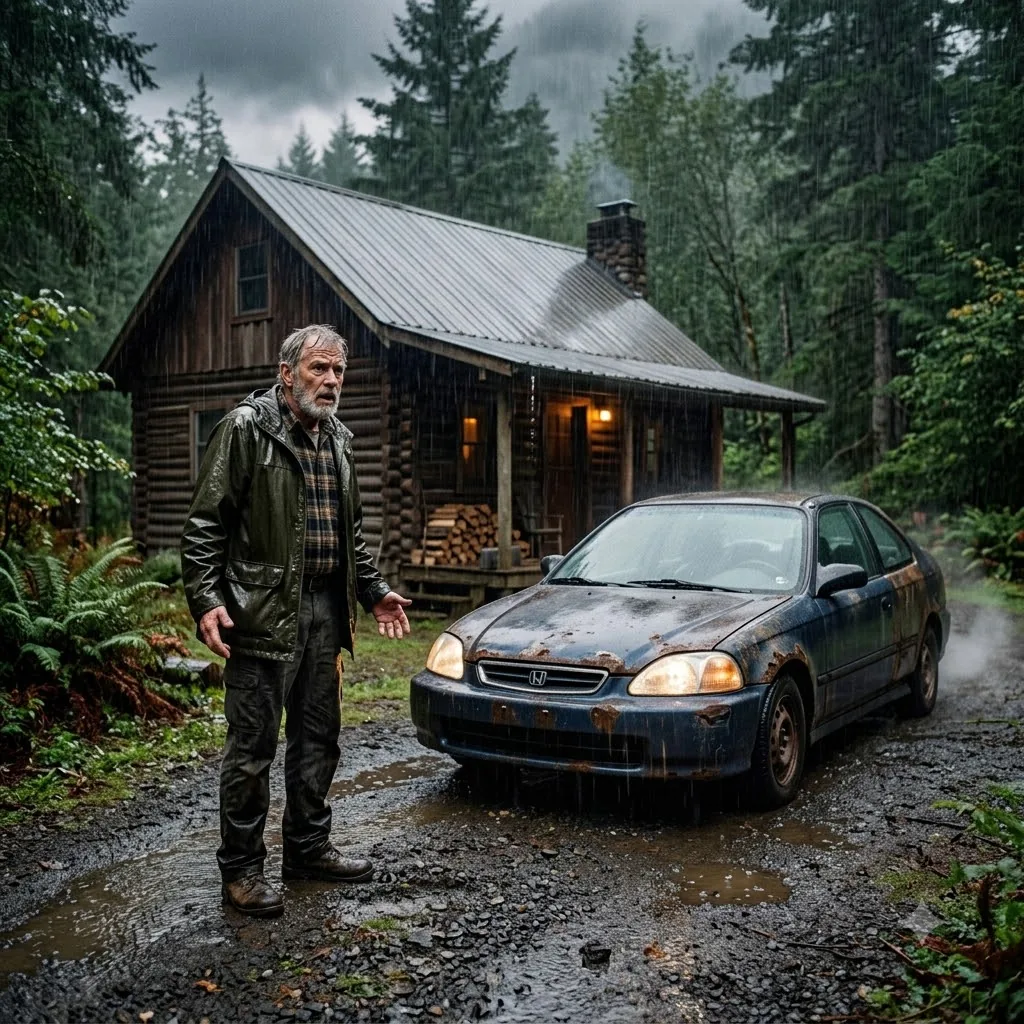
He moved slowly to the front window and pushed aside the heavy wool curtain. Through the distorted glass, the shape of a vehicle materialized in the downpour. It was a rusted silver Honda Civic, idling right in the middle of his gravel driveway. The headlights were off. The windshield wipers were not moving, even as the rain sheeted across the glass.
No one ever came up this road. Delivery drivers left packages in a wooden box down at the highway.
The exhaust pipe of the Civic sputtered, kicking out a cloud of dark gray smoke that clung to the wet gravel. Through the rain-streaked driver’s side window, Arthur could just make out the silhouette of a person gripping the steering wheel. It was a young woman. Her face was entirely obscured by the glare of the glass and the shadows of the cabin’s porch roof, but her posture was rigid. She was staring directly at his front door.
Arthur let the curtain fall back into place and stepped away from the window. He moved toward the fireplace, his eyes fixed on the heavy iron poker resting against the stone hearth. He wrapped his hand around the cold metal handle just as a heavy, deliberate knock echoed against the wood of his front door.
The red light on the diner card reader blinked twice before settling into a steady, condemning glare. Betty slid the beige plastic terminal back across the laminated counter, her usual warm smile replaced by a tight, uncomfortable line. She tapped the screen with a manicured nail, indicating the bold text that read “DECLINED.”
Arthur stared at the little machine. He had used that same debit card every Tuesday for five years to pay for his eggs, toast, and black coffee. He reached into his worn tweed jacket, patting the pockets for cash, but found only a lint-covered quarter and a spare ribbon for his typewriter. The silence in the diner stretched out. A few of the regulars down the counter shifted on their stools, their eyes fixed stubbornly on their plates. No one offered to cover the four dollars. No one even looked at him.
He slid the quarter across the counter as a meager tip, muttered an apology, and walked out into the damp morning air. The heavy oak door swung shut behind him, cutting off the low murmur of conversation that instantly resumed.
The drive back to his cabin took twenty minutes along winding, potholed dirt roads. Gray clouds sat low over the pine trees, releasing a fine, freezing mist that coated the windshield of his old truck. He turned the dials of the radio, hoping to find the local news station, but the speaker only produced a thick, aggressive static. He snapped it off. The silence in the cab felt heavy and oppressive.
His cabin sat at the end of a long, unmarked gravel driveway, isolated from the nearest neighbor by three miles of dense woods. Arthur liked the quiet. He had spent the last decade here, surrounded by stacks of manuscript paper and the comforting smell of woodsmoke, completely unplugged from the frantic hum of modern life. He did not own a computer. He did not carry a cellular phone. His connection to the outside world consisted of the diner, the post office, and the heavy black rotary telephone sitting on his cluttered desk.
He unlocked the deadbolt and stepped inside, shivering as the damp chill of the cabin washed over him. He needed to call the bank. He also needed to call Martin, his editor at the publishing house in New York, to ask about the royalty check that should have arrived a week ago.
Arthur shrugged off his wet coat and picked up the heavy receiver of the landline. He dialed the familiar ten digits of the publishing house, a number he had called on the first of the month for twelve years.
The line clicked. There was no ringing.
A harsh, automated voice filled his ear. The tone was entirely devoid of warmth, sounding like an old tape recording playing at the wrong speed. It did not offer a standard corporate greeting.
“The party you have reached has severed all professional and personal contact with the caller,” the metallic voice stated. “Any further attempts to communicate will be considered harassment and will be forwarded to our legal representation. Do not attempt to contact this number or any associated personnel.”
The line went dead, replaced by a rapid, shrill dial tone.
Arthur held the receiver away from his head. He stared at the black plastic earpiece as if a venomous insect had crawled out of it. He pressed the receiver hook down, released it, and dialed the number again. His thick fingers slipped on the rotary dial, forcing him to restart. When he finally finished the sequence, the same dead click echoed on the line. The identical robotic voice repeated the exact same legal disclaimer.
He slammed the phone down. The loud crack echoed off the wooden beams of the ceiling.
A deep, unsettling cold began to spread through his chest. The declined debit card and the mechanical rejection from Martin’s office could not be a coincidence. Someone had flipped a switch. His entire infrastructure had been dismantled while he slept. Without a computer to check digital messages or a television to watch the news, he was trapped in a sensory void. He had no way to see the machinery moving against him. He only felt the heavy steel doors of the world slamming shut.
The mist outside turned into a steady, driving rain. The drops hammered against the tin roof of the cabin, sounding like a swarm of angry bees. Arthur paced the length of his small living room, his boots tracking mud across the braided rug. He stopped at the window, peering out into the gray afternoon.
He needed to go to the bank in person. He would demand to speak to the manager and force them to explain the lock on his account. He reached for his damp coat hanging by the door.
A low, guttural rumble cut through the sound of the rain.
Arthur froze. The noise was coming from outside. It sounded like a faulty muffler.
He moved slowly to the front window and pushed aside the heavy wool curtain. Through the distorted glass, the shape of a vehicle materialized in the downpour. It was a rusted silver Honda Civic, idling right in the middle of his gravel driveway. The headlights were off. The windshield wipers were not moving, even as the rain sheeted across the glass.
No one ever came up this road. Delivery drivers left packages in a wooden box down at the highway.
The exhaust pipe of the Civic sputtered, kicking out a cloud of dark gray smoke that clung to the wet gravel. Through the rain-streaked driver’s side window, Arthur could just make out the silhouette of a person gripping the steering wheel. It was a young woman. Her face was entirely obscured by the glare of the glass and the shadows of the cabin’s porch roof, but her posture was rigid. She was staring directly at his front door.
Arthur let the curtain fall back into place and stepped away from the window. He moved toward the fireplace, his eyes fixed on the heavy iron poker resting against the stone hearth. He wrapped his hand around the cold metal handle just as a heavy, deliberate knock echoed against the wood of his front door.