Story code: ST-000808
Part 1: The Override
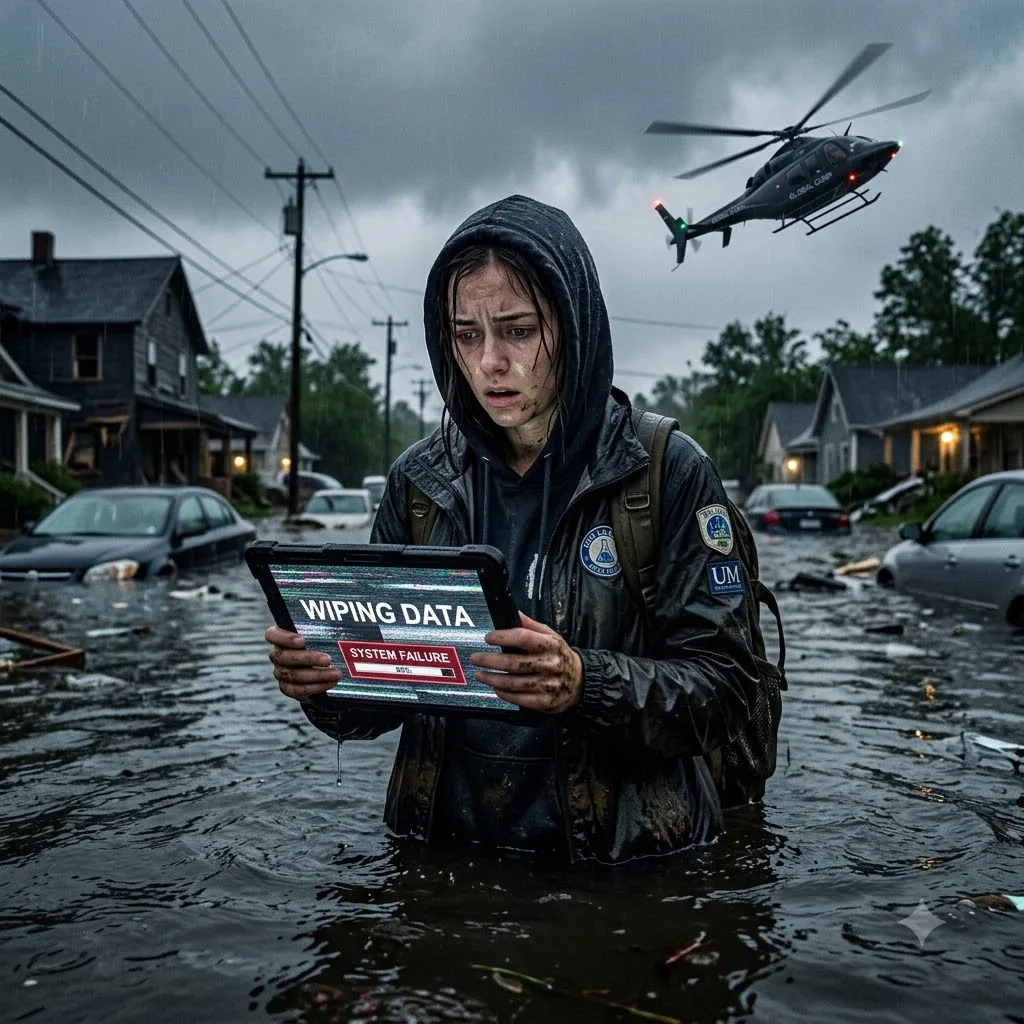
Mateo stood waist-deep in the stagnant, oil-slicked floodwater of NE 2nd Avenue when the screen of his university-issued tablet flashed red. He was mid-pull, muscles burning as he dragged a fifty-pound salinity sensor up from a submerged storm drain, but he froze when the digital prompt appeared.
*System Administrator has initiated a remote wipe.*
He dropped the heavy sensor back into the murky water with a massive splash. Frantic, he wiped his wet, neoprene-gloved hands on his chest waders and jammed his thumb against the cancel button. The glass screen ignored his desperate tapping. Line by line, three years of Little Haiti water quality data, the absolute foundation of his doctorate, dissolved into empty space.
The progress bar sprinted across the high-definition display. The file containing his primary field observations shrank from four gigabytes to zero bytes. His backup folders followed. Decrypted field notes, geographical maps of the saltwater intrusion, the soil degradation logs-all of it vanished into the cloud. Mateo slammed his thumb onto the hard power button, trying to force a shutdown to save whatever remained on the local drive. The device glowed brighter, locked in a remote override state, completely indifferent to his physical struggle. A final gray logo appeared on the screen, indicating a successful factory reset, before fading to absolute, irreversible black.
The total silence of the dead screen stood in harsh contrast to the chaotic reality surrounding him. The floodwater sloshed against his chest waders, thick with the stench of raw sewage, dead fish, and heavy ocean salt. The neighborhood of Little Haiti was drowning in yet another devastating king tide, a slow-motion disaster he had spent thirty-six months meticulously documenting. His fellowship depended entirely on this data. His mother’s rent depended on the fellowship stipend. Without those files, the university would cut his funding by the end of the week.
A rhythmic, heavy thumping rattled the corrugated metal roofs of the nearby corner stores. Mateo looked up, squinting against the blinding glare of the Florida sun reflecting off the water. A sleek, twin-engine helicopter banked aggressively low over the flooded intersection. Its dark, tinted windows offered no view of the passengers, but the silver logo painted on its underbelly was completely unmistakable. It was the crest of Vanguard Holdings. The development conglomerate was funding his entire research grant. The billionaire behind the company had insisted on mapping the structural integrity of the neighborhood, framing the massive grant as a philanthropic effort to save the community from rising sea levels.
The chopper’s powerful rotor wash kicked up a filthy mist from the flooded streets. Mateo shielded his face as the aircraft hovered momentarily over the block, its occupants getting a perfect, untouchable aerial view of the waterlogged homes and sinking businesses. Then, the machine pitched forward and accelerated toward the gleaming, dry high-rises of downtown Miami, leaving Mateo in its turbulent wake.
He waded toward the higher ground of the sidewalk, his heavy boots dragging against submerged debris. The fifty-pound sensor was still attached to the storm drain grate by a thick yellow tether. He seized the cable and hauled the metallic cylinder out of the muck. It was supposed to be transmitting live flow data back to the university servers. Instead, its green indicator light was dead. The lockout was not just on his tablet. They had bricked his hardware too.
Mateo reached the edge of the water, stepping onto a narrow patch of dry concrete near his parked truck. He stripped off his soaked gloves and pulled his personal cell phone from a waterproof pouch hanging around his neck. The screen was cracked, but it had a strong signal. He dialed his faculty advisor, Dr. Aris. The line rang exactly twice before clicking over to a disconnected tone. Mateo ended the call. He dialed the university IT emergency line. A pre-recorded voice informed him that his student ID was no longer recognized by the campus network.
A heavy, suffocating knot formed in his chest. His access had been systematically and intentionally severed. Someone had flipped a switch on his entire academic and financial existence. He threw his ruined equipment into the bed of his rusted Ford Ranger and slammed the tailgate shut. The metallic clang echoed down the deserted street.
He climbed into the cab, soaking his driver’s seat. He needed to get to the campus lab before they physicalized the lockout by clearing out his physical office. He turned the ignition key. The engine sputtered, caught, and roared to life. He threw the truck into gear, ready to force his way past the flooded street barricades.
A violent rap on his passenger-side window shattered his focus.
Mateo whipped his head around. A man in a pristine charcoal suit stood on the running board of his truck, completely unfazed by the foul water splashing just inches from his expensive leather shoes. The man held a silver briefcase in one hand. In the other, he held a laminated termination notice printed on heavy university letterhead, pressing the document flat against the wet glass.
Mateo stood waist-deep in the stagnant, oil-slicked floodwater of NE 2nd Avenue when the screen of his university-issued tablet flashed red. He was mid-pull, muscles burning as he dragged a fifty-pound salinity sensor up from a submerged storm drain, but he froze when the digital prompt appeared.
*System Administrator has initiated a remote wipe.*
He dropped the heavy sensor back into the murky water with a massive splash. Frantic, he wiped his wet, neoprene-gloved hands on his chest waders and jammed his thumb against the cancel button. The glass screen ignored his desperate tapping. Line by line, three years of Little Haiti water quality data, the absolute foundation of his doctorate, dissolved into empty space.
The progress bar sprinted across the high-definition display. The file containing his primary field observations shrank from four gigabytes to zero bytes. His backup folders followed. Decrypted field notes, geographical maps of the saltwater intrusion, the soil degradation logs-all of it vanished into the cloud. Mateo slammed his thumb onto the hard power button, trying to force a shutdown to save whatever remained on the local drive. The device glowed brighter, locked in a remote override state, completely indifferent to his physical struggle. A final gray logo appeared on the screen, indicating a successful factory reset, before fading to absolute, irreversible black.
The total silence of the dead screen stood in harsh contrast to the chaotic reality surrounding him. The floodwater sloshed against his chest waders, thick with the stench of raw sewage, dead fish, and heavy ocean salt. The neighborhood of Little Haiti was drowning in yet another devastating king tide, a slow-motion disaster he had spent thirty-six months meticulously documenting. His fellowship depended entirely on this data. His mother’s rent depended on the fellowship stipend. Without those files, the university would cut his funding by the end of the week.
A rhythmic, heavy thumping rattled the corrugated metal roofs of the nearby corner stores. Mateo looked up, squinting against the blinding glare of the Florida sun reflecting off the water. A sleek, twin-engine helicopter banked aggressively low over the flooded intersection. Its dark, tinted windows offered no view of the passengers, but the silver logo painted on its underbelly was completely unmistakable. It was the crest of Vanguard Holdings. The development conglomerate was funding his entire research grant. The billionaire behind the company had insisted on mapping the structural integrity of the neighborhood, framing the massive grant as a philanthropic effort to save the community from rising sea levels.
The chopper’s powerful rotor wash kicked up a filthy mist from the flooded streets. Mateo shielded his face as the aircraft hovered momentarily over the block, its occupants getting a perfect, untouchable aerial view of the waterlogged homes and sinking businesses. Then, the machine pitched forward and accelerated toward the gleaming, dry high-rises of downtown Miami, leaving Mateo in its turbulent wake.
He waded toward the higher ground of the sidewalk, his heavy boots dragging against submerged debris. The fifty-pound sensor was still attached to the storm drain grate by a thick yellow tether. He seized the cable and hauled the metallic cylinder out of the muck. It was supposed to be transmitting live flow data back to the university servers. Instead, its green indicator light was dead. The lockout was not just on his tablet. They had bricked his hardware too.
Mateo reached the edge of the water, stepping onto a narrow patch of dry concrete near his parked truck. He stripped off his soaked gloves and pulled his personal cell phone from a waterproof pouch hanging around his neck. The screen was cracked, but it had a strong signal. He dialed his faculty advisor, Dr. Aris. The line rang exactly twice before clicking over to a disconnected tone. Mateo ended the call. He dialed the university IT emergency line. A pre-recorded voice informed him that his student ID was no longer recognized by the campus network.
A heavy, suffocating knot formed in his chest. His access had been systematically and intentionally severed. Someone had flipped a switch on his entire academic and financial existence. He threw his ruined equipment into the bed of his rusted Ford Ranger and slammed the tailgate shut. The metallic clang echoed down the deserted street.
He climbed into the cab, soaking his driver’s seat. He needed to get to the campus lab before they physicalized the lockout by clearing out his physical office. He turned the ignition key. The engine sputtered, caught, and roared to life. He threw the truck into gear, ready to force his way past the flooded street barricades.
A violent rap on his passenger-side window shattered his focus.
Mateo whipped his head around. A man in a pristine charcoal suit stood on the running board of his truck, completely unfazed by the foul water splashing just inches from his expensive leather shoes. The man held a silver briefcase in one hand. In the other, he held a laminated termination notice printed on heavy university letterhead, pressing the document flat against the wet glass.