Story code: ST-000814
Part 1: The Defensive Posture
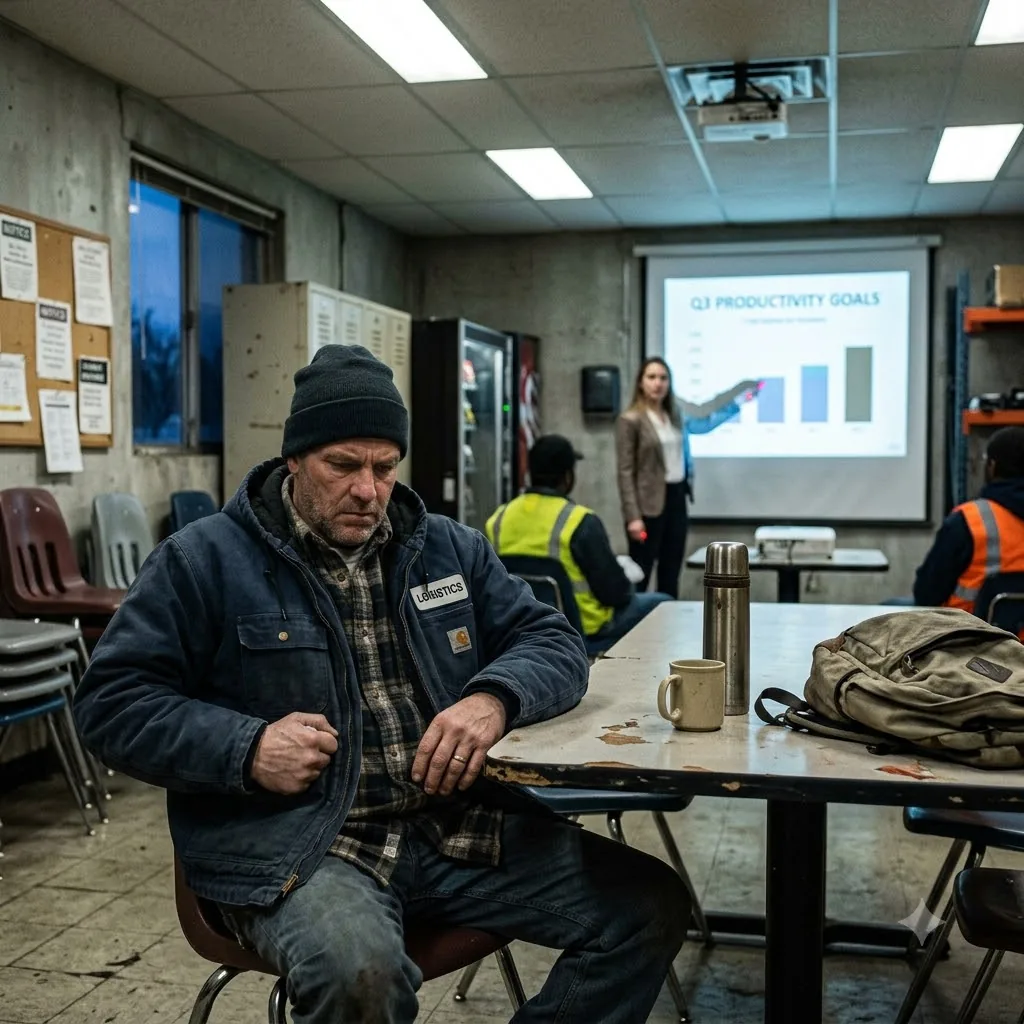
The fluorescent tubes in the breakroom ceiling buzzed with a sickly, relentless hum that made the six in the morning start time feel like an active punishment. Dean stared at a projection screen displaying the words ‘Deconstructing Systemic Inequities in the Workspace’ in a crisp, minimalist font. In the plastic chair next to him, Hector’s chin rested against his chest in a dead sleep, still wearing his steel-toed boots and heavy canvas coveralls from the graveyard shift. At the front of the room, a corporate trainer named Valerie paced in spotless beige slacks, her laser pointer dancing across a bright, sanitized pie chart detailing microaggressions.
Dean did not care about the pie chart or the lecture. His right hand was buried deep in the pocket of his own work jacket, his knuckles white as he crushed a torn, heavy paper envelope into a tighter and tighter ball.
He had found it next to the warehouse manager’s office door ten minutes before the seminar began. It had been resting on the scuffed linoleum, dropped in an obvious hurry. The heavy woven texture of the paper was unmistakable, and the jagged tear at the flap revealed just enough of the contents to turn Dean’s stomach into a block of ice. Now, sitting in the blinding light of the mandatory HR training, the thick edges of the paper dug into his palm.
“Notice the physical manifestations of defensive posturing,” Valerie said, her voice projecting with practiced, theatrical empathy. She stepped away from the screen and walked down the center aisle of the cramped breakroom. “When we are confronted with our own privilege, the body reacts. Shoulders hunch. Arms cross. We close ourselves off to the dialogue.”
Dean kept his eyes on the cinderblock wall just behind her head. The envelope’s sharp corners scraped the thick calluses on his fingers. He imagined the exact angle he would need to march upstairs, kick open the manager’s door, and throw the crumpled evidence onto the polished mahogany desk. The sheer rage vibrating through his forearms made it difficult to draw a full breath.
“Take our friend right here,” Valerie said.
Dean blinked. Valerie was standing a few inches from his left shoulder. She smelled of expensive vanilla lotion and dry shampoo, a stark contrast to the scent of industrial solvent, sweat, and stale coffee that clung to the rest of the room. Hector jerked awake at the sudden proximity, his elbow knocking sharply into Dean’s ribs.
“I am talking about the physical barrier you are creating,” Valerie said, directing her perfectly manicured hand toward Dean. “Your hand is buried in your pocket. Your jaw is clenched. You are exhibiting textbook fragility. This is a safe space, but you are bringing a hostile, defensive energy into our shared ecosystem.”
Dean did not pull his hand out of his pocket. If he took his hand out, the torn envelope would come with it. He simply stared at her, letting the silence stretch out over the hum of the fluorescent lights.
“I am just tired,” Dean said. His voice came out flat, low, and completely devoid of the collaborative warmth Valerie was demanding.
Valerie sighed. It was a long, performed sound of deep disappointment. She turned to the rest of the room, addressing the twenty exhausted laborers who were struggling to keep their eyes open under the harsh lights. “This is exactly what the literature describes. The refusal to engage. The insistence on shifting the blame to physical circumstances rather than doing the required emotional labor. Notice how his posture remains rigidly defensive.”
She turned back to Dean. She leaned in closer, invading his personal space, her beige slacks brushing against the grease-stained knee of his work pants.
“I need you to participate,” Valerie said, her voice dropping to a harsh, instructional whisper that carried across the quiet room anyway. “I need you to uncross your legs, take your hand out of your pocket, and show me that you are open to the work. Remove the physical barriers. Right now.”
Dean’s grip on the envelope tightened until his fingernails bit into his own flesh. He calculated the cost of standing up. He calculated the cost of walking out the heavy metal doors at the back of the room. He calculated the absolute destruction that would follow if the contents of his pocket saw the light of day before he had a chance to secure the proof.
“My hand stays right where it is,” Dean said.
Valerie’s expression tightened, the mask of academic empathy slipping to reveal cold, bureaucratic fury. She did not back away. Instead, she reached out with alarming speed, her fingers closing tightly around Dean’s wrist inside the fabric of his jacket pocket.
“We do not tolerate defiance disguised as discomfort,” she said, jerking his arm violently upward.
The fabric of his jacket snagged. The heavy, crumpled envelope shifted against the worn lining, slipping upward as Valerie dragged his clenched fist out into the open air.
The fluorescent tubes in the breakroom ceiling buzzed with a sickly, relentless hum that made the six in the morning start time feel like an active punishment. Dean stared at a projection screen displaying the words ‘Deconstructing Systemic Inequities in the Workspace’ in a crisp, minimalist font. In the plastic chair next to him, Hector’s chin rested against his chest in a dead sleep, still wearing his steel-toed boots and heavy canvas coveralls from the graveyard shift. At the front of the room, a corporate trainer named Valerie paced in spotless beige slacks, her laser pointer dancing across a bright, sanitized pie chart detailing microaggressions.
Dean did not care about the pie chart or the lecture. His right hand was buried deep in the pocket of his own work jacket, his knuckles white as he crushed a torn, heavy paper envelope into a tighter and tighter ball.
He had found it next to the warehouse manager’s office door ten minutes before the seminar began. It had been resting on the scuffed linoleum, dropped in an obvious hurry. The heavy woven texture of the paper was unmistakable, and the jagged tear at the flap revealed just enough of the contents to turn Dean’s stomach into a block of ice. Now, sitting in the blinding light of the mandatory HR training, the thick edges of the paper dug into his palm.
“Notice the physical manifestations of defensive posturing,” Valerie said, her voice projecting with practiced, theatrical empathy. She stepped away from the screen and walked down the center aisle of the cramped breakroom. “When we are confronted with our own privilege, the body reacts. Shoulders hunch. Arms cross. We close ourselves off to the dialogue.”
Dean kept his eyes on the cinderblock wall just behind her head. The envelope’s sharp corners scraped the thick calluses on his fingers. He imagined the exact angle he would need to march upstairs, kick open the manager’s door, and throw the crumpled evidence onto the polished mahogany desk. The sheer rage vibrating through his forearms made it difficult to draw a full breath.
“Take our friend right here,” Valerie said.
Dean blinked. Valerie was standing a few inches from his left shoulder. She smelled of expensive vanilla lotion and dry shampoo, a stark contrast to the scent of industrial solvent, sweat, and stale coffee that clung to the rest of the room. Hector jerked awake at the sudden proximity, his elbow knocking sharply into Dean’s ribs.
“I am talking about the physical barrier you are creating,” Valerie said, directing her perfectly manicured hand toward Dean. “Your hand is buried in your pocket. Your jaw is clenched. You are exhibiting textbook fragility. This is a safe space, but you are bringing a hostile, defensive energy into our shared ecosystem.”
Dean did not pull his hand out of his pocket. If he took his hand out, the torn envelope would come with it. He simply stared at her, letting the silence stretch out over the hum of the fluorescent lights.
“I am just tired,” Dean said. His voice came out flat, low, and completely devoid of the collaborative warmth Valerie was demanding.
Valerie sighed. It was a long, performed sound of deep disappointment. She turned to the rest of the room, addressing the twenty exhausted laborers who were struggling to keep their eyes open under the harsh lights. “This is exactly what the literature describes. The refusal to engage. The insistence on shifting the blame to physical circumstances rather than doing the required emotional labor. Notice how his posture remains rigidly defensive.”
She turned back to Dean. She leaned in closer, invading his personal space, her beige slacks brushing against the grease-stained knee of his work pants.
“I need you to participate,” Valerie said, her voice dropping to a harsh, instructional whisper that carried across the quiet room anyway. “I need you to uncross your legs, take your hand out of your pocket, and show me that you are open to the work. Remove the physical barriers. Right now.”
Dean’s grip on the envelope tightened until his fingernails bit into his own flesh. He calculated the cost of standing up. He calculated the cost of walking out the heavy metal doors at the back of the room. He calculated the absolute destruction that would follow if the contents of his pocket saw the light of day before he had a chance to secure the proof.
“My hand stays right where it is,” Dean said.
Valerie’s expression tightened, the mask of academic empathy slipping to reveal cold, bureaucratic fury. She did not back away. Instead, she reached out with alarming speed, her fingers closing tightly around Dean’s wrist inside the fabric of his jacket pocket.
“We do not tolerate defiance disguised as discomfort,” she said, jerking his arm violently upward.
The fabric of his jacket snagged. The heavy, crumpled envelope shifted against the worn lining, slipping upward as Valerie dragged his clenched fist out into the open air.