Story code: ST-000818
Part 1: The Driveway Load
Mark watched the red taillights of Dave’s sedan vanish around the corner of Elm Street, leaving his driveway entirely empty for the first time all evening. The neighborhood was silent, wrapped in the deep quiet of a Tuesday night. Before his automatic garage door could finish its heavy mechanical descent, the phone in his hand vibrated with a long, continuous buzz. The screen displayed an urgent alert from the Oakridge Homeowners Association portal. He tapped the notification, expecting a generic reminder about trash bin placement. Instead, he found a formal citation stamped with a bold red header.
The violation read ‘Excessive Driveway Load.’ The penalty was listed at exactly five hundred dollars.
Mark stared at the digital document. Dave and Sarah from the corporate accounting division had parked on his concrete driveway for barely two hours. They had come over to finalize the quarterly projections over a few boxes of takeout pizza. Three standard sedans parked in a suburban driveway did not constitute a structural violation or an eyesore. He scrolled down the document with his thumb, looking for a photo or a description of the infraction. There was only a timestamp. The fine had been issued just three minutes ago. Someone on the local HOA board had to be watching his property the exact moment his coworkers backed out into the street.
Five hundred dollars was a heavy hit for a Tuesday night. He locked the front door, throwing the deadbolt with a sharp metallic clack, and dropped his keys onto the entryway table. He needed to draft a formal appeal to the board before the late fees could compound. He walked down the short hallway into his home office, shedding his suit jacket over the back of an armchair. He tapped the spacebar on his company-issued laptop to wake the system, intending to pull up the neighborhood bylaws he had saved on his local hard drive.
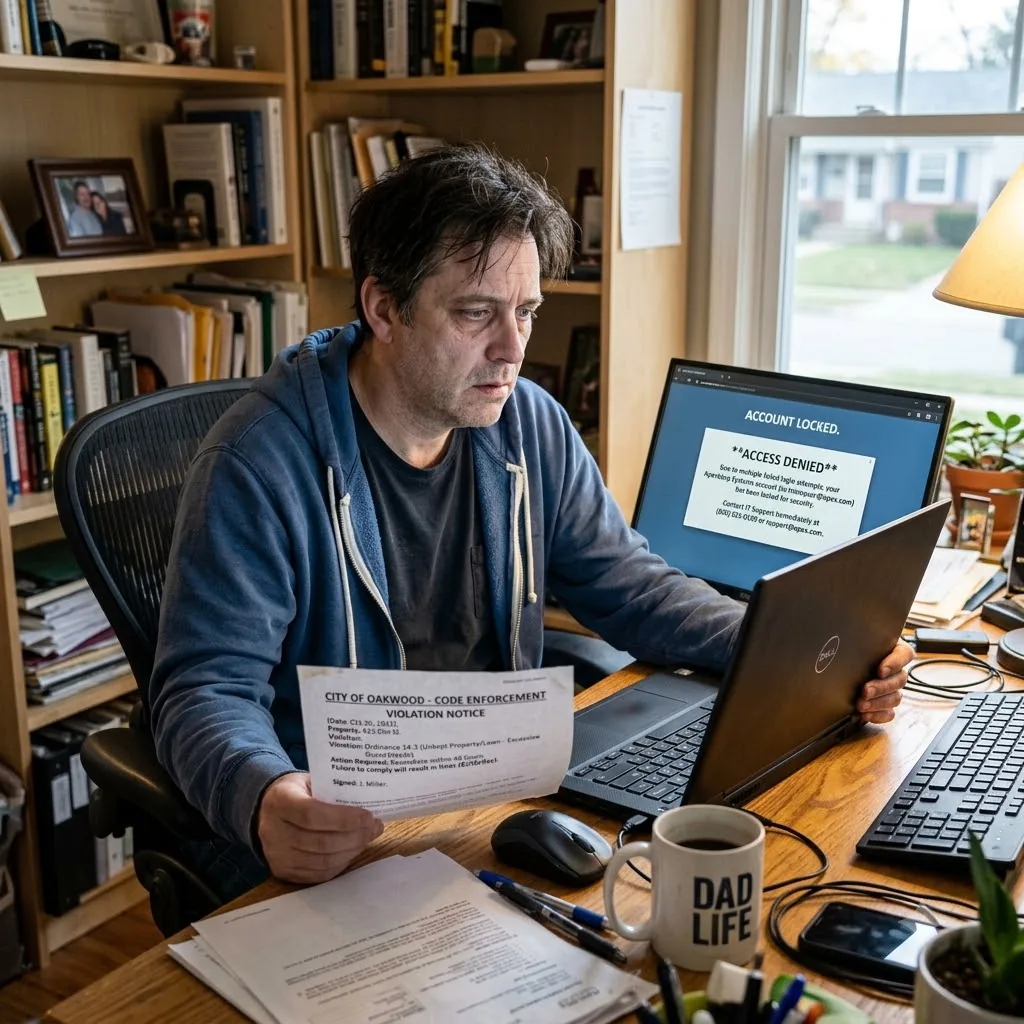
The monitor flared to life, casting a harsh bluish glow across the dark room. The corporate single sign-on system authenticated his credentials automatically. Instead of loading his familiar desktop environment and his spreadsheets, the screen snapped to a solid gray background. A massive corporate padlock icon sat dead center, blocking all system access.
Beneath the security icon, a stark white dialog box demanded immediate attention. The header identified it as a mandatory HR Wellness Module, initiated by Diane, the senior compliance officer in Human Resources. Mark moved his mouse to the corner of the window. There was no exit button to close it. The ‘Skip for Now’ button, usually available for these quarterly training exercises, was entirely grayed out. He clicked the desktop behind the window and pounded the escape key multiple times. The system refused to yield. His entire machine was held hostage.
He clicked the single blue button labeled ‘Begin Assessment’ just to clear the obstruction. The screen transitioned to a sterile, minimalist interface featuring a single text prompt. Mark leaned closer to the monitor, resting his hands on the edge of the desk.
The text on the screen read: “Financial Wellness Check. Employees experiencing unexpected neighborhood penalties of five hundred dollars are statistically more likely to demonstrate reduced workplace productivity and elevated stress. Please detail your exact payment strategy for the ‘Excessive Driveway Load’ citation below to unlock your workstation.”
A blinking cursor waited in the empty text box beneath the prompt.
Mark stopped breathing. He slowly looked away from the glowing monitor, scanning the shadowed corners of his home office. The HOA notice had arrived on his personal phone just four minutes ago. It was a completely private neighborhood matter. His corporate HR department was located in a windowless business park three states away. There was no physical or digital connection between his local homeowners association and the company payroll system.
He picked up his phone and opened the HOA email again, holding it up next to the monitor. He compared the timestamp of the citation to the HR module generation time displayed in the top right corner of his screen. They were identical down to the exact second.
He placed his fingers on the keyboard and typed a single word into the HR box, testing the system’s boundaries. He wrote ‘savings’ and hit enter.
The white box instantly flashed a brilliant, angry red. A new message replaced the prompt, stating that vague responses were unacceptable for citation resolution. The system demanded the last four digits of the routing number he intended to use for the five-hundred-dollar transfer.
Mark pushed his rolling chair back from the desk. The plastic wheels caught loudly on the hardwood floor, echoing in the quiet house. The screen refreshed again on its own before he could stand up.
The new prompt did not ask for a routing number. The text announced that Diane from Human Resources was initiating a live, mandatory screen-share to assist with his financial compliance. A tiny green light next to his laptop webcam flickered to life.
Mark watched the red taillights of Dave’s sedan vanish around the corner of Elm Street, leaving his driveway entirely empty for the first time all evening. The neighborhood was silent, wrapped in the deep quiet of a Tuesday night. Before his automatic garage door could finish its heavy mechanical descent, the phone in his hand vibrated with a long, continuous buzz. The screen displayed an urgent alert from the Oakridge Homeowners Association portal. He tapped the notification, expecting a generic reminder about trash bin placement. Instead, he found a formal citation stamped with a bold red header.
The violation read ‘Excessive Driveway Load.’ The penalty was listed at exactly five hundred dollars.
Mark stared at the digital document. Dave and Sarah from the corporate accounting division had parked on his concrete driveway for barely two hours. They had come over to finalize the quarterly projections over a few boxes of takeout pizza. Three standard sedans parked in a suburban driveway did not constitute a structural violation or an eyesore. He scrolled down the document with his thumb, looking for a photo or a description of the infraction. There was only a timestamp. The fine had been issued just three minutes ago. Someone on the local HOA board had to be watching his property the exact moment his coworkers backed out into the street.
Five hundred dollars was a heavy hit for a Tuesday night. He locked the front door, throwing the deadbolt with a sharp metallic clack, and dropped his keys onto the entryway table. He needed to draft a formal appeal to the board before the late fees could compound. He walked down the short hallway into his home office, shedding his suit jacket over the back of an armchair. He tapped the spacebar on his company-issued laptop to wake the system, intending to pull up the neighborhood bylaws he had saved on his local hard drive.
The monitor flared to life, casting a harsh bluish glow across the dark room. The corporate single sign-on system authenticated his credentials automatically. Instead of loading his familiar desktop environment and his spreadsheets, the screen snapped to a solid gray background. A massive corporate padlock icon sat dead center, blocking all system access.
Beneath the security icon, a stark white dialog box demanded immediate attention. The header identified it as a mandatory HR Wellness Module, initiated by Diane, the senior compliance officer in Human Resources. Mark moved his mouse to the corner of the window. There was no exit button to close it. The ‘Skip for Now’ button, usually available for these quarterly training exercises, was entirely grayed out. He clicked the desktop behind the window and pounded the escape key multiple times. The system refused to yield. His entire machine was held hostage.
He clicked the single blue button labeled ‘Begin Assessment’ just to clear the obstruction. The screen transitioned to a sterile, minimalist interface featuring a single text prompt. Mark leaned closer to the monitor, resting his hands on the edge of the desk.
The text on the screen read: “Financial Wellness Check. Employees experiencing unexpected neighborhood penalties of five hundred dollars are statistically more likely to demonstrate reduced workplace productivity and elevated stress. Please detail your exact payment strategy for the ‘Excessive Driveway Load’ citation below to unlock your workstation.”
A blinking cursor waited in the empty text box beneath the prompt.
Mark stopped breathing. He slowly looked away from the glowing monitor, scanning the shadowed corners of his home office. The HOA notice had arrived on his personal phone just four minutes ago. It was a completely private neighborhood matter. His corporate HR department was located in a windowless business park three states away. There was no physical or digital connection between his local homeowners association and the company payroll system.
He picked up his phone and opened the HOA email again, holding it up next to the monitor. He compared the timestamp of the citation to the HR module generation time displayed in the top right corner of his screen. They were identical down to the exact second.
He placed his fingers on the keyboard and typed a single word into the HR box, testing the system’s boundaries. He wrote ‘savings’ and hit enter.
The white box instantly flashed a brilliant, angry red. A new message replaced the prompt, stating that vague responses were unacceptable for citation resolution. The system demanded the last four digits of the routing number he intended to use for the five-hundred-dollar transfer.
Mark pushed his rolling chair back from the desk. The plastic wheels caught loudly on the hardwood floor, echoing in the quiet house. The screen refreshed again on its own before he could stand up.
The new prompt did not ask for a routing number. The text announced that Diane from Human Resources was initiating a live, mandatory screen-share to assist with his financial compliance. A tiny green light next to his laptop webcam flickered to life.