Story code: ST-000818
Part 2: The Wellness Check
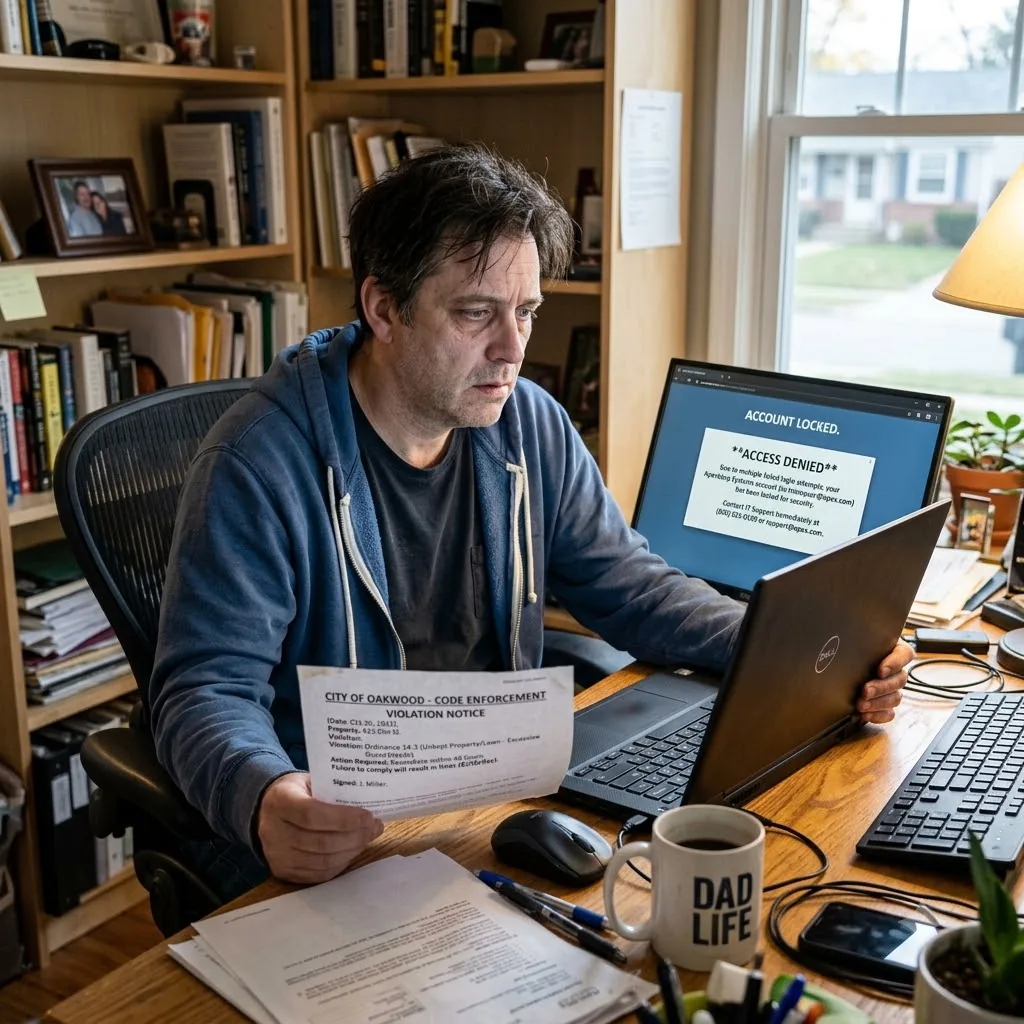
Mark stared at the glowing green dot. He reached out and pressed his thumb flat against the laptop camera lens. The cold glass was a small comfort against the sudden spike of his pulse.
“Mark, covering the visual sensor is a violation of the remote wellness policy,” a voice chirped from the laptop speakers. It was Diane. Her tone was artificially bright, the exact cadence of a pre-recorded customer service prompt, but the words were clearly live. “Please remove your finger so we can proceed with your financial compliance audit.”
Mark kept his thumb pressed hard against the bezel. “Diane? It’s nine-thirty at night. I’m off the clock.”
“Wellness is a round-the-clock corporate initiative,” Diane replied smoothly. A faint sound of typing clicked through the audio feed. “Particularly when an employee’s domestic liabilities threaten their operational stability. The green light indicates your microphone is active, but I need visual confirmation of your identity before we can discuss the five-hundred-dollar penalty.”
“How do you know about that?” Mark asked, his voice tight. “The HOA notice hit my personal phone five minutes ago. It has nothing to do with this company.”
“Remove your thumb, Mark, or I will be forced to log a ‘Non-Compliant/Hostile’ flag on your quarterly review.”
Mark exhaled a shaky breath and pulled his hand back. The screen flickered, replacing the padlock icon with a split-screen video feed. Diane sat in a sterile, white-walled cubicle, wearing a headset. She was smiling, but her eyes were fixed on a monitor off-screen, rapidly scanning data he couldn’t see.
“Thank you,” Diane said. “To answer your question, Oakridge Homeowners Association recently migrated to the Synergy Community Management platform. As you should have read in last week’s enterprise newsletter, our parent conglomerate acquired Synergy. Data silos are inefficient. When an employee incurs a severe local penalty, our system flags the financial instability as an internal risk factor.”
Mark stared at her pixelated face. “It’s a driveway fine. It’s not a severe penalty. And it’s definitely not a corporate risk factor.”
“Any unsanctioned off-site gathering that results in municipal or community citations is a corporate risk factor,” Diane countered, her smile never wavering. “Especially when that gathering involves Dave from Accounts Payable and Sarah from Quarterly Forecasting. You were discussing company projections on unzoned, uninsured residential property, weren’t you?”
A cold knot formed in Mark’s stomach. She wasn’t just checking on his ability to pay. She was interrogating him.
“We had pizza,” Mark said carefully, remembering to keep his face neutral for the camera. “It was just dinner.”
“Dinner,” Diane repeated, typing rapidly. “So you deny that corporate materials were discussed? Because if you deny it, Dave and Sarah’s presence constitutes a breach of the fraternization limits outlined in Section 8 of the employee handbook. If you confirm it was a business meeting, however, you have operated an unauthorized branch office, exposing the company to zoning litigation from the Oakridge HOA.”
Mark swallowed hard. He was trapped in a logic loop. She was building a paper trail, trying to force him to admit to a policy violation either way. If he said it was social, he violated fraternization rules. If he said it was work, he was operating an illegal branch office and brought the five-hundred-dollar fine onto the company’s liability ledger. They were trying to manufacture a reason to terminate him for cause, or force him to indemnify them.
“I’m not answering these questions without a union rep or HR advocate,” Mark said, leaning back from the desk.
“I am your HR advocate, Mark,” Diane said, looking directly into the lens for the first time. “I am here to protect your wellness. And right now, your financial wellness requires you to prove you can absorb this penalty without resorting to corporate embezzlement. The statistics on desperate employees are quite clear.”
“I’m not going to embezzle anything!” Mark raised his voice, the absurdity of the accusation breaking his restraint. “It’s five hundred dollars!”
“Then prove it,” Diane said. “Share your screen. Open your primary banking portal. Show me the routing number and the available balance. Once I verify that you possess the liquid capital to clear the Oakridge citation, I can close this wellness check.”
“You want me to log into my personal bank account while you watch?”
“It is a mandatory compliance step,” Diane said. “If you refuse, I will have to assume you are financially insolvent. Insolvent employees are an immediate security risk. Your system access will be permanently revoked, and corporate security will be dispatched to retrieve company hardware.”
Mark looked at his laptop. All of his work for the last three years, his upcoming quarterly presentation, his stock option vesting schedule-everything was tied to this machine and the network it connected to. If she locked him out, he was effectively fired.
Before he could argue further, a new document popped up over Diane’s video feed. It was a digital authorization form, dense with legal text.
“I have pushed a payroll deduction agreement to your desktop,” Diane said, her voice dropping the cheerful customer service tone entirely, replaced by a flat, authoritative clip. “Since you refuse to verify external funds, the company will magnanimously settle the Oakridge citation on your behalf to clear the corporate liability. We will simply garnish the five hundred dollars, plus a standard two-hundred-dollar administrative recovery fee, from your next paycheck. You have sixty seconds to click ‘Agree’.”
A large red timer appeared at the top of the document. It started counting down from sixty.
“Seven hundred dollars?” Mark gripped the edge of his desk. “You can’t do that. I haven’t even appealed the HOA fine yet!”
“Fifty seconds, Mark,” Diane said, her eyes already tracking back to her other monitor, dismissing him. “Refusal to sign is considered voluntary resignation.”
The red numbers ticked down, flashing brightly in the dark office.