Story code: ST-000838
Part 2: The Dead Line
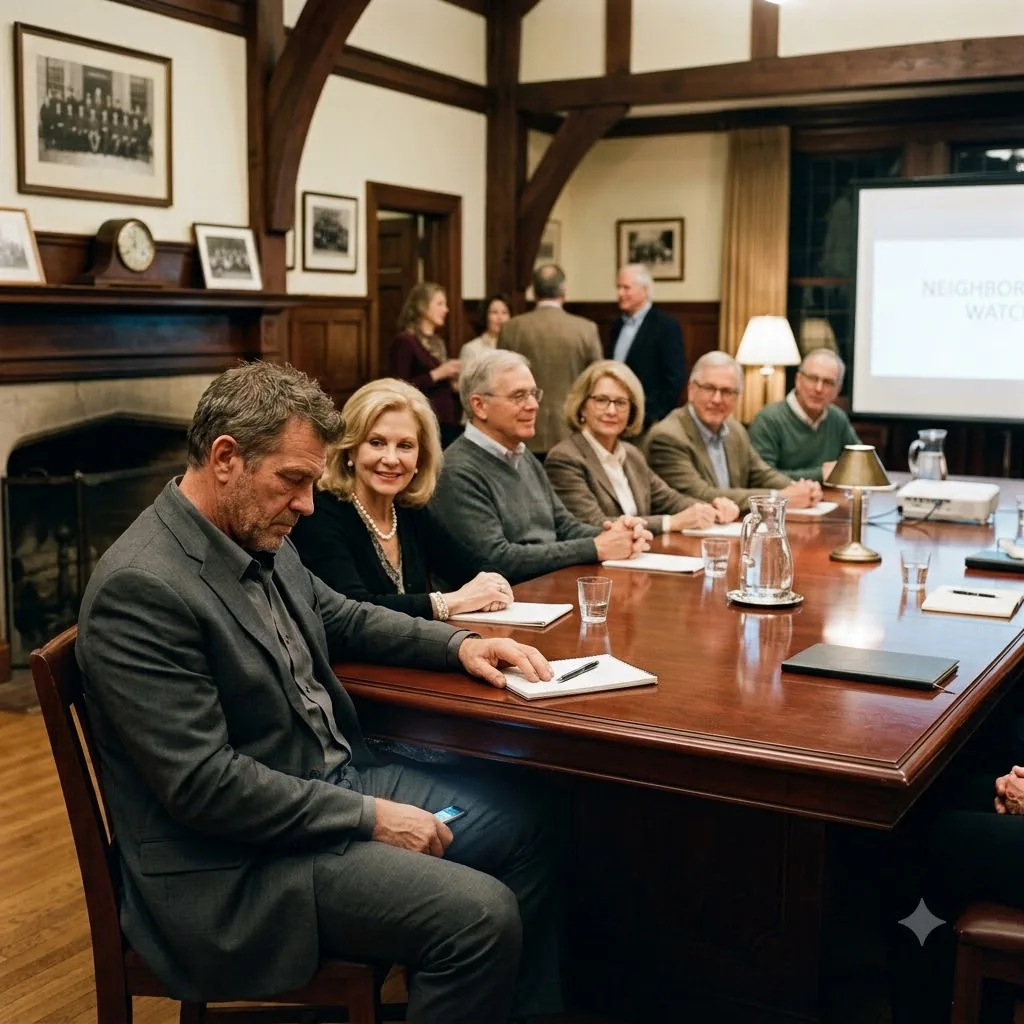
“Is there a problem, Marcus?” The woman at the head of the table froze, her pastel cardigan bunching at the shoulders as she stared at him. The screech of the chair still hung in the sterile air of the conference room, silencing the murmurs of the heritage board. Every eye turned to him, assessing, judging, waiting for the facade of the reformed community leader to crack.
Marcus forced his jaw to unclench. He kept his phone pinned flat against his thigh, screen down to hide the lethal broadcast playing in his hand. “My apologies, Mrs. Higgins. A pipe just burst at our temporary facility on 4th Street. Water is flooding the main electrical room. I have to shut off the mains before we have a catastrophic fire.”
Mrs. Higgins frowned, her silver pen hovering over her notepad. “Well, surely someone else can handle maintenance? We are in the middle of a crucial zoning discussion.”
“I’m the only one with the keys to the utility closet,” Marcus lied smoothly. He stood up, buttoning his suit jacket with a steady, practiced hand. “I appreciate your time. I will have my assistant email the revised architectural mockups for the shelter in the morning.”
He didn’t wait for her permission to leave. He walked out with measured, deliberate steps, resisting the overwhelming biological urge to sprint. If he ran, they would see a criminal fleeing a scene. The moment the heavy mahogany door clicked shut behind him, Marcus broke into a dead sprint.
He hit the stairwell, his thumb mashing the screen of his phone to pull up Trey’s contact. He pressed call. It went straight to voicemail. Trey was using his phone’s camera for the live stream; he was swiping away the incoming calls to keep the broadcast alive.
Marcus burst into the parking garage, the damp concrete echoing with his rapid footsteps. He pulled up the Instagram feed again as he sprinted toward his beat-up sedan. The viewer count at the top of the screen had climbed from forty to over three hundred. It was catching the algorithm. People were actively tagging the Eastside crew in the comments, baiting them, stoking a digital fire that was about to have real-world casualties.
On the screen, Trey was still pacing in front of the chain-link fence, the gun now tucked loosely back into his waistband, though the matte-black grip was blatantly visible. He was shouting into the camera. Marcus turned the volume up just one notch, pressing the phone to his ear as he unlocked his car.
“-think you run the south lots? Nah, this is our dirt now!” Trey’s voice was reedy, pitching up with synthetic adrenaline. “We building a fortress right here! Come see me! Come see me!”
Marcus slammed the driver’s side door, throwing the car into gear. His tires chirped against the slick garage floor. He threw the phone onto the passenger seat, leaving the stream running so he could monitor the background. The abandoned textile mill was a ten-minute drive in normal traffic. Marcus had maybe four minutes before someone answered Trey’s challenge.
His dashboard display lit up with an incoming call. It wasn’t Trey. The caller ID flashed Silas.
Marcus cursed, gripping the steering wheel until his knuckles turned white. Silas was the shot-caller for the Eastside boys. He was an older, calculating man who respected the neighborhood peace treaty because it was good for business, but he would absolutely not tolerate public disrespect, especially not on a live broadcast.
Marcus tapped the accept button on his steering wheel. “Silas. I’m handling it.”
“You’re handling it?” Silas’s voice was a low, dangerous rumble over the car’s speakers. “Your pup is standing on the border line waving a Glock and claiming the mill. My phone is blowing up, Marcus. My young guys are getting into their cars right now. You told me your outreach program was neutral ground.”
“It is neutral,” Marcus said, swerving violently around a slow-moving delivery truck. He ran a yellow light, his eyes darting between the dark road and the illuminated stream bouncing on the passenger seat. “Trey is nineteen. He’s stupid, he’s scared, and he’s trying to impress people on the internet who don’t care if he dies. I am three minutes away. Call your boys off.”
“You know I can’t do that,” Silas replied, the calm in his tone far worse than anger. “If I tell them to stand down after a public call-out, I look weak. The treaty looks weak. They’re going to make an example out of him, Marcus. And if you get in the way, they’ll drop you too. You got two minutes before they pull up.”
The line went dead.
Marcus floored the accelerator, the engine whining as he merged onto the viaduct that connected the manicured heritage district to the crumbling industrial sector. The pristine streetlights gave way to shattered bulbs and creeping shadows. He glanced at the phone again.
On the stream, Trey had stopped pacing. The boy was looking off-camera into the darkness, his eyes suddenly wide. The manufactured bravado evaporated from his features, leaving only the terrified teenager Marcus had pulled off the corner a month ago. The audio picked up the deep, aggressive roar of a modified exhaust engine echoing off the brick walls of the mill.
“Yeah, pull up then!” Trey yelled, his voice cracking. His hand hovered over the grip of the gun at his waist. He was terrified. He was about to draw the weapon out of pure, instinctual panic.
Marcus crested the viaduct. He could see the jagged silhouette of the textile mill against the night sky, barely a quarter-mile away. But between him and the mill lay the old industrial rail crossing.
The warning lights began to flash violently in the darkness. The red and white striped barrier arms started their slow, mechanical descent.
“No, no, no,” Marcus chanted, laying on the horn as if noise could force the gates back up.
He wasn’t going to make it. A massive freight train was rumbling down the tracks, its horn blasting a deafening warning that vibrated through the floorboards of Marcus’s car. He slammed on the brakes, the sedan skidding to a violent halt just inches from the lowered crossing gate.
Marcus snatched the phone from the passenger seat. On the screen, a pair of headlights washed over Trey, blinding the camera lens. Car doors slammed. Voices shouted, heavy and sharp.
Trey scrambled backward toward the chain-link fence, pulling the gun from his waistband, his hand shaking so violently the camera blurred.
The deafening clatter of the freight train roared past Marcus’s windshield, a relentless wall of steel entirely blocking his path to the mill, while the first gunshot cracked through his phone’s speaker.