Story code: ST-000870
Part 1: The Packaging
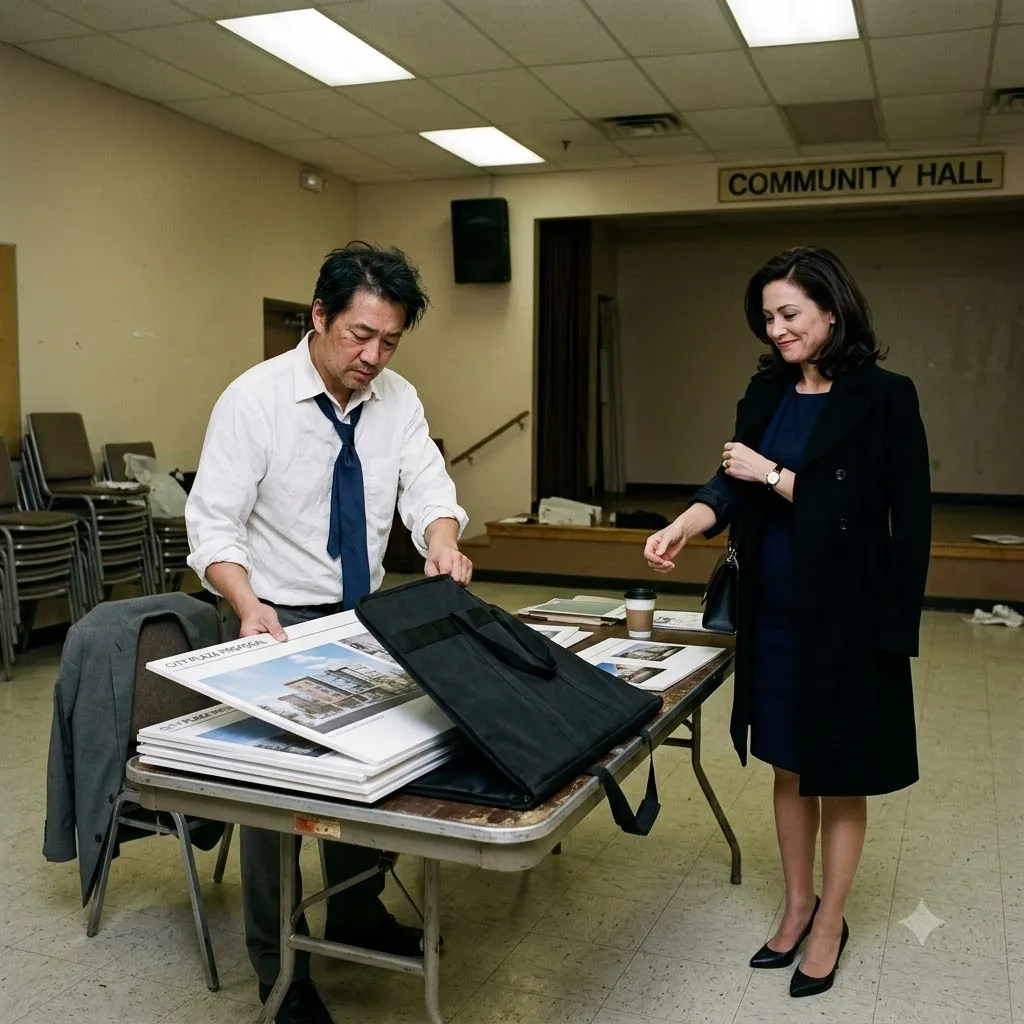
The fluorescent lights of the recreation center gymnasium hummed a flat, relentless note as Marcus snapped the roof off the scale model of the Haven Street Shelter. He placed the balsa wood and architectural foam carefully into his padded carrying case, his movements slow and deliberate so he would not break the fragile cross-beams. Across the scarred folding table, Dr. Aris Thorne adjusted the lapels of her cream-colored blazer. She had remained perfectly immaculate through three hours of neighborhood shouting, while Marcus felt entirely hollowed out.
“It is a harsh outcome, Marcus, but a necessary learning moment,” Aris said. Her voice was pitched at the precise frequency of professional compassion she taught in her executive presence seminars. She tapped a manicured fingernail against the edge of the table. “The feedback from the zoning board was clear tonight. It is not the concept of transitional housing they rejected. It is the packaging. Your presentation relied entirely on a data-driven tone that read as cold.”
Marcus wrapped a miniature solar array in tissue paper. He needed Aris to sign off on his final evaluation for the senior partner track at the firm. Without her certification of his leadership empathy and cultural fit, his path to the C-suite was entirely dead.
“I presented the environmental impact studies they requested,” Marcus said, keeping his voice strictly level, ensuring no trace of frustration leaked through. “I showed them the traffic flow models and the independent parking assessments. I answered their objections with the exact metrics the city requires.”
“And in doing so, you deployed an aggressive leadership energy,” Aris replied smoothly. She leaned forward, offering a sympathetic tilt of her head. “You cornered them with facts. You did not meet them in their emotional space. The neighborhood association felt bullied by your expertise. To lead at the executive level, you must master softness. You must make people feel safe, even when they are objectively wrong.”
Marcus stared at the miniature green spaces he had painstakingly glued to the foam board. He picked up the tiny wire trees that represented the community garden. For two years, this firm-sponsored initiative had been his lifeblood. Tonight, it had been dismantled by a sudden, anonymous environmental injunction filed just hours before the meeting. The injunction claimed the shelter would disrupt a protected drainage easement, a technicality so obscure even the city planners had missed it. The neighborhood board had eagerly seized on that anonymous filing to vote the project down.
He placed the final section of the model into the case and snapped the heavy metal latches shut. He breathed in the smell of industrial floor wax and stale coffee that lingered in the empty hall.
“I will review the recording of my presentation,” Marcus said, choosing the safest possible corporate response. “I will look for areas where my tone created friction for the residents.”
“That is the growth mindset we are looking for,” Aris said, smiling thinly. “Your ambition is a powerful engine, Marcus. But raw ambition without polish reads as threatening to stakeholders. We can unpack your aggressive triggers in our one-on-one session on Thursday morning.”
She reached for her oversized leather designer tote resting on the edge of the metal folding chair. Her movement was brisk, a sharp pivot toward the exit doors as if eager to leave the gymnasium and the working-class neighborhood behind entirely. The heavy leather strap caught on the exposed metal hinge of the chair back. The weight of the bag pulled the chair off balance. The entire assembly tipped sideways, crashing to the floor with a clatter that echoed sharply off the high cinderblock walls.
Marcus lunged across the space between them to catch it. His hand grabbed the leather strap a second too late. The bag hit the floor, spilling its contents across the scuffed hardwood. A silver fountain pen, a leather-bound planner, a compact mirror, and a thick blue legal folder slid out from the main compartment.
The blue folder hit the ground at an angle, sliding across the polished floorboards and fanning open.
Marcus knelt to gather the scattered items. He reached for the blue folder first, intending to slide the papers back inside. The harsh overhead light caught the bold, capitalized black text stamped across the top page of the document. It was a formal legal filing. He recognized the specific formatting immediately, the exact layout that had been projected onto the screen during the brutal three-hour meeting he had just survived.
It was the environmental injunction. The anonymous filing regarding the Haven Street drainage easement. The exact document that had given the zoning board the legal ammunition to kill his project.
Marcus stopped moving. His fingers hovered millimeters over the heavy cotton paper. The document was not a copy handed out at the meeting. It was an original printout, bearing a wet-ink notary stamp from a local law office. A yellow sticky note was affixed to the top right corner, bearing Aris’s distinct, angular handwriting. The note contained a single line of instruction directing a paralegal to file the motion before three o’clock.
The gymnasium felt suddenly devoid of air. The hum of the fluorescent lights faded into a heavy, suffocating silence. Marcus kept his eyes locked on the wet-ink stamp and the yellow square of paper, his hand frozen mid-reach.
A manicured hand thrust down into his field of vision. Aris’s fingers clamped tight over the edge of the blue folder.
The fluorescent lights of the recreation center gymnasium hummed a flat, relentless note as Marcus snapped the roof off the scale model of the Haven Street Shelter. He placed the balsa wood and architectural foam carefully into his padded carrying case, his movements slow and deliberate so he would not break the fragile cross-beams. Across the scarred folding table, Dr. Aris Thorne adjusted the lapels of her cream-colored blazer. She had remained perfectly immaculate through three hours of neighborhood shouting, while Marcus felt entirely hollowed out.
“It is a harsh outcome, Marcus, but a necessary learning moment,” Aris said. Her voice was pitched at the precise frequency of professional compassion she taught in her executive presence seminars. She tapped a manicured fingernail against the edge of the table. “The feedback from the zoning board was clear tonight. It is not the concept of transitional housing they rejected. It is the packaging. Your presentation relied entirely on a data-driven tone that read as cold.”
Marcus wrapped a miniature solar array in tissue paper. He needed Aris to sign off on his final evaluation for the senior partner track at the firm. Without her certification of his leadership empathy and cultural fit, his path to the C-suite was entirely dead.
“I presented the environmental impact studies they requested,” Marcus said, keeping his voice strictly level, ensuring no trace of frustration leaked through. “I showed them the traffic flow models and the independent parking assessments. I answered their objections with the exact metrics the city requires.”
“And in doing so, you deployed an aggressive leadership energy,” Aris replied smoothly. She leaned forward, offering a sympathetic tilt of her head. “You cornered them with facts. You did not meet them in their emotional space. The neighborhood association felt bullied by your expertise. To lead at the executive level, you must master softness. You must make people feel safe, even when they are objectively wrong.”
Marcus stared at the miniature green spaces he had painstakingly glued to the foam board. He picked up the tiny wire trees that represented the community garden. For two years, this firm-sponsored initiative had been his lifeblood. Tonight, it had been dismantled by a sudden, anonymous environmental injunction filed just hours before the meeting. The injunction claimed the shelter would disrupt a protected drainage easement, a technicality so obscure even the city planners had missed it. The neighborhood board had eagerly seized on that anonymous filing to vote the project down.
He placed the final section of the model into the case and snapped the heavy metal latches shut. He breathed in the smell of industrial floor wax and stale coffee that lingered in the empty hall.
“I will review the recording of my presentation,” Marcus said, choosing the safest possible corporate response. “I will look for areas where my tone created friction for the residents.”
“That is the growth mindset we are looking for,” Aris said, smiling thinly. “Your ambition is a powerful engine, Marcus. But raw ambition without polish reads as threatening to stakeholders. We can unpack your aggressive triggers in our one-on-one session on Thursday morning.”
She reached for her oversized leather designer tote resting on the edge of the metal folding chair. Her movement was brisk, a sharp pivot toward the exit doors as if eager to leave the gymnasium and the working-class neighborhood behind entirely. The heavy leather strap caught on the exposed metal hinge of the chair back. The weight of the bag pulled the chair off balance. The entire assembly tipped sideways, crashing to the floor with a clatter that echoed sharply off the high cinderblock walls.
Marcus lunged across the space between them to catch it. His hand grabbed the leather strap a second too late. The bag hit the floor, spilling its contents across the scuffed hardwood. A silver fountain pen, a leather-bound planner, a compact mirror, and a thick blue legal folder slid out from the main compartment.
The blue folder hit the ground at an angle, sliding across the polished floorboards and fanning open.
Marcus knelt to gather the scattered items. He reached for the blue folder first, intending to slide the papers back inside. The harsh overhead light caught the bold, capitalized black text stamped across the top page of the document. It was a formal legal filing. He recognized the specific formatting immediately, the exact layout that had been projected onto the screen during the brutal three-hour meeting he had just survived.
It was the environmental injunction. The anonymous filing regarding the Haven Street drainage easement. The exact document that had given the zoning board the legal ammunition to kill his project.
Marcus stopped moving. His fingers hovered millimeters over the heavy cotton paper. The document was not a copy handed out at the meeting. It was an original printout, bearing a wet-ink notary stamp from a local law office. A yellow sticky note was affixed to the top right corner, bearing Aris’s distinct, angular handwriting. The note contained a single line of instruction directing a paralegal to file the motion before three o’clock.
The gymnasium felt suddenly devoid of air. The hum of the fluorescent lights faded into a heavy, suffocating silence. Marcus kept his eyes locked on the wet-ink stamp and the yellow square of paper, his hand frozen mid-reach.
A manicured hand thrust down into his field of vision. Aris’s fingers clamped tight over the edge of the blue folder.