Story code: ST-000874
Part 1: The Property Line
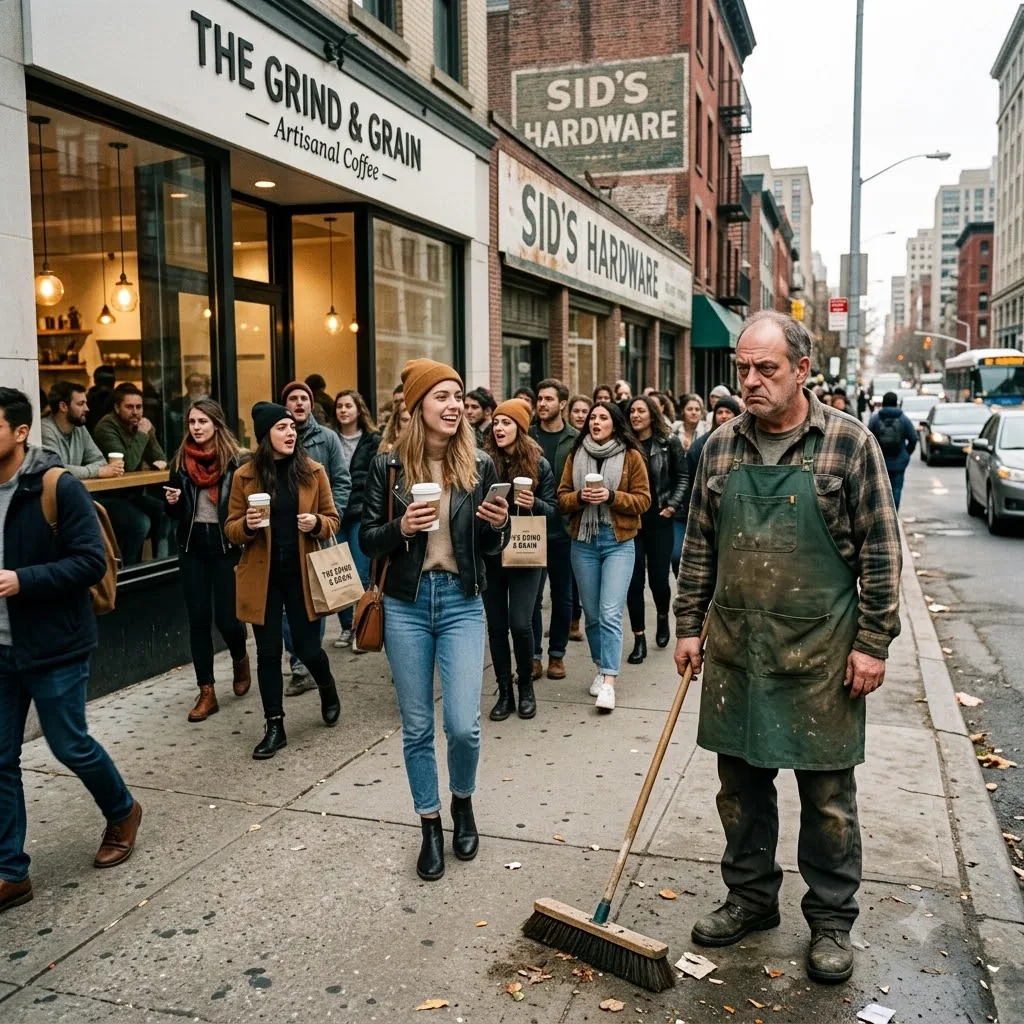
The chanting vibrated the cracked glass of the front door just as the crowd of protesters spilled out from the new artisanal café next door and blocked Mateo’s entire sidewalk. He leaned heavily on his wooden push broom, exhaling a long breath that fogged the glass. It was only ten in the morning, and already his day was derailed by the sheer volume of bodies crowding his property line.
For fifty years, the faded awning above his head had declared this corner a safe haven for the neighborhood, a dependable place for fresh plantains, cold milk, and quiet respect. Now, the air smelled of burnt espresso and whatever herbal sage mixture the café owner burned to draw in her upscale clientele. Mateo gripped the handle of his broom and pushed his front door open, the old brass bell chiming weakly against the noise of a battery-powered megaphone.
A young woman in a knitted beanie was leaning entirely against his outdoor ice machine, resting her heavy cardboard sign on his display of ripe mangoes. Mateo tapped the wooden end of his broom against the pavement. He pointed a thick, calloused finger toward the invisible line separating his bodega from the café’s sleek black exterior. The woman rolled her eyes, grabbed her sign, and shuffled two inches to the left, still blocking the path for any actual customers trying to enter his store.
Mateo began to sweep. He swept imaginary dust from the pavement, using the broad bristles to physically force the crowd back toward their side. He was a tired business owner trying to keep his floor clean and his doorway clear, fighting a tide of people who looked right through him. The protesters ignored his sweeping, stepping over the bristles in their expensive leather boots, sipping from compostable cups stamped with the café’s minimalist leaf logo. They were loud, their chants bleeding together into a wall of pure noise that gave Mateo a sharp ache behind his temples.
He recognized the ringleader immediately. The café owner, a woman who had moved in three months ago with a vocal mission to sanitize the entire block, stood on a reclaimed wood milk crate. She wore a tailored linen jumpsuit and held a clipboard, directing the protesters with sharp, practiced gestures. She treated Mateo’s sidewalk as an overflow zone for her crusade, completely indifferent to the fact that his morning rush had evaporated.
Mateo retreated into the dim, familiar sanctuary of his store. The hum of the ancient refrigeration units usually calmed him, a steady heartbeat that had accompanied his family through decades of early mornings. He walked down the narrow aisle, straightening cans of black beans and aligning boxes of rice. The air inside smelled of fresh pine cleaner and the sweet, starchy scent of baking bread from the small oven in the back. It was a smell built on fifty years of unbroken routine.
The bell above the door jingled sharply. A young man wearing a denim jacket draped with political pins pushed his way inside. The protester bypassed the local pastries Mateo had set out and marched straight to the ATM in the corner. He stood there for five minutes, taking up space, tapping his boots against the freshly mopped linoleum and leaving a trail of gray street dust. When the machine finally dispensed his cash, the man turned and walked out, completely ignoring Mateo at the register. He did not buy a bottle of water. He did not offer an apology for the mess. He simply let the heavy glass door slam shut, vibrating the walls all over again.
Mateo grabbed his mop and wiped away the dusty footprints with slow, deliberate strokes. He watched the café owner through the front window as he worked. She had never once stepped foot inside his bodega to introduce herself. Since the day she signed her lease, her only communication had been a series of passive-aggressive notes taped to his garbage cans, demanding he relocate them so they would not ruin the aesthetic of her outdoor seating. Now, she was commanding an entire mob, turning the shared pavement into a battlefield.
Hector, the neighborhood mail carrier, managed to squeeze past the shouting crowd and pushed the door open, shaking his head. Hector dropped a small stack of envelopes onto the counter, tapped the top one with a solemn finger, and slipped back out into the chaos without a single word.
The top envelope bore the return address of the property management company that owned the entire building. Mateo felt a cold weight settle in his stomach. He picked up his box cutter and sliced the thick paper open. He slid out a single sheet of heavy white paper. Before he could process the dense legal text or the bold numbers at the center of the page, a sudden movement outside caught his eye.
The café owner stepped away from her wooden crate and marched directly up to the outside of Mateo’s window. She held a roll of heavy-duty packing tape in her teeth and a glossy, full-color petition in her hands. She did not look at Mateo through the glass. Mateo stepped forward, pressing his palm and the unfolded management letter flat against the inside of the pane to brace himself as she tore a strip of tape.
She slapped her glossy petition directly over his faded store logo on the exterior of the glass, stepping back to admire her work as Mateo looked down to realize the bold text of her moral crusade to eradicate her specific neighborhood target aligned perfectly over the devastating 300-percent rent hike notice in his hand, the two pieces of paper physically overlapping to trap his family’s entire livelihood between them.
The chanting vibrated the cracked glass of the front door just as the crowd of protesters spilled out from the new artisanal café next door and blocked Mateo’s entire sidewalk. He leaned heavily on his wooden push broom, exhaling a long breath that fogged the glass. It was only ten in the morning, and already his day was derailed by the sheer volume of bodies crowding his property line.
For fifty years, the faded awning above his head had declared this corner a safe haven for the neighborhood, a dependable place for fresh plantains, cold milk, and quiet respect. Now, the air smelled of burnt espresso and whatever herbal sage mixture the café owner burned to draw in her upscale clientele. Mateo gripped the handle of his broom and pushed his front door open, the old brass bell chiming weakly against the noise of a battery-powered megaphone.
A young woman in a knitted beanie was leaning entirely against his outdoor ice machine, resting her heavy cardboard sign on his display of ripe mangoes. Mateo tapped the wooden end of his broom against the pavement. He pointed a thick, calloused finger toward the invisible line separating his bodega from the café’s sleek black exterior. The woman rolled her eyes, grabbed her sign, and shuffled two inches to the left, still blocking the path for any actual customers trying to enter his store.
Mateo began to sweep. He swept imaginary dust from the pavement, using the broad bristles to physically force the crowd back toward their side. He was a tired business owner trying to keep his floor clean and his doorway clear, fighting a tide of people who looked right through him. The protesters ignored his sweeping, stepping over the bristles in their expensive leather boots, sipping from compostable cups stamped with the café’s minimalist leaf logo. They were loud, their chants bleeding together into a wall of pure noise that gave Mateo a sharp ache behind his temples.
He recognized the ringleader immediately. The café owner, a woman who had moved in three months ago with a vocal mission to sanitize the entire block, stood on a reclaimed wood milk crate. She wore a tailored linen jumpsuit and held a clipboard, directing the protesters with sharp, practiced gestures. She treated Mateo’s sidewalk as an overflow zone for her crusade, completely indifferent to the fact that his morning rush had evaporated.
Mateo retreated into the dim, familiar sanctuary of his store. The hum of the ancient refrigeration units usually calmed him, a steady heartbeat that had accompanied his family through decades of early mornings. He walked down the narrow aisle, straightening cans of black beans and aligning boxes of rice. The air inside smelled of fresh pine cleaner and the sweet, starchy scent of baking bread from the small oven in the back. It was a smell built on fifty years of unbroken routine.
The bell above the door jingled sharply. A young man wearing a denim jacket draped with political pins pushed his way inside. The protester bypassed the local pastries Mateo had set out and marched straight to the ATM in the corner. He stood there for five minutes, taking up space, tapping his boots against the freshly mopped linoleum and leaving a trail of gray street dust. When the machine finally dispensed his cash, the man turned and walked out, completely ignoring Mateo at the register. He did not buy a bottle of water. He did not offer an apology for the mess. He simply let the heavy glass door slam shut, vibrating the walls all over again.
Mateo grabbed his mop and wiped away the dusty footprints with slow, deliberate strokes. He watched the café owner through the front window as he worked. She had never once stepped foot inside his bodega to introduce herself. Since the day she signed her lease, her only communication had been a series of passive-aggressive notes taped to his garbage cans, demanding he relocate them so they would not ruin the aesthetic of her outdoor seating. Now, she was commanding an entire mob, turning the shared pavement into a battlefield.
Hector, the neighborhood mail carrier, managed to squeeze past the shouting crowd and pushed the door open, shaking his head. Hector dropped a small stack of envelopes onto the counter, tapped the top one with a solemn finger, and slipped back out into the chaos without a single word.
The top envelope bore the return address of the property management company that owned the entire building. Mateo felt a cold weight settle in his stomach. He picked up his box cutter and sliced the thick paper open. He slid out a single sheet of heavy white paper. Before he could process the dense legal text or the bold numbers at the center of the page, a sudden movement outside caught his eye.
The café owner stepped away from her wooden crate and marched directly up to the outside of Mateo’s window. She held a roll of heavy-duty packing tape in her teeth and a glossy, full-color petition in her hands. She did not look at Mateo through the glass. Mateo stepped forward, pressing his palm and the unfolded management letter flat against the inside of the pane to brace himself as she tore a strip of tape.
She slapped her glossy petition directly over his faded store logo on the exterior of the glass, stepping back to admire her work as Mateo looked down to realize the bold text of her moral crusade to eradicate her specific neighborhood target aligned perfectly over the devastating 300-percent rent hike notice in his hand, the two pieces of paper physically overlapping to trap his family’s entire livelihood between them.