Story code: ST-000879
Part 1: The Staged Decay
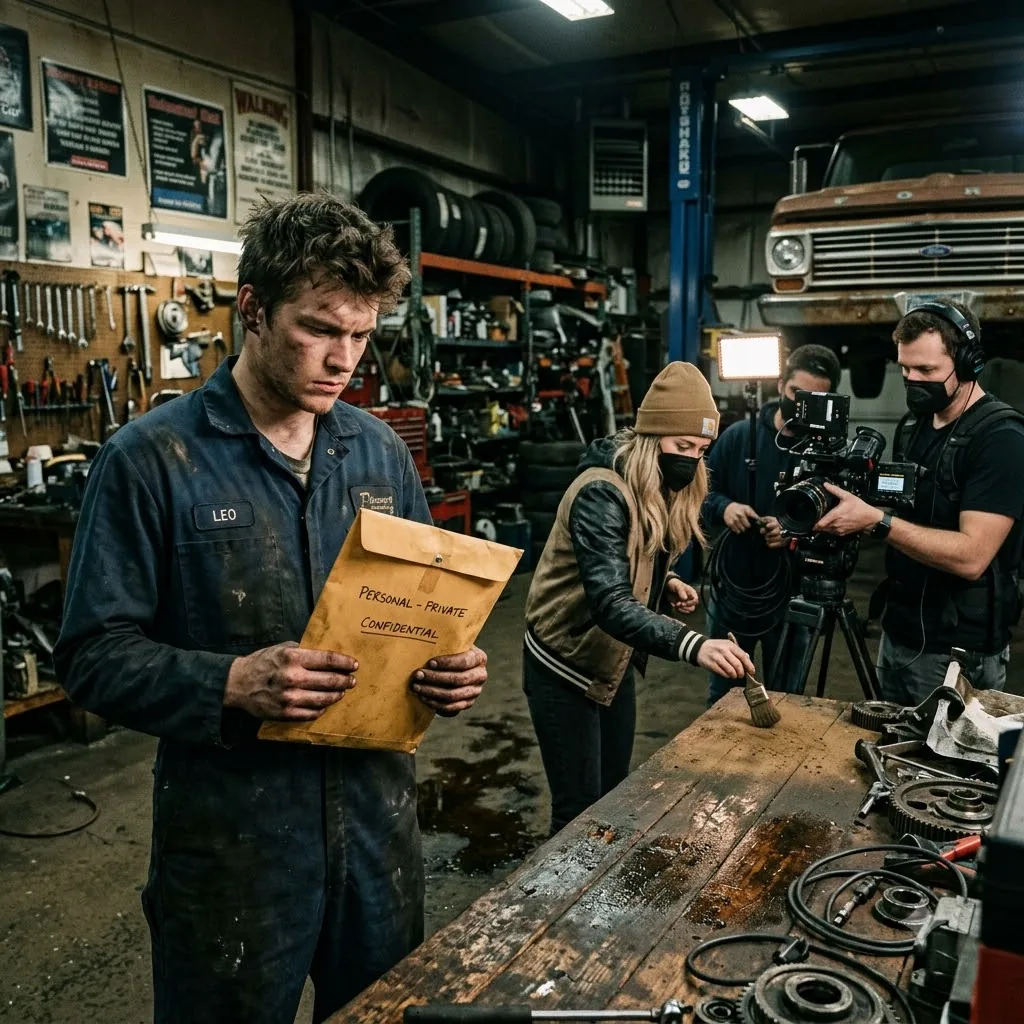
The guy in the oversized beanie was actively rubbing a handful of theatrical ash into the grain of my grandfather’s impeccably clean oak workbench. I stood by the hydraulic lift, gripping a thick, sealed manila envelope so hard my knuckles burned, watching these Brooklyn filmmakers try to make my functional auto shop look like a rotting graveyard.
The director, a woman named Chloe wearing pristine white sneakers, pointed at the pegboard where I kept my wrenches organized by millimeter. She snapped her fingers and told her assistant to knock a few of the tools onto the concrete floor so the shot looked more desperate. They had been occupying my workspace for three hours. They originally told me they were shooting a documentary piece on the forgotten mechanics of Appalachia, documenting the slow, tragic death of the manual trades. I had agreed to let them in because I desperately needed a high-definition camera rolling for what I was about to do.
I shifted my grip on the heavy envelope. The paper was stiff against my calluses. The brown flap was taped entirely shut with heavy shipping tape. I had a split lip that was just starting to scab over, and a deep, throbbing ache in my lower ribs from three nights ago when I finally got my hands on the documents sealed inside. The film crew had not noticed the purple bruising along my jawline. They only saw the grease on my work coveralls and the superficial rust on the corrugated tin roof outside.
The cameraman adjusted a massive, expensive lens, framing my hands and then slowly panning up to my face. Chloe stood just out of the shot with a digital tablet and a stylus. She kept prompting me to talk about the opioid crisis, or how the big corporate dealerships in the city were squeezing my livelihood into dust. She wanted a specific flavor of misery. She instructed me to look out the stained window at the empty two-lane highway and let out a heavy sigh. They were trying to manufacture a viral moment, a sad, defeated rural caricature they could slice into a montage of American decay.
I stayed perfectly quiet. I let them arrange their harsh LED lighting panels around my air compressor. They placed a cracked, unwashed coffee mug on the edge of the desk for atmosphere. The assistant even poured a little bit of stale water from a plastic bottle onto the floor to simulate a neglected roof leak. It was a bizarre, insulting pantomime. They wanted me angry about the economy, or broken by the changing modern world. They were subtly pushing me, hoping I would finally yell at them for intruding, trying to capture a raw, unhinged reaction they could monetize online.
I knew exactly how media operations like this worked. If I lost my temper and threw them out, I became the unstable, aggressive hillbilly for their B-roll. If I played along with their script, I became the tragic, helpless victim. Neither of those narratives was going to protect the legal case I was painstakingly building. I needed their footage, but I needed to control the exact moment the narrative flipped.
The manila envelope felt like a lead weight in my hands. It contained the absolute only leverage I had left in this town. I had bled on the sharp gravel behind a heavily gated compound in the next county over just to pull these specific files from a steel cabinet before the shredder trucks arrived at dawn. The film crew knew absolutely nothing about that desperate midnight run. They thought I was just Silas, the quiet guy who changed their transmission fluid last summer and seemed like a cheap, compliant subject for their grant-funded media project.
Chloe clapped her hands together to get my attention. She told the cameraman to roll continuous. She stepped forward, carefully avoiding the fake puddle her assistant had created, and told me to stare directly into the glass of the lens and tell the world how it felt to lose everything my family had built. She leaned in, her voice dropping into a fake, hushed tone of absolute pity. She pushed a boom microphone toward my chest, nodding at me to perform my grief for her audience.
I did not look into the camera lens. I did not give her the sad, defeated sigh she was begging for. I walked straight past her, stepping firmly through the artificial puddle on the floor. I marched up to the workbench they had just deliberately ruined with fake dust, maintaining eye contact with the blinking red light of the camera. I raised my arm and slammed the thick, sealed manila envelope down onto the wood right in front of the lens.
The guy in the oversized beanie was actively rubbing a handful of theatrical ash into the grain of my grandfather’s impeccably clean oak workbench. I stood by the hydraulic lift, gripping a thick, sealed manila envelope so hard my knuckles burned, watching these Brooklyn filmmakers try to make my functional auto shop look like a rotting graveyard.
The director, a woman named Chloe wearing pristine white sneakers, pointed at the pegboard where I kept my wrenches organized by millimeter. She snapped her fingers and told her assistant to knock a few of the tools onto the concrete floor so the shot looked more desperate. They had been occupying my workspace for three hours. They originally told me they were shooting a documentary piece on the forgotten mechanics of Appalachia, documenting the slow, tragic death of the manual trades. I had agreed to let them in because I desperately needed a high-definition camera rolling for what I was about to do.
I shifted my grip on the heavy envelope. The paper was stiff against my calluses. The brown flap was taped entirely shut with heavy shipping tape. I had a split lip that was just starting to scab over, and a deep, throbbing ache in my lower ribs from three nights ago when I finally got my hands on the documents sealed inside. The film crew had not noticed the purple bruising along my jawline. They only saw the grease on my work coveralls and the superficial rust on the corrugated tin roof outside.
The cameraman adjusted a massive, expensive lens, framing my hands and then slowly panning up to my face. Chloe stood just out of the shot with a digital tablet and a stylus. She kept prompting me to talk about the opioid crisis, or how the big corporate dealerships in the city were squeezing my livelihood into dust. She wanted a specific flavor of misery. She instructed me to look out the stained window at the empty two-lane highway and let out a heavy sigh. They were trying to manufacture a viral moment, a sad, defeated rural caricature they could slice into a montage of American decay.
I stayed perfectly quiet. I let them arrange their harsh LED lighting panels around my air compressor. They placed a cracked, unwashed coffee mug on the edge of the desk for atmosphere. The assistant even poured a little bit of stale water from a plastic bottle onto the floor to simulate a neglected roof leak. It was a bizarre, insulting pantomime. They wanted me angry about the economy, or broken by the changing modern world. They were subtly pushing me, hoping I would finally yell at them for intruding, trying to capture a raw, unhinged reaction they could monetize online.
I knew exactly how media operations like this worked. If I lost my temper and threw them out, I became the unstable, aggressive hillbilly for their B-roll. If I played along with their script, I became the tragic, helpless victim. Neither of those narratives was going to protect the legal case I was painstakingly building. I needed their footage, but I needed to control the exact moment the narrative flipped.
The manila envelope felt like a lead weight in my hands. It contained the absolute only leverage I had left in this town. I had bled on the sharp gravel behind a heavily gated compound in the next county over just to pull these specific files from a steel cabinet before the shredder trucks arrived at dawn. The film crew knew absolutely nothing about that desperate midnight run. They thought I was just Silas, the quiet guy who changed their transmission fluid last summer and seemed like a cheap, compliant subject for their grant-funded media project.
Chloe clapped her hands together to get my attention. She told the cameraman to roll continuous. She stepped forward, carefully avoiding the fake puddle her assistant had created, and told me to stare directly into the glass of the lens and tell the world how it felt to lose everything my family had built. She leaned in, her voice dropping into a fake, hushed tone of absolute pity. She pushed a boom microphone toward my chest, nodding at me to perform my grief for her audience.
I did not look into the camera lens. I did not give her the sad, defeated sigh she was begging for. I walked straight past her, stepping firmly through the artificial puddle on the floor. I marched up to the workbench they had just deliberately ruined with fake dust, maintaining eye contact with the blinking red light of the camera. I raised my arm and slammed the thick, sealed manila envelope down onto the wood right in front of the lens.