Story code: ST-000881
Part 4: Acceptable Collateral
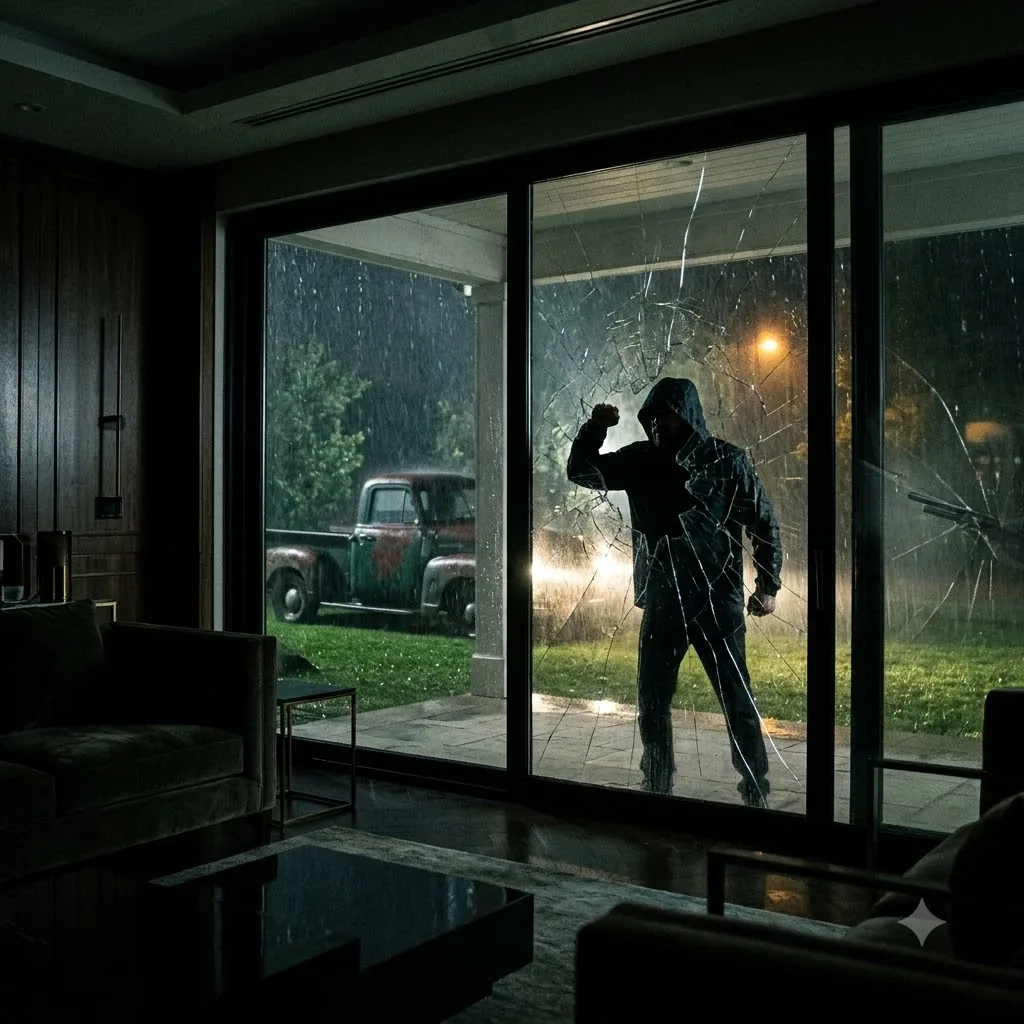
The shotgun slipped from Vance’s hands. It hit the marble floor with a dull, hollow clatter, sliding a few inches before coming to rest against the splintered mahogany of the ruined doorframe. The weapon of absolute, castle-doctrine authority, the heavy-gauge steel that had made him feel like a titan defending his fortress, was suddenly the most useless object in the world.
Vance didn’t realize he was moving until his bare feet crossed the threshold. The freezing winter wind hit him like a physical blow, slicing through his thin silk robe, but he barely felt the temperature. He stepped down onto the stone porch, his soles crunching over the shattered glass of his own front door. He was leaving the acoustic perfection of his foyer, leaving the impenetrable bubble of wealth and isolation he had spent twenty years building, and descending into the chaotic, brutal reality he had engineered on a spreadsheet.
“Get up,” Vance said, his voice entirely devoid of its previous corporate bark. It was a hollow, trembling sound. “Get up, show me.”
The husband scrambled up from the marble, slipping on his own bloody handprints, and stumbled past Vance toward the wrecked truck. Vance followed, his bare feet sinking into the freezing, half-frozen mud of the front lawn. The imported hydrangeas, meticulously maintained by a landscaping crew he paid a fortune, snapped and crushed beneath his weight.
The rusted truck hissed violently, a plume of acrid white steam pouring from the crumpled hood. As Vance reached the passenger side, the sickly green glow of the dashboard illuminated the interior. The woman was pinned between the crushed dashboard and the seat, her head lolling against the shattered window. The seatbelt had locked, but the sheer force of the impact had driven the steering column and dash inward. Her lower abdomen and legs were a dark, saturated mess. It wasn’t just a cut. It was a catastrophic arterial hemorrhage.
Vance had spent his entire career in healthcare management. He knew the terminology. He knew the billing codes for trauma, the average cost of an ICU bed per hour, the profit margins on emergency surgical interventions. But he had never actually touched a dying patient. He had never smelled the overwhelming, heavy copper scent of fresh arterial blood mixed with the chemical tang of deployed airbags.
“We need to get her out,” the husband sobbed, yanking frantically on the bent handle of the passenger door. It wouldn’t budge. “We have to get her inside!”
“No,” Vance said, his corporate logic returning just enough to recognize the physical impossibility. “She’s pinned. Moving her will accelerate the bleeding. We have to apply pressure.”
Vance didn’t hesitate. He stripped off his silk robe, the garment catching for a brief second on the freezing wind before he bundled it into a thick, improvised trauma pad. He stood in the freezing mud in only his boxers and undershirt, his skin instantly erupting in goosebumps as the icy air bit into him. He reached through the shattered window, avoiding the jagged edges of safety glass, and pressed the wadded silk directly against the massive, dark stain spreading across the woman’s lap.
The woman groaned, a shallow, wet sound that barely parted her lips. Her skin was the color of old parchment, completely drained, her eyes rolled back into her head.
“Hold this,” Vance ordered the husband. “Press down with everything you have. Do not let up.”
The husband shoved his hands through the window, layering his already blood-soaked fingers over Vance’s, pressing his weight against the makeshift bandage.
Vance pulled his hands back. They were covered in it. The thick, viscous reality of the “acceptable collateral” his board of directors had discussed over catered lunches. Three weeks ago, he had signed the liquidation order for County General. He had successfully argued that the facility was a financial sinkhole, that closing it and centralizing care at Memorial-thirty miles away-would bump the regional stock by six percent before the quarterly earnings call. He had drawn a clean, elegant line through a column of numbers.
Now, that line was bleeding out into his imported topsoil.
“Where is the ambulance?” the husband pleaded, his breath pluming in the freezing air, his face pale with shock and terror. “You called them, right? You said they were coming!”
Vance looked down the long, dark expanse of his private driveway. The wrought-iron security gates lay in twisted ruins at the edge of the property line. Beyond that was nothing but three miles of winding, heavily wooded private road, connecting to a county highway that was currently pitch black.
“They are coming,” Vance whispered, though the words tasted like ash.
He remembered the dispatcher’s voice. *You are in sector four. You’re out in the hills.*
With County General boarded up and dark, the emergency dispatch grid had been completely redrawn. The nearest available paramedic unit wasn’t sitting in a bay five miles away anymore. They were dispatching from the next county over. They were coming from Memorial. The very facility he had designated as the efficient alternative.
*Twenty minutes,* the dispatcher had said. But that was for a cruiser running lights and sirens. An ambulance, navigating the steep, winding mountain roads in the dead of winter, would take longer. Thirty minutes. Maybe forty.
A lifetime.
Vance sank to his knees in the freezing mud, the icy slush soaking through his thin cotton underwear, numbing his legs. He reached his blood-stained hands back through the window, placing them over the husband’s trembling grip, adding his own weight to the ruined silk robe. The woman’s breathing was growing impossibly shallow, the agonizingly slow rhythm of a body running completely out of time.
Vance stared into the darkness of his sprawling, multi-million-dollar estate. He had built a fortress to keep the world out, to insulate himself from the messy, unprofitable realities of the people whose lives he managed from a corner office. But the gates were broken. The fortress was breached. And all the wealth, security, and castle-doctrine righteousness in the world couldn’t buy him a single drop of the blood slipping through his fingers, as they knelt in the dirt, waiting for a siren that was still three counties away.