Story code: ST-000882
Part 1: The Azure Wall
Gloria pressed the heavy wooden stir stick deep into the plastic five-gallon bucket, grinding the raw powder against the bottom until the dull liquid burst into a brilliant, piercing azure. She kept her focus strictly on the swirling vortex of color. The thick, chalky smell of outdoor acrylic usually settled her nerves, grounding her in a ritual she had practiced on this exact corner for thirty long years. Today, her calloused hands shook. The bright blue splashed over the rim, splattering and staining the concrete sidewalk. She wiped her trembling fingers on her canvas apron, her knuckles brushing against the stiff, folded edge of the certified letter weighing down her pocket.
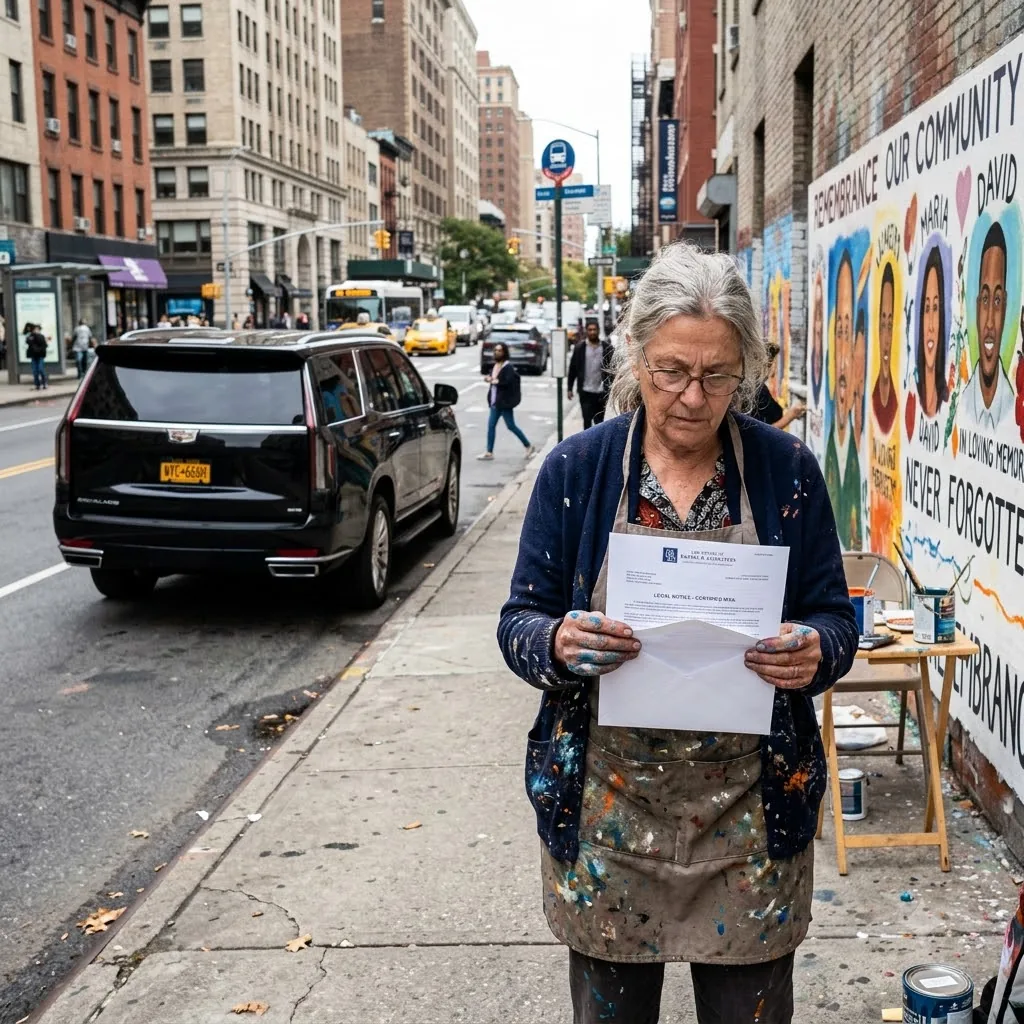
The heavy envelope had arrived just two hours prior, thrust into her hands by a courier who demanded an urgent signature before fleeing down the block. Gloria pulled the thick, watermarked paper free again, leaving a fresh blue thumbprint on the pristine white margin. The header featured a sharp, minimalist geometric logo she did not recognize. The Arts District Improvement Board. She traced the raised black ink with her thumbnail, feeling the sudden, cold reality of the embossed letters. The board possessed a title that sounded official, carrying the brutal, crushing weight of municipal authority over a neighborhood she had anchored long before any district rebranding efforts began.
Her eyes caught on the bolded, unyielding terms dominating the center of the page. Notice of Extreme Code Violation. The document did not mention the three decades of community vigils held at the base of her wall. It ignored the fifty names of departed neighbors she had painstakingly lettered and maintained out of her own pocket, buying supplies with her meager savings. The crisp, legal text reduced her life’s work, and the history of her community, to a single, devastating classification. Unapproved exterior modification and willful vandalism.
The penalty clause printed below the accusation struck her chest like a physical blow, tightening her ribs until she struggled to draw breath. The newly formed board was levying a daily fine of five hundred dollars, compounding every twenty-four hours until the unauthorized paint was permanently removed. Gloria stared at the impossible zeros. Five hundred dollars a day meant three thousand, five hundred dollars a week. Within a single month, the fines would total fifteen thousand dollars. The secondary clause buried in the fine print secured the financial trap. Failure to remit payment in full would result in an immediate property lien and expedited foreclosure proceedings against her home.
She looked up from the letter to the sprawling, vibrant brick wall wrapping around the side of her house. The mural was a living tapestry of the block, a continuous monument to the people who built the community. Eradicating it meant painting over Hector, over Maria, over the children who had left them too soon. Refusing to destroy it meant losing the home she and her late husband had paid off through forty years of grueling factory shifts. She lived on a rigid, fixed pension, counting pennies to keep the lights on and the memorial maintained. The board knew she could never pay an escalating daily ransom. The fine was not a punishment meant to force compliance, but a deliberate mechanism designed to force her out.
Gloria folded the letter with deliberate slowness, sliding it back into the deep pocket of her apron. The neighborhood around her felt abruptly foreign, the afternoon shadows stretching unnaturally across the cracked pavement. Down the block, the familiar sounds of local life felt muted, replaced by the crushing anxiety buzzing in her ears. She picked up her wide bristle brush, gripping the worn wooden handle like a lifeline. She refused to let a piece of paper paralyze her in her own front yard. She dipped the brush into the azure bucket, lifting it out heavy and dripping with fresh paint. She turned toward the fading section of the memorial wall, determined to touch up the sky behind Little Julian’s name, fighting the suffocating dread tightening her throat.
A low, heavy hum vibrated through the soles of her worn shoes. The sound grew rapidly, replacing the distant hum of traffic with an immediate, oppressive mechanical growl.
Gloria paused, her brush suspended mid-air, the blue paint dripping steadily onto the concrete. A sleek, black SUV with heavily tinted windows rolled to a creeping halt, idling against the curb mere inches from her property line. The massive vehicle blocked out the afternoon sun, casting a long, cold shadow directly over her bright azure paint. The engine rumbled in an aggressive, steady rhythm, rattling the loose pebbles in the gutter. The heavy rear door clicked loud in the quiet street, swinging open to reveal a pair of polished, expensive leather dress shoes stepping onto the pavement. A man stepped out, his tailored charcoal suit standing in stark, jarring contrast to the worn brick and fading murals of her home. He did not look at her face. He did not glance at the thirty years of names carefully painted on the wall. He raised a steady hand and pointed directly at her open paint buckets.
Gloria pressed the heavy wooden stir stick deep into the plastic five-gallon bucket, grinding the raw powder against the bottom until the dull liquid burst into a brilliant, piercing azure. She kept her focus strictly on the swirling vortex of color. The thick, chalky smell of outdoor acrylic usually settled her nerves, grounding her in a ritual she had practiced on this exact corner for thirty long years. Today, her calloused hands shook. The bright blue splashed over the rim, splattering and staining the concrete sidewalk. She wiped her trembling fingers on her canvas apron, her knuckles brushing against the stiff, folded edge of the certified letter weighing down her pocket.
The heavy envelope had arrived just two hours prior, thrust into her hands by a courier who demanded an urgent signature before fleeing down the block. Gloria pulled the thick, watermarked paper free again, leaving a fresh blue thumbprint on the pristine white margin. The header featured a sharp, minimalist geometric logo she did not recognize. The Arts District Improvement Board. She traced the raised black ink with her thumbnail, feeling the sudden, cold reality of the embossed letters. The board possessed a title that sounded official, carrying the brutal, crushing weight of municipal authority over a neighborhood she had anchored long before any district rebranding efforts began.
Her eyes caught on the bolded, unyielding terms dominating the center of the page. Notice of Extreme Code Violation. The document did not mention the three decades of community vigils held at the base of her wall. It ignored the fifty names of departed neighbors she had painstakingly lettered and maintained out of her own pocket, buying supplies with her meager savings. The crisp, legal text reduced her life’s work, and the history of her community, to a single, devastating classification. Unapproved exterior modification and willful vandalism.
The penalty clause printed below the accusation struck her chest like a physical blow, tightening her ribs until she struggled to draw breath. The newly formed board was levying a daily fine of five hundred dollars, compounding every twenty-four hours until the unauthorized paint was permanently removed. Gloria stared at the impossible zeros. Five hundred dollars a day meant three thousand, five hundred dollars a week. Within a single month, the fines would total fifteen thousand dollars. The secondary clause buried in the fine print secured the financial trap. Failure to remit payment in full would result in an immediate property lien and expedited foreclosure proceedings against her home.
She looked up from the letter to the sprawling, vibrant brick wall wrapping around the side of her house. The mural was a living tapestry of the block, a continuous monument to the people who built the community. Eradicating it meant painting over Hector, over Maria, over the children who had left them too soon. Refusing to destroy it meant losing the home she and her late husband had paid off through forty years of grueling factory shifts. She lived on a rigid, fixed pension, counting pennies to keep the lights on and the memorial maintained. The board knew she could never pay an escalating daily ransom. The fine was not a punishment meant to force compliance, but a deliberate mechanism designed to force her out.
Gloria folded the letter with deliberate slowness, sliding it back into the deep pocket of her apron. The neighborhood around her felt abruptly foreign, the afternoon shadows stretching unnaturally across the cracked pavement. Down the block, the familiar sounds of local life felt muted, replaced by the crushing anxiety buzzing in her ears. She picked up her wide bristle brush, gripping the worn wooden handle like a lifeline. She refused to let a piece of paper paralyze her in her own front yard. She dipped the brush into the azure bucket, lifting it out heavy and dripping with fresh paint. She turned toward the fading section of the memorial wall, determined to touch up the sky behind Little Julian’s name, fighting the suffocating dread tightening her throat.
A low, heavy hum vibrated through the soles of her worn shoes. The sound grew rapidly, replacing the distant hum of traffic with an immediate, oppressive mechanical growl.
Gloria paused, her brush suspended mid-air, the blue paint dripping steadily onto the concrete. A sleek, black SUV with heavily tinted windows rolled to a creeping halt, idling against the curb mere inches from her property line. The massive vehicle blocked out the afternoon sun, casting a long, cold shadow directly over her bright azure paint. The engine rumbled in an aggressive, steady rhythm, rattling the loose pebbles in the gutter. The heavy rear door clicked loud in the quiet street, swinging open to reveal a pair of polished, expensive leather dress shoes stepping onto the pavement. A man stepped out, his tailored charcoal suit standing in stark, jarring contrast to the worn brick and fading murals of her home. He did not look at her face. He did not glance at the thirty years of names carefully painted on the wall. He raised a steady hand and pointed directly at her open paint buckets.