Story code: ST-000782
Part 1: Room 12
Rosa dragged the damp rag across the cracked laminate dresser, sweeping a pile of burnt aluminum foil and cigarette ash into her plastic dustpan. The stale smell of sweat and chemical smoke hung heavy in the stifling air of Room 12. She kept her head angled down, her eyes fixed on the scuffed baseboards.
The manager leaned against the open doorframe. His shadow stretched across the stained carpet, trapping her in the narrow corner by the bathroom sink. He tapped a clipboard against his thigh in a steady, irritating rhythm. He told her she was moving too slow today. He reminded her, in a voice as casual as someone discussing the local sports team, that a lot of places would call the authorities over a plastic-feeling Social Security card. He said she was lucky he was such a forgiving boss, allowing her to earn a living, as long as she minded her own business and turned over the rooms for his favorite long-term tenants without making a fuss. He made sure to emphasize the word favorite.
Rosa nodded once, wiping the rag over the same spot on the dresser until her knuckles turned white. She did not look up. She waited until his heavy boots finally shuffled away down the exterior concrete walkway, his whistling fading into the roar of the nearby highway.
The silence left behind felt thick and oily. Rosa moved to the bed, stripping the rumpled, yellowing sheets. The tenant in Room 12 paid in cash, week by week, and vehemently preferred not to be disturbed. Today was the mandatory deep clean, a policy even the manager enforced to keep the health inspectors at bay. She hauled the heavy, sagging mattress upward with a grunt, wedging her hip against the box spring to tuck the fresh fitted sheet beneath the corner.
Something scraped against the wooden bed frame.
Rosa paused. She leaned her weight against the mattress, holding it hoisted in the air with one aching shoulder, and peered into the dark space underneath. A glint of dull silver caught the sliver of sunlight slipping past the tightly drawn blackout curtains. It was pushed far back, nearly against the peeling wall, as if kicked hastily out of sight.
She lowered the mattress back into place and dropped to her knees. Reaching her arm into the dust bunnies and discarded food wrappers, her fingers brushed against a chunk of cold metal. She closed her hand around it and pulled it out into the light.
Rosa stopped breathing.
It was a thick, heavy steel keychain, cut into the shape of a luchador mask. The left eyehole was slightly warped where a drop of industrial solder had fallen on it during metal shop class. Her thumb traced the rough edge of that specific, hardened solder. Her son had made this in the eleventh grade. He had clipped it to his belt loop every single day until the night he vanished two years ago. The police had barely looked at her when they called it a standard runaway case. The coroner had later called it a tragic, anonymous overdose when they found him by the river.
They had never returned his keys.
Rosa stared at the heavy metal mask resting in her calloused, chemical-burned palm. There was no surge of tears. Her chest did not heave with delayed grief. The hollow, exhausting sorrow that had worn her down to a shadow over the last two years evaporated in a single second, replaced instantly by a cold, absolute stillness. She slipped the keychain deep into the pocket of her cleaning apron.
She stood up. Her dark eyes scanned the room, no longer seeing a messy motel unit to clean, but a confined space to control. She walked softly, careful to avoid the creaking floorboards, to the open doorway. The parking lot was empty under the glaring midday sun. She pulled the heavy wooden door shut. The deadbolt slid into place with a definitive, heavy thud. She fastened the brass chain lock for good measure.
Beside the sagging armchair stood a cheap floor lamp. The pole was flimsy, hollow aluminum, but the base was a solid, heavy brass plate, designed to keep the fixture from tipping over on the uneven carpet. Rosa gripped the thin pole with one hand and grabbed the brass disc with the other. She twisted hard. The metal screeched in protest, loudly at first, then gave way as the threads loosened. She spun the base round and round, working in furious silence, until it detached entirely.
It weighed at least ten pounds in her hands. The edge of the brass was blunt, dense, and unforgiving.
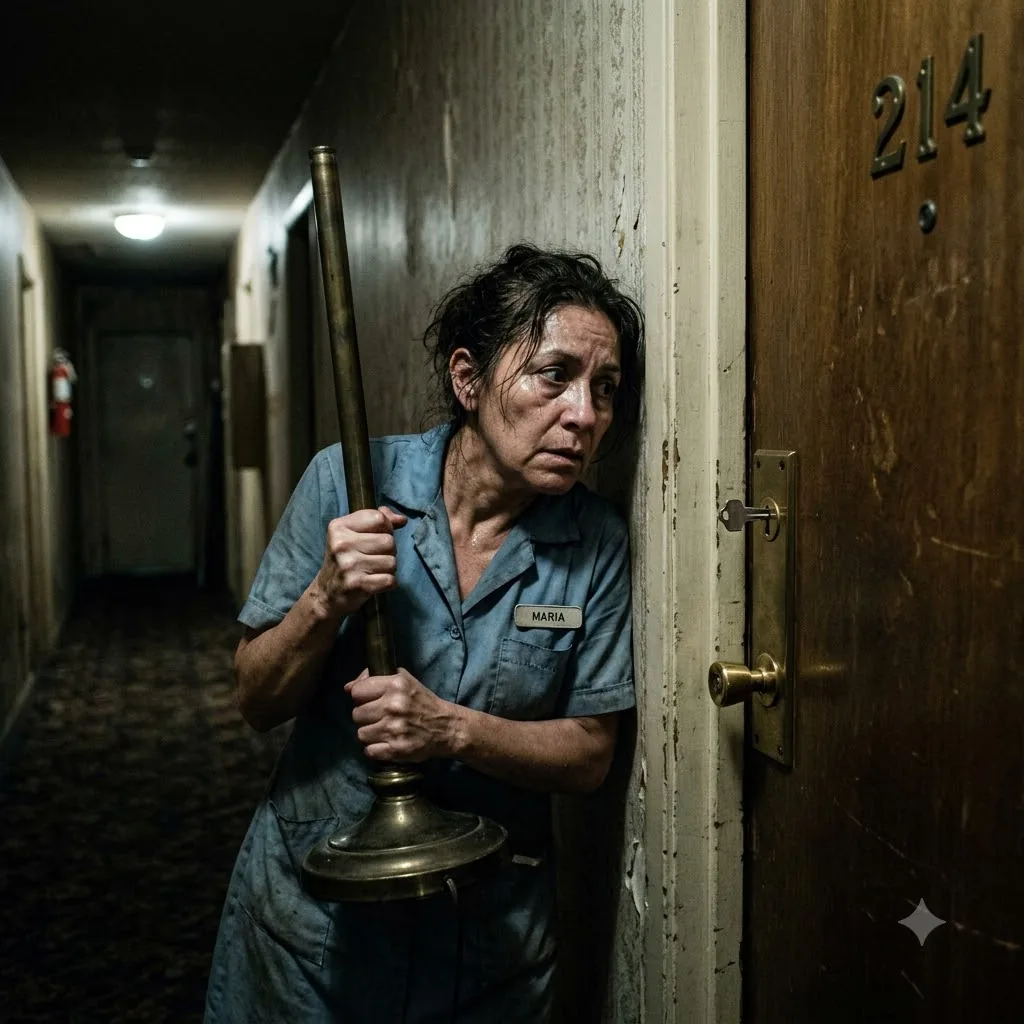
Rosa moved to the wall right beside the door. She pressed her spine flat against the peeling wallpaper, hiding herself completely from the angle of the peephole. She raised the heavy brass plate to shoulder height, gripping the center threading like a makeshift handle. She controlled her breathing, forcing the air in and out through her nose in slow, silent increments.
Footsteps echoed on the concrete walkway outside. They were heavy, unhurried, stopping directly on the welcome mat of Room 12.
A shadow blocked the tiny circle of light shining through the peephole. The brass lock cylinder rattled loudly as a key scraped into the mechanism.
Rosa dragged the damp rag across the cracked laminate dresser, sweeping a pile of burnt aluminum foil and cigarette ash into her plastic dustpan. The stale smell of sweat and chemical smoke hung heavy in the stifling air of Room 12. She kept her head angled down, her eyes fixed on the scuffed baseboards.
The manager leaned against the open doorframe. His shadow stretched across the stained carpet, trapping her in the narrow corner by the bathroom sink. He tapped a clipboard against his thigh in a steady, irritating rhythm. He told her she was moving too slow today. He reminded her, in a voice as casual as someone discussing the local sports team, that a lot of places would call the authorities over a plastic-feeling Social Security card. He said she was lucky he was such a forgiving boss, allowing her to earn a living, as long as she minded her own business and turned over the rooms for his favorite long-term tenants without making a fuss. He made sure to emphasize the word favorite.
Rosa nodded once, wiping the rag over the same spot on the dresser until her knuckles turned white. She did not look up. She waited until his heavy boots finally shuffled away down the exterior concrete walkway, his whistling fading into the roar of the nearby highway.
The silence left behind felt thick and oily. Rosa moved to the bed, stripping the rumpled, yellowing sheets. The tenant in Room 12 paid in cash, week by week, and vehemently preferred not to be disturbed. Today was the mandatory deep clean, a policy even the manager enforced to keep the health inspectors at bay. She hauled the heavy, sagging mattress upward with a grunt, wedging her hip against the box spring to tuck the fresh fitted sheet beneath the corner.
Something scraped against the wooden bed frame.
Rosa paused. She leaned her weight against the mattress, holding it hoisted in the air with one aching shoulder, and peered into the dark space underneath. A glint of dull silver caught the sliver of sunlight slipping past the tightly drawn blackout curtains. It was pushed far back, nearly against the peeling wall, as if kicked hastily out of sight.
She lowered the mattress back into place and dropped to her knees. Reaching her arm into the dust bunnies and discarded food wrappers, her fingers brushed against a chunk of cold metal. She closed her hand around it and pulled it out into the light.
Rosa stopped breathing.
It was a thick, heavy steel keychain, cut into the shape of a luchador mask. The left eyehole was slightly warped where a drop of industrial solder had fallen on it during metal shop class. Her thumb traced the rough edge of that specific, hardened solder. Her son had made this in the eleventh grade. He had clipped it to his belt loop every single day until the night he vanished two years ago. The police had barely looked at her when they called it a standard runaway case. The coroner had later called it a tragic, anonymous overdose when they found him by the river.
They had never returned his keys.
Rosa stared at the heavy metal mask resting in her calloused, chemical-burned palm. There was no surge of tears. Her chest did not heave with delayed grief. The hollow, exhausting sorrow that had worn her down to a shadow over the last two years evaporated in a single second, replaced instantly by a cold, absolute stillness. She slipped the keychain deep into the pocket of her cleaning apron.
She stood up. Her dark eyes scanned the room, no longer seeing a messy motel unit to clean, but a confined space to control. She walked softly, careful to avoid the creaking floorboards, to the open doorway. The parking lot was empty under the glaring midday sun. She pulled the heavy wooden door shut. The deadbolt slid into place with a definitive, heavy thud. She fastened the brass chain lock for good measure.
Beside the sagging armchair stood a cheap floor lamp. The pole was flimsy, hollow aluminum, but the base was a solid, heavy brass plate, designed to keep the fixture from tipping over on the uneven carpet. Rosa gripped the thin pole with one hand and grabbed the brass disc with the other. She twisted hard. The metal screeched in protest, loudly at first, then gave way as the threads loosened. She spun the base round and round, working in furious silence, until it detached entirely.
It weighed at least ten pounds in her hands. The edge of the brass was blunt, dense, and unforgiving.
Rosa moved to the wall right beside the door. She pressed her spine flat against the peeling wallpaper, hiding herself completely from the angle of the peephole. She raised the heavy brass plate to shoulder height, gripping the center threading like a makeshift handle. She controlled her breathing, forcing the air in and out through her nose in slow, silent increments.
Footsteps echoed on the concrete walkway outside. They were heavy, unhurried, stopping directly on the welcome mat of Room 12.
A shadow blocked the tiny circle of light shining through the peephole. The brass lock cylinder rattled loudly as a key scraped into the mechanism.