Story code: ST-000890
Part 1: Critical Hold
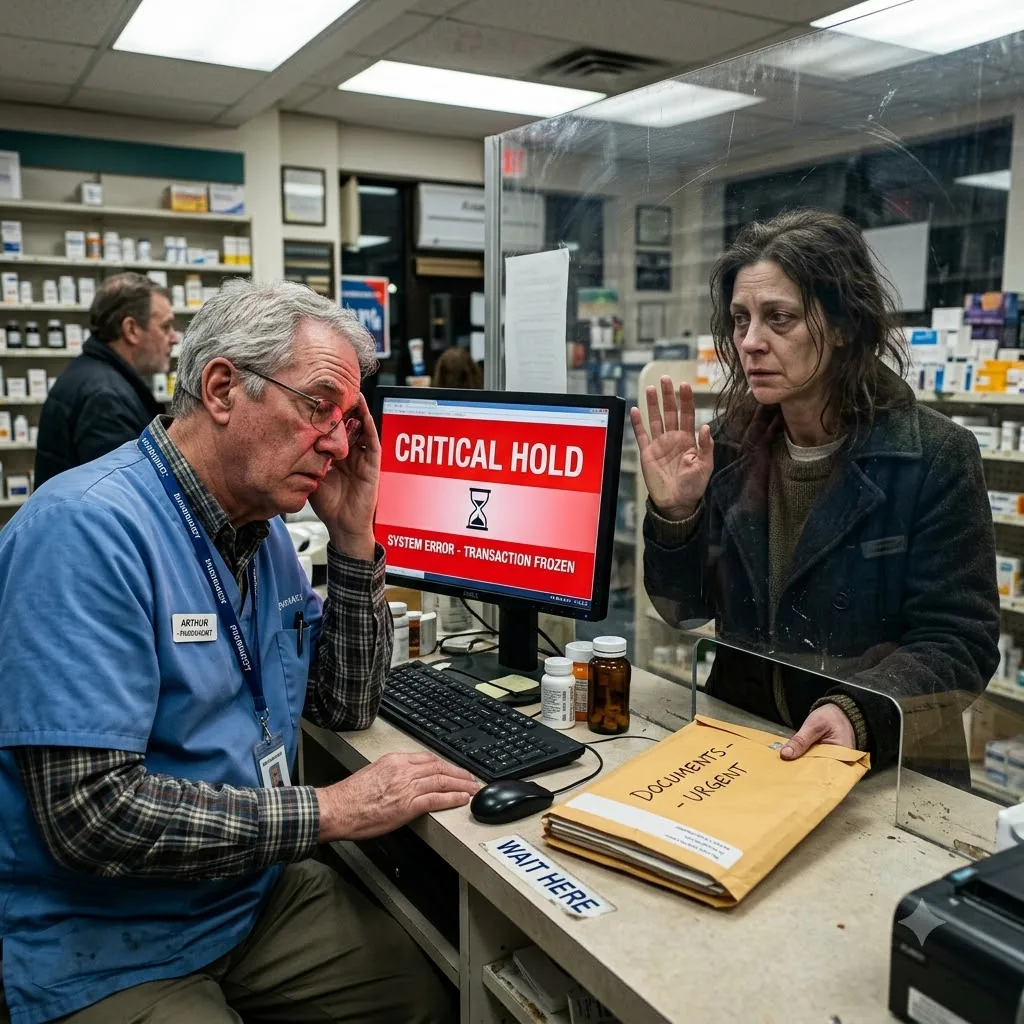
The dispensing screen went completely black before erupting into a solid, blinding red block of text. CRITICAL HOLD. Arthur stopped his hand mid-reach, his fingers hovering over a half-filled amber bottle of lisinopril. The mechanical hum of the automated pill-counter seemed to pitch upward, mocking the sudden silence of his keyboard. The system had locked him out. He tapped the escape key, then the spacebar, but the red glare remained absolute, burning itself into the lenses of his safety glasses.
This was the end. The corporate algorithm had finally caught up to his slowing hands. Management had installed the new keystroke-and-fill tracking software three weeks ago, establishing a hard, unforgiving limit of ninety seconds per prescription. Arthur had been averaging ninety-four seconds. The artificial intelligence monitoring his station did not care about the phone ringing incessantly on line three. It did not care about the drive-thru sensor chiming every twelve seconds, or the fact that older human hands could only count out tiny white tablets so fast without making a fatal error. It only cared about the raw data, the red lines on a spreadsheet in a corporate office three states away. He stood frozen behind the raised counter, waiting for the inevitable notification of his termination to print from the thermal receipt machine.
Nothing printed. The red screen just blinked, bathing his pale, lined face in a harsh, rhythmic light. He glanced at the dark dome of the ceiling camera, assuming a district manager was watching him live, preparing to dispatch the store security guard to strip him of his badge and escort him out the back door. He set the lisinopril bottle down. The hard plastic clattered against the metal counting tray, sounding like a hammer strike in his own ears. He took a deep, shaky breath, mourning the loss of his pension, his health insurance, the quiet stability of his life in the white coat.
A sharp clearing of a throat broke through his mounting panic.
The sound came from the consultation window, a specific section of the plexiglass barrier reserved for patients needing intensive counsel on new, dangerous medications. Arthur turned slowly, smoothing the front of his lab coat out of sheer nervous habit. He fully expected to see his store manager standing there holding a grim expression and a manila folder of severance paperwork.
Instead, a stranger stood on the other side of the thick acrylic divider. The woman possessed a terrifying stillness that did not belong in a busy retail pharmacy on a chaotic Tuesday afternoon. Behind her, the line for pickup stretched down the greeting card aisle, filled with people shifting their weight and checking their watches. This woman did none of that. The fluorescent lights overhead cast deep, bruised shadows under her eyes, making her skin look like old parchment. She wore a dark, oversized wool coat pulled tight across her chest, her posture rigid, her shoulders drawn up to her ears. She did not tap her fingers on the laminate counter. She did not sigh heavily. She just stared directly at the embroidered name tag pinned over Arthur’s heart.
Arthur approached the glass, keeping his empty hands visible in front of him. He tried to muster the mandatory, algorithm-approved customer service smile, but the muscles in his face felt entirely paralyzed. He opened his mouth to explain that the system was down, that he could not process any transactions or verify any insurance claims until the computer released its iron grip on his terminal.
The woman did not give him the chance to utter a single syllable.
She reached into the deep, sagging pocket of her coat and withdrew a thick, overstuffed manila envelope. It was heavily worn at the corners, the edges frayed and softened from being handled repeatedly. A thick red string wrapped frantically around the closure flap, securing whatever heavy burden rested inside. She placed it flat on the metal pass-through tray at the bottom of the window, keeping her hand pressed firmly against the top of the paper.
With a slow, deliberate push of her pale index finger, she slid the envelope under the plexiglass barrier.
The heavy paper scraped aggressively against the stainless steel track. Arthur stared down at it, the blood roaring in his ears. The envelope was completely blank on top, devoid of any corporate logos, return addresses, or official letterhead. It held none of the familiar characteristics of a corporate termination notice or a standard disciplinary write-up. It was intensely personal, incredibly heavy, and bulging with uneven, jagged stacks of paper.
He looked back up at the woman, realizing the flashing red text on his screen had absolutely nothing to do with his ninety-second fill-time metrics.
Her hollow eyes remained fixed on him, entirely unblinking, carrying a weight that made the recycled air in the pharmacy feel dangerously thin. She placed both of her hands flat on the outer ledge of the counter, leaning in close enough that her shallow breaths lightly fogged the acrylic shield between them.
“You verified the dosage override,” she said, her voice dropping to a harsh, gravelly whisper that carried clearly through the circular speaker grate. “I have the printouts.”
Arthur looked down at the frayed red string on the envelope. He reached out with trembling fingers, pulling the heavy package toward his side of the counter as the red screen on his terminal flashed again, illuminating the metal clasp just as he hooked his thumb under the sealed flap.
The dispensing screen went completely black before erupting into a solid, blinding red block of text. CRITICAL HOLD. Arthur stopped his hand mid-reach, his fingers hovering over a half-filled amber bottle of lisinopril. The mechanical hum of the automated pill-counter seemed to pitch upward, mocking the sudden silence of his keyboard. The system had locked him out. He tapped the escape key, then the spacebar, but the red glare remained absolute, burning itself into the lenses of his safety glasses.
This was the end. The corporate algorithm had finally caught up to his slowing hands. Management had installed the new keystroke-and-fill tracking software three weeks ago, establishing a hard, unforgiving limit of ninety seconds per prescription. Arthur had been averaging ninety-four seconds. The artificial intelligence monitoring his station did not care about the phone ringing incessantly on line three. It did not care about the drive-thru sensor chiming every twelve seconds, or the fact that older human hands could only count out tiny white tablets so fast without making a fatal error. It only cared about the raw data, the red lines on a spreadsheet in a corporate office three states away. He stood frozen behind the raised counter, waiting for the inevitable notification of his termination to print from the thermal receipt machine.
Nothing printed. The red screen just blinked, bathing his pale, lined face in a harsh, rhythmic light. He glanced at the dark dome of the ceiling camera, assuming a district manager was watching him live, preparing to dispatch the store security guard to strip him of his badge and escort him out the back door. He set the lisinopril bottle down. The hard plastic clattered against the metal counting tray, sounding like a hammer strike in his own ears. He took a deep, shaky breath, mourning the loss of his pension, his health insurance, the quiet stability of his life in the white coat.
A sharp clearing of a throat broke through his mounting panic.
The sound came from the consultation window, a specific section of the plexiglass barrier reserved for patients needing intensive counsel on new, dangerous medications. Arthur turned slowly, smoothing the front of his lab coat out of sheer nervous habit. He fully expected to see his store manager standing there holding a grim expression and a manila folder of severance paperwork.
Instead, a stranger stood on the other side of the thick acrylic divider. The woman possessed a terrifying stillness that did not belong in a busy retail pharmacy on a chaotic Tuesday afternoon. Behind her, the line for pickup stretched down the greeting card aisle, filled with people shifting their weight and checking their watches. This woman did none of that. The fluorescent lights overhead cast deep, bruised shadows under her eyes, making her skin look like old parchment. She wore a dark, oversized wool coat pulled tight across her chest, her posture rigid, her shoulders drawn up to her ears. She did not tap her fingers on the laminate counter. She did not sigh heavily. She just stared directly at the embroidered name tag pinned over Arthur’s heart.
Arthur approached the glass, keeping his empty hands visible in front of him. He tried to muster the mandatory, algorithm-approved customer service smile, but the muscles in his face felt entirely paralyzed. He opened his mouth to explain that the system was down, that he could not process any transactions or verify any insurance claims until the computer released its iron grip on his terminal.
The woman did not give him the chance to utter a single syllable.
She reached into the deep, sagging pocket of her coat and withdrew a thick, overstuffed manila envelope. It was heavily worn at the corners, the edges frayed and softened from being handled repeatedly. A thick red string wrapped frantically around the closure flap, securing whatever heavy burden rested inside. She placed it flat on the metal pass-through tray at the bottom of the window, keeping her hand pressed firmly against the top of the paper.
With a slow, deliberate push of her pale index finger, she slid the envelope under the plexiglass barrier.
The heavy paper scraped aggressively against the stainless steel track. Arthur stared down at it, the blood roaring in his ears. The envelope was completely blank on top, devoid of any corporate logos, return addresses, or official letterhead. It held none of the familiar characteristics of a corporate termination notice or a standard disciplinary write-up. It was intensely personal, incredibly heavy, and bulging with uneven, jagged stacks of paper.
He looked back up at the woman, realizing the flashing red text on his screen had absolutely nothing to do with his ninety-second fill-time metrics.
Her hollow eyes remained fixed on him, entirely unblinking, carrying a weight that made the recycled air in the pharmacy feel dangerously thin. She placed both of her hands flat on the outer ledge of the counter, leaning in close enough that her shallow breaths lightly fogged the acrylic shield between them.
“You verified the dosage override,” she said, her voice dropping to a harsh, gravelly whisper that carried clearly through the circular speaker grate. “I have the printouts.”
Arthur looked down at the frayed red string on the envelope. He reached out with trembling fingers, pulling the heavy package toward his side of the counter as the red screen on his terminal flashed again, illuminating the metal clasp just as he hooked his thumb under the sealed flap.