Story code: ST-000947
Part 1: Forty Dollars
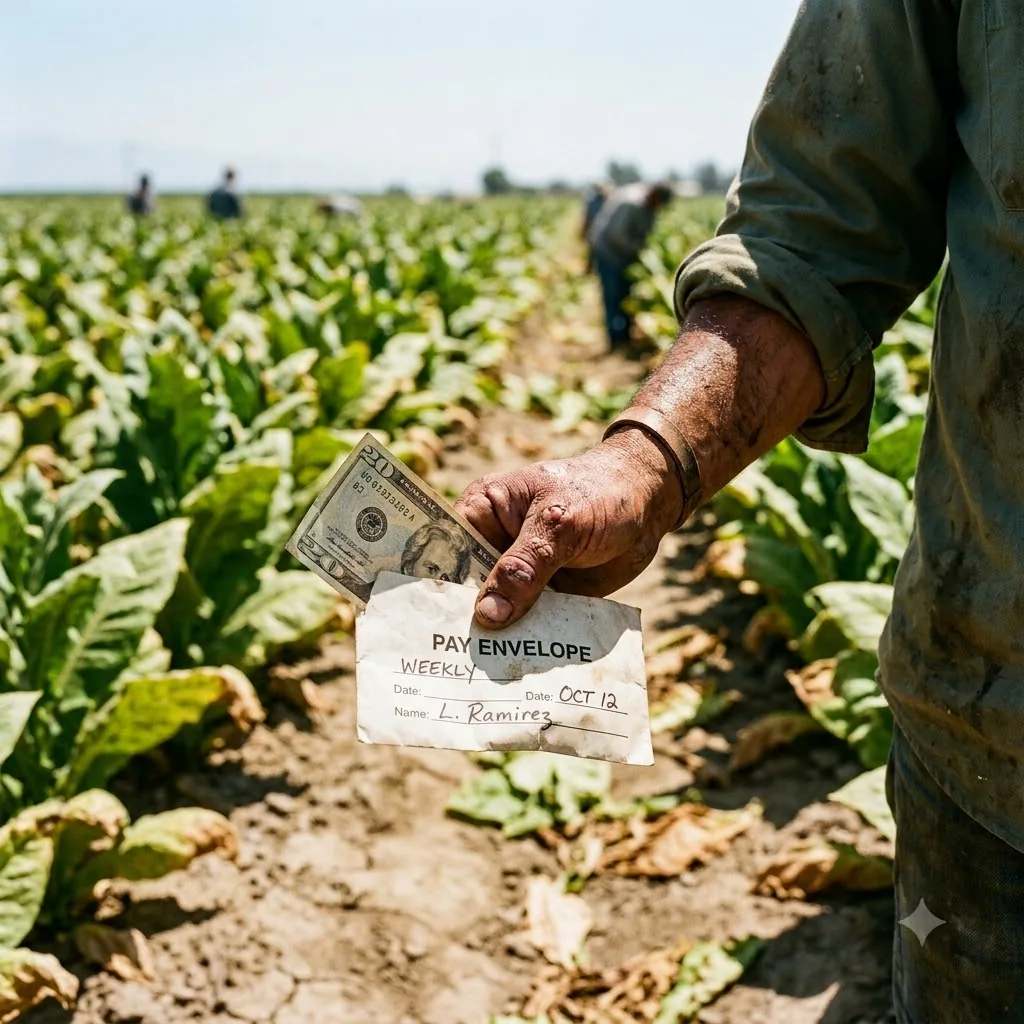
The Kentucky heat was a physical weight pressing down on the curing tobacco fields, but the manila envelope in Mateo’s cracked, blistered hand felt entirely hollow. Three weeks of twelve-hour days under a blinding sun culminated in this single, flimsy square of paper. He tore the sealed edge with a blackened thumbnail and tipped the contents onto his calloused palm. Two crisp twenty-dollar bills slid out, fluttering faintly in the dead, baking air. Forty dollars. For four hundred hours of labor.
Mateo stared at the green paper sticking to his sweaty skin. The ambient noise of the labor camp-the rumble of the distant diesel tractors, the exhaustion-heavy Spanish murmurs of the other men in the payout line-faded into a low, static hum. A coldness, entirely out of place in the hundred-degree afternoon, began to coil at the base of his spine. His shoulders, previously slumped from the grueling day’s harvest, rolled back into a rigid, perfectly squared line. The chronic ache in his lower back vanished, replaced by a hyper-aware stillness. He did not yell. He did not curse. His breathing simply shifted into a measured, silent rhythm.
Beside him, a sharp intake of breath broke his focus. Julian, his younger brother by six years, was staring at the money, then up at Mateo’s face. All the color drained from the boy’s sunburnt cheeks, leaving a sickly ash gray. Julian recognized that flat, unblinking stare. It was a posture Mateo had sworn to leave behind three thousand miles ago.
Julian grabbed Mateo’s forearm. His grip was entirely slick with sweat, trembling violently against Mateo’s hardened muscle. “Mateo, do not do it.”
Mateo did not look at him. His eyes remained fixed on the air-conditioned trailer parked fifty yards away at the top of the gravel incline. The foreman, a man named Harris, sat in there.
“They said immigration enforcement is raiding the neighboring county,” Julian whispered, his voice cracking, desperate to pull his brother back into the guise of a subservient laborer. “Harris made sure everyone heard about it this morning. If you make a scene, he will make the call. That is why he shorted us. He knows we cannot do anything.”
Mateo looked down at Julian’s hand wrapped around his arm. He noted the white knuckles, the dirt caked under the torn fingernails, the sheer terror radiating through the boy’s frame. Julian was nineteen but looked fifteen right now, terrified of authorities, terrified of deportation, and most of all, terrified of the dormant thing currently waking up inside his older brother.
The coldness coiled tighter in Mateo’s chest, spreading a strange, familiar clarity to his extremities. The shift was almost complete. The weary, broken posture of a desperate migrant worker evaporated, replaced by a terrifyingly calm center of gravity. He flexed his right hand, the tendons standing out like steel cables under the tanned skin. He folded the two twenty-dollar bills precisely in half, then in half again, and pressed them firmly into Julian’s trembling palm.
“Wait by the truck,” Mateo said. His voice was no longer the exhausted, deferential rasp of a field hand. It was a smooth, deadpan baritone that left absolutely no room for debate.
“Mateo, please,” Julian begged, his eyes darting frantically toward the other men, hoping someone would intervene.
The rest of the crew was staring at the ground, clutching their own suspiciously thin envelopes. They shuffled toward the rusting transport buses in defeated silence, unwilling to meet Julian’s eyes. They were beaten men. Mateo was not.
Mateo gently but firmly peeled Julian’s fingers off his arm. He did not offer any reassurances or empty promises of safety. He simply turned his body toward the gravel incline.
The walk took exactly forty-two steps. Mateo counted them automatically, an old habit of mapping distances and calculating approaches kicking in without conscious thought. His stride changed. He no longer trudged, dragging his boots through the dust like the other laborers. His footfalls became silent, rolling heel to toe, his upper body perfectly still. The heat radiated off the white gravel in shimmering waves, blurring the edges of the metal trailer, but Mateo’s focus remained diamond-hard.
The loud, rattling hum of the oversized window AC unit grew deafening as he approached. It was spitting condensation onto the dry dirt below, creating a small circle of dark, muddy sludge. Harris was inside, breathing cool, filtered air, insulated by the arrogant belief that a few rumors of border patrol vans were enough to keep thirty starving men entirely in line.
Mateo stopped at the base of the three metal stairs leading to the trailer door. The heavy thud of a bassline vibrated through the cheap aluminum siding, indicating Harris was likely listening to the radio, completely unconcerned with the world outside. Mateo’s right hand brushed against his thigh, verifying the position of the heavy utility knife clipped to his pocket, though he had no intention of drawing it yet. The posture he carried up the steps was upright, balanced, and utterly devoid of hesitation.
He reached the small metal landing. The trailer door was heavy fiberglass, equipped with a standard aluminum latch handle. The AC unit vibrated violently against the wall inches from his left shoulder, blowing hot exhaust across his cheek. It was a sharp contrast to the absolute, icy calculation freezing his veins. Mateo wrapped his calloused hand around the metal latch. He did not bother to knock. He depressed the handle and pushed the door inward.
The Kentucky heat was a physical weight pressing down on the curing tobacco fields, but the manila envelope in Mateo’s cracked, blistered hand felt entirely hollow. Three weeks of twelve-hour days under a blinding sun culminated in this single, flimsy square of paper. He tore the sealed edge with a blackened thumbnail and tipped the contents onto his calloused palm. Two crisp twenty-dollar bills slid out, fluttering faintly in the dead, baking air. Forty dollars. For four hundred hours of labor.
Mateo stared at the green paper sticking to his sweaty skin. The ambient noise of the labor camp-the rumble of the distant diesel tractors, the exhaustion-heavy Spanish murmurs of the other men in the payout line-faded into a low, static hum. A coldness, entirely out of place in the hundred-degree afternoon, began to coil at the base of his spine. His shoulders, previously slumped from the grueling day’s harvest, rolled back into a rigid, perfectly squared line. The chronic ache in his lower back vanished, replaced by a hyper-aware stillness. He did not yell. He did not curse. His breathing simply shifted into a measured, silent rhythm.
Beside him, a sharp intake of breath broke his focus. Julian, his younger brother by six years, was staring at the money, then up at Mateo’s face. All the color drained from the boy’s sunburnt cheeks, leaving a sickly ash gray. Julian recognized that flat, unblinking stare. It was a posture Mateo had sworn to leave behind three thousand miles ago.
Julian grabbed Mateo’s forearm. His grip was entirely slick with sweat, trembling violently against Mateo’s hardened muscle. “Mateo, do not do it.”
Mateo did not look at him. His eyes remained fixed on the air-conditioned trailer parked fifty yards away at the top of the gravel incline. The foreman, a man named Harris, sat in there.
“They said immigration enforcement is raiding the neighboring county,” Julian whispered, his voice cracking, desperate to pull his brother back into the guise of a subservient laborer. “Harris made sure everyone heard about it this morning. If you make a scene, he will make the call. That is why he shorted us. He knows we cannot do anything.”
Mateo looked down at Julian’s hand wrapped around his arm. He noted the white knuckles, the dirt caked under the torn fingernails, the sheer terror radiating through the boy’s frame. Julian was nineteen but looked fifteen right now, terrified of authorities, terrified of deportation, and most of all, terrified of the dormant thing currently waking up inside his older brother.
The coldness coiled tighter in Mateo’s chest, spreading a strange, familiar clarity to his extremities. The shift was almost complete. The weary, broken posture of a desperate migrant worker evaporated, replaced by a terrifyingly calm center of gravity. He flexed his right hand, the tendons standing out like steel cables under the tanned skin. He folded the two twenty-dollar bills precisely in half, then in half again, and pressed them firmly into Julian’s trembling palm.
“Wait by the truck,” Mateo said. His voice was no longer the exhausted, deferential rasp of a field hand. It was a smooth, deadpan baritone that left absolutely no room for debate.
“Mateo, please,” Julian begged, his eyes darting frantically toward the other men, hoping someone would intervene.
The rest of the crew was staring at the ground, clutching their own suspiciously thin envelopes. They shuffled toward the rusting transport buses in defeated silence, unwilling to meet Julian’s eyes. They were beaten men. Mateo was not.
Mateo gently but firmly peeled Julian’s fingers off his arm. He did not offer any reassurances or empty promises of safety. He simply turned his body toward the gravel incline.
The walk took exactly forty-two steps. Mateo counted them automatically, an old habit of mapping distances and calculating approaches kicking in without conscious thought. His stride changed. He no longer trudged, dragging his boots through the dust like the other laborers. His footfalls became silent, rolling heel to toe, his upper body perfectly still. The heat radiated off the white gravel in shimmering waves, blurring the edges of the metal trailer, but Mateo’s focus remained diamond-hard.
The loud, rattling hum of the oversized window AC unit grew deafening as he approached. It was spitting condensation onto the dry dirt below, creating a small circle of dark, muddy sludge. Harris was inside, breathing cool, filtered air, insulated by the arrogant belief that a few rumors of border patrol vans were enough to keep thirty starving men entirely in line.
Mateo stopped at the base of the three metal stairs leading to the trailer door. The heavy thud of a bassline vibrated through the cheap aluminum siding, indicating Harris was likely listening to the radio, completely unconcerned with the world outside. Mateo’s right hand brushed against his thigh, verifying the position of the heavy utility knife clipped to his pocket, though he had no intention of drawing it yet. The posture he carried up the steps was upright, balanced, and utterly devoid of hesitation.
He reached the small metal landing. The trailer door was heavy fiberglass, equipped with a standard aluminum latch handle. The AC unit vibrated violently against the wall inches from his left shoulder, blowing hot exhaust across his cheek. It was a sharp contrast to the absolute, icy calculation freezing his veins. Mateo wrapped his calloused hand around the metal latch. He did not bother to knock. He depressed the handle and pushed the door inward.