Story code: ST-000960
Part 1: The Six-Minute Gap
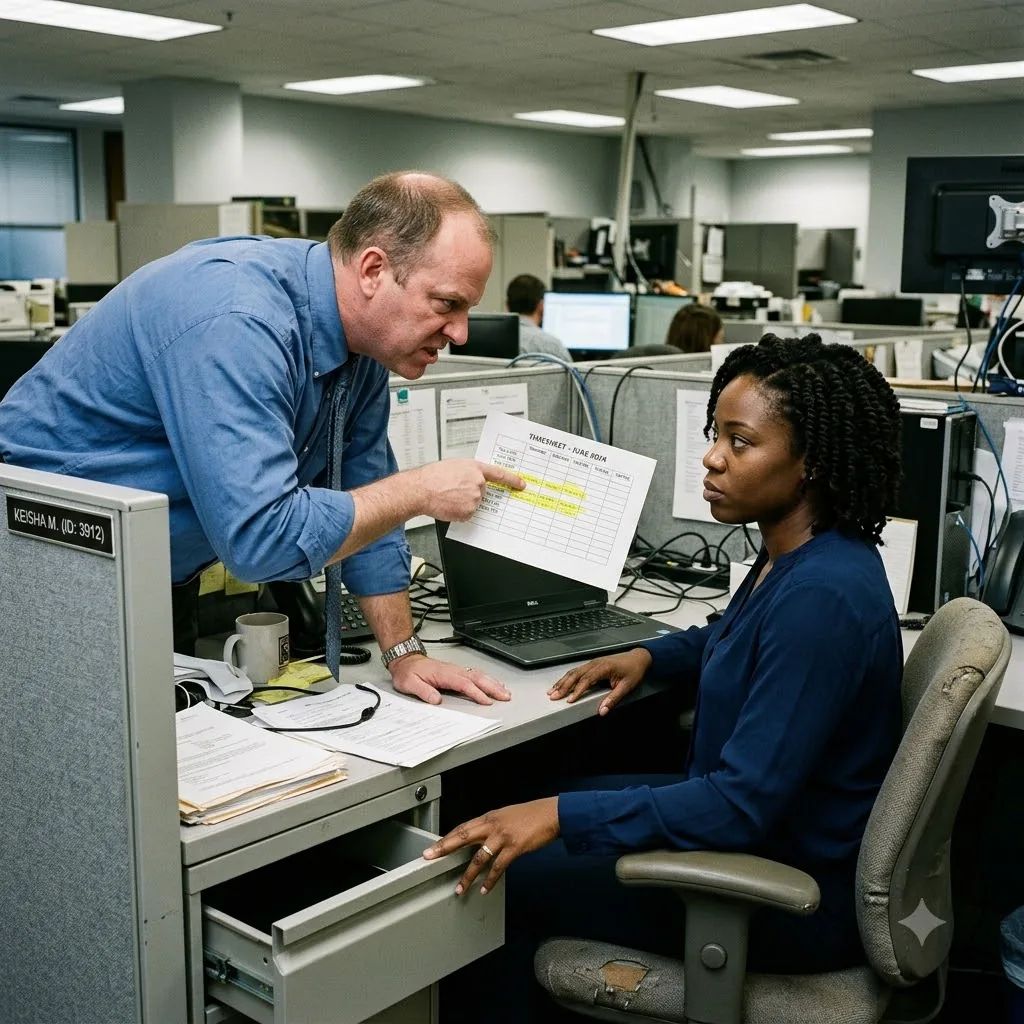
Greg tapped his gold-plated pen against Maya’s monitor, leaving a greasy smudge directly over a cell highlighted in aggressive neon yellow. The spreadsheet documented her entire week down to the second, and Greg was currently fixated on a singular, microscopic flaw.
“Six minutes,” Greg said, letting the words hang in the stagnant air of the open-plan office.
Maya kept her hands folded in her lap, pressing her fingernails into her palms to maintain a neutral expression. She did not look at the smudge, nor did she look at Greg’s face, which hovered entirely too close to her shoulder. Instead, she stared at the row of numbers indicating she had badged through the lobby at eight-fourteen but had not logged into the primary server until eight-twenty.
“This is a random audit,” Greg continued, his voice pitched just loud enough for Brad and Sarah in the neighboring cubicles to hear. “We run them on everyone.”
Maya knew that was a lie. She had seen Brad roll in at nine-thirty twice this week with a cardboard tray of iced coffees, entirely unbothered and definitely unaudited. But pointing that out would not serve her current objective. The silence in the surrounding cubicles grew heavy. The usual clatter of keyboards abruptly stopped, replaced by the distinct, strained quiet of coworkers actively pretending not to eavesdrop.
“We are just making sure our newer additions are fully aligned with the corporate work ethic,” Greg said. He leaned in closer, bringing with him the sharp, metallic scent of his aftershave. “It is about making sure you are a culture fit, Maya. Some backgrounds do not prepare people for the level of rigor we demand here.”
The coded language was heavy, familiar, and suffocating. Work ethic. Culture fit. Some backgrounds. Greg used these phrases like small, blunt instruments. He never outright said what he meant, but the implications were designed to keep her small, to remind her that he viewed her presence in the marketing department as a risky, charitable experiment.
“I understand,” Maya said, her voice even, stripped of any emotion he could weaponize.
“It is a matter of oversight,” Greg sighed, crossing his arms over his chest. He stood up straight, though he remained planted firmly in the narrow entrance of her workspace, effectively trapping her in the chair. “When we bring someone in who requires more hand-holding, it places a burden on the rest of the team. I need to know you are committed to the hours we pay you for. A six-minute gap might seem trivial to you, but it suggests a lack of urgency. It suggests you do not value company time.”
Maya shifted her weight in her ergonomic chair. Her left knee brushed against the metal handle of her bottom desk drawer. The drawer was unlocked. It was open just a fraction of an inch, casting a thin sliver of shadow against the industrial carpet.
“I was at my desk,” Maya stated flatly.
“But not logged in,” Greg countered instantly, tapping the monitor a second time. “Sitting at the desk is not working. Working is working. We need proactive energy. We need people who hit the ground running, not people who need nearly ten minutes to settle in.”
Maya focused on the rhythm of her breathing. In and out. She refused to give him the satisfaction of a defensive reaction. She refused to explain that the lobby elevators had been held for a freight delivery, or that she had stopped in the restroom. Giving him an excuse would only feed his narrative that she was constantly making excuses.
“I have to formally document this discrepancy,” Greg said, adjusting his expensive tie. “It goes into your quarterly file. I am sure you understand why we need to maintain strict standards.”
“Of course,” Maya said.
“I am watching your progress very closely,” Greg added, lowering his voice into a tone that feigned mentorship but dripped with a clear threat. “I want to see you succeed here, Maya. But you have to meet me halfway. You have to prove you belong in this environment. I cannot protect you if leadership sees a pattern of time theft.”
Time theft. Six minutes.
The sheer audacity of the phrase vibrated in the tight space between them. Maya slowly unclasped her hands. She let her left arm drop naturally to her side, sliding her fingertips down the edge of her chair.
“I will ensure there is no pattern,” Maya said.
“See that you do,” Greg said, refusing to step back. “Because the next audit might not be a simple warning. I need employees who do not require constant monitoring. I need to know you can manage yourself without me looking over your shoulder.”
As Greg launched into another repetitive lecture on professional standards, accountability, and his expectations for the quarter, Maya slipped her index finger into the tiny gap of the bottom drawer. She pushed it open just another millimeter. Her fingertip brushed the cool, smooth cover of the thick leather journal hidden completely out of his sight.
Greg tapped his gold-plated pen against Maya’s monitor, leaving a greasy smudge directly over a cell highlighted in aggressive neon yellow. The spreadsheet documented her entire week down to the second, and Greg was currently fixated on a singular, microscopic flaw.
“Six minutes,” Greg said, letting the words hang in the stagnant air of the open-plan office.
Maya kept her hands folded in her lap, pressing her fingernails into her palms to maintain a neutral expression. She did not look at the smudge, nor did she look at Greg’s face, which hovered entirely too close to her shoulder. Instead, she stared at the row of numbers indicating she had badged through the lobby at eight-fourteen but had not logged into the primary server until eight-twenty.
“This is a random audit,” Greg continued, his voice pitched just loud enough for Brad and Sarah in the neighboring cubicles to hear. “We run them on everyone.”
Maya knew that was a lie. She had seen Brad roll in at nine-thirty twice this week with a cardboard tray of iced coffees, entirely unbothered and definitely unaudited. But pointing that out would not serve her current objective. The silence in the surrounding cubicles grew heavy. The usual clatter of keyboards abruptly stopped, replaced by the distinct, strained quiet of coworkers actively pretending not to eavesdrop.
“We are just making sure our newer additions are fully aligned with the corporate work ethic,” Greg said. He leaned in closer, bringing with him the sharp, metallic scent of his aftershave. “It is about making sure you are a culture fit, Maya. Some backgrounds do not prepare people for the level of rigor we demand here.”
The coded language was heavy, familiar, and suffocating. Work ethic. Culture fit. Some backgrounds. Greg used these phrases like small, blunt instruments. He never outright said what he meant, but the implications were designed to keep her small, to remind her that he viewed her presence in the marketing department as a risky, charitable experiment.
“I understand,” Maya said, her voice even, stripped of any emotion he could weaponize.
“It is a matter of oversight,” Greg sighed, crossing his arms over his chest. He stood up straight, though he remained planted firmly in the narrow entrance of her workspace, effectively trapping her in the chair. “When we bring someone in who requires more hand-holding, it places a burden on the rest of the team. I need to know you are committed to the hours we pay you for. A six-minute gap might seem trivial to you, but it suggests a lack of urgency. It suggests you do not value company time.”
Maya shifted her weight in her ergonomic chair. Her left knee brushed against the metal handle of her bottom desk drawer. The drawer was unlocked. It was open just a fraction of an inch, casting a thin sliver of shadow against the industrial carpet.
“I was at my desk,” Maya stated flatly.
“But not logged in,” Greg countered instantly, tapping the monitor a second time. “Sitting at the desk is not working. Working is working. We need proactive energy. We need people who hit the ground running, not people who need nearly ten minutes to settle in.”
Maya focused on the rhythm of her breathing. In and out. She refused to give him the satisfaction of a defensive reaction. She refused to explain that the lobby elevators had been held for a freight delivery, or that she had stopped in the restroom. Giving him an excuse would only feed his narrative that she was constantly making excuses.
“I have to formally document this discrepancy,” Greg said, adjusting his expensive tie. “It goes into your quarterly file. I am sure you understand why we need to maintain strict standards.”
“Of course,” Maya said.
“I am watching your progress very closely,” Greg added, lowering his voice into a tone that feigned mentorship but dripped with a clear threat. “I want to see you succeed here, Maya. But you have to meet me halfway. You have to prove you belong in this environment. I cannot protect you if leadership sees a pattern of time theft.”
Time theft. Six minutes.
The sheer audacity of the phrase vibrated in the tight space between them. Maya slowly unclasped her hands. She let her left arm drop naturally to her side, sliding her fingertips down the edge of her chair.
“I will ensure there is no pattern,” Maya said.
“See that you do,” Greg said, refusing to step back. “Because the next audit might not be a simple warning. I need employees who do not require constant monitoring. I need to know you can manage yourself without me looking over your shoulder.”
As Greg launched into another repetitive lecture on professional standards, accountability, and his expectations for the quarter, Maya slipped her index finger into the tiny gap of the bottom drawer. She pushed it open just another millimeter. Her fingertip brushed the cool, smooth cover of the thick leather journal hidden completely out of his sight.