Story code: ST-000231
Part 1: Cut Access in the Courthouse Room
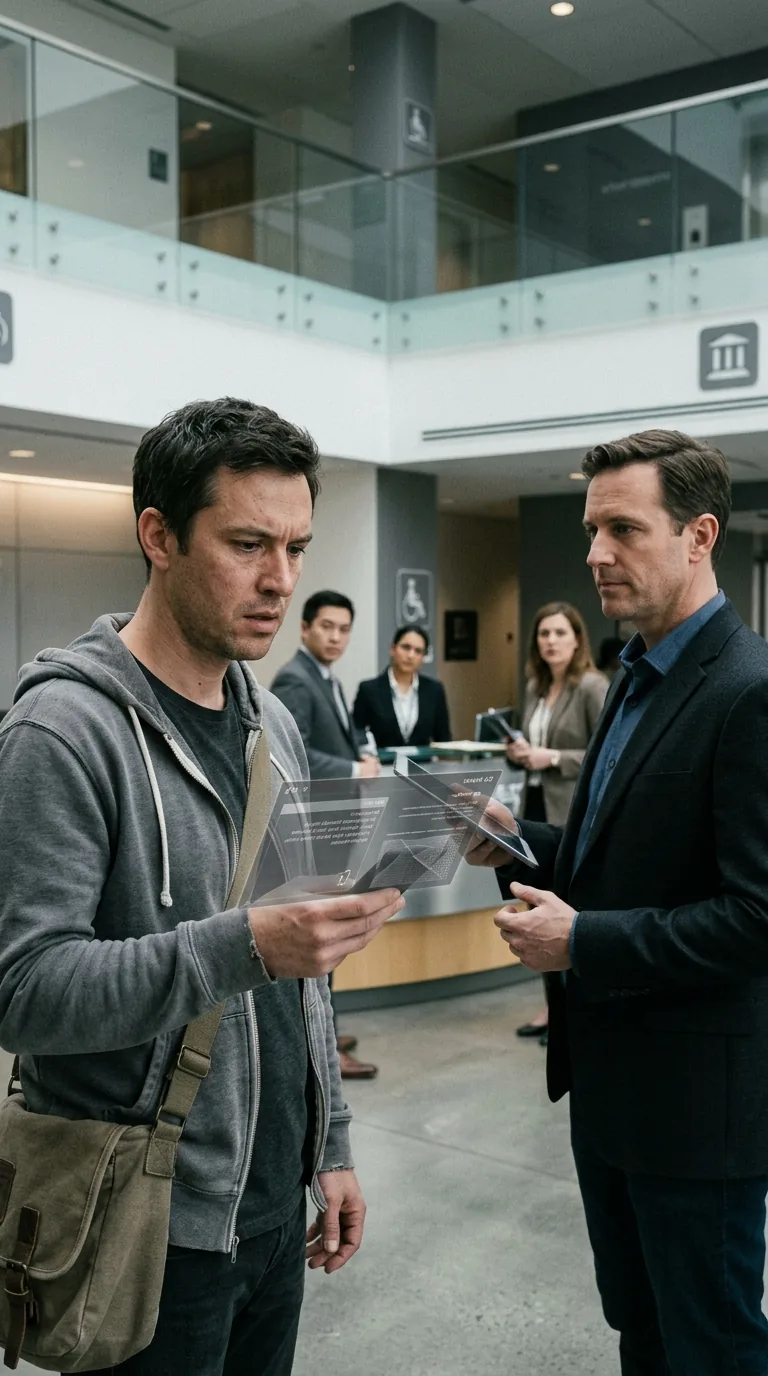
Cal Mercer cut my access right in the middle of the virtual courthouse lobby, where the deed panel was still open, the courthouse texture was all glass rails and gray icons, and my ride key, password, and help link all went dead at once. I was standing in the ordinary room with Mina Alvarez at the check-in desk, Iris beside the digital deed display, and Cal controlling the room through his permission panel like it was his home screen. The screen on my wrist flashed denied, the transport button dimmed, and the help tab spun once before locking to a blank line.
I had come in for a normal work step, nothing dramatic. The room looked like every other US courthouse interface built into the platform: clean columns, flat benches, a digital flag in one corner, and a deed bay on the wall where property records floated as bright blue tiles. People were moving through ordinary business. One clerk was guiding a couple toward a side portal. A man in a blazer was talking into a headset near the back. Mina was scanning arrivals and keeping her hand on the desk edge. Then Cal touched his panel, and the room changed shape around the cut.
He did not raise his voice. He did not have to. He stood near the deed bay with one hand low by his side and the other hovering over the permission strip. His replies stayed short. Mine did too after the first ask.
“My ride just locked,” I said, holding up the wrist display so he could see the red bar. “I need the access back.”
Cal looked at the screen, then at Iris, then back at me. “Not until this is handled.” His finger tapped once. The deed tile behind him brightened, which meant he had control of something in the room, and he knew I could see it.
Iris stepped closer to the deed bay, not to him. She kept one palm open near the interface and used the other to refresh a panel that should have loaded my transport path. It stayed blank. She tried the password lane next. Same result. The help prompt rolled, stalled, and dropped.
Mina saw all of it. She did not speak right away. She kept watching the timing: who arrived, who stopped, who waited. When she finally looked up, her eyes went from my dead wrist panel to Cal’s permission bar and back again.
“That shouldn’t be locked,” she said.
Cal gave a thin smile that never reached the rest of his face. “She knows what to do.”
I had not raised my voice yet. I asked once more, plain and even. “What do you need from me?”
He shifted his weight toward the deed bay. Not much. Just enough to make the room read the movement.
“The same thing I asked for earlier,” he said. “You can keep this simple.”
That was the whole pressure of it. No speech about rights. No loud threat. Just the visible cut: no ride, no key, no password, no help. The room kept going around us while mine stalled in place.
Iris kept her attention on the panel. She checked the deed tile, then the permission log, then the transport link under my name. Her fingers moved fast and clean. She did not announce anything. She only said, “The route is still there. It is not open.”
Cal heard that. His jaw moved once, and he touched the panel again. A gray notice slid across the deed bay: ACCESS TEMPORARILY RESTRICTED.
Mina let out a short breath through her nose and looked down at the desk. Another clerk passed behind her, slowed for half a step, then kept moving. Nobody in the room wanted to be the one to step into it.
I checked the wrist panel again. The ride slot had vanished. The help button was gone. The password reset link was there and then was not. Every practical way out of the room had been clipped off through the same account lane Cal was holding.
Iris leaned in toward the deed bay, low enough that only the three of us could hear her. “You are still using the deed channel,” she said. “That means it still has a live route.”
Cal’s hand froze on the panel for the first time.
He covered it fast, but I saw the delay. He was looking at the same numbers I was, or at least at enough of them to know they mattered. Then his screen flashed once, and the deed tile behind him changed from blue to amber.
Mina saw that too. Her eyes went to the tile, then to Cal’s hand, then to Iris.
I did not say what I noticed next: the access cut had landed hard, but the deed bay was still asking for a response from somebody in the room. If Cal had already shut me out, why was the system still waiting on him to clear something he was pretending he did not need?
Cal Mercer cut my access right in the middle of the virtual courthouse lobby, where the deed panel was still open, the courthouse texture was all glass rails and gray icons, and my ride key, password, and help link all went dead at once. I was standing in the ordinary room with Mina Alvarez at the check-in desk, Iris beside the digital deed display, and Cal controlling the room through his permission panel like it was his home screen. The screen on my wrist flashed denied, the transport button dimmed, and the help tab spun once before locking to a blank line.
I had come in for a normal work step, nothing dramatic. The room looked like every other US courthouse interface built into the platform: clean columns, flat benches, a digital flag in one corner, and a deed bay on the wall where property records floated as bright blue tiles. People were moving through ordinary business. One clerk was guiding a couple toward a side portal. A man in a blazer was talking into a headset near the back. Mina was scanning arrivals and keeping her hand on the desk edge. Then Cal touched his panel, and the room changed shape around the cut.
He did not raise his voice. He did not have to. He stood near the deed bay with one hand low by his side and the other hovering over the permission strip. His replies stayed short. Mine did too after the first ask.
“My ride just locked,” I said, holding up the wrist display so he could see the red bar. “I need the access back.”
Cal looked at the screen, then at Iris, then back at me. “Not until this is handled.” His finger tapped once. The deed tile behind him brightened, which meant he had control of something in the room, and he knew I could see it.
Iris stepped closer to the deed bay, not to him. She kept one palm open near the interface and used the other to refresh a panel that should have loaded my transport path. It stayed blank. She tried the password lane next. Same result. The help prompt rolled, stalled, and dropped.
Mina saw all of it. She did not speak right away. She kept watching the timing: who arrived, who stopped, who waited. When she finally looked up, her eyes went from my dead wrist panel to Cal’s permission bar and back again.
“That shouldn’t be locked,” she said.
Cal gave a thin smile that never reached the rest of his face. “She knows what to do.”
I had not raised my voice yet. I asked once more, plain and even. “What do you need from me?”
He shifted his weight toward the deed bay. Not much. Just enough to make the room read the movement.
“The same thing I asked for earlier,” he said. “You can keep this simple.”
That was the whole pressure of it. No speech about rights. No loud threat. Just the visible cut: no ride, no key, no password, no help. The room kept going around us while mine stalled in place.
Iris kept her attention on the panel. She checked the deed tile, then the permission log, then the transport link under my name. Her fingers moved fast and clean. She did not announce anything. She only said, “The route is still there. It is not open.”
Cal heard that. His jaw moved once, and he touched the panel again. A gray notice slid across the deed bay: ACCESS TEMPORARILY RESTRICTED.
Mina let out a short breath through her nose and looked down at the desk. Another clerk passed behind her, slowed for half a step, then kept moving. Nobody in the room wanted to be the one to step into it.
I checked the wrist panel again. The ride slot had vanished. The help button was gone. The password reset link was there and then was not. Every practical way out of the room had been clipped off through the same account lane Cal was holding.
Iris leaned in toward the deed bay, low enough that only the three of us could hear her. “You are still using the deed channel,” she said. “That means it still has a live route.”
Cal’s hand froze on the panel for the first time.
He covered it fast, but I saw the delay. He was looking at the same numbers I was, or at least at enough of them to know they mattered. Then his screen flashed once, and the deed tile behind him changed from blue to amber.
Mina saw that too. Her eyes went to the tile, then to Cal’s hand, then to Iris.
I did not say what I noticed next: the access cut had landed hard, but the deed bay was still asking for a response from somebody in the room. If Cal had already shut me out, why was the system still waiting on him to clear something he was pretending he did not need?