Story code: ST-000398
Part 1: The Bin and the Big Word
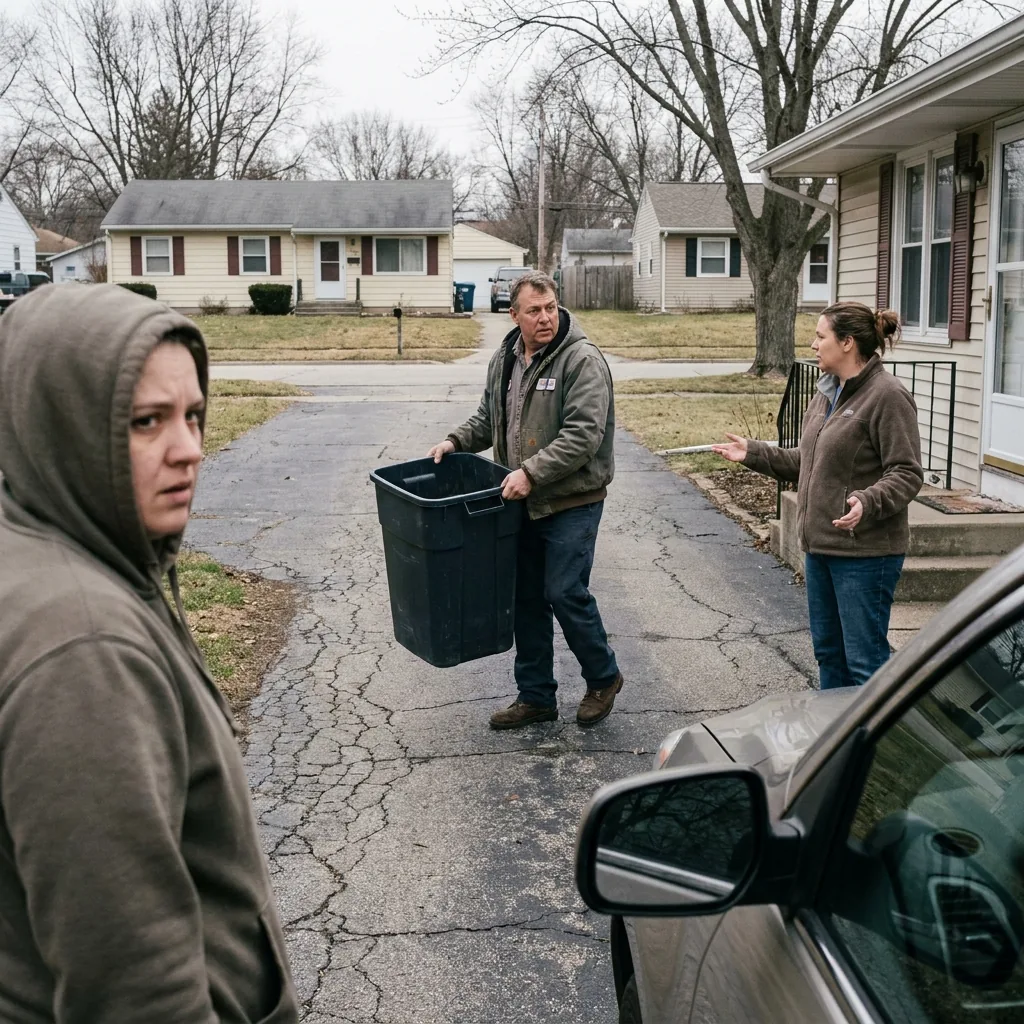
Derek Hall was halfway down the shared driveway with Megan Price’s trash bin in both hands, talking over her before she could even finish saying to put it back. He stood there in the middle of the concrete like the space belonged to his voice, the black bin scraping beside his shoes while the lid kept popping open and shut in the wind from a passing car. Then he used a word none of us had heard before and said it like a specialist was settling the matter for good.
He pointed at the bin, then at the painted edge where the two properties met, and said, “This is a lateral easement interlock issue. It’s basic access control.” He said it smooth and fast, like he had used the phrase in a meeting instead of making it up in a driveway. Megan was standing on the other side of the bin, one hand still on the handle, looking from the bin to Derek’s face and back again. Mrs. Alvarez had come out of her front door with a grocery bag in one hand and stopped near the walkway, her eyes moving from the bin to the line in the pavement to Derek’s gestures.
Derek kept going before anybody else could get a word in. “If you don’t understand the access geometry, that’s fine, but don’t block shared ingress and then act like you’re being treated unfairly.” He used his free hand to draw a little shape in the air, like the driveway was a diagram only he could read. Megan said, very plainly, “It’s my trash bin. Put it back where it was.” Derek did not answer that directly. He lifted his chin and spoke louder, not faster, just louder. “I’m trying to keep this from turning into a liability issue for everyone involved.”
That was the part that made the whole thing go still for a second. The bin sat crooked in the middle of the driveway while he stood over it talking like the words themselves had authority. Mrs. Alvarez shifted her grocery bag to the other hand and looked at the wheels on the bin. Megan’s fingers tightened on the handle, but she did not step back. Derek kept using the same polished voice, the kind that makes a small problem sound like a professional consultation. He said the bin had to stay “within the access corridor,” then said the placement was “noncompliant with the shared-driveway protocol,” then said he was being generous by explaining it instead of “escalating it through the proper channels.”
He never once said where his “protocol” came from. He never named a rule anyone else could check. He just kept feeding the air with terms. I was standing a few feet away with my hands full of the boxes I had been carrying to my car, and I could see the way the words were working on the space. Megan had to keep asking about the same object over and over because Derek kept sliding away from the bin itself. “Move the bin back.” “The bin was fine where it was.” “Why are you making this harder?” He answered with more jargon. “Because your placement is creating an access anomaly.”
Mrs. Alvarez glanced at me once, then back at Derek, like she was waiting for the sentence that would make sense. Derek caught that look and leaned into it. “It’s not a big deal unless somebody doesn’t understand the mechanics,” he said. “I’m just trying to keep people from acting on bad information.” Then he tapped the side of the bin with two fingers, soft and smug, like he was demonstrating a point in class. Megan said, still calm but louder now, “You are not taking my trash bin because you invented a phrase.”
Derek smiled at that the way people do when they think the other person has walked right into the trap. “I didn’t invent anything,” he said. “You just don’t know the terminology.” He said it in a voice meant for an audience that wanted to believe expertise was the same thing as being right. Mrs. Alvarez’s mouth pressed into a thin line. The lid on the bin lifted once in the breeze and slapped shut again.
Derek turned his shoulder toward Megan and kept talking at the rest of us instead of at her. “Look, the issue is simple if you understand lateral access.” Then he said the fake term again, slower this time, like repeating it would make it real. “This is a lateral easement interlock.”
He said it with complete confidence, standing beside the trash bin in the shared driveway, while Megan kept one hand on the handle and Mrs. Alvarez kept looking from the painted line to his face. That was the moment he made the mistake of explaining the word instead of the bin, and he did it so cleanly that I still remember the exact shape of his hand when he said it. Why would a real rule need that much performance in the middle of a driveway?
Derek Hall was halfway down the shared driveway with Megan Price’s trash bin in both hands, talking over her before she could even finish saying to put it back. He stood there in the middle of the concrete like the space belonged to his voice, the black bin scraping beside his shoes while the lid kept popping open and shut in the wind from a passing car. Then he used a word none of us had heard before and said it like a specialist was settling the matter for good.
He pointed at the bin, then at the painted edge where the two properties met, and said, “This is a lateral easement interlock issue. It’s basic access control.” He said it smooth and fast, like he had used the phrase in a meeting instead of making it up in a driveway. Megan was standing on the other side of the bin, one hand still on the handle, looking from the bin to Derek’s face and back again. Mrs. Alvarez had come out of her front door with a grocery bag in one hand and stopped near the walkway, her eyes moving from the bin to the line in the pavement to Derek’s gestures.
Derek kept going before anybody else could get a word in. “If you don’t understand the access geometry, that’s fine, but don’t block shared ingress and then act like you’re being treated unfairly.” He used his free hand to draw a little shape in the air, like the driveway was a diagram only he could read. Megan said, very plainly, “It’s my trash bin. Put it back where it was.” Derek did not answer that directly. He lifted his chin and spoke louder, not faster, just louder. “I’m trying to keep this from turning into a liability issue for everyone involved.”
That was the part that made the whole thing go still for a second. The bin sat crooked in the middle of the driveway while he stood over it talking like the words themselves had authority. Mrs. Alvarez shifted her grocery bag to the other hand and looked at the wheels on the bin. Megan’s fingers tightened on the handle, but she did not step back. Derek kept using the same polished voice, the kind that makes a small problem sound like a professional consultation. He said the bin had to stay “within the access corridor,” then said the placement was “noncompliant with the shared-driveway protocol,” then said he was being generous by explaining it instead of “escalating it through the proper channels.”
He never once said where his “protocol” came from. He never named a rule anyone else could check. He just kept feeding the air with terms. I was standing a few feet away with my hands full of the boxes I had been carrying to my car, and I could see the way the words were working on the space. Megan had to keep asking about the same object over and over because Derek kept sliding away from the bin itself. “Move the bin back.” “The bin was fine where it was.” “Why are you making this harder?” He answered with more jargon. “Because your placement is creating an access anomaly.”
Mrs. Alvarez glanced at me once, then back at Derek, like she was waiting for the sentence that would make sense. Derek caught that look and leaned into it. “It’s not a big deal unless somebody doesn’t understand the mechanics,” he said. “I’m just trying to keep people from acting on bad information.” Then he tapped the side of the bin with two fingers, soft and smug, like he was demonstrating a point in class. Megan said, still calm but louder now, “You are not taking my trash bin because you invented a phrase.”
Derek smiled at that the way people do when they think the other person has walked right into the trap. “I didn’t invent anything,” he said. “You just don’t know the terminology.” He said it in a voice meant for an audience that wanted to believe expertise was the same thing as being right. Mrs. Alvarez’s mouth pressed into a thin line. The lid on the bin lifted once in the breeze and slapped shut again.
Derek turned his shoulder toward Megan and kept talking at the rest of us instead of at her. “Look, the issue is simple if you understand lateral access.” Then he said the fake term again, slower this time, like repeating it would make it real. “This is a lateral easement interlock.”
He said it with complete confidence, standing beside the trash bin in the shared driveway, while Megan kept one hand on the handle and Mrs. Alvarez kept looking from the painted line to his face. That was the moment he made the mistake of explaining the word instead of the bin, and he did it so cleanly that I still remember the exact shape of his hand when he said it. Why would a real rule need that much performance in the middle of a driveway?