Story code: ST-000966
Part 1: The Sterile Divide
Chloe adjusted the screen brightness on her tablet to minimize the glare from the overhead fluorescent lights. The ER waiting room was experiencing a rare, sterile lull at two in the morning, smelling faintly of lemon bleach and ozone. She tapped the backspace key, carefully deleting the phrase “property values” and typing “pedestrian safety” in its place. Her email to the Oakridge Zoning Board needed to strike the perfect tone of concerned, civic-minded citizenship. She prided herself on her progressive politics, her monthly donations to civil rights groups, and her vast empathy, but a multi-story subsidized housing unit at the end of her cul-de-sac was simply a step too far. It would ruin the neighborhood aesthetic. It would inevitably increase traffic. It was a matter of infrastructure, she told herself, not class.
She tapped her manicured nail against the edge of the triage desk, reviewing the paragraph. It was polished. It was weaponized politeness. She reached for her iced matcha latte to take a celebratory sip just as the heavy glass automatic doors at the entrance hissed apart.
The sharp, unmistakable stench of cow manure and raw copper rushed into the climate-controlled air.
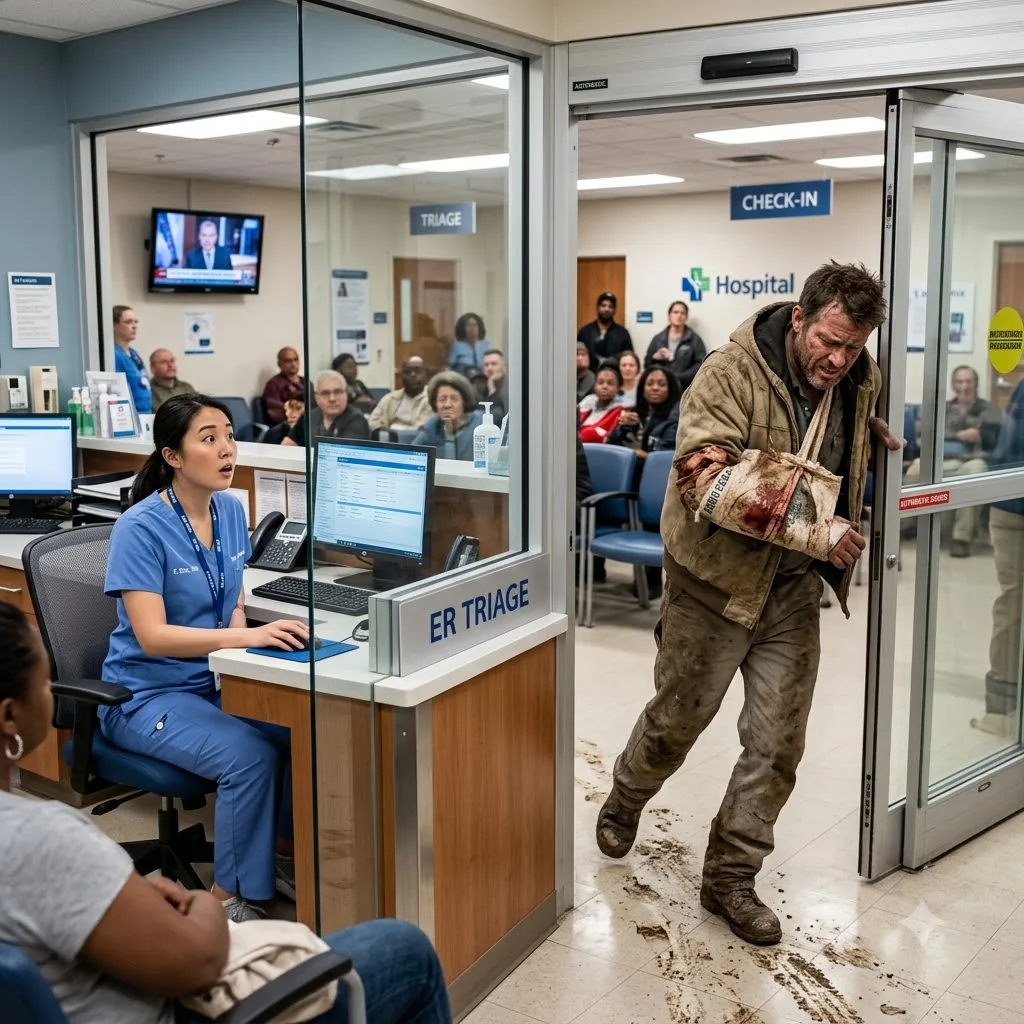
Chloe lowered her cup. A man stood in the entryway, swaying slightly. His boots were thick with dark, wet muck that immediately began to stain the pristine linoleum tiles. He wore a faded flannel shirt ripped at the shoulder, but her eyes zeroed in on his right arm. He cradled it against his chest, wrapped in a heavy, woven burlap feed sack. The fabric was soaked through with a deep, blossoming crimson that dripped steadily onto the floor.
He looked terrified. His eyes darted around the empty waiting room, lingering on the security cameras mounted in the corners, then locking onto Chloe with the desperate intensity of a cornered animal.
“Sir, you need to come sit down,” Chloe instructed, her professional instincts overriding her annoyance at the mud. She locked her tablet screen, the zoning board email vanishing into the dark, and stepped out from behind the reinforced glass of the triage counter.
The man took a half-step backward as she approached. He shook his head frantically, his breathing shallow and rapid. He mumbled something in Spanish, his voice barely a rasp.
“I need to see that arm,” she said, keeping her voice calm and authoritative, the tone she used to de-escalate combative drunks. “I am a nurse. Let me help you.”
He squeezed his injured arm tighter against his ribs. A fresh wave of blood seeped through the rough burlap, dripping off his elbow to splatter on the toe of his ruined boot. He swallowed hard and spoke in heavily accented, broken English, demanding she stop where she was. He told her he only needed bandages and thread. He insisted he could not sign any papers. He repeated the word “cash” twice, pulling a crumpled twenty-dollar bill from his front pocket with trembling, grease-stained fingers.
Chloe stopped three feet away. The pieces snapped together in her mind. He was an agricultural worker from one of the massive dairy farms out on Route 9, likely off the books, and definitely terrified of the hospital’s mandatory reporting protocols. If she registered him, he would be in the system. The police or immigration enforcement would be notified of a severe workplace injury. If she didn’t register him, she was violating every fundamental protocol of her nursing license.
“Put the money away,” she directed softly, gesturing toward an examination chair in the triage alcove. “Sit down. Just let me look.”
He hesitated, scanning the quiet corridor behind her. The silence of the hospital suddenly felt oppressive, heavy with the weight of the rules she was supposed to enforce. Slowly, he shuffled toward the chair, leaving a trail of brown and red across the shining floor. He collapsed into the plastic seat, his head falling back against the wall as a quiet groan escaped his lips.
Chloe pulled on a pair of purple nitrile gloves from the wall dispenser. She approached him cautiously and reached for the blood-soaked feed sack. The rough fabric was stiffening with coagulating blood and smelled strongly of livestock and torn flesh. She peeled the top layer back.
The laceration was horrific. It looked like an industrial crush injury combined with a deep, jagged tear, exposing muscle tissue and the dull gleam of white bone near the forearm. This was not something a simple bandage and butterfly stitches could fix. He needed a trauma surgeon, intravenous antibiotics, and a sterile operating room.
“This is very bad,” she murmured, feeling the pulse in his wrist above the wound. It was thready and dangerously fast. “You need a doctor. We have to check you in.”
At the word doctor, the man’s eyes snapped open in absolute panic. He ripped his arm out of her grasp with surprising strength, suppressing a scream of agony through clenched teeth. He stood up abruptly, knocking the plastic chair backward. It clattered loudly against the floor.
He clutched the sack to his chest again, backing toward the hissing automatic doors. He told her she was going to ruin his life. He accused her of calling the authorities.
“I am not calling anyone,” Chloe insisted, taking a step toward him. Her heart hammered against her ribs. She thought of her tablet sitting on the desk, holding an email designed to quietly push people exactly like him out of her pristine suburban bubble. Now he was bleeding on her shoes, demanding she prove her proclaimed empathy.
He reached the threshold of the doors, swaying heavily. The sensors triggered, parting the glass to let in the humid night air. Before he could turn to run into the dark, the imposing figure of the hospital’s night security guard stepped out of the shadows of the ambulance bay, blocking the exit entirely.
Chloe adjusted the screen brightness on her tablet to minimize the glare from the overhead fluorescent lights. The ER waiting room was experiencing a rare, sterile lull at two in the morning, smelling faintly of lemon bleach and ozone. She tapped the backspace key, carefully deleting the phrase “property values” and typing “pedestrian safety” in its place. Her email to the Oakridge Zoning Board needed to strike the perfect tone of concerned, civic-minded citizenship. She prided herself on her progressive politics, her monthly donations to civil rights groups, and her vast empathy, but a multi-story subsidized housing unit at the end of her cul-de-sac was simply a step too far. It would ruin the neighborhood aesthetic. It would inevitably increase traffic. It was a matter of infrastructure, she told herself, not class.
She tapped her manicured nail against the edge of the triage desk, reviewing the paragraph. It was polished. It was weaponized politeness. She reached for her iced matcha latte to take a celebratory sip just as the heavy glass automatic doors at the entrance hissed apart.
The sharp, unmistakable stench of cow manure and raw copper rushed into the climate-controlled air.
Chloe lowered her cup. A man stood in the entryway, swaying slightly. His boots were thick with dark, wet muck that immediately began to stain the pristine linoleum tiles. He wore a faded flannel shirt ripped at the shoulder, but her eyes zeroed in on his right arm. He cradled it against his chest, wrapped in a heavy, woven burlap feed sack. The fabric was soaked through with a deep, blossoming crimson that dripped steadily onto the floor.
He looked terrified. His eyes darted around the empty waiting room, lingering on the security cameras mounted in the corners, then locking onto Chloe with the desperate intensity of a cornered animal.
“Sir, you need to come sit down,” Chloe instructed, her professional instincts overriding her annoyance at the mud. She locked her tablet screen, the zoning board email vanishing into the dark, and stepped out from behind the reinforced glass of the triage counter.
The man took a half-step backward as she approached. He shook his head frantically, his breathing shallow and rapid. He mumbled something in Spanish, his voice barely a rasp.
“I need to see that arm,” she said, keeping her voice calm and authoritative, the tone she used to de-escalate combative drunks. “I am a nurse. Let me help you.”
He squeezed his injured arm tighter against his ribs. A fresh wave of blood seeped through the rough burlap, dripping off his elbow to splatter on the toe of his ruined boot. He swallowed hard and spoke in heavily accented, broken English, demanding she stop where she was. He told her he only needed bandages and thread. He insisted he could not sign any papers. He repeated the word “cash” twice, pulling a crumpled twenty-dollar bill from his front pocket with trembling, grease-stained fingers.
Chloe stopped three feet away. The pieces snapped together in her mind. He was an agricultural worker from one of the massive dairy farms out on Route 9, likely off the books, and definitely terrified of the hospital’s mandatory reporting protocols. If she registered him, he would be in the system. The police or immigration enforcement would be notified of a severe workplace injury. If she didn’t register him, she was violating every fundamental protocol of her nursing license.
“Put the money away,” she directed softly, gesturing toward an examination chair in the triage alcove. “Sit down. Just let me look.”
He hesitated, scanning the quiet corridor behind her. The silence of the hospital suddenly felt oppressive, heavy with the weight of the rules she was supposed to enforce. Slowly, he shuffled toward the chair, leaving a trail of brown and red across the shining floor. He collapsed into the plastic seat, his head falling back against the wall as a quiet groan escaped his lips.
Chloe pulled on a pair of purple nitrile gloves from the wall dispenser. She approached him cautiously and reached for the blood-soaked feed sack. The rough fabric was stiffening with coagulating blood and smelled strongly of livestock and torn flesh. She peeled the top layer back.
The laceration was horrific. It looked like an industrial crush injury combined with a deep, jagged tear, exposing muscle tissue and the dull gleam of white bone near the forearm. This was not something a simple bandage and butterfly stitches could fix. He needed a trauma surgeon, intravenous antibiotics, and a sterile operating room.
“This is very bad,” she murmured, feeling the pulse in his wrist above the wound. It was thready and dangerously fast. “You need a doctor. We have to check you in.”
At the word doctor, the man’s eyes snapped open in absolute panic. He ripped his arm out of her grasp with surprising strength, suppressing a scream of agony through clenched teeth. He stood up abruptly, knocking the plastic chair backward. It clattered loudly against the floor.
He clutched the sack to his chest again, backing toward the hissing automatic doors. He told her she was going to ruin his life. He accused her of calling the authorities.
“I am not calling anyone,” Chloe insisted, taking a step toward him. Her heart hammered against her ribs. She thought of her tablet sitting on the desk, holding an email designed to quietly push people exactly like him out of her pristine suburban bubble. Now he was bleeding on her shoes, demanding she prove her proclaimed empathy.
He reached the threshold of the doors, swaying heavily. The sensors triggered, parting the glass to let in the humid night air. Before he could turn to run into the dark, the imposing figure of the hospital’s night security guard stepped out of the shadows of the ambulance bay, blocking the exit entirely.