Story code: ST-000984
Part 1: The Distressed Patina
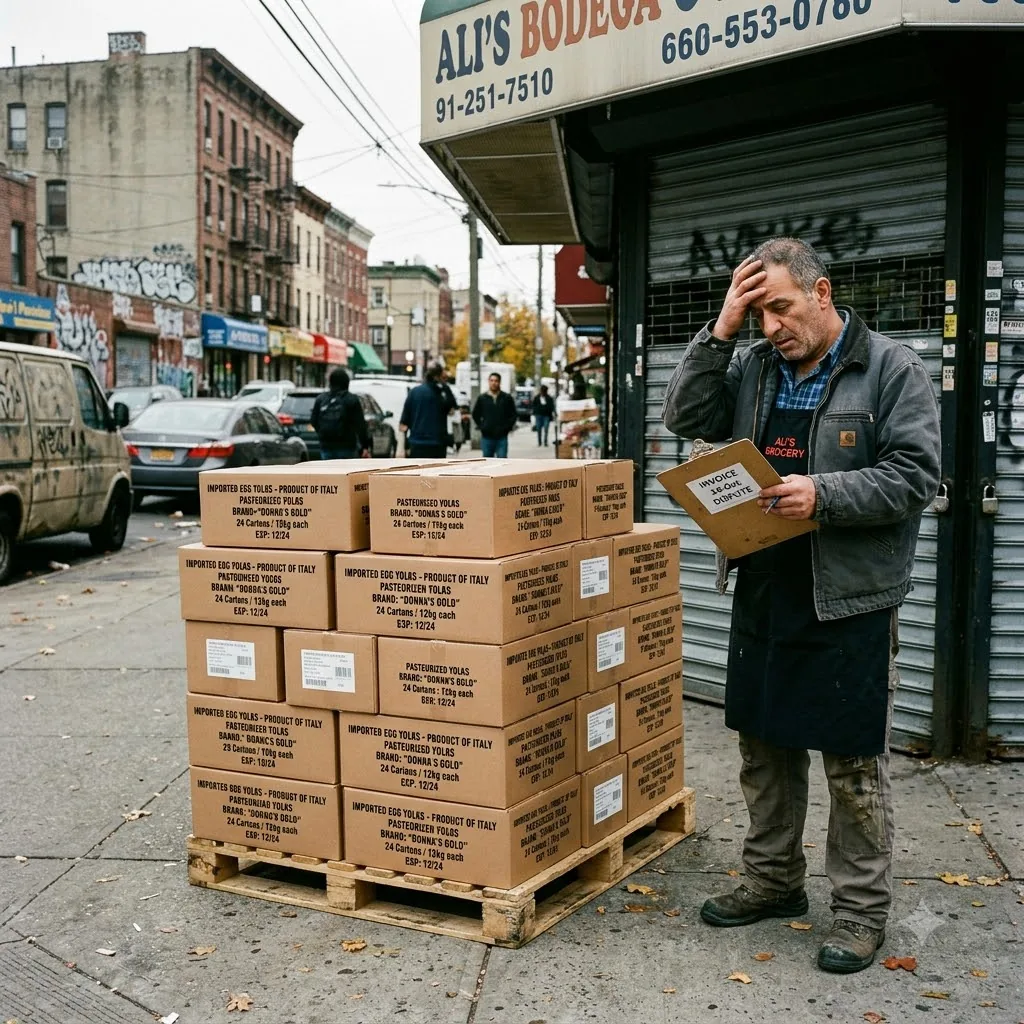
Hector braced his steel-toed work boots against the cracked concrete, but he could not reach the padlock on his bodega’s metal security gate. A monolithic wooden pallet, wrapped in thick layers of industrial plastic, occupied the exact spot where he needed to stand. The shrink-wrap squeezed tight around fifty corrugated cardboard boxes, each stamped with an elegant crimson sun and stenciled text declaring the contents to be imported, yuzu-fed Japanese egg yolks.
He checked his digital watch. Five-fifteen in the morning, and the neighborhood supply trucks were not due for another three hours. The pallet was heavy enough to crack the uneven pavement beneath it. Hector pressed his shoulder against the stack, trying to wedge enough space to slip his arm through to the gate padlock, but the boxes did not budge. The street was entirely silent, save for the hum of the amber streetlights and the distant rumble of the early commuter train.
A wooden delivery clipboard was wedged tightly between two of the top boxes. Hector grabbed the metal clip and yanked it free. As he did, a thick rubber band snapped, sending a disorganized stack of white envelopes fluttering to the damp sidewalk. The local postal worker had apparently given up trying to slide mail under the blocked door and simply stuffed Hector’s daily delivery into the nearest available crevice.
Hector knelt on the damp concrete, gathering the scattered envelopes. He sorted through past-due utility bills, grocery circulars, and a thick manila envelope bearing the embossed crest of the property management company. The return address belonged to the venture capital holding group that had purchased the entire block six months ago. He tore the flap open with his thumb.
The single sheet of heavy bond paper inside carried no pleasantries. It was a formal commercial lease renewal notice. Hector scanned the dense legal text, his eyes catching on the bold numbers printed at the bottom of the page. He read the figure three times. The management company was demanding a four hundred percent rent increase, effective at the end of the next thirty days.
The cool morning air in his lungs turned to lead. His father had signed the original lease for this corner spot thirty-two years ago, back when the neighborhood consisted mostly of auto repair shops and vacant lots. Now, holding the piece of paper that effectively condemned his family’s legacy, Hector stared blindly at the cartoonish drawing of a golden egg on the box in front of him. A four hundred percent hike was not a negotiation tactic. It was an eviction notice disguised as paperwork.
A sharp squeal of metal hinges broke the quiet.
Next door, the rusted iron grate of the old neighborhood laundromat had been replaced by a sleek, matte-black glass door. It swung open to reveal a man wearing a raw denim apron over a vintage band t-shirt. The man carried a steaming ceramic mug and possessed a meticulously waxed mustache that curled at the ends. This was the new tenant, the purveyor of a shop specializing in small-batch, artisanal mayonnaise.
The man took a slow sip from his mug and looked at the towering mountain of egg yolks. He let out a long, satisfied breath.
“Incredible,” the man said, stepping onto the sidewalk. “They actually got the overnight cold-chain logistics right. The yuzu flavor profile completely degrades if they drop below forty degrees for even a single hour.”
Hector stood up, the lease renewal crumpled tightly in his fist. He pointed a steady finger at the pallet blocking his family’s business.
“Ah, man, my bad,” the neighbor said, though his tone held zero urgency or apology. “Logistics just drops this stuff wherever the GPS tells them to. I am Silas, by the way. We haven’t formally met, since I have been in the trenches building out the lab. I mean, the kitchen.”
Hector remained silent, waiting for Silas to offer a solution to the immediate physical problem blocking his livelihood.
Silas stepped closer, his expensive leather boots clicking sharply on the concrete. He looked past the pallet, studying the faded, hand-painted sign above Hector’s gate. He admired the chipped paint, the weathered aluminum framing, and the faded lettering of Hector’s last name.
“I have to say, the authentic aesthetic you have going on here is absolutely brilliant,” Silas said, reaching out to trace a finger over a rusted rivet on the gate frame. “You cannot buy that kind of distressed patina. We were actually hoping to capture some of this raw, urban energy for our brand identity. People crave the real neighborhood feel.”
Hector looked down at the paper in his hand. The piece of paper that dictated the total destruction of his real neighborhood feel.
Silas noticed the document. He noticed the rigid, trembling tension in Hector’s jaw.
“Look, I know the transition on this block is intense,” Silas said, lowering his voice to a tone of practiced, superficial empathy. “The corporate landlords are cleaning house. But I see a unique opportunity for us to align. We need more floor space for our emulsification centrifuges, and you possess the prime corner footprint. We are prepared to offer a synergistic buyout of your remaining lease.”
Hector stared at the man. The artisanal chef was offering to buy out a lease that, as of three minutes ago, was entirely worthless to anyone without venture capital backing.
“We retain your signage,” Silas continued, gesturing grandly at the faded awning above them. “We keep the grit. We keep the bodega vibe. We just transition the inventory to our heritage fat-based products. It honors the rich history of the space while elevating the demographic.”
Hector smoothed out the crumpled lease renewal against his thigh. He looked at the absurd mountain of imported yolks, then at the man praising the aesthetic of a struggling family business he fully intended to gut and hollow out. The venture capital management company wanted him gone. The mayonnaise artisan wanted to wear his family’s history like a cheap costume.
Silas reached into the front pocket of his denim apron and produced a thick, textured letterpress business card, extending it toward Hector.
Hector did not take the card. He folded the devastating rent hike into a tiny square, slipped it into his chest pocket, and stepped toward the massive stack of imported Japanese egg yolks.
Hector braced his steel-toed work boots against the cracked concrete, but he could not reach the padlock on his bodega’s metal security gate. A monolithic wooden pallet, wrapped in thick layers of industrial plastic, occupied the exact spot where he needed to stand. The shrink-wrap squeezed tight around fifty corrugated cardboard boxes, each stamped with an elegant crimson sun and stenciled text declaring the contents to be imported, yuzu-fed Japanese egg yolks.
He checked his digital watch. Five-fifteen in the morning, and the neighborhood supply trucks were not due for another three hours. The pallet was heavy enough to crack the uneven pavement beneath it. Hector pressed his shoulder against the stack, trying to wedge enough space to slip his arm through to the gate padlock, but the boxes did not budge. The street was entirely silent, save for the hum of the amber streetlights and the distant rumble of the early commuter train.
A wooden delivery clipboard was wedged tightly between two of the top boxes. Hector grabbed the metal clip and yanked it free. As he did, a thick rubber band snapped, sending a disorganized stack of white envelopes fluttering to the damp sidewalk. The local postal worker had apparently given up trying to slide mail under the blocked door and simply stuffed Hector’s daily delivery into the nearest available crevice.
Hector knelt on the damp concrete, gathering the scattered envelopes. He sorted through past-due utility bills, grocery circulars, and a thick manila envelope bearing the embossed crest of the property management company. The return address belonged to the venture capital holding group that had purchased the entire block six months ago. He tore the flap open with his thumb.
The single sheet of heavy bond paper inside carried no pleasantries. It was a formal commercial lease renewal notice. Hector scanned the dense legal text, his eyes catching on the bold numbers printed at the bottom of the page. He read the figure three times. The management company was demanding a four hundred percent rent increase, effective at the end of the next thirty days.
The cool morning air in his lungs turned to lead. His father had signed the original lease for this corner spot thirty-two years ago, back when the neighborhood consisted mostly of auto repair shops and vacant lots. Now, holding the piece of paper that effectively condemned his family’s legacy, Hector stared blindly at the cartoonish drawing of a golden egg on the box in front of him. A four hundred percent hike was not a negotiation tactic. It was an eviction notice disguised as paperwork.
A sharp squeal of metal hinges broke the quiet.
Next door, the rusted iron grate of the old neighborhood laundromat had been replaced by a sleek, matte-black glass door. It swung open to reveal a man wearing a raw denim apron over a vintage band t-shirt. The man carried a steaming ceramic mug and possessed a meticulously waxed mustache that curled at the ends. This was the new tenant, the purveyor of a shop specializing in small-batch, artisanal mayonnaise.
The man took a slow sip from his mug and looked at the towering mountain of egg yolks. He let out a long, satisfied breath.
“Incredible,” the man said, stepping onto the sidewalk. “They actually got the overnight cold-chain logistics right. The yuzu flavor profile completely degrades if they drop below forty degrees for even a single hour.”
Hector stood up, the lease renewal crumpled tightly in his fist. He pointed a steady finger at the pallet blocking his family’s business.
“Ah, man, my bad,” the neighbor said, though his tone held zero urgency or apology. “Logistics just drops this stuff wherever the GPS tells them to. I am Silas, by the way. We haven’t formally met, since I have been in the trenches building out the lab. I mean, the kitchen.”
Hector remained silent, waiting for Silas to offer a solution to the immediate physical problem blocking his livelihood.
Silas stepped closer, his expensive leather boots clicking sharply on the concrete. He looked past the pallet, studying the faded, hand-painted sign above Hector’s gate. He admired the chipped paint, the weathered aluminum framing, and the faded lettering of Hector’s last name.
“I have to say, the authentic aesthetic you have going on here is absolutely brilliant,” Silas said, reaching out to trace a finger over a rusted rivet on the gate frame. “You cannot buy that kind of distressed patina. We were actually hoping to capture some of this raw, urban energy for our brand identity. People crave the real neighborhood feel.”
Hector looked down at the paper in his hand. The piece of paper that dictated the total destruction of his real neighborhood feel.
Silas noticed the document. He noticed the rigid, trembling tension in Hector’s jaw.
“Look, I know the transition on this block is intense,” Silas said, lowering his voice to a tone of practiced, superficial empathy. “The corporate landlords are cleaning house. But I see a unique opportunity for us to align. We need more floor space for our emulsification centrifuges, and you possess the prime corner footprint. We are prepared to offer a synergistic buyout of your remaining lease.”
Hector stared at the man. The artisanal chef was offering to buy out a lease that, as of three minutes ago, was entirely worthless to anyone without venture capital backing.
“We retain your signage,” Silas continued, gesturing grandly at the faded awning above them. “We keep the grit. We keep the bodega vibe. We just transition the inventory to our heritage fat-based products. It honors the rich history of the space while elevating the demographic.”
Hector smoothed out the crumpled lease renewal against his thigh. He looked at the absurd mountain of imported yolks, then at the man praising the aesthetic of a struggling family business he fully intended to gut and hollow out. The venture capital management company wanted him gone. The mayonnaise artisan wanted to wear his family’s history like a cheap costume.
Silas reached into the front pocket of his denim apron and produced a thick, textured letterpress business card, extending it toward Hector.
Hector did not take the card. He folded the devastating rent hike into a tiny square, slipped it into his chest pocket, and stepped toward the massive stack of imported Japanese egg yolks.