Story code: ST-000987
Part 1: The Drop Cloth
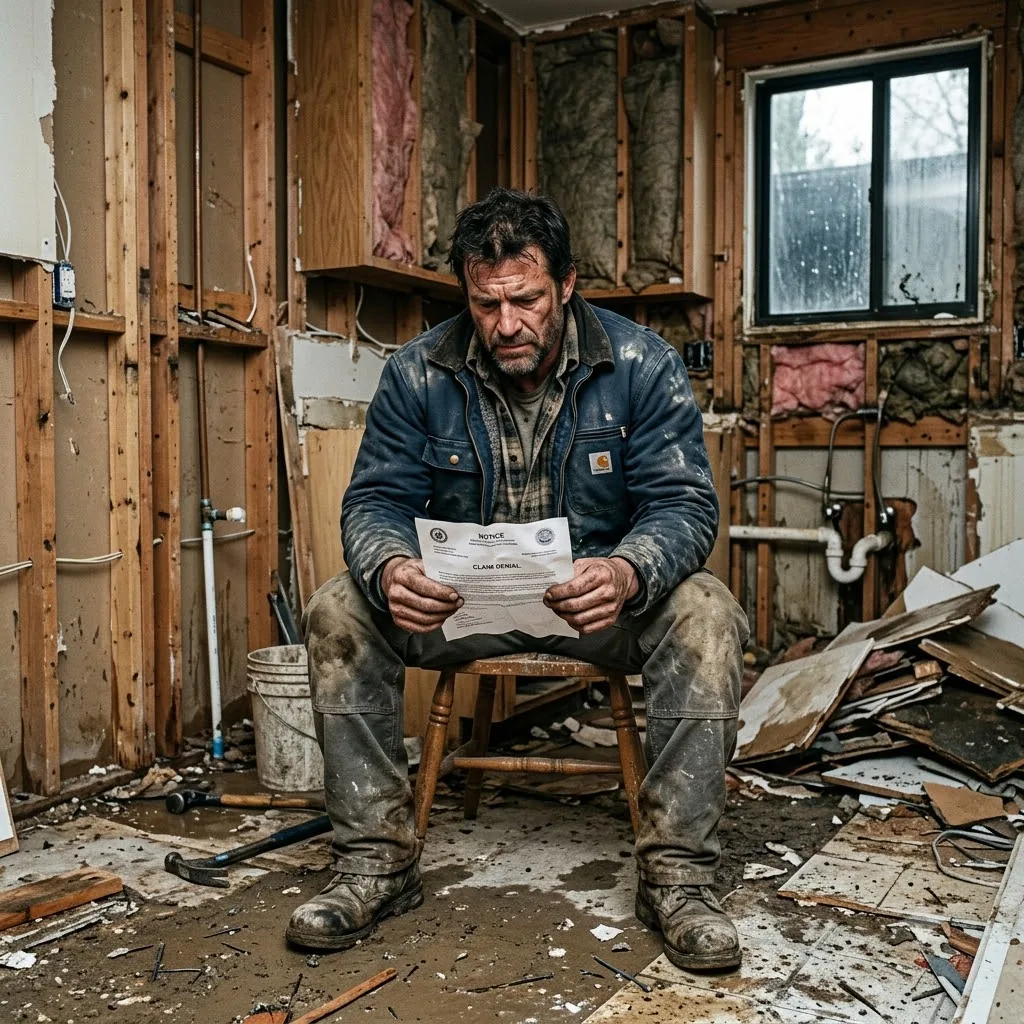
Marcus stared at the word “Denied” printed in sterile black ink on the heavy stock of the final insurance notice. The letter crinkled in his grip, his fingers swollen and wrapped in electrical tape that was now peeling away from sweat. The kitchen around him smelled like low tide, a thick, suffocating blend of stagnant river mud and the blooming black mold that refused to die. He wiped a streak of gray drywall dust from his forehead, leaving a gritty smear across his brow. His sister’s kitchen was a gutted carcass, the bottom four feet of every wall ripped out to expose rotting pine studs and corroded copper pipes.
The adjuster had been here just two days ago, pointing a manicured finger at a clause buried deep in the policy appendix. Something about ground-up water intrusion superseding storm-damage mandates. It was a technicality designed to keep money in a corporate account while real people choked on airborne spores. Marcus folded the thick paper into tight squares and shoved it deep into his canvas work belt.
For three weeks, he had been doing it the right way, breaking his own body to pull this house back from the brink. Waking up in the dark, hauling waterlogged couches and warped floorboards out to the rented dumpster in the freezing morning air. Then came the scraping, the bleaching, the mixing of heavy buckets of joint compound until the tendons in his forearms felt like they were going to snap. All of this before putting on his uniform and clocking in for a nine-hour shift at the distribution center.
He grabbed his pry bar and turned back to the ruined island cabinetry. He drove the flat steel edge into the seam of a swollen oak door and threw his weight backward. The wood splintered with a loud crack, raining rusted screws and damp sawdust onto the subfloor. He kicked the broken debris aside. The warehouse pay barely covered the lumber and the mold remediation chemicals. Now, without the insurance check, the remaining electrical work and the mandatory plumbing inspections were completely out of reach.
Upstairs, the floorboards creaked. He could hear his sister dragging boxes across the hallway, followed by that same rattling cough that had settled deep in her chest the day the river breached its banks. She was packing up the last of her daughter’s belongings, moving them into the one dry, drafty corner of the attic. Marcus gripped the pry bar tighter, his knuckles turning white beneath the grime. He slammed the steel into the next cabinet, ignoring the sharp sting of a blister popping on his palm. Honest sweat was supposed to fix this. Legitimate labor was supposed to be the path forward.
He dropped the pry bar and sat heavily on a cracked, overturned joint-compound bucket. Dust plumed up around his boots. He ran the numbers in his head again, staring at the exposed joists. Four thousand for the wiring, two for the drywall, another three for the flooring and the baseboards. The math remained rigid and unforgiving. He stared at his boots, caked in gray plaster, mud, and exhaustion. The uniform of a man playing entirely by the rules. He picked up his trowel and a fresh bucket of mud, forcing himself to stand. His knees popped in the quiet room. He would just keep moving, keep spackling over the rot, keep working until his back gave out completely.
The afternoon dragged on in a repetitive, grueling haze. The dust coated his throat, chalky and dry, making it harder to pull in the thick, humid air of the ruined house. He focused entirely on the mindless rhythm of his hands. Scoop the mud, spread it across the seam, scrape it flat. Scoop, spread, scrape. It kept his mind locked strictly within these four walls. He refused to look out the window at the cars rolling down the street. He refused to let himself consider any shortcuts or quick cash.
He reached the end of the wall and scraped the trowel clean against the bucket rim. The compound was running low. He dragged his heavy, mud-caked boots toward the hallway, intending to pull another bag of mix from the front porch. The floorboards in the adjacent room groaned. Marcus did not look up, assuming his sister had finally come downstairs to survey the meager progress. He kept his head down, wiping his chalky hands on his denim thighs.
A shadow stretched across the exposed subfloor, blocking the harsh afternoon sunlight spilling through the bare windows. The squeak of fresh rubber on the damp, warped floorboards stopped Marcus completely. He froze, staring at the floor as Trey’s pristine designer sneakers stepped deliberately onto his dusty canvas drop cloth.
Marcus stared at the word “Denied” printed in sterile black ink on the heavy stock of the final insurance notice. The letter crinkled in his grip, his fingers swollen and wrapped in electrical tape that was now peeling away from sweat. The kitchen around him smelled like low tide, a thick, suffocating blend of stagnant river mud and the blooming black mold that refused to die. He wiped a streak of gray drywall dust from his forehead, leaving a gritty smear across his brow. His sister’s kitchen was a gutted carcass, the bottom four feet of every wall ripped out to expose rotting pine studs and corroded copper pipes.
The adjuster had been here just two days ago, pointing a manicured finger at a clause buried deep in the policy appendix. Something about ground-up water intrusion superseding storm-damage mandates. It was a technicality designed to keep money in a corporate account while real people choked on airborne spores. Marcus folded the thick paper into tight squares and shoved it deep into his canvas work belt.
For three weeks, he had been doing it the right way, breaking his own body to pull this house back from the brink. Waking up in the dark, hauling waterlogged couches and warped floorboards out to the rented dumpster in the freezing morning air. Then came the scraping, the bleaching, the mixing of heavy buckets of joint compound until the tendons in his forearms felt like they were going to snap. All of this before putting on his uniform and clocking in for a nine-hour shift at the distribution center.
He grabbed his pry bar and turned back to the ruined island cabinetry. He drove the flat steel edge into the seam of a swollen oak door and threw his weight backward. The wood splintered with a loud crack, raining rusted screws and damp sawdust onto the subfloor. He kicked the broken debris aside. The warehouse pay barely covered the lumber and the mold remediation chemicals. Now, without the insurance check, the remaining electrical work and the mandatory plumbing inspections were completely out of reach.
Upstairs, the floorboards creaked. He could hear his sister dragging boxes across the hallway, followed by that same rattling cough that had settled deep in her chest the day the river breached its banks. She was packing up the last of her daughter’s belongings, moving them into the one dry, drafty corner of the attic. Marcus gripped the pry bar tighter, his knuckles turning white beneath the grime. He slammed the steel into the next cabinet, ignoring the sharp sting of a blister popping on his palm. Honest sweat was supposed to fix this. Legitimate labor was supposed to be the path forward.
He dropped the pry bar and sat heavily on a cracked, overturned joint-compound bucket. Dust plumed up around his boots. He ran the numbers in his head again, staring at the exposed joists. Four thousand for the wiring, two for the drywall, another three for the flooring and the baseboards. The math remained rigid and unforgiving. He stared at his boots, caked in gray plaster, mud, and exhaustion. The uniform of a man playing entirely by the rules. He picked up his trowel and a fresh bucket of mud, forcing himself to stand. His knees popped in the quiet room. He would just keep moving, keep spackling over the rot, keep working until his back gave out completely.
The afternoon dragged on in a repetitive, grueling haze. The dust coated his throat, chalky and dry, making it harder to pull in the thick, humid air of the ruined house. He focused entirely on the mindless rhythm of his hands. Scoop the mud, spread it across the seam, scrape it flat. Scoop, spread, scrape. It kept his mind locked strictly within these four walls. He refused to look out the window at the cars rolling down the street. He refused to let himself consider any shortcuts or quick cash.
He reached the end of the wall and scraped the trowel clean against the bucket rim. The compound was running low. He dragged his heavy, mud-caked boots toward the hallway, intending to pull another bag of mix from the front porch. The floorboards in the adjacent room groaned. Marcus did not look up, assuming his sister had finally come downstairs to survey the meager progress. He kept his head down, wiping his chalky hands on his denim thighs.
A shadow stretched across the exposed subfloor, blocking the harsh afternoon sunlight spilling through the bare windows. The squeak of fresh rubber on the damp, warped floorboards stopped Marcus completely. He froze, staring at the floor as Trey’s pristine designer sneakers stepped deliberately onto his dusty canvas drop cloth.