Story code: ST-001002
Part 1: The Inspection
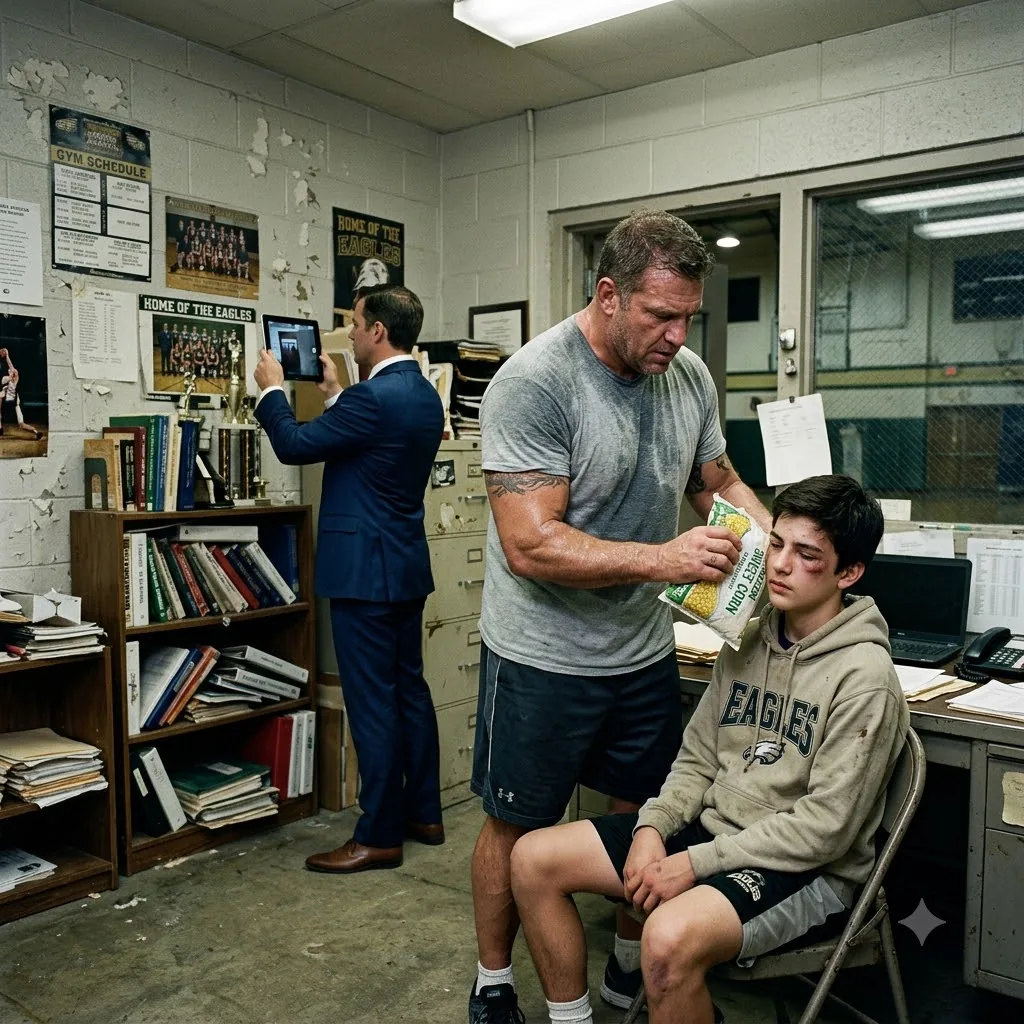
Marcus held a thawing bag of generic store-brand sweet corn against Leo’s left eyebrow, ignoring the way the fourteen-year-old dug his fingernails into the faux-leather armrest. A thick drop of dark blood slipped past the plastic edge of the bag, tracing a jagged path down Leo’s cheek and splashing onto the cracked linoleum of the youth center’s back office. Marcus shifted his grip, pressing the cold plastic firmer against the split skin. He needed to stop the bleeding before the swelling sealed the eye completely shut. Out on the main court, the echoing thud of basketballs had ceased entirely. The silence left behind was heavy, carrying only the low hum of the overhead fluorescent lights and Leo’s ragged breathing.
The office door swung open, the rusted hinges whining in loud protest. Marcus braced his shoulders, expecting to see the police or perhaps the older boys from the rival neighborhood who had thrown the elbow.
The man standing in the doorway wore a tailored charcoal suit that looked entirely alien against the backdrop of peeling paint and scuffed floorboards. A bright blue lanyard hung from his neck, terminating in a city council identification badge. He held a sleek leather satchel tight against his ribs.
Marcus kept his hand pressed to Leo’s face, nodding frantically toward the wall phone. He told the man to dial emergency services, pointing to the blood now pooling near the metal desk leg.
The city aide did not look at the phone. He looked down at Leo, letting his eyes track over the torn collar, the swelling eye, and the blood on the floor. His expression remained entirely flat, devoid of alarm or even mild concern. He adjusted his wire-rimmed glasses, stepped meticulously over the crimson droplets to protect his polished oxford shoes, and bypassed the desk entirely.
He walked straight to the back corner of the room, stopping squarely in front of the center’s dilapidated reading shelf.
Marcus watched in disbelief as the man unclasped his leather satchel. This was the donation rack, a sagging wooden bookcase cobbled together by the community board ten years ago. It held a random assortment of discarded paperbacks, outdated encyclopedias, heavily creased fantasy novels, and water-damaged test prep guides.
The man withdrew a heavy silver tablet. He held it up in both hands, aligning the camera lens with the top shelf.
A harsh white flash strobed across the dim office, temporarily blinding Marcus.
Leo flinched at the sudden light, letting out a sharp groan. Marcus gripped the boy’s shoulder to keep him still, his own confusion mounting into a sharp, immediate anger. He demanded the aide state his business in a private community office during a medical emergency.
The aide ignored the voice behind him. He swiped a finger across the tablet screen, leaned closer to the middle shelf, and snapped another photo. The flash fired again, illuminating the faded spines of a dozen donated history textbooks and worn-out detective novels.
Marcus dropped the bag of corn onto the desk. He grabbed a roll of heavy gauze, pressing a thick wad of it against Leo’s brow. He told the boy to hold it tight and keep his head tilted back. Marcus stood up, his rubber sneakers squeaking loudly against the slick floor, and closed the distance to the bookshelf.
He ordered the man to leave the building at once. He pointed a blood-stained finger toward the exit, stating that this was a city-funded safe zone and no unauthorized personnel were allowed past the reception desk.
The aide finally lowered the tablet. He did not apologize. He did not explain his presence. He reached into his satchel and withdrew a thick, overstuffed manila folder. The edges of the folder were reinforced with red tape, and a heavy brass clasp held the top flap securely shut.
He turned around and tossed the folder onto Marcus’s desk. It landed heavily, sliding just inches away from the puddle of melting sweet corn and fresh blood.
The aide tapped the cover of the folder with one manicured finger. He stated in a clear, practiced monotone that the Eastside Youth Center’s power grid access was scheduled for immediate termination by order of the municipal oversight committee.
Marcus stared at the folder, then back at the man. He stated that the center’s utility bills were paid in full for the next six months through a local non-profit grant. He added that cutting the power to a designated youth shelter in the middle of a heatwave was a direct violation of the city’s own safety mandate.
The aide picked up his tablet and aimed it at the bottom shelf, capturing an image of a haphazard stack of graphic novels. He informed Marcus that the shutoff had nothing to do with utility arrears. He slid the tablet back into the leather bag and fastened the metal buckles with a crisp snap.
He looked directly at Marcus for the first time since entering the room. He stated the closure was a mandatory enforcement action due to severe ideological curriculum violations discovered on the premises.
Marcus looked at the sagging shelf of donated paperbacks. There was no curriculum here. There were no classes. It was a gymnasium for kids who had nowhere else to go. He reached for the manila folder, his fingers leaving a smear of red on the heavy paper, and pulled back the brass clasp to expose the first page.
Marcus held a thawing bag of generic store-brand sweet corn against Leo’s left eyebrow, ignoring the way the fourteen-year-old dug his fingernails into the faux-leather armrest. A thick drop of dark blood slipped past the plastic edge of the bag, tracing a jagged path down Leo’s cheek and splashing onto the cracked linoleum of the youth center’s back office. Marcus shifted his grip, pressing the cold plastic firmer against the split skin. He needed to stop the bleeding before the swelling sealed the eye completely shut. Out on the main court, the echoing thud of basketballs had ceased entirely. The silence left behind was heavy, carrying only the low hum of the overhead fluorescent lights and Leo’s ragged breathing.
The office door swung open, the rusted hinges whining in loud protest. Marcus braced his shoulders, expecting to see the police or perhaps the older boys from the rival neighborhood who had thrown the elbow.
The man standing in the doorway wore a tailored charcoal suit that looked entirely alien against the backdrop of peeling paint and scuffed floorboards. A bright blue lanyard hung from his neck, terminating in a city council identification badge. He held a sleek leather satchel tight against his ribs.
Marcus kept his hand pressed to Leo’s face, nodding frantically toward the wall phone. He told the man to dial emergency services, pointing to the blood now pooling near the metal desk leg.
The city aide did not look at the phone. He looked down at Leo, letting his eyes track over the torn collar, the swelling eye, and the blood on the floor. His expression remained entirely flat, devoid of alarm or even mild concern. He adjusted his wire-rimmed glasses, stepped meticulously over the crimson droplets to protect his polished oxford shoes, and bypassed the desk entirely.
He walked straight to the back corner of the room, stopping squarely in front of the center’s dilapidated reading shelf.
Marcus watched in disbelief as the man unclasped his leather satchel. This was the donation rack, a sagging wooden bookcase cobbled together by the community board ten years ago. It held a random assortment of discarded paperbacks, outdated encyclopedias, heavily creased fantasy novels, and water-damaged test prep guides.
The man withdrew a heavy silver tablet. He held it up in both hands, aligning the camera lens with the top shelf.
A harsh white flash strobed across the dim office, temporarily blinding Marcus.
Leo flinched at the sudden light, letting out a sharp groan. Marcus gripped the boy’s shoulder to keep him still, his own confusion mounting into a sharp, immediate anger. He demanded the aide state his business in a private community office during a medical emergency.
The aide ignored the voice behind him. He swiped a finger across the tablet screen, leaned closer to the middle shelf, and snapped another photo. The flash fired again, illuminating the faded spines of a dozen donated history textbooks and worn-out detective novels.
Marcus dropped the bag of corn onto the desk. He grabbed a roll of heavy gauze, pressing a thick wad of it against Leo’s brow. He told the boy to hold it tight and keep his head tilted back. Marcus stood up, his rubber sneakers squeaking loudly against the slick floor, and closed the distance to the bookshelf.
He ordered the man to leave the building at once. He pointed a blood-stained finger toward the exit, stating that this was a city-funded safe zone and no unauthorized personnel were allowed past the reception desk.
The aide finally lowered the tablet. He did not apologize. He did not explain his presence. He reached into his satchel and withdrew a thick, overstuffed manila folder. The edges of the folder were reinforced with red tape, and a heavy brass clasp held the top flap securely shut.
He turned around and tossed the folder onto Marcus’s desk. It landed heavily, sliding just inches away from the puddle of melting sweet corn and fresh blood.
The aide tapped the cover of the folder with one manicured finger. He stated in a clear, practiced monotone that the Eastside Youth Center’s power grid access was scheduled for immediate termination by order of the municipal oversight committee.
Marcus stared at the folder, then back at the man. He stated that the center’s utility bills were paid in full for the next six months through a local non-profit grant. He added that cutting the power to a designated youth shelter in the middle of a heatwave was a direct violation of the city’s own safety mandate.
The aide picked up his tablet and aimed it at the bottom shelf, capturing an image of a haphazard stack of graphic novels. He informed Marcus that the shutoff had nothing to do with utility arrears. He slid the tablet back into the leather bag and fastened the metal buckles with a crisp snap.
He looked directly at Marcus for the first time since entering the room. He stated the closure was a mandatory enforcement action due to severe ideological curriculum violations discovered on the premises.
Marcus looked at the sagging shelf of donated paperbacks. There was no curriculum here. There were no classes. It was a gymnasium for kids who had nowhere else to go. He reached for the manila folder, his fingers leaving a smear of red on the heavy paper, and pulled back the brass clasp to expose the first page.