Story code: ST-001002
Part 2: The Ransom
Marcus stared at the first page of the heavy manila folder. His blood-smeared thumb rested over a meticulously printed spreadsheet that spanned the entire length of the legal-sized paper. The document was a masterclass in bureaucratic absurdity, filled with endless columns of ISBNs, dates of alleged infraction, and dense paragraphs of municipal code printed in an aggressive, microscopic font. A high-resolution photograph of a battered paperback copy of a classic dystopian novel-one Marcus remembered reading in high school-was paperclipped to the top right corner. The image was stamped with a vivid red seal denoting “Category 4 Subversion.” Beneath it, a dog-eared fantasy novel about teenage wizards, its cover barely clinging to the spine by a strip of yellowed tape, was flagged with a yellow sticky note citing “promotion of unsanctioned vigilante structures and anti-authoritarian allegories.”
Marcus flipped over to the second page, his breathing growing shallow with disbelief. It listed a 1998 set of donated encyclopedias, citing them for “outdated geographical borders incompatible with current geopolitical alignment directives.” Page three contained a photograph of a math textbook from the nineteen-nineties, somehow flagged for containing word problems that promoted non-compliant economic theories.
He looked up from the paper to the city aide, who was carefully wiping a speck of microscopic dust from the black screen of his silver tablet with a microfiber cloth. Marcus stated again, his voice rising, that there was no curriculum being taught here. He explained that these books were dropped off in cardboard boxes by elderly neighbors, local church groups, and families cleaning out their attics. Half of them were missing their back covers. None of the kids even read them; they used the thicker volumes as weights to hold down the curling edges of the worn wrestling mats in the gymnasium.
The aide slid the tablet back into his leather satchel, perfectly aligning the brass buckles before snapping them shut. He informed Marcus that intent did not nullify possession. According to City Ordinance 88-B, harboring unvetted narrative materials in a designated youth zone constituted a deliberate attempt to radicalize minors. He adjusted his wire-rimmed glasses, looking completely unfazed by the sweat beginning to bead on Marcus’s forehead, and added that, as the acting director of the Eastside Youth Center, Marcus was now personally liable for the distribution of Class C Contraband to a vulnerable population.
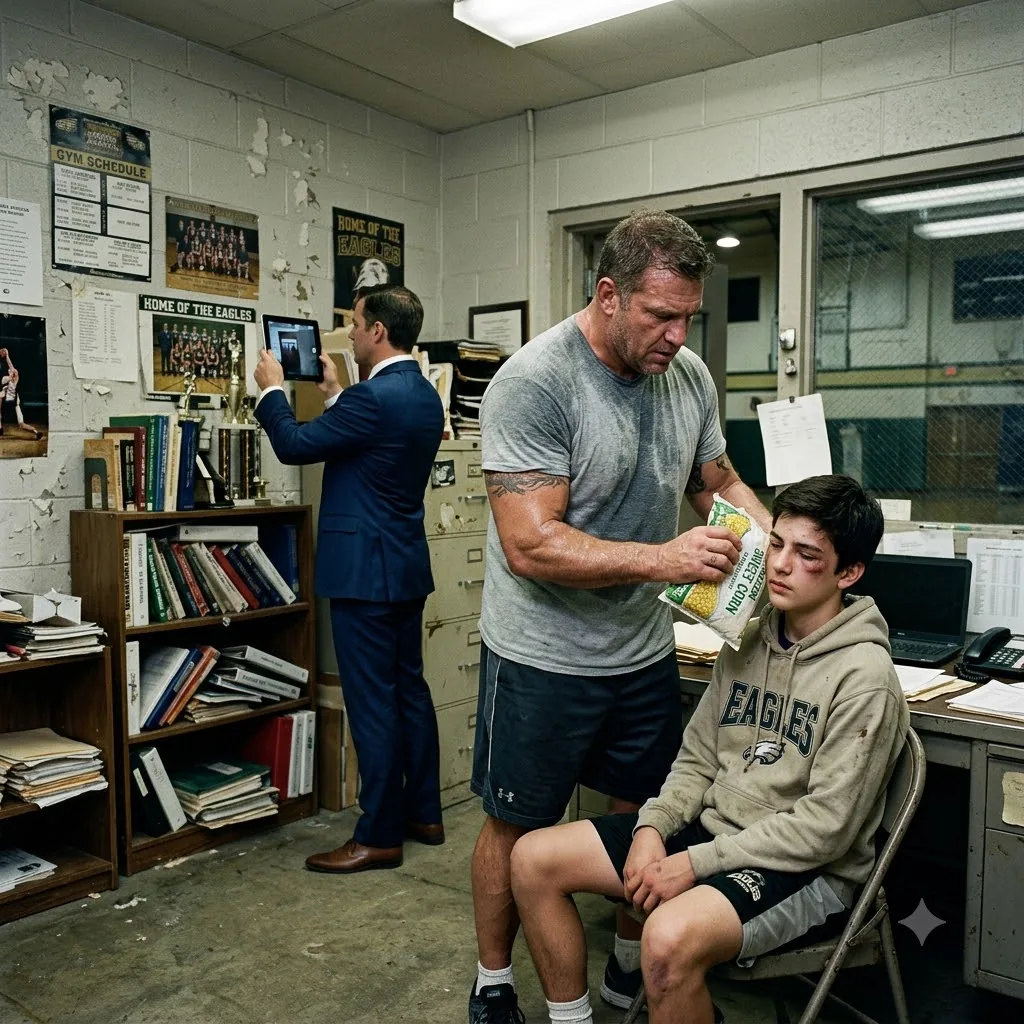
A sharp groan pulled Marcus’s attention back to the desk. Leo was slumping sideways in the plastic chair, his sneakers slipping wildly on the linoleum. The wad of heavy gauze Marcus had applied was completely soaked through, the bright red liquid seeping steadily between the boy’s pale, trembling fingers. The heat in the small back office was already oppressive, the ancient window unit rattling as it struggled against the mid-August heatwave, but Leo was shivering violently. His skin had taken on a grayish pallor. Shock was setting in, and fast.
Marcus dropped the heavy folder onto the desk, no longer caring about the blood he smeared across the pristine white spreadsheet. He grabbed his rusted keychain from the top drawer. He told the aide they were done here. He was taking the boy to the emergency room, and the city could mail whatever ridiculous fines they wanted to the center’s PO box. He stepped around the desk, wrapping a muscular arm around Leo’s waist and pulling the teenager firmly to his feet.
The aide did not move out of the doorway. He stood perfectly still, blocking the only exit from the cramped office. Instead of moving, he reached into the breast pocket of his charcoal suit and produced a single sheet of blue carbon paper, holding it out between two manicured fingers.
He stated, his voice devoid of any inflection, that leaving the premises with an active Category 4 violation unresolved would trigger an immediate police lockdown of the building. He noted that there were currently two patrol cruisers parked at the end of the alleyway, awaiting his signal. If Marcus attempted to transport a minor while under suspicion of ideological endangerment, he would be detained before he reached the end of the block. The child, the aide added without so much as a glance at Leo, would be taken into state custody pending a thorough investigation into his exposure to the contraband materials.
Marcus stopped dead in his tracks. The jagged teeth of his keys dug painfully into his palm. He looked at the blue paper, then up at the aide’s impassive face. The man wasn’t acting out of malice; it was somehow much worse. It was pure, indifferent administration. He was a cog executing a designed sequence.
Marcus demanded to know exactly what the blue paper was.
The aide explained it was a voluntary surrender of municipal lease. He stated that if Marcus signed over the building’s management rights back to the city oversight committee right now, the ideological violation would be downgraded to a simple clerical warning. The property would be slated for immediate redevelopment, but Marcus would face no criminal charges, and a specialized city EMT unit would be dispatched directly to the office to stabilize the boy without any police interference.
The trap snapped shut in Marcus’s mind, cold and sharp. This had absolutely nothing to do with a torn copy of a fantasy novel or a thirty-year-old encyclopedia. The city had been trying to bulldoze the Eastside Youth Center for three years to make way for the massive new commercial transit hub. They had failed to break the community trust lease in court. They had failed to starve the center out through budget cuts, thanks to the stubborn independent non-profit grants Marcus had secured.
Now, they were using a newly passed censorship ordinance as a weapon. They had sent an inspector to find a loophole on a forgotten donation shelf, manufacturing a federal-level crime out of donated trash to force a surrender.
Leo slumped heavier against Marcus’s side, his breathing rapid and painfully shallow. Blood dripped steadily from the boy’s chin, splattering onto the toe of Marcus’s rubber sneaker.
Marcus stared at the blue paper. It was a ransom note dressed in municipal legalese. Sign away the only safe haven these kids had, or watch one of them bleed out while being dragged into the foster system.
He swallowed hard, his throat dry, and asked the aide how much time he had to make the decision.
The aide checked a sleek silver wristwatch. He stated that the grid termination was scheduled in three minutes, at which point the electronic locks on the main doors would default to an emergency seal to preserve the crime scene. If the paper was not signed by then, the building would become a quarantined zone, and nobody would be permitted to enter or leave.
Marcus tightened his grip on Leo’s waist. He looked at the rattling window AC unit, then at the heavy steel door at the end of the hallway. Three minutes. The heat in the room seemed to double, pressing heavily against his chest. He reached slowly toward the desk, his hand hovering in the tense air between the blue pen resting on the blotter and the heavy iron paperweight sitting just beside it.
Before his fingers could brush either one, the fluorescent lights overhead flickered violently, buzzing like an angry swarm of wasps. The window unit sputtered, groaned, and died with a pathetic wheeze. The lights flared one last time, illuminating the aide’s emotionless face, and then the office plunged into absolute, suffocating darkness.