Story code: ST-001004
Part 1: The Binder of Debts
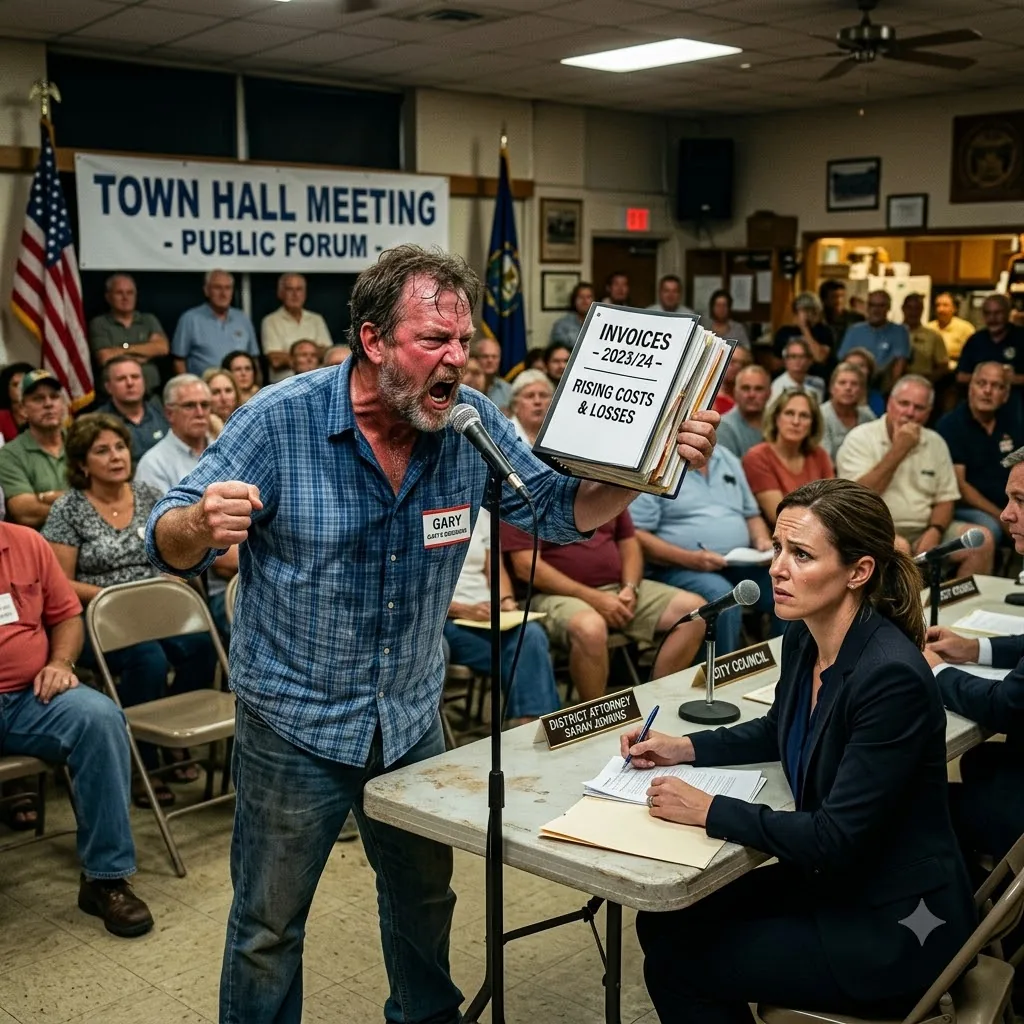
The air conditioner in the Oakridge Community Center had died three hours ago, leaving District Attorney Kelly Vance to sweat through her silk blouse as the gymnasium erupted into another chorus of boos. At the center aisle microphone, Amir stepped forward, his knuckles white around a massive, bursting three-ring binder. He slammed the heavy binder onto the wooden podium, the sound echoing like a gunshot over the screaming crowd. Papers immediately spilled over the edge, revealing pink carbon copies of unpaid invoices, glossy photographs of shattered glass, and yellowing estimates from contractors.
Amir shoved a heavily taped repair bill toward the dais, his hands violently trembling. He yelled that his livelihood was bleeding out on the pavement of Fifth Street while her office handed out second chances to criminals. The veins in his neck bulged as he recounted the third break-in this month. He pointed fiercely at a photograph of his devastated storefront, the plywood boards sprayed with crude graffiti. He detailed how the juveniles who threw the bricks were currently attending a Saturday circle-sharing workshop instead of sitting in a holding cell.
Kelly kept her hands folded on the plastic table, her fingernails biting into her own palms to maintain her composure. She could see the dark circles under Amir’s eyes and the fraying cuffs of his dress shirt. She recognized the absolute ruin of a man who had poured twenty years of his life into a corner grocery store, only to watch it dismantled piece by piece. His raw, visceral grief filled the stifling room, transforming the town hall into a powder keg waiting for a spark.
The crowd roared its absolute agreement with Amir. A woman in the third row stood up, shouting over the noise about plummeting property values and shattered windshields. Two men in the back banged their folding chairs against the bleachers in a steady, intimidating rhythm. Kelly leaned into her microphone, her voice level and practiced, attempting to explain the long-term data behind her restorative justice policies. She stated that jailing minors for non-violent property crimes historically led to higher rates of violent offenses later in life.
The microphone fed back with a high-pitched squeal that only agitated the room further. Amir cut her off, refusing to listen to another word of political rhetoric. He slammed his hand onto the binder again, crushing a stack of past-due notices. He stated loudly that he did not care about recidivism statistics or sociological studies. He cared about the thirty-two thousand dollars in damages his insurance refused to cover. He cared that his life savings were gone, his credit was destroyed, and his wife was taking a second night shift just to keep their lights on.
He tapped the thick spine of the binder, his voice dropping to a hard, unwavering register that silenced the entire room. He announced he was not just there to yell at a politician. He informed the dais that he had filed a massive civil suit against the city that morning, naming Kelly’s office specifically for gross negligence and dereliction of duty.
The crowd quieted, shifting from blind rage to eager anticipation. Kelly glanced to her right. Her chief of staff sat frozen, his pen hovering over his legal pad, looking completely blindsided by the announcement. Kelly did the mental math instantly. A corner store owner facing imminent bankruptcy could not possibly afford the retainer for a lawsuit of that magnitude, let alone the team of high-powered litigators required to take on the municipal government.
Amir locked eyes with her and leaned closer to his microphone. He stated clearly that he did not have to pay a single dime for his elite legal representation. He declared that the decent people of the community had finally had enough of her radical experiments, and a highly concerned citizen had stepped forward to fund his entire legal team. He spoke of this mysterious benefactor with profound reverence, calling him a man of true moral fiber who recognized the decay of their neighborhood and decided to fund a war to take it back.
Amir gestured toward the back of the suffocating gymnasium. The heavy metal double doors opened, letting in a brief sliver of harsh street light before slamming shut. A tall man in a flawlessly tailored charcoal suit walked down the center aisle. The hostile, sweating crowd instinctively parted for him, offering a wide berth of deference.
Kelly felt the damp heat of the room suddenly evaporate, replaced by a freezing sheet of dread spreading across her skin. The man stepped into the fluorescent glare of the podium, his posture rigidly straight. He rested a firm, supportive hand on Amir’s shoulder. The store owner nodded to him, stepping back to cede the floor.
The man turned his gaze directly at the dais. Kelly stared back into the uncompromising, ice-blue eyes of a man she had not spoken to in seven years. Her breath hitched in her throat as she looked at the man who had packed her belongings in trash bags and changed the locks on her childhood home. Her estranged father smiled at the cheering crowd and slowly pulled the microphone from the stand.
The air conditioner in the Oakridge Community Center had died three hours ago, leaving District Attorney Kelly Vance to sweat through her silk blouse as the gymnasium erupted into another chorus of boos. At the center aisle microphone, Amir stepped forward, his knuckles white around a massive, bursting three-ring binder. He slammed the heavy binder onto the wooden podium, the sound echoing like a gunshot over the screaming crowd. Papers immediately spilled over the edge, revealing pink carbon copies of unpaid invoices, glossy photographs of shattered glass, and yellowing estimates from contractors.
Amir shoved a heavily taped repair bill toward the dais, his hands violently trembling. He yelled that his livelihood was bleeding out on the pavement of Fifth Street while her office handed out second chances to criminals. The veins in his neck bulged as he recounted the third break-in this month. He pointed fiercely at a photograph of his devastated storefront, the plywood boards sprayed with crude graffiti. He detailed how the juveniles who threw the bricks were currently attending a Saturday circle-sharing workshop instead of sitting in a holding cell.
Kelly kept her hands folded on the plastic table, her fingernails biting into her own palms to maintain her composure. She could see the dark circles under Amir’s eyes and the fraying cuffs of his dress shirt. She recognized the absolute ruin of a man who had poured twenty years of his life into a corner grocery store, only to watch it dismantled piece by piece. His raw, visceral grief filled the stifling room, transforming the town hall into a powder keg waiting for a spark.
The crowd roared its absolute agreement with Amir. A woman in the third row stood up, shouting over the noise about plummeting property values and shattered windshields. Two men in the back banged their folding chairs against the bleachers in a steady, intimidating rhythm. Kelly leaned into her microphone, her voice level and practiced, attempting to explain the long-term data behind her restorative justice policies. She stated that jailing minors for non-violent property crimes historically led to higher rates of violent offenses later in life.
The microphone fed back with a high-pitched squeal that only agitated the room further. Amir cut her off, refusing to listen to another word of political rhetoric. He slammed his hand onto the binder again, crushing a stack of past-due notices. He stated loudly that he did not care about recidivism statistics or sociological studies. He cared about the thirty-two thousand dollars in damages his insurance refused to cover. He cared that his life savings were gone, his credit was destroyed, and his wife was taking a second night shift just to keep their lights on.
He tapped the thick spine of the binder, his voice dropping to a hard, unwavering register that silenced the entire room. He announced he was not just there to yell at a politician. He informed the dais that he had filed a massive civil suit against the city that morning, naming Kelly’s office specifically for gross negligence and dereliction of duty.
The crowd quieted, shifting from blind rage to eager anticipation. Kelly glanced to her right. Her chief of staff sat frozen, his pen hovering over his legal pad, looking completely blindsided by the announcement. Kelly did the mental math instantly. A corner store owner facing imminent bankruptcy could not possibly afford the retainer for a lawsuit of that magnitude, let alone the team of high-powered litigators required to take on the municipal government.
Amir locked eyes with her and leaned closer to his microphone. He stated clearly that he did not have to pay a single dime for his elite legal representation. He declared that the decent people of the community had finally had enough of her radical experiments, and a highly concerned citizen had stepped forward to fund his entire legal team. He spoke of this mysterious benefactor with profound reverence, calling him a man of true moral fiber who recognized the decay of their neighborhood and decided to fund a war to take it back.
Amir gestured toward the back of the suffocating gymnasium. The heavy metal double doors opened, letting in a brief sliver of harsh street light before slamming shut. A tall man in a flawlessly tailored charcoal suit walked down the center aisle. The hostile, sweating crowd instinctively parted for him, offering a wide berth of deference.
Kelly felt the damp heat of the room suddenly evaporate, replaced by a freezing sheet of dread spreading across her skin. The man stepped into the fluorescent glare of the podium, his posture rigidly straight. He rested a firm, supportive hand on Amir’s shoulder. The store owner nodded to him, stepping back to cede the floor.
The man turned his gaze directly at the dais. Kelly stared back into the uncompromising, ice-blue eyes of a man she had not spoken to in seven years. Her breath hitched in her throat as she looked at the man who had packed her belongings in trash bags and changed the locks on her childhood home. Her estranged father smiled at the cheering crowd and slowly pulled the microphone from the stand.