Story code: ST-000236
Part 4: What the Vial Made Plain
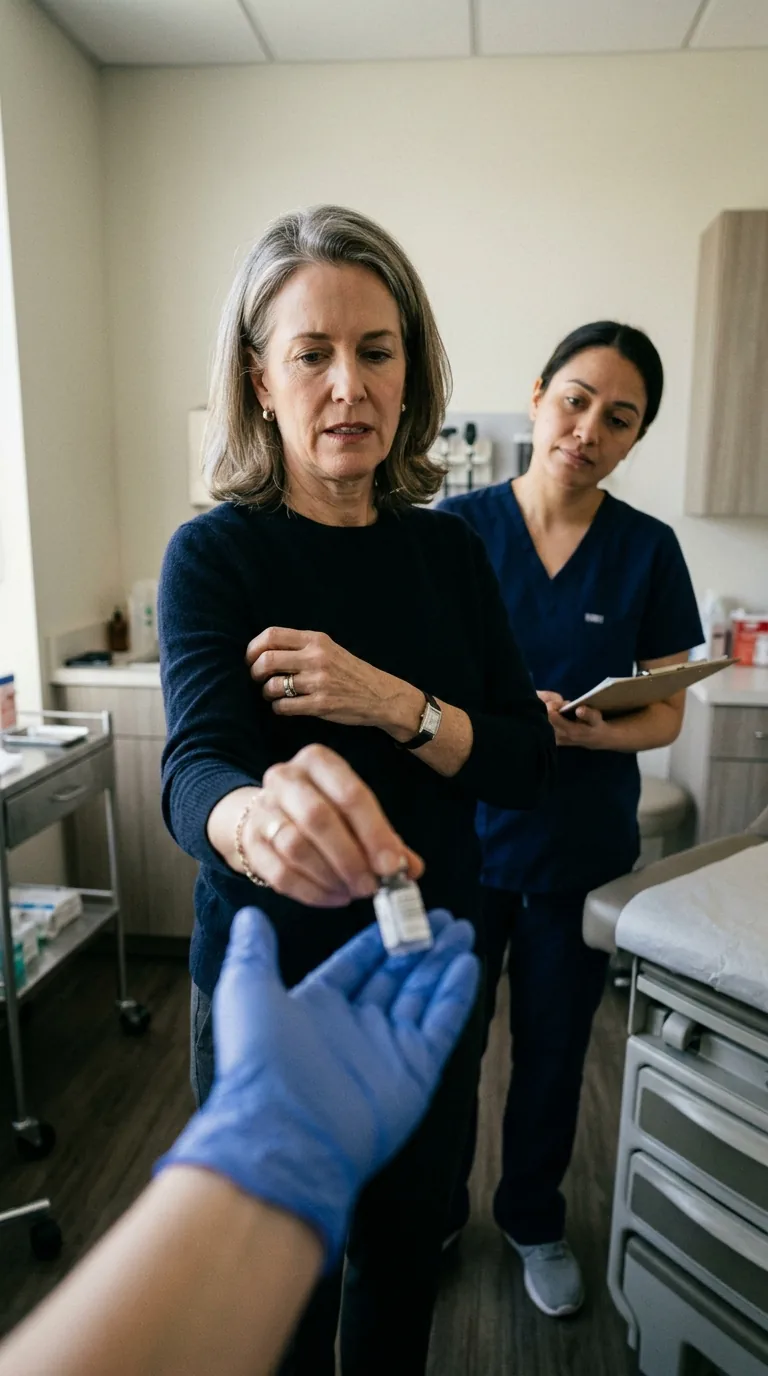
The next step was the one nobody had been trying to name. Dr. Sloane brought the treatment vial back under the task light, set it on the stainless tray, and moved his finger once along the printed sequence without touching the cap.
“Mrs. Vale, complete it,” he said.
Marian did not answer right away. She stood square to the tray, coat still open, eyes on the label. The room stayed still around her. The nurse had gone back to the counter. The receptionist was watching the screen instead of the doorway. I kept my hands folded at my sides.
“I already did,” Marian said.
“Not for the record,” Dr. Sloane said.
That was all it took. He did not raise his voice. He did not explain. He just stepped back and left the vial where she could reach it. The silence after that was tight enough to hear.
Marian picked it up.
This time there was no show of uncertainty. No extra questions. No paused breath over the cap. Her thumb found the seal, broke it cleanly, and set the top aside with a soft click. She checked the wristband against the lot number, then matched the route notation, then turned the bottle a quarter turn so the label faced the light exactly.
The whole motion was smooth enough to be ordinary if you had not watched her drag it out for fifteen minutes before. It was the same hand, the same vial, the same room. The difference was that nobody else was carrying the work for her anymore.
Dr. Sloane watched the bottle, not her face. “Again,” he said.
Marian repeated the last step without hesitation. Clean. Exact. The tray stayed level in her hand. The motion was so precise it made the earlier fumbling look staged in retrospect, and the room had no way to unsee that now.
I heard the printer start behind the desk. A new page came out and the nurse took it without ceremony. She looked at it once, then walked it to the front counter and slid it into a slot marked with Marian’s name. When she came back, she set a small paper receipt beside the vial and said, “The reschedule fee is posted. The earlier window is gone.”
Marian’s fingers closed around the tray edge. She did not reach for me. She did not ask for help. She only looked at the receipt, then at Dr. Sloane.
He gave a single nod toward the counter. “Future visits on this treatment line will need advance payment and a locked intake time. No same-day adjustment. No staff handoff unless the record calls for it.”
Locked intake time. That was the concrete cost. Not a speech. Not an apology. A changed access rule. A fee. A note on the chart that would follow her back to every quick fix she had been trying to force onto somebody else.
Marian set the vial down with exact care, then reached for her coat button and missed it once before finding it on the second try. Nobody moved to fix that for her. She straightened the button herself and picked up the receipt.
“We can finish this visit,” she said.
“We will,” Dr. Sloane said. “But we finish it as written.”
He slid the vial back toward the bay and nodded for me to clear the tray. I lifted it without hurry. My hands stayed steady. Nobody asked me to repeat anything.
Marian took the receipt, the new appointment card, and the vial’s replacement seal, and she walked out of the treatment room under her own account, with her own fee, and with the room having seen exactly what she could do when the pretending stopped. I stayed behind long enough to watch the door close and the screen lock her next visit behind a code that now cost money to reopen.
That was the bitter part. I was free to leave, but the clinic had made sure freedom had a price tag hanging off it, plain as the vial under the light.