Story code: ST-001045
Part 1: The Zen Den
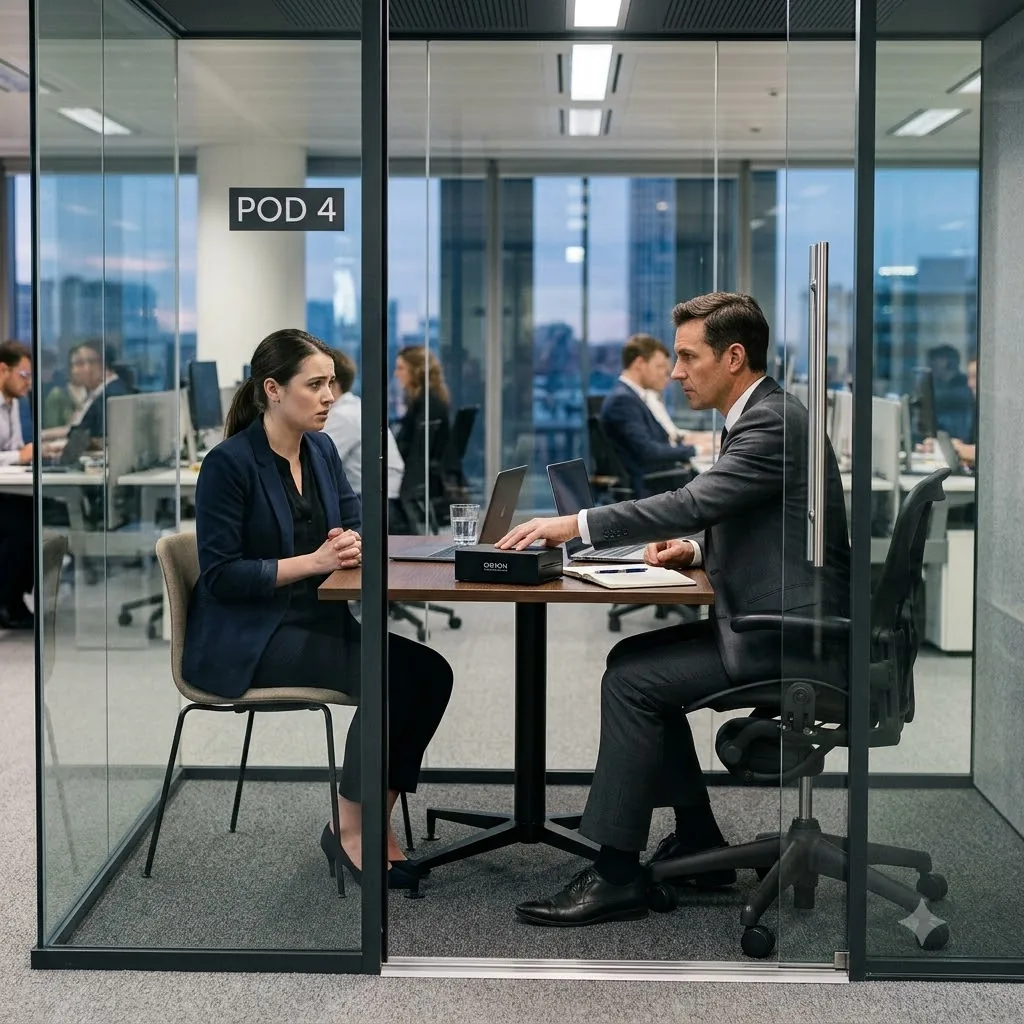
The hum of the ventilation system died the second Elias pulled the heavy glass door shut. Sarah sat perfectly still in the center of the soundproof HR pod, a space the weekly company newsletter called the “Zen Den.” There was no zen to be found here today. The thick acoustic panels on the walls swallowed the ambient noise of the bustling open-plan office outside, leaving only the sharp, rhythmic sound of Elias tapping a silver pen against his teeth. He took the seat opposite her and steepled his fingers, arranging his features into a mask of deep, therapeutic concern.
“We are having a Wellness Alignment Sync, Sarah,” Elias said, leaning forward so that the scent of his expensive cologne filled the small space. His voice was pitched low, a practiced cadence designed to soothe and disarm. “Your file has been flagged by the Culture Success team, and we want to ensure you feel supported in your journey with us.”
Sarah kept her hands folded loosely in her lap. She knew exactly what was in that file. She watched his eyes track over the single printed sheet of paper attached to his clipboard.
“Let us discuss the end of your shift yesterday,” Elias continued, tapping the paper with the end of his pen. “Security footage shows you crawling under your workstation. Again. You physically unplugged your dual monitors, your docking station, and the automated air purifier we provided for your respiratory comfort. You severed the power entirely rather than simply putting them to sleep.”
“I turn them off to save energy,” Sarah said, keeping her tone flat and relentlessly agreeable. “It is an old habit from my previous jobs.”
Elias shook his head slowly, exuding a heavy, sorrowful patience. “We need to move past these defensive narratives. The company pays the utility bill, not you. We are looking at a pattern of behavior that indicates a severe mental health crisis. You are isolating yourself from the corporate ecosystem. You are cutting off the connections designed to nurture you.”
He reached into his tailored blazer pocket and placed his own sleek, black smartphone on the table between them. The screen remained dark, but Sarah felt her chest tighten involuntarily at the sight of it.
“HR noted during onboarding that you refused to install the mandatory wellness tracking app,” Elias said softly. “You claimed you did not own a smartphone. We assumed it was a financial hurdle. We offered a generous tech stipend. You refused the stipend. You requested a physical landline for your desk.”
“I prefer an analog lifestyle,” Sarah stated. She focused her gaze on the neutral wood grain of the table, strictly avoiding the dark rectangle of his phone. “I have a landline for emergencies. I read paperbacks on my commute. It keeps me grounded in reality.”
“It keeps you hidden,” Elias corrected, his therapeutic tone dropping half an octave. He picked up his pen again, rolling the metal cylinder between his thumb and forefinger. “We consider this a massive red flag, Sarah. In modern corporate culture, refusing to carry a device is a deliberate act of self-harm. You are severing your tether to your support network. You are shutting down your electronic peripherals as a physical manifestation of shutting down your own psyche.”
Sarah pressed her short fingernails into the palms of her hands. The air in the pod felt thick, recycled one too many times. She could see her coworkers through the glass walls, silently clicking through their afternoon tasks, completely oblivious to the intense intervention happening mere feet away. Elias was using the language of care, but his eyes were sharp, calculating, and entirely devoid of actual empathy. He was hunting for a specific reaction.
“I assure you my mental health is perfectly fine,” Sarah said. She shifted her weight, preparing the muscles in her legs to stand. “My metrics are in the top tier of the department. My productivity is flawless. If my analog habits are not violating a written company policy, I would like to get back to my desk to finish my quarterly reports.”
“Your metrics are irrelevant when your soul is crying out for intervention,” Elias countered, raising his hand flat to stall her movement. “We do not let our team members drown in the dark. We pull them into the light. We have analyzed the exact timestamps of your unplugging rituals. They correlate directly with the daily firmware updates pushed to our desk devices at six in the evening. That level of paranoia requires immediate remediation.”
Sarah froze. The sudden mention of the firmware updates sent a cold spike of pure adrenaline down her spine. She kept her face completely blank, terrified to give him any physical confirmation. She had thought her timing was subtle. She had assumed the sheer volume of data generated by the three hundred employees on the floor would mask her small, daily severances of power.
Elias did not break eye contact. He slowly pushed his chair back from the table. For a brief, hopeful second, Sarah thought the meeting was over and he was letting her leave.
Instead, Elias stood up, grasped the back of his chair, and dragged it across the small room. He wedged the heavy, steel-framed base directly against the door handle, physically blocking the only exit from the glass box.
Sarah tensed, her breath catching as her eyes darted from the barricaded door back to her manager.
Elias sat back down on the very edge of the table, towering over her. He reached into his other pocket and withdrew a small, featureless white cube. It had no visible ports, no buttons, and no seams. He placed his large hand flat on top of it and slid the heavy object across the smooth surface of the table until it stopped mere inches from her folded hands.
“This is the new mandatory wellness hub,” Elias said, his therapeutic voice dropping to a hard, mechanical command. “You will take it home tonight, you will plug it into the wall directly beside your bed, and you will never disconnect it.”
The hum of the ventilation system died the second Elias pulled the heavy glass door shut. Sarah sat perfectly still in the center of the soundproof HR pod, a space the weekly company newsletter called the “Zen Den.” There was no zen to be found here today. The thick acoustic panels on the walls swallowed the ambient noise of the bustling open-plan office outside, leaving only the sharp, rhythmic sound of Elias tapping a silver pen against his teeth. He took the seat opposite her and steepled his fingers, arranging his features into a mask of deep, therapeutic concern.
“We are having a Wellness Alignment Sync, Sarah,” Elias said, leaning forward so that the scent of his expensive cologne filled the small space. His voice was pitched low, a practiced cadence designed to soothe and disarm. “Your file has been flagged by the Culture Success team, and we want to ensure you feel supported in your journey with us.”
Sarah kept her hands folded loosely in her lap. She knew exactly what was in that file. She watched his eyes track over the single printed sheet of paper attached to his clipboard.
“Let us discuss the end of your shift yesterday,” Elias continued, tapping the paper with the end of his pen. “Security footage shows you crawling under your workstation. Again. You physically unplugged your dual monitors, your docking station, and the automated air purifier we provided for your respiratory comfort. You severed the power entirely rather than simply putting them to sleep.”
“I turn them off to save energy,” Sarah said, keeping her tone flat and relentlessly agreeable. “It is an old habit from my previous jobs.”
Elias shook his head slowly, exuding a heavy, sorrowful patience. “We need to move past these defensive narratives. The company pays the utility bill, not you. We are looking at a pattern of behavior that indicates a severe mental health crisis. You are isolating yourself from the corporate ecosystem. You are cutting off the connections designed to nurture you.”
He reached into his tailored blazer pocket and placed his own sleek, black smartphone on the table between them. The screen remained dark, but Sarah felt her chest tighten involuntarily at the sight of it.
“HR noted during onboarding that you refused to install the mandatory wellness tracking app,” Elias said softly. “You claimed you did not own a smartphone. We assumed it was a financial hurdle. We offered a generous tech stipend. You refused the stipend. You requested a physical landline for your desk.”
“I prefer an analog lifestyle,” Sarah stated. She focused her gaze on the neutral wood grain of the table, strictly avoiding the dark rectangle of his phone. “I have a landline for emergencies. I read paperbacks on my commute. It keeps me grounded in reality.”
“It keeps you hidden,” Elias corrected, his therapeutic tone dropping half an octave. He picked up his pen again, rolling the metal cylinder between his thumb and forefinger. “We consider this a massive red flag, Sarah. In modern corporate culture, refusing to carry a device is a deliberate act of self-harm. You are severing your tether to your support network. You are shutting down your electronic peripherals as a physical manifestation of shutting down your own psyche.”
Sarah pressed her short fingernails into the palms of her hands. The air in the pod felt thick, recycled one too many times. She could see her coworkers through the glass walls, silently clicking through their afternoon tasks, completely oblivious to the intense intervention happening mere feet away. Elias was using the language of care, but his eyes were sharp, calculating, and entirely devoid of actual empathy. He was hunting for a specific reaction.
“I assure you my mental health is perfectly fine,” Sarah said. She shifted her weight, preparing the muscles in her legs to stand. “My metrics are in the top tier of the department. My productivity is flawless. If my analog habits are not violating a written company policy, I would like to get back to my desk to finish my quarterly reports.”
“Your metrics are irrelevant when your soul is crying out for intervention,” Elias countered, raising his hand flat to stall her movement. “We do not let our team members drown in the dark. We pull them into the light. We have analyzed the exact timestamps of your unplugging rituals. They correlate directly with the daily firmware updates pushed to our desk devices at six in the evening. That level of paranoia requires immediate remediation.”
Sarah froze. The sudden mention of the firmware updates sent a cold spike of pure adrenaline down her spine. She kept her face completely blank, terrified to give him any physical confirmation. She had thought her timing was subtle. She had assumed the sheer volume of data generated by the three hundred employees on the floor would mask her small, daily severances of power.
Elias did not break eye contact. He slowly pushed his chair back from the table. For a brief, hopeful second, Sarah thought the meeting was over and he was letting her leave.
Instead, Elias stood up, grasped the back of his chair, and dragged it across the small room. He wedged the heavy, steel-framed base directly against the door handle, physically blocking the only exit from the glass box.
Sarah tensed, her breath catching as her eyes darted from the barricaded door back to her manager.
Elias sat back down on the very edge of the table, towering over her. He reached into his other pocket and withdrew a small, featureless white cube. It had no visible ports, no buttons, and no seams. He placed his large hand flat on top of it and slid the heavy object across the smooth surface of the table until it stopped mere inches from her folded hands.
“This is the new mandatory wellness hub,” Elias said, his therapeutic voice dropping to a hard, mechanical command. “You will take it home tonight, you will plug it into the wall directly beside your bed, and you will never disconnect it.”