Story code: ST-001077
Part 1: The Lavender Notice
Elias stood at the edge of his driveway, his thumb tracing the embossed silver seal on the heavy, pastel-blue envelope. The words Community Wellness Check were stamped across the front in a soothing, flowing script. He tore the flap, pulling out a sheet of thick linen paper that smelled faintly of lavender. The top paragraph thanked him for his continued journey with the Oak Creek Village family, expressing a deep desire for collective serenity and neighborhood healing. The second paragraph informed him of a four-thousand-five-hundred-dollar lien placed against his property.
The stated violation was printed in a gentle, rounded font: Disruption of Aesthetic Harmony.
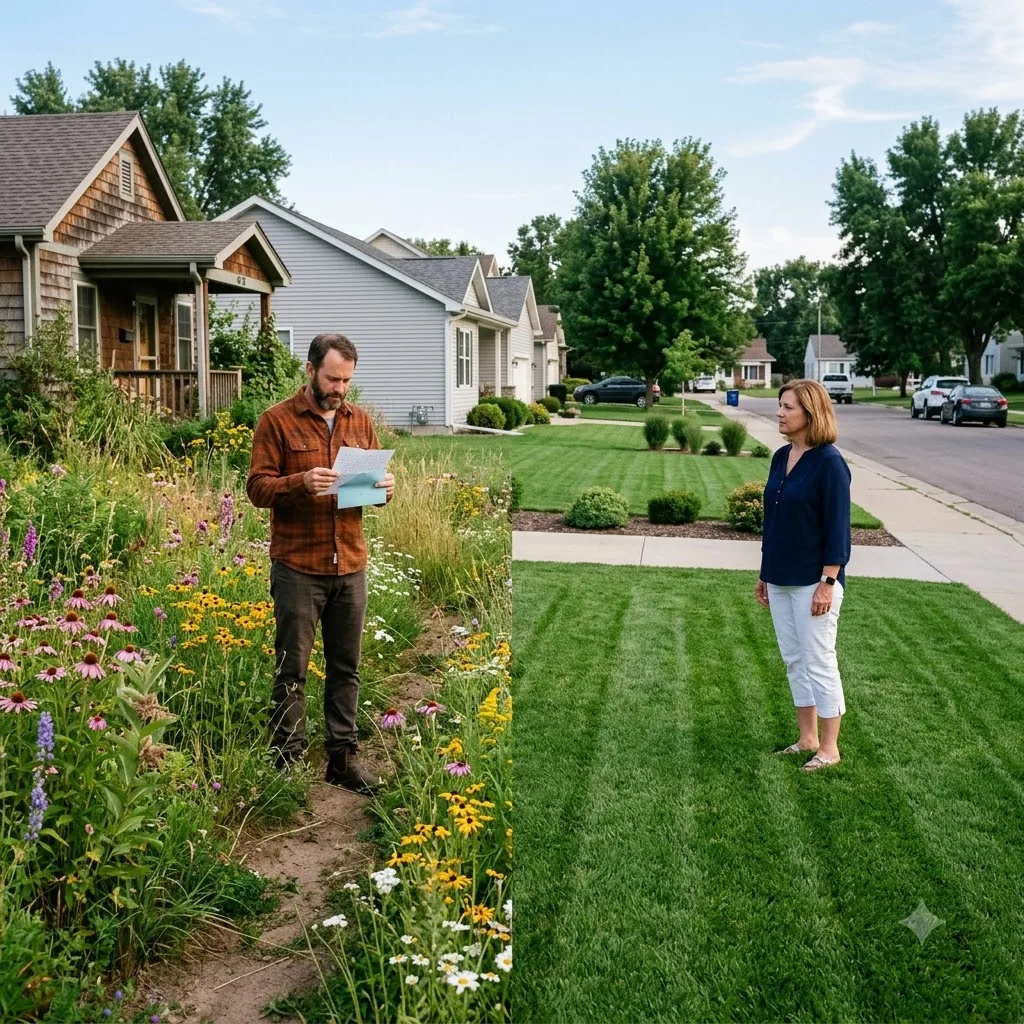
Elias lowered the letter. The afternoon sun beat down on his front yard, a dense, carefully cultivated patch of tall native switchgrass, blooming milkweed, and goldenrod. Dozens of bees hummed through the purple coneflowers he had planted by hand. It was exactly what the local university agricultural extension had recommended for soil retention and pollinator support. He had spent months testing the pH levels, analyzing the drainage patterns, and curating an ecosystem that would thrive in the drought-prone climate. He had a thick folder of soil reports and ecological surveys sitting on his kitchen counter, ready to prove the environmental necessity of every single root in his soil.
The HOA board had completely ignored the folder.
He looked back at the linen paper. The text did not mention weeds, overgrown lawns, or property lines. It framed his garden as a behavioral issue. The letter stated that the height of his wild indigo presented a barrier to community wellness and that his refusal to implement standardized turf grass demonstrated a confrontational energy incompatible with Oak Creek values. They were weaponizing his botanical facts into a psychological failing. By presenting objective data on soil erosion at the last meeting, the board claimed Elias was exhibiting an unwillingness to engage in heart-centered community dialogue.
He walked up the driveway, his boots crunching on the gravel. Every other yard on the street was a flat, unbroken carpet of chemically treated Kentucky bluegrass. There were no dandelions. There were no bees. The silence of the neighborhood was absolute, broken only by the distant hum of a landscaping crew’s leaf blower two streets over. His yard was the only living, breathing thing in sight. It was a refuge for monarch butterflies and local songbirds, all meticulously documented in the spreadsheets he had mailed to the architectural review committee.
The four-thousand-five-hundred-dollar figure at the top of the page seemed to burn into his retinas. It was not a fine he could fight in small claims court. It was a lien. They had attached it directly to the deed of his house.
Elias read the final paragraph of the pastel-blue notice. It offered a path to forgiveness. To avoid immediate foreclosure proceedings, he was required to initiate a mandatory mediation process. The letter called it a Re-alignment Consultation. A phone number was provided at the bottom, right next to a small illustration of a dove holding an olive branch. The instructions mandated that he call the number within twenty-four hours of receipt to demonstrate his commitment to neighborhood healing.
A sharp snapping sound pulled his attention across the street.
Brenda stood on her front walkway, a pair of stainless steel pruning shears in her gloved hands. She wore a pristine white tennis skirt and a matching visor. Her lawn was a flawless, artificial green, cut to a uniform height of exactly one and a half inches. She clipped a microscopic imperfection from her perfectly spherical boxwood shrub. She did not look at the shrub. Her eyes were locked entirely on Elias.
She stood perfectly still after making the cut. The shears remained closed in her grip. Her expression was completely neutral, a blank mask of neighborly observation. She knew exactly what was in the pastel-blue envelope. As the head of the aesthetic harmony subcommittee, she had likely chosen the lavender scent herself.
Elias felt the thick linen paper crinkle as his grip tightened. His factual defense was useless against a system that diagnosed his data as a symptom of a hostile personality. He could not submit another soil sample. He could not send them another university study on native pollinators. The board had engineered a scenario where fighting the fine with science only proved his lack of compliance with their emotional standards. Any attempt to argue the facts would be recorded as further aggression.
He took a deep breath, letting the scent of his blooming goldenrod fill his lungs. He reached into his pocket and pulled out his phone. He had to play their game to buy time. He tapped the screen, unlocking the device, and stared at the ten-digit number printed beneath the dove.
Brenda took one step closer to the edge of her driveway. She rested the tip of her pruning shears against her palm, still watching him through the blinding afternoon glare.
Elias typed the numbers into his dialer. He pressed the green call button and lifted the phone to his ear, listening to the first long ring echo through the receiver.
Elias stood at the edge of his driveway, his thumb tracing the embossed silver seal on the heavy, pastel-blue envelope. The words Community Wellness Check were stamped across the front in a soothing, flowing script. He tore the flap, pulling out a sheet of thick linen paper that smelled faintly of lavender. The top paragraph thanked him for his continued journey with the Oak Creek Village family, expressing a deep desire for collective serenity and neighborhood healing. The second paragraph informed him of a four-thousand-five-hundred-dollar lien placed against his property.
The stated violation was printed in a gentle, rounded font: Disruption of Aesthetic Harmony.
Elias lowered the letter. The afternoon sun beat down on his front yard, a dense, carefully cultivated patch of tall native switchgrass, blooming milkweed, and goldenrod. Dozens of bees hummed through the purple coneflowers he had planted by hand. It was exactly what the local university agricultural extension had recommended for soil retention and pollinator support. He had spent months testing the pH levels, analyzing the drainage patterns, and curating an ecosystem that would thrive in the drought-prone climate. He had a thick folder of soil reports and ecological surveys sitting on his kitchen counter, ready to prove the environmental necessity of every single root in his soil.
The HOA board had completely ignored the folder.
He looked back at the linen paper. The text did not mention weeds, overgrown lawns, or property lines. It framed his garden as a behavioral issue. The letter stated that the height of his wild indigo presented a barrier to community wellness and that his refusal to implement standardized turf grass demonstrated a confrontational energy incompatible with Oak Creek values. They were weaponizing his botanical facts into a psychological failing. By presenting objective data on soil erosion at the last meeting, the board claimed Elias was exhibiting an unwillingness to engage in heart-centered community dialogue.
He walked up the driveway, his boots crunching on the gravel. Every other yard on the street was a flat, unbroken carpet of chemically treated Kentucky bluegrass. There were no dandelions. There were no bees. The silence of the neighborhood was absolute, broken only by the distant hum of a landscaping crew’s leaf blower two streets over. His yard was the only living, breathing thing in sight. It was a refuge for monarch butterflies and local songbirds, all meticulously documented in the spreadsheets he had mailed to the architectural review committee.
The four-thousand-five-hundred-dollar figure at the top of the page seemed to burn into his retinas. It was not a fine he could fight in small claims court. It was a lien. They had attached it directly to the deed of his house.
Elias read the final paragraph of the pastel-blue notice. It offered a path to forgiveness. To avoid immediate foreclosure proceedings, he was required to initiate a mandatory mediation process. The letter called it a Re-alignment Consultation. A phone number was provided at the bottom, right next to a small illustration of a dove holding an olive branch. The instructions mandated that he call the number within twenty-four hours of receipt to demonstrate his commitment to neighborhood healing.
A sharp snapping sound pulled his attention across the street.
Brenda stood on her front walkway, a pair of stainless steel pruning shears in her gloved hands. She wore a pristine white tennis skirt and a matching visor. Her lawn was a flawless, artificial green, cut to a uniform height of exactly one and a half inches. She clipped a microscopic imperfection from her perfectly spherical boxwood shrub. She did not look at the shrub. Her eyes were locked entirely on Elias.
She stood perfectly still after making the cut. The shears remained closed in her grip. Her expression was completely neutral, a blank mask of neighborly observation. She knew exactly what was in the pastel-blue envelope. As the head of the aesthetic harmony subcommittee, she had likely chosen the lavender scent herself.
Elias felt the thick linen paper crinkle as his grip tightened. His factual defense was useless against a system that diagnosed his data as a symptom of a hostile personality. He could not submit another soil sample. He could not send them another university study on native pollinators. The board had engineered a scenario where fighting the fine with science only proved his lack of compliance with their emotional standards. Any attempt to argue the facts would be recorded as further aggression.
He took a deep breath, letting the scent of his blooming goldenrod fill his lungs. He reached into his pocket and pulled out his phone. He had to play their game to buy time. He tapped the screen, unlocking the device, and stared at the ten-digit number printed beneath the dove.
Brenda took one step closer to the edge of her driveway. She rested the tip of her pruning shears against her palm, still watching him through the blinding afternoon glare.
Elias typed the numbers into his dialer. He pressed the green call button and lifted the phone to his ear, listening to the first long ring echo through the receiver.