Story code: ST-001078
Part 1: The Blueprint
David’s voice boomed through the rusted skeleton of the Oakhaven Steel Mill, the crisp vowels of his rehearsed speech bouncing off the cold iron beams before settling over the crowd. He gripped the edges of the temporary oak podium, flashing a bright, practiced smile at the rows of city councilmen and wealthy investors seated on velvet folding chairs. Forty feet above the pristine white stage, the heavy thud of a pipe wrench striking reinforced glass punctuated David’s deliberate pauses.
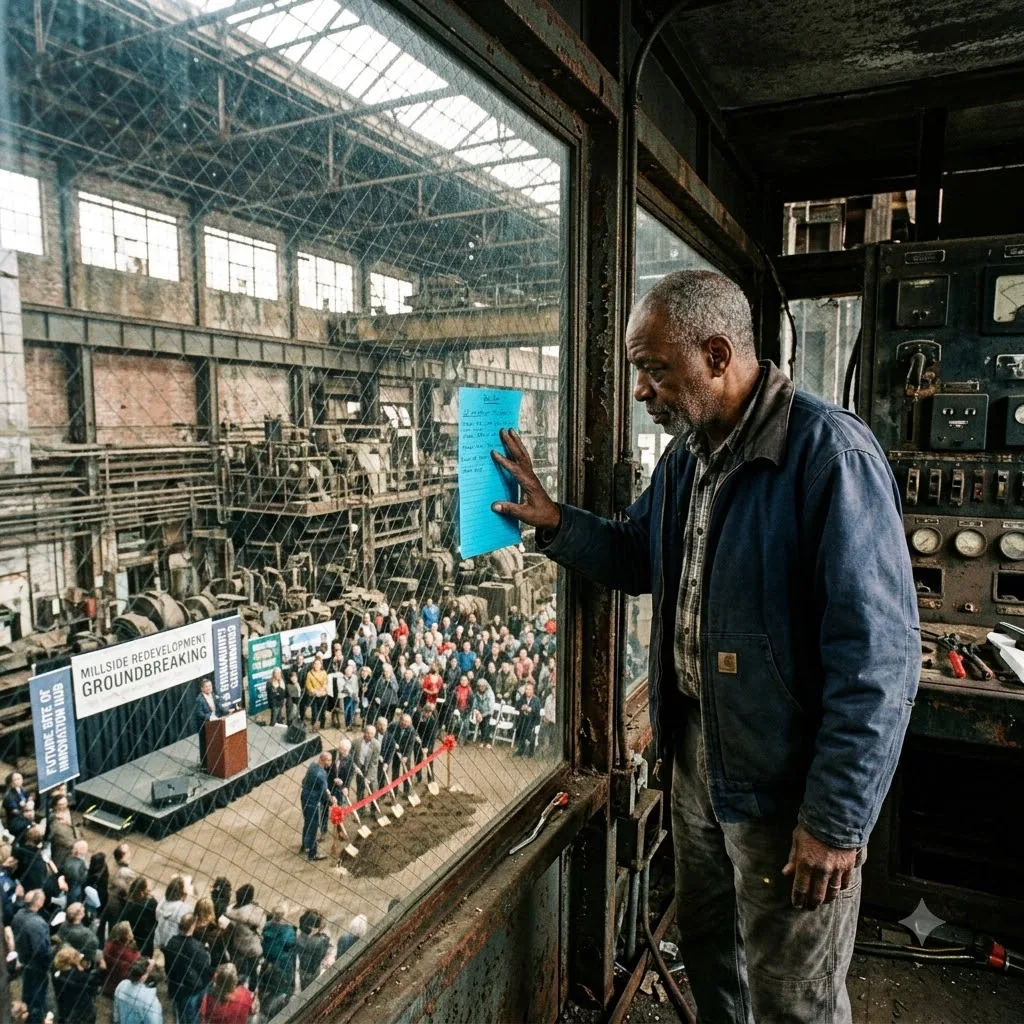
He did not let his smile falter as he looked up at the old supervisor’s control room suspended near the vaulted ceiling. Behind the thick, grime-streaked window, Marcus paced like a caged animal in a faded denim coat. The retired steelworker had breached the site at dawn, hauling himself up the rusted fire stairs and chaining the control room’s heavy steel door from the inside. He had spent the entire morning demanding a reinstatement of the mill’s dissolved pension fund, tossing hand-scrawled signs out a narrow ventilation slit.
Rather than order a tactical police extraction that would ruin the pristine optics of the groundbreaking ceremony, David had instructed his security team to stand down. He had decided to spin the disruption into public relations gold. He leaned closer to the microphone, letting a note of profound, manufactured pity soften his authoritative tone.
He told the captivated crowd about his own grandfather, a man who arrived on these shores with empty pockets, calloused hands, and a relentless, driving work ethic. He painted a vivid picture of progress, of cities evolving from soot and ash into shining hubs of modern luxury and innovation. Then, David aimed a perfectly manicured finger directly at the glass booth above the stage. He declared to the press that the man pounding on the window was not a villain, but a tragic casualty of nostalgia. He called Marcus a living monument to an era that had rightfully passed, a man desperately trying to chain the bright future to the rust of the past.
The investors nodded in solemn agreement, their expensive suits catching the flash of camera lenses. A few local journalists turned their lenses upward, snapping photos of the angry, disheveled man raging behind the glass, perfectly framing him as the stubborn antagonist to David’s visionary project.
David felt an intoxicating surge of absolute control. He unclipped the wireless microphone from the stand and paced across the wide stage, expanding on his grand vision for the multi-million dollar luxury apartments that would soon replace the decaying industrial infrastructure. He detailed the planned indoor waterfall cascading over reclaimed gears, the rooftop community gardens overlooking the river, and the artisanal coffee bar that would sit exactly where the blast furnaces had once melted iron. He spoke passionately about honoring the working-class spirit of the town by elevating the entire neighborhood into a modern beacon of prosperity.
Up in the elevated booth, the rhythmic, metallic banging stopped. Marcus lowered his heavy pipe wrench.
David caught the sudden cessation of movement out of the corner of his eye. A smug warmth spread through his chest. He assumed his effortless eloquence and the sheer size of the indifferent crowd had finally broken the old man’s resolve. He imagined Marcus realizing the absolute futility of his solo protest, humbled by the undeniable, crushing momentum of capital. David paused his speech for a dramatic beat, turning his body fully toward the high control room to offer a magnanimous, forgiving nod to his defeated adversary.
Marcus was not looking at the crowd of dignitaries, nor was he looking at the glossy architectural renderings displayed on the easels around the stage. He was staring directly down at David. The old man’s face was utterly devoid of the frantic, desperate anger he had displayed all morning. A cold, deliberate calm had settled over his features as he reached a grease-stained hand into the oversized inner pocket of his coat.
David took a deep breath to resume his speech, raising the microphone to his lips to deliver his final, soaring conclusion about the boundless nature of the American Dream. His eyes remained locked on the grime-streaked window above, expecting to see Marcus produce a cell phone to record a manifesto, or perhaps a printed list of foolish, empty demands.
Instead, Marcus pulled out a single, stiff blue folder.
The breath caught in David’s throat, forming a cold, solid lump of dread. The bright stage lights suddenly felt blinding. He recognized the heavy, textured azure stock of that specific folder instantly. He knew exactly what it was, and more importantly, he knew that it was supposed to be secured inside the locked leather briefcase hidden under the passenger seat of his tinted SUV parked more than a mile away in a private, guarded lot.
He blinked rapidly, a sudden sheen of icy sweat breaking out along his hairline and prickling the back of his neck. He frantically told himself it was just a coincidence, a random piece of blue scrap paper Marcus had found in the mill’s abandoned administrative wing. It had to be a trick of the stage lighting.
Then Marcus opened the folder with agonizing slowness. He removed a single sheet of matching blue paper, the distinctive gold-embossed seal of David’s offshore shell company catching a stray beam of sunlight piercing the broken roof above. The old steelworker did not shout down at the stage. He did not resume banging his wrench against the pane. He simply stepped forward, his eyes dead and unblinking, and pressed the open document flat against the reinforced glass.
David’s voice evaporated entirely from his lungs. The triumphant words of his grand finale died on his tongue, replaced by a sudden, suffocating panic that violently seized his chest. His manicured fingers went entirely numb, losing all feeling and grip on the sleek black plastic in his hand. The heavy wireless microphone slipped from his grasp and plummeted toward the concrete floor.
David’s voice boomed through the rusted skeleton of the Oakhaven Steel Mill, the crisp vowels of his rehearsed speech bouncing off the cold iron beams before settling over the crowd. He gripped the edges of the temporary oak podium, flashing a bright, practiced smile at the rows of city councilmen and wealthy investors seated on velvet folding chairs. Forty feet above the pristine white stage, the heavy thud of a pipe wrench striking reinforced glass punctuated David’s deliberate pauses.
He did not let his smile falter as he looked up at the old supervisor’s control room suspended near the vaulted ceiling. Behind the thick, grime-streaked window, Marcus paced like a caged animal in a faded denim coat. The retired steelworker had breached the site at dawn, hauling himself up the rusted fire stairs and chaining the control room’s heavy steel door from the inside. He had spent the entire morning demanding a reinstatement of the mill’s dissolved pension fund, tossing hand-scrawled signs out a narrow ventilation slit.
Rather than order a tactical police extraction that would ruin the pristine optics of the groundbreaking ceremony, David had instructed his security team to stand down. He had decided to spin the disruption into public relations gold. He leaned closer to the microphone, letting a note of profound, manufactured pity soften his authoritative tone.
He told the captivated crowd about his own grandfather, a man who arrived on these shores with empty pockets, calloused hands, and a relentless, driving work ethic. He painted a vivid picture of progress, of cities evolving from soot and ash into shining hubs of modern luxury and innovation. Then, David aimed a perfectly manicured finger directly at the glass booth above the stage. He declared to the press that the man pounding on the window was not a villain, but a tragic casualty of nostalgia. He called Marcus a living monument to an era that had rightfully passed, a man desperately trying to chain the bright future to the rust of the past.
The investors nodded in solemn agreement, their expensive suits catching the flash of camera lenses. A few local journalists turned their lenses upward, snapping photos of the angry, disheveled man raging behind the glass, perfectly framing him as the stubborn antagonist to David’s visionary project.
David felt an intoxicating surge of absolute control. He unclipped the wireless microphone from the stand and paced across the wide stage, expanding on his grand vision for the multi-million dollar luxury apartments that would soon replace the decaying industrial infrastructure. He detailed the planned indoor waterfall cascading over reclaimed gears, the rooftop community gardens overlooking the river, and the artisanal coffee bar that would sit exactly where the blast furnaces had once melted iron. He spoke passionately about honoring the working-class spirit of the town by elevating the entire neighborhood into a modern beacon of prosperity.
Up in the elevated booth, the rhythmic, metallic banging stopped. Marcus lowered his heavy pipe wrench.
David caught the sudden cessation of movement out of the corner of his eye. A smug warmth spread through his chest. He assumed his effortless eloquence and the sheer size of the indifferent crowd had finally broken the old man’s resolve. He imagined Marcus realizing the absolute futility of his solo protest, humbled by the undeniable, crushing momentum of capital. David paused his speech for a dramatic beat, turning his body fully toward the high control room to offer a magnanimous, forgiving nod to his defeated adversary.
Marcus was not looking at the crowd of dignitaries, nor was he looking at the glossy architectural renderings displayed on the easels around the stage. He was staring directly down at David. The old man’s face was utterly devoid of the frantic, desperate anger he had displayed all morning. A cold, deliberate calm had settled over his features as he reached a grease-stained hand into the oversized inner pocket of his coat.
David took a deep breath to resume his speech, raising the microphone to his lips to deliver his final, soaring conclusion about the boundless nature of the American Dream. His eyes remained locked on the grime-streaked window above, expecting to see Marcus produce a cell phone to record a manifesto, or perhaps a printed list of foolish, empty demands.
Instead, Marcus pulled out a single, stiff blue folder.
The breath caught in David’s throat, forming a cold, solid lump of dread. The bright stage lights suddenly felt blinding. He recognized the heavy, textured azure stock of that specific folder instantly. He knew exactly what it was, and more importantly, he knew that it was supposed to be secured inside the locked leather briefcase hidden under the passenger seat of his tinted SUV parked more than a mile away in a private, guarded lot.
He blinked rapidly, a sudden sheen of icy sweat breaking out along his hairline and prickling the back of his neck. He frantically told himself it was just a coincidence, a random piece of blue scrap paper Marcus had found in the mill’s abandoned administrative wing. It had to be a trick of the stage lighting.
Then Marcus opened the folder with agonizing slowness. He removed a single sheet of matching blue paper, the distinctive gold-embossed seal of David’s offshore shell company catching a stray beam of sunlight piercing the broken roof above. The old steelworker did not shout down at the stage. He did not resume banging his wrench against the pane. He simply stepped forward, his eyes dead and unblinking, and pressed the open document flat against the reinforced glass.
David’s voice evaporated entirely from his lungs. The triumphant words of his grand finale died on his tongue, replaced by a sudden, suffocating panic that violently seized his chest. His manicured fingers went entirely numb, losing all feeling and grip on the sleek black plastic in his hand. The heavy wireless microphone slipped from his grasp and plummeted toward the concrete floor.