Story code: ST-001083
Part 1: The Drone Feed
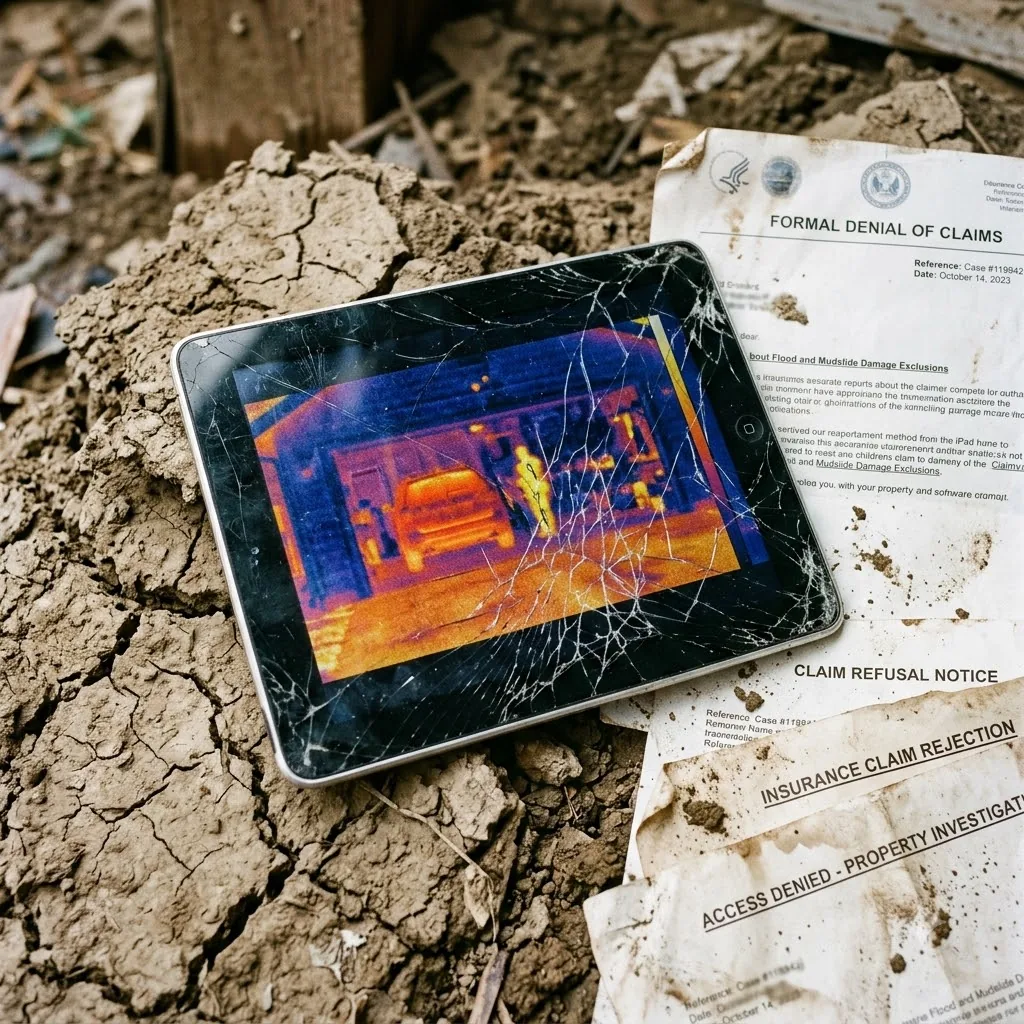
The glowing screen of the iPad cast a pale blue light across David’s face as he nudged the left joystick forward. On the display, the thermal camera translated the dead, mud-caked ruins of Sycamore Drive into cold purples and blacks. Only one structure glowed with a blinding, radioactive yellow of intense heat. Miller’s garage. Even from three houses down, sitting in the ruins of his own collapsed sunroom, David could hear the relentless, high-pitched mechanical whine of a CNC machine cutting through solid steel. The sound had not stopped for six days.
David’s finger rested on the drone controller. He glanced down at the folding table beside him, where a stack of water-warped envelopes sat anchored by a chunk of dried clay. Every single disaster insurance claim, denied. FEMA had moved on. The county had moved on. The street was nothing but a trench of hardened brown sludge, uprooted oak trees, and the skeletal remains of what used to be a suburban cul-de-sac. David was completely alone in the dark, except for the neighbor who refused to evacuate.
The drone hovered fifty feet above the wreckage, its four rotors humming a low, steady vibration that was entirely swallowed by the screech of Miller’s milling equipment. David watched the screen intently. He tapped the thermal filter, switching to the low-light optical lens. The yellow heat-bloom faded into a grainy, greenish night-vision feed.
Down below, Miller’s driveway was a fortress of tarps and stacked pallets. While the rest of the neighborhood was struggling to find bottled water and dry socks, Miller had somehow hauled in heavy-duty generator equipment and industrial-grade steel blocks. David angled the camera down. The gap beneath Miller’s partially open garage door spilled a harsh, flickering halogen light onto the mud.
David eased the right joystick forward. The drone descended, dipping below the canopy of a dead, slanted oak tree. The whine of the CNC machine grew louder, a grinding, metallic shriek that vibrated in David’s teeth. He needed to see what was inside. He needed to understand why a man living in a condemned disaster zone was running a heavy-machinery shop around the clock.
The insurance letters on David’s table fluttered in a stray breeze. He placed a hand over the top letter. The adjuster had called it an act of God before driving away in a clean white sedan. David had lost his kitchen, his car, and his savings to a wall of earth. Miller had lost half his roof, yet he was spending his nights machining perfectly symmetrical blocks of high-tensile metal.
On the iPad screen, the drone drifted closer to the garage door gap. David could see the heavy boots of his neighbor pacing back and forth across the concrete floor. Miller moved with a rigid, obsessive energy. He was dragging thick cables, locking metal plates into heavy vises, and dumping buckets of metallic shavings into a corner bin. The objects on his workbench were obscured by shadow and the glare of the work lamps. They were long, heavy, and modular. To David, they looked like the skeletal components of something massive, something that required absolute, mathematical precision to function.
David swallowed hard, his throat dry with the dust of the ruined street. He pressed the joystick slightly to the right, maneuvering the drone toward a side window that had been shattered during the mudslide. The glass was gone, replaced by a sagging piece of clear plastic. The drone hovered just outside this plastic veil.
Inside, the CNC machine paused its screaming rotation. In the sudden quiet, David could hear the hum of the cooling fans and the heavy thud of Miller’s boots. The camera caught a glimpse of the workbench. There were intricate cylinders, threaded at both ends, stacked in a neat row. Beside them sat a large, heavy receiver, completely devoid of any serial numbers or manufacturer marks. It was a factory born out of the apocalypse, building parts for a machine David could not identify.
The drone’s battery indicator flashed a warning in the corner of the iPad screen. Eighteen percent. David ignored it. He pushed the altitude stick down, dropping the drone to eye level with the torn plastic window. He needed one clear shot of the assembled device.
Miller stepped into the frame. He was covered in black grease and metal dust, his eyes fixed intently on a digital caliper in his right hand. He was measuring a freshly cut cylinder. The man had not shaved in a week. His movements were terrifyingly calm, completely detached from the reality of the mud-filled wasteland outside his walls.
David leaned closer to the iPad, holding his breath. The drone’s rotors kicked up a tiny cloud of dust from the windowsill.
Miller’s head snapped up. He looked directly at the sagging plastic. He looked directly at the camera lens.
David panicked and jammed the joystick backward to pull the drone into a rapid ascent. The rotors whined in protest, fighting the sudden change in momentum. The drone lurched up and away from the window, climbing toward the safety of the dark sky.
A violent blur of motion erupted from the side door of the garage. Miller stepped out into the mud, moving faster than a man his size should be able to move. The halogen light from the doorway caught the grim, set line of his jaw. He was not holding a tool. He was holding a long, wooden broom handle, gripping it like a baseball bat.
David pushed the throttle to maximum.
The broom handle swung upward in a vicious, sweeping arc, filling the entire frame of the iPad lens. A sharp, echoing crack split the night air.
The screen instantly snapped to black.
The glowing screen of the iPad cast a pale blue light across David’s face as he nudged the left joystick forward. On the display, the thermal camera translated the dead, mud-caked ruins of Sycamore Drive into cold purples and blacks. Only one structure glowed with a blinding, radioactive yellow of intense heat. Miller’s garage. Even from three houses down, sitting in the ruins of his own collapsed sunroom, David could hear the relentless, high-pitched mechanical whine of a CNC machine cutting through solid steel. The sound had not stopped for six days.
David’s finger rested on the drone controller. He glanced down at the folding table beside him, where a stack of water-warped envelopes sat anchored by a chunk of dried clay. Every single disaster insurance claim, denied. FEMA had moved on. The county had moved on. The street was nothing but a trench of hardened brown sludge, uprooted oak trees, and the skeletal remains of what used to be a suburban cul-de-sac. David was completely alone in the dark, except for the neighbor who refused to evacuate.
The drone hovered fifty feet above the wreckage, its four rotors humming a low, steady vibration that was entirely swallowed by the screech of Miller’s milling equipment. David watched the screen intently. He tapped the thermal filter, switching to the low-light optical lens. The yellow heat-bloom faded into a grainy, greenish night-vision feed.
Down below, Miller’s driveway was a fortress of tarps and stacked pallets. While the rest of the neighborhood was struggling to find bottled water and dry socks, Miller had somehow hauled in heavy-duty generator equipment and industrial-grade steel blocks. David angled the camera down. The gap beneath Miller’s partially open garage door spilled a harsh, flickering halogen light onto the mud.
David eased the right joystick forward. The drone descended, dipping below the canopy of a dead, slanted oak tree. The whine of the CNC machine grew louder, a grinding, metallic shriek that vibrated in David’s teeth. He needed to see what was inside. He needed to understand why a man living in a condemned disaster zone was running a heavy-machinery shop around the clock.
The insurance letters on David’s table fluttered in a stray breeze. He placed a hand over the top letter. The adjuster had called it an act of God before driving away in a clean white sedan. David had lost his kitchen, his car, and his savings to a wall of earth. Miller had lost half his roof, yet he was spending his nights machining perfectly symmetrical blocks of high-tensile metal.
On the iPad screen, the drone drifted closer to the garage door gap. David could see the heavy boots of his neighbor pacing back and forth across the concrete floor. Miller moved with a rigid, obsessive energy. He was dragging thick cables, locking metal plates into heavy vises, and dumping buckets of metallic shavings into a corner bin. The objects on his workbench were obscured by shadow and the glare of the work lamps. They were long, heavy, and modular. To David, they looked like the skeletal components of something massive, something that required absolute, mathematical precision to function.
David swallowed hard, his throat dry with the dust of the ruined street. He pressed the joystick slightly to the right, maneuvering the drone toward a side window that had been shattered during the mudslide. The glass was gone, replaced by a sagging piece of clear plastic. The drone hovered just outside this plastic veil.
Inside, the CNC machine paused its screaming rotation. In the sudden quiet, David could hear the hum of the cooling fans and the heavy thud of Miller’s boots. The camera caught a glimpse of the workbench. There were intricate cylinders, threaded at both ends, stacked in a neat row. Beside them sat a large, heavy receiver, completely devoid of any serial numbers or manufacturer marks. It was a factory born out of the apocalypse, building parts for a machine David could not identify.
The drone’s battery indicator flashed a warning in the corner of the iPad screen. Eighteen percent. David ignored it. He pushed the altitude stick down, dropping the drone to eye level with the torn plastic window. He needed one clear shot of the assembled device.
Miller stepped into the frame. He was covered in black grease and metal dust, his eyes fixed intently on a digital caliper in his right hand. He was measuring a freshly cut cylinder. The man had not shaved in a week. His movements were terrifyingly calm, completely detached from the reality of the mud-filled wasteland outside his walls.
David leaned closer to the iPad, holding his breath. The drone’s rotors kicked up a tiny cloud of dust from the windowsill.
Miller’s head snapped up. He looked directly at the sagging plastic. He looked directly at the camera lens.
David panicked and jammed the joystick backward to pull the drone into a rapid ascent. The rotors whined in protest, fighting the sudden change in momentum. The drone lurched up and away from the window, climbing toward the safety of the dark sky.
A violent blur of motion erupted from the side door of the garage. Miller stepped out into the mud, moving faster than a man his size should be able to move. The halogen light from the doorway caught the grim, set line of his jaw. He was not holding a tool. He was holding a long, wooden broom handle, gripping it like a baseball bat.
David pushed the throttle to maximum.
The broom handle swung upward in a vicious, sweeping arc, filling the entire frame of the iPad lens. A sharp, echoing crack split the night air.
The screen instantly snapped to black.