Story code: ST-001080
Part 1: The Clean Feed
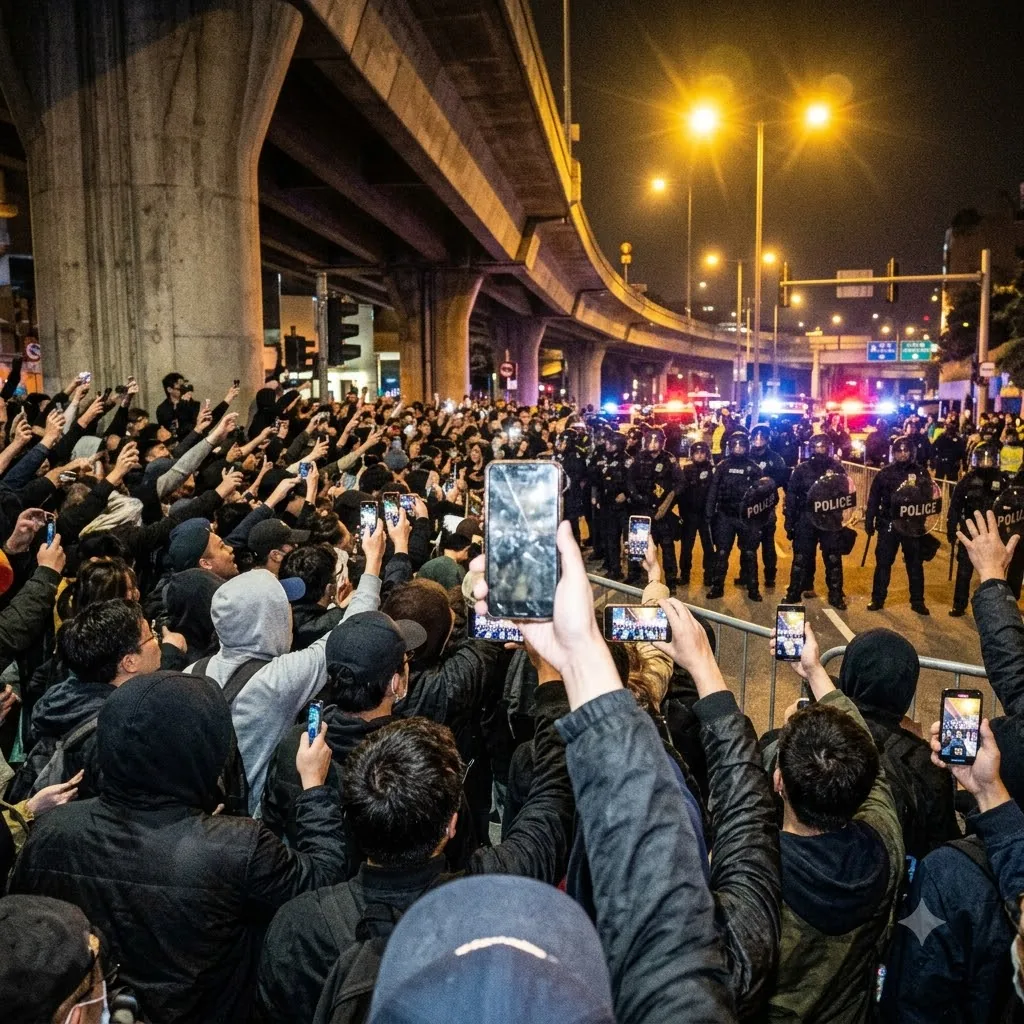
Concrete dust and the smell of hot asphalt pressed hard into my cheek as the wall of polycarbonate shields stepped forward in unison. The I-95 overpass above us trapped the sound, turning the collective panic of three hundred enclosed people into a physical weight pressing against my eardrums. I kept my arms locked high above the crush of bodies, my grip white-knuckled on the heavy carbon-fiber gimbal, keeping the main lens dead-centered on the advancing line of riot gear. This was the exact scenario we built our platform for. I just needed to keep the feed alive. Marcus was sitting safe in our soundproof studio back in the arts district, pulling my raw transmission from the cloud, mixing the audio levels, and pushing the unvarnished reality out to our half-million subscribers.
The crowd surged backward in a wave of sheer terror. A teenager with a neon green backpack slammed hard into my chest, knocking the breath out of my lungs. I braced my steel-toed boots against the edge of the curb and forced my arms back up, refusing to lower the rig. The gimbal motors whined loudly in protest, struggling to stabilize against the sudden violent movement. I tapped the side of my headset to check the two-way comms link with Marcus. Only heavy, rhythmic static greeted me. The cellular networks down in this concrete trench were completely choked by the sheer density of devices trying to push data out of the police kettle. That was perfectly fine. We had planned for this exact bottleneck. My rig had a dedicated bonded cellular backpack, slicing the high-definition video into tiny packets and firing them off simultaneously across four different commercial carrier bands. As long as the red recording light stayed solid, Marcus had my eyes on the ground. He had the definitive proof of the entrapment happening in real time.
The police were not letting anyone disperse. They were methodically tightening the circle, boxing us into a fifty-foot stretch of cracked pavement with absolutely no exit. The physical pressure of the crowd was becoming incredibly dangerous. People were gasping for air, packed so tightly shoulder to shoulder that no one could even raise their arms to defend their faces. I watched the battery indicator on my main monitor flash from a warning yellow to an angry, pulsing red. I reached blindly into my cargo pocket for the spare cell, my sweaty fingers fumbling over the nylon zippers in the impossibly tight space. Another massive surge of trapped bodies hit me from the left side. The camera dipped sharply toward the ground, the monitor screen flickered into a harsh matrix of dead pixels, and the red recording light abruptly died.
The sudden dead weight of the rig in my hands felt exactly like an anchor pulling me under. I let the expensive setup drop heavily to its chest strap, shoving my hand back into my pocket to grab my personal phone. If the main feed was dead, I had to get the mobile app broadcasting immediately. Marcus needed to know the primary camera was down so he could seamlessly switch to the backup street-cam footage or run our contingency graphics loop. The cracked screen of my phone lit up, showing a single, weak bar of signal. I pulled up the public side of our app to see what was currently broadcasting to our audience. The video feed buffered indefinitely, just a spinning white circle hovering over a flat black background. The noise of the panicked crowd around me was a chaotic, deafening roar of shouting, coughing, and scraping boots. I clamped my free hand hard over my left ear, trying desperately to isolate the tiny speaker on the bottom of my phone. Nothing came through the device.
Then, a completely different sound pierced the immediate, terrifying noise of the kettle.
It was not coming from my device. Ten feet away, standing slightly behind the front line of interlocking riot shields, a heavy-set officer had his helmet visor flipped up to catch the breeze. He was leaning casually against the reinforced hood of a patrol cruiser, a heavy-duty smartphone held sideways in his thick, gloved hand. The volume on his device was cranked to absolute maximum. I instantly recognized the deep, synthesized bass drop of our own platform’s signature intro graphic. The distinct sound bounced clearly off the concrete pillar right next to his head. I stared blankly at the officer’s screen.
It was my footage. It was the exact, shaky pan I had shot exactly three minutes ago, showing the terrified, tear-stained faces of the college kids pressed violently against the concrete highway barrier.
But the audio track was completely wrong. I fully expected to hear the raw, terrified shouting and pleading I had just recorded in that moment. Instead, a smooth, heavily compressed studio voice boomed out of the cop’s phone speaker. It was Marcus. His signature, trusted baritone voiceover rolled out over the chaotic noise of the kettle, perfectly paced, completely calm, and undeniably polished. I watched the delayed video of the crying teenagers on the officer’s screen while Marcus’s voice track played directly over it. He was describing the scene with absolute clinical detachment, explicitly labeling the trapped, unarmed crowd as violent, armed agitators actively attempting to breach a secure municipal zone. He commended the tactical precision and necessary force of the police containment unit.
The officer holding the phone looked up from his screen, locked eyes directly with me through the narrow gap in the plastic shields, and flashed a wide, knowing grin. He reached down to his heavy utility belt and tapped the shoulder of the cop standing in front of him. The entire line of shields lifted one inch off the asphalt and slammed forward in unison.
Concrete dust and the smell of hot asphalt pressed hard into my cheek as the wall of polycarbonate shields stepped forward in unison. The I-95 overpass above us trapped the sound, turning the collective panic of three hundred enclosed people into a physical weight pressing against my eardrums. I kept my arms locked high above the crush of bodies, my grip white-knuckled on the heavy carbon-fiber gimbal, keeping the main lens dead-centered on the advancing line of riot gear. This was the exact scenario we built our platform for. I just needed to keep the feed alive. Marcus was sitting safe in our soundproof studio back in the arts district, pulling my raw transmission from the cloud, mixing the audio levels, and pushing the unvarnished reality out to our half-million subscribers.
The crowd surged backward in a wave of sheer terror. A teenager with a neon green backpack slammed hard into my chest, knocking the breath out of my lungs. I braced my steel-toed boots against the edge of the curb and forced my arms back up, refusing to lower the rig. The gimbal motors whined loudly in protest, struggling to stabilize against the sudden violent movement. I tapped the side of my headset to check the two-way comms link with Marcus. Only heavy, rhythmic static greeted me. The cellular networks down in this concrete trench were completely choked by the sheer density of devices trying to push data out of the police kettle. That was perfectly fine. We had planned for this exact bottleneck. My rig had a dedicated bonded cellular backpack, slicing the high-definition video into tiny packets and firing them off simultaneously across four different commercial carrier bands. As long as the red recording light stayed solid, Marcus had my eyes on the ground. He had the definitive proof of the entrapment happening in real time.
The police were not letting anyone disperse. They were methodically tightening the circle, boxing us into a fifty-foot stretch of cracked pavement with absolutely no exit. The physical pressure of the crowd was becoming incredibly dangerous. People were gasping for air, packed so tightly shoulder to shoulder that no one could even raise their arms to defend their faces. I watched the battery indicator on my main monitor flash from a warning yellow to an angry, pulsing red. I reached blindly into my cargo pocket for the spare cell, my sweaty fingers fumbling over the nylon zippers in the impossibly tight space. Another massive surge of trapped bodies hit me from the left side. The camera dipped sharply toward the ground, the monitor screen flickered into a harsh matrix of dead pixels, and the red recording light abruptly died.
The sudden dead weight of the rig in my hands felt exactly like an anchor pulling me under. I let the expensive setup drop heavily to its chest strap, shoving my hand back into my pocket to grab my personal phone. If the main feed was dead, I had to get the mobile app broadcasting immediately. Marcus needed to know the primary camera was down so he could seamlessly switch to the backup street-cam footage or run our contingency graphics loop. The cracked screen of my phone lit up, showing a single, weak bar of signal. I pulled up the public side of our app to see what was currently broadcasting to our audience. The video feed buffered indefinitely, just a spinning white circle hovering over a flat black background. The noise of the panicked crowd around me was a chaotic, deafening roar of shouting, coughing, and scraping boots. I clamped my free hand hard over my left ear, trying desperately to isolate the tiny speaker on the bottom of my phone. Nothing came through the device.
Then, a completely different sound pierced the immediate, terrifying noise of the kettle.
It was not coming from my device. Ten feet away, standing slightly behind the front line of interlocking riot shields, a heavy-set officer had his helmet visor flipped up to catch the breeze. He was leaning casually against the reinforced hood of a patrol cruiser, a heavy-duty smartphone held sideways in his thick, gloved hand. The volume on his device was cranked to absolute maximum. I instantly recognized the deep, synthesized bass drop of our own platform’s signature intro graphic. The distinct sound bounced clearly off the concrete pillar right next to his head. I stared blankly at the officer’s screen.
It was my footage. It was the exact, shaky pan I had shot exactly three minutes ago, showing the terrified, tear-stained faces of the college kids pressed violently against the concrete highway barrier.
But the audio track was completely wrong. I fully expected to hear the raw, terrified shouting and pleading I had just recorded in that moment. Instead, a smooth, heavily compressed studio voice boomed out of the cop’s phone speaker. It was Marcus. His signature, trusted baritone voiceover rolled out over the chaotic noise of the kettle, perfectly paced, completely calm, and undeniably polished. I watched the delayed video of the crying teenagers on the officer’s screen while Marcus’s voice track played directly over it. He was describing the scene with absolute clinical detachment, explicitly labeling the trapped, unarmed crowd as violent, armed agitators actively attempting to breach a secure municipal zone. He commended the tactical precision and necessary force of the police containment unit.
The officer holding the phone looked up from his screen, locked eyes directly with me through the narrow gap in the plastic shields, and flashed a wide, knowing grin. He reached down to his heavy utility belt and tapped the shoulder of the cop standing in front of him. The entire line of shields lifted one inch off the asphalt and slammed forward in unison.