Story code: ST-001080
Part 4: The Raw Transmission
The heavy-set cop didn’t understand the platform’s routing architecture, but he understood brute force. He gave up on trying to close the application. Instead, he simply clamped his thick thumb down on the physical power button, holding it against the side of the chassis until the hardware forcibly overrode the software. The shattered screen flickered, froze, and finally died into a flat, lifeless black. The split feed was severed.
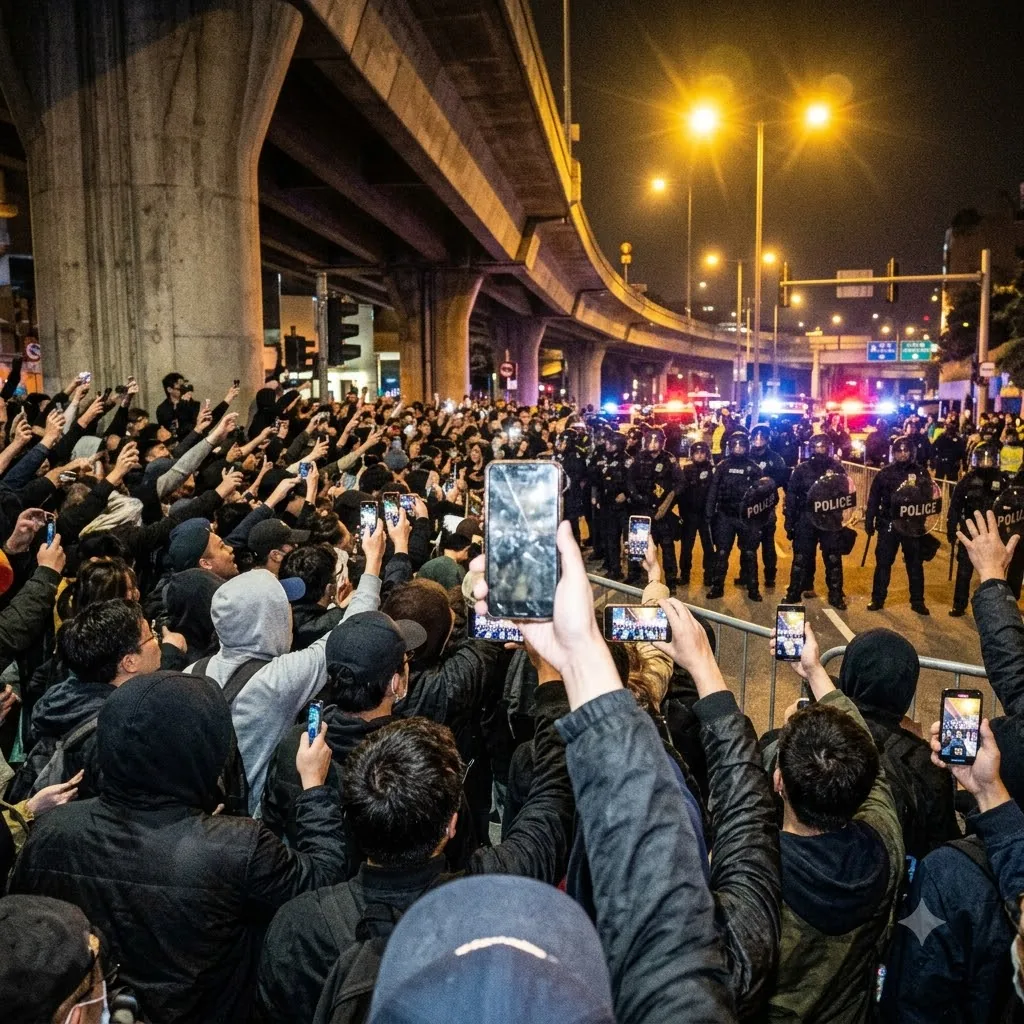
My shoulders screamed in agony as the arresting officer hauled me up by my jacket collar. The plastic zip-tie cut deep into the raw skin of my wrists, pinning my arms behind my back at an unnatural angle. The kettle was breaking apart now, the tactical units methodically dismantling the crowd and marching us toward a line of idling prisoner transport vans.
I was shoved violently into the metal belly of the closest van, stumbling over the boots of other protesters before collapsing onto a ribbed steel bench. The heavy steel doors slammed shut, plunging us into a sweltering, claustrophobic darkness smelling of dried sweat and diesel exhaust. As the engine rumbled beneath us, I rested my head back against the vibrating metal wall.
I knew exactly what was happening in the corporate suites. The midnight deadline was ticking down, but Zenith Media wasn’t in the business of buying public relations disasters. They wanted a sterile, brand-safe environment to pipe local news through. Instead, I had just injected a violent, unedited reality check directly into their executive boardroom. Marcus’s pristine pitch was reduced to ashes. His eight-figure payout was vaporized. He had sold out our entire core ethos for a massive payday that I had just permanently burned to the ground.
Hours later, the van doors swung open to the harsh, blinding fluorescent glare of a municipal garage converted into a mass processing center. We were marched out in a single-file line, our boots echoing hollowly on the oil-stained concrete. My collarbone throbbed in a steady, sickening rhythm, a sharp reminder of the impact with the asphalt.
An exhausted, red-eyed booking officer processed our line one by one at a series of folding metal tables. When it was finally my turn, he grabbed my bound hands and aggressively snipped the thick plastic zip-ties with a pair of heavy trauma shears. The sudden rush of blood back into my fingers felt like a wave of crushed glass. Before I could even rub my wrists, he dumped the contents of my confiscated pockets onto the table.
Out came my keys, my wallet, a crushed spare camera battery, and my phone. The screen was heavily spider-webbed from where the cop had slammed it onto the cruiser’s reinforced hood, but the chassis was still miraculously intact.
“Unlock it and power it down,” the booking officer muttered, barely looking up from his stack of carbon-copy paperwork. “We have to verify the battery isn’t a swollen fire hazard before we seal it in an evidence bag.”
My fingers were stiff and shaking violently. I pressed my thumb against the biometric sensor at the bottom of the cracked glass. The screen woke up.
It didn’t just boot up normally. The device completely froze for three agonizing seconds as the processor choked on a massive, unyielding backlog of inbound data.
When the lock screen finally rendered, it was a continuous, blurring waterfall of push banners sliding down the glass faster than my tired eyes could track. I knew Marcus had undoubtedly pulled the emergency kill-switch on our main servers the second my phone died. He would have shut down the entire Content Delivery Network to stop the bleeding. Our primary domain was likely returning a flat 404 error. The startup we had built together was entirely dead.
But these notifications weren’t coming from our corporate app. They were pouring in from the decentralized, open-source mirror channel I had built two years ago-the personal, unbranded fail-over node I kept running in the background. I had hardcoded the developer backdoor to always push a redundant signal there, just in case our main servers ever failed.
The subscriber metrics flashing across my shattered screen were incomprehensible. *+8,500 new followers.* A second later, the widget refreshed. *+14,200 new followers.*
A breaking news alert from a major tech blog squeezed through the relentless barrage of subscription alerts: *Zenith Media Cancels Acquisition of Streaming Startup Following Live On-Air Breakdown; Co-Founder Exposed.*
Marcus was left with absolutely nothing. No corporate buyout, no sanitized megaphone, and no credibility in the industry.
“I said power it down,” the booking officer snapped, tapping his pen aggressively against the metal table.
I stared at the shattered glass one last time. I was standing in a freezing police garage, facing a laundry list of municipal charges. My ten-thousand-dollar primary camera rig was destroyed, left to be swept up as garbage on the highway. I had no company, no studio, and no investors.
I pressed the side button until the screen faded to black, sliding the heavy device across the table and into the clear plastic evidence bag. The polished corporate lie was dead, but the audience had finally seen the raw, unfiltered transmission. And they knew exactly who held the camera.