Story code: ST-000245
Part 2: The Story They Tried to Use
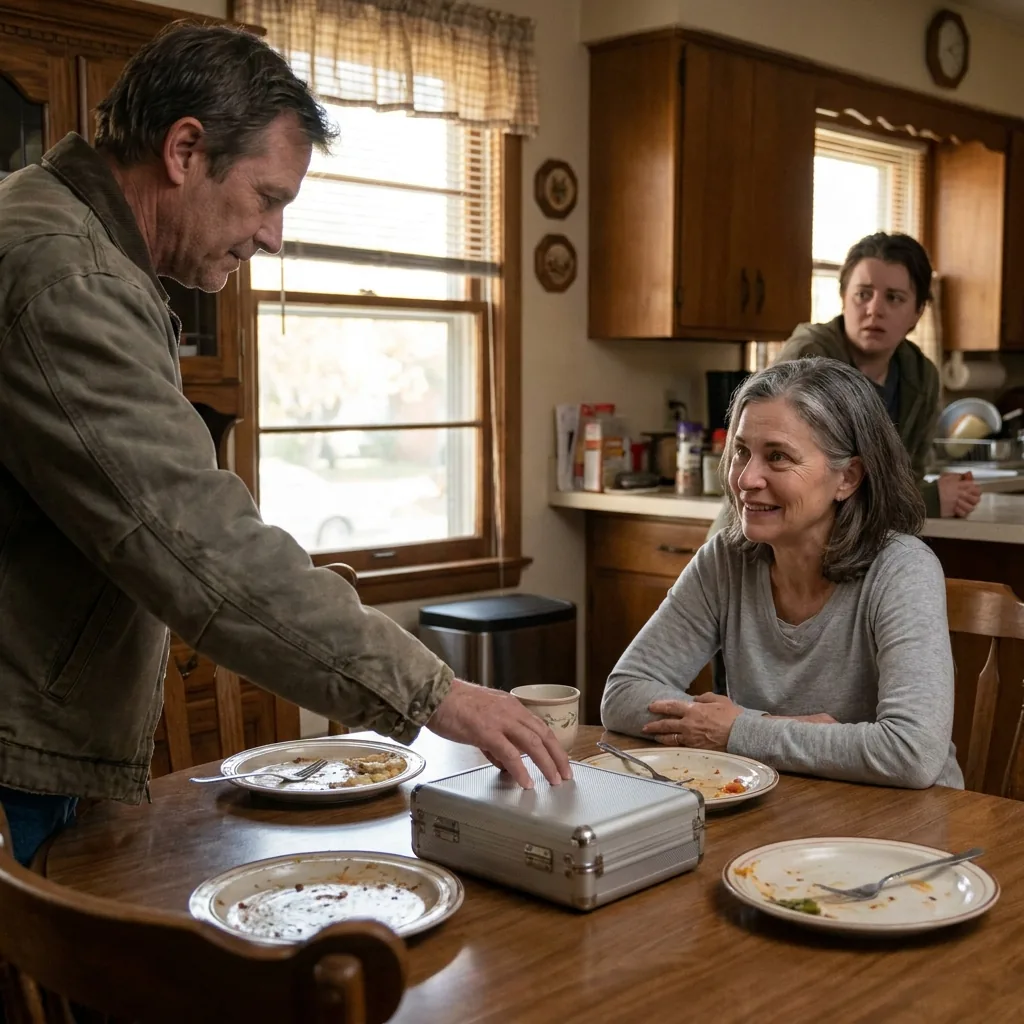
Rina answered Eli before Daniel did. That told me as much as anything else in the room. “She hasn’t said anything improper,” Rina said, still using that calm clinic voice. “Secondary continuity labels can appear when a client tests alternative identity mapping in private therapeutic contexts. It does not mean another person has entered the record.” Maya looked at her like she had just watched a door close from the inside. Daniel kept folding the bakery bag until the paper split down one side. Eli did not touch his food again. “You said she,” he said. Rina’s jaw tightened for one second, then settled. “I was referring to the name.” That was the moment the public explanation arrived, clean and ready and already too smooth. You could hear what it wanted to do. Keep the ceremony meal from collapsing. Keep staff from gathering. Keep the room inside language that sounded technical enough to end family questions. Maya did not accept it, but she did something harder. She used it. “Fine,” she said, and her voice went so even that everyone at the table leaned in to hear. “Then there was identity mapping. Private therapeutic context. A label carryover. That’s what happened.” Daniel turned to her fast at that, like he had not expected help to sound like that. Rina nodded once, encouraged. “Exactly. We don’t need to dramatize exploratory work.” Maya kept her hand on the drive case. “Then I want the witness screens to show the intake trail for the carryover before anything continues.” Rina’s expression did not break, but it paused. “That is not necessary for a meal-stage review.” “You just made it necessary,” Maya said. A few people at nearby tables had started pretending not to listen. That American clinic skill, staring very hard at your salad while tracking every word. A staff tech near the coffee station checked our table number on a tablet and then looked away. Nobody wanted a scene. That made the pressure quieter, not smaller. Daniel finally spoke into the opening Maya had created. “It was a trial name,” he said. “For processing. Nothing happened.” Maya looked at him. “Used where?” He rubbed the split bakery bag between his fingers. “In consults.” “How many?” Rina stepped in again. “Quantity isn’t the point.” “It is if my family is hearing about it for the first time from intake language over lunch,” Maya said. No one raised a voice. That was part of what made it ugly. Every sentence stayed small enough to pass for civilized. The damage kept showing anyway. Rina tried a different route. “If we freeze the event over a private naming trial, the record will show family dispute during continuity review. That can complicate future handling of the drive.” There it was: the cost attached to refusing the neat explanation. Maya heard it too. She looked at the witness screens, then at the staff tech who was still pretending not to monitor us. “So the choice is smile through it now or carry a dispute flag later?” Rina spread one hand. “I’m saying there are practical consequences to how this is framed.” Daniel said, “Maya.” Just her name. Nothing after it. She did not look at him right away. When she did, it was with the careful face of someone picking a step across broken glass. “You told us the drive was lost,” she said. “Now I’m supposed to agree it was in private consults under another name, and that this is ordinary enough to eat cake over.” No one corrected her. That mattered. Eli had been watching who would meet whose eyes. He leaned back and looked up at the witness screens instead. On one screen, the clinic had the event queue open in a corner beside the looping consent reminders. Family Meal Review, Table C. Client attached. Artifact present. Advocate attached. Intake synced. Eli stood so suddenly his chair legs scraped the floor. Not loud, but enough for the nearby tables to go still. “What does synced mean?” he asked. Rina answered without looking at the screen. “Standard language.” Eli pointed. “Then why did it change?” We all looked up. A second line had appeared under the event queue while we were talking. It was small, plain text in the same clinic font. Alias history confirmed. The staff tech at the coffee station moved immediately, too late to block us from seeing it. He tapped his tablet, and the line vanished. But it had been there. Everyone at our table had read it. Two women from the next table had read it too, judging by the way both of them dropped their eyes at the same time. Rina’s procedural voice came back a shade faster than before. “Auto-populated language,” she said. “This is exactly why families should not overread intermediate display terms.” Intermediate display terms. Alias history. Private naming trial. She kept handing us polished phrases that slid over the surface and caught on every sharp edge underneath. Maya did something then that cost her. She nodded. “All right,” she said. “For the room, it was a naming trial. We continue the meal.” Daniel exhaled through his nose and reached for his water. He did not touch the drive case. That was the false alibi, and everybody at the table knew it was one. It bought maybe ten minutes of public order, but it changed the record of who had agreed to what. The staff tech relaxed enough to stop hovering. Rina sat down at the end of the table as if the situation had been contained. Then Maya slid the silver case two inches toward herself and pressed the wake strip with her thumb. The case lit up, and on its narrow status band, before any privacy shield could fully engage, a greeting flashed in plain text: Welcome back, Lena. Nobody at the table spoke for a full three seconds, and then Maya said, very clearly, “Tell me why the drive knows that name when you told.