Story code: ST-001093
Part 1: The Last Commission
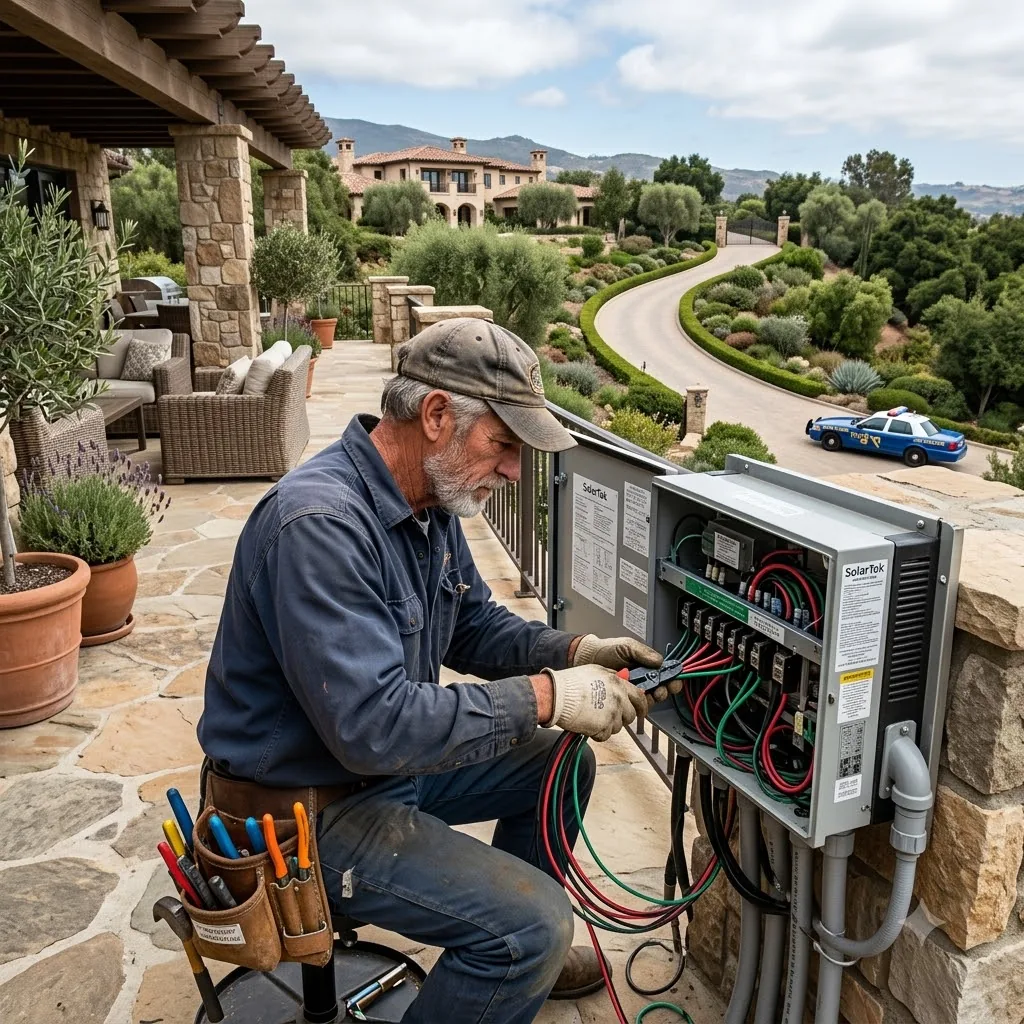
Wayne clamped his wire strippers around the thick copper grounding cable, forcing his wrists to lock so his trembling hands wouldn’t butcher the insulation. He squeezed the handles and pulled the black sheathing free with a sharp jerk. Down at the base of the winding, half-mile-long driveway, a white Ford Explorer with a low-profile light bar sat idling on the sun-baked shoulder of the canyon road. The sheriff’s deputy inside wasn’t there for the residents of the glass-and-timber mansion looming behind Wayne. They were waiting out the clock for the fifty-year-old solar apprentice sweating over an open inverter box.
Wayne pushed the newly stripped wire into the grounding bus bar and tightened the lug with a hex wrench. The torque had to be exact. His new career demanded a precision that his tired, factory-worn joints fought against every day. He wiped a streak of dark grease from his forehead, keeping his eyes fixed on the digital display of his multimeter. He absolutely refused to look down the hill again. The cruiser was a silent, looming promise. They knew there was no other way off the ridge. The deputies were perfectly content to sit in the air conditioning and let him finish his workday before slapping the cuffs on his wrists.
The mountain air was thin and dry, carrying the scent of crushed pine needles and expensive landscaping mulch. Wayne fed the red positive and black negative leads through a length of rigid metal conduit, his breath catching in his throat every time the plastic shielding scraped against the galvanized steel. He was the oldest trainee in his local union chapter by two full decades. The younger guys on the crew bounded up ladders and hauled eighty-pound panels like they were cardboard. Wayne had to rely on mechanical leverage, sheer stubbornness, and a desperate, gnawing need to keep a reliable paycheck coming in. He couldn’t let his site supervisor find a shoddy connection tomorrow. He had to finish commissioning the energy system, even if he wouldn’t be walking away from this property a free man.
He secured the final direct-current array string into the primary terminal block. The satisfying click of the locking mechanism echoed off the slate patio. He reached for his roll of electrical tape, wrapping the exposed metal connectors with tight, overlapping turns. The sheer, overwhelming wealth of the estate was suffocating to be around. Infinity pools stretched toward the horizon, accompanied by imported marble fire pits burning gas in the middle of the day, and a sweeping view of the industrial valley below. Down in that valley sat the rusted skeleton of the automotive stamping plant where Wayne had spent twenty-five years of his life. The same plant that had been liquidated, gutted for scrap, and abandoned, taking the town’s economy down with it.
Sharp footsteps sounded on the terrace stairs. Expensive leather soles tapping a crisp rhythm against the imported stone.
Wayne didn’t turn around. He focused on snapping the heavy brushed-metal cover back onto the inverter housing. He secured the four corner tension latches one by one, testing their resistance with the thumb of his glove.
“You are making quite a mess of my morning schedule, Wayne.”
The voice was polished, carrying the unmistakable arrogance of a man who had never swung a hammer in his life. Wayne recognized the exact cadence immediately. He had heard it echoing through crowded union halls, blaring over cheap PA systems during the final, brutal contract negotiations that had ultimately doomed his hometown.
Wayne slowly unclipped his safety harness from the steel anchoring line. He placed his multimeter gently into his tool belt. He turned around to face the sprawling upper terrace.
Standing ten feet away was Arthur Vance, the former chief executive officer of the automotive group. The man who signed the closure orders from a high-rise office three states away was now standing in casual weekend linen, looking down at his solar installation. Vance wasn’t looking at the photovoltaic panels, though. He was staring intently at a thick, manila medical folder clutched fiercely in his left hand. The tab on the side bore the red urgency sticker of the regional oncology center, the exact facility where Vance’s youngest daughter was currently registered as an inpatient.
Vance stepped forward, stopping just outside the shadow cast by the solar array. The executive’s usually pristine, media-trained composure was completely fractured. His jaw muscles worked furiously under his skin, and his white-knuckled grip on the folder actively crumpled the thick cardstock paper. He looked down the steep hill toward the idling sheriff’s cruiser, watching the sunlight glint off the windshield, then turned his gaze back to the aging electrical apprentice standing on his roof.
Wayne tightened his grip on his heavy lineman pliers, refusing to break eye contact or offer a single word of explanation.
Vance lifted the medical file, his hand shaking with a rage that mirrored Wayne’s own physical exhaustion, and slammed the stack of papers directly onto the slate tiles between them.
Wayne clamped his wire strippers around the thick copper grounding cable, forcing his wrists to lock so his trembling hands wouldn’t butcher the insulation. He squeezed the handles and pulled the black sheathing free with a sharp jerk. Down at the base of the winding, half-mile-long driveway, a white Ford Explorer with a low-profile light bar sat idling on the sun-baked shoulder of the canyon road. The sheriff’s deputy inside wasn’t there for the residents of the glass-and-timber mansion looming behind Wayne. They were waiting out the clock for the fifty-year-old solar apprentice sweating over an open inverter box.
Wayne pushed the newly stripped wire into the grounding bus bar and tightened the lug with a hex wrench. The torque had to be exact. His new career demanded a precision that his tired, factory-worn joints fought against every day. He wiped a streak of dark grease from his forehead, keeping his eyes fixed on the digital display of his multimeter. He absolutely refused to look down the hill again. The cruiser was a silent, looming promise. They knew there was no other way off the ridge. The deputies were perfectly content to sit in the air conditioning and let him finish his workday before slapping the cuffs on his wrists.
The mountain air was thin and dry, carrying the scent of crushed pine needles and expensive landscaping mulch. Wayne fed the red positive and black negative leads through a length of rigid metal conduit, his breath catching in his throat every time the plastic shielding scraped against the galvanized steel. He was the oldest trainee in his local union chapter by two full decades. The younger guys on the crew bounded up ladders and hauled eighty-pound panels like they were cardboard. Wayne had to rely on mechanical leverage, sheer stubbornness, and a desperate, gnawing need to keep a reliable paycheck coming in. He couldn’t let his site supervisor find a shoddy connection tomorrow. He had to finish commissioning the energy system, even if he wouldn’t be walking away from this property a free man.
He secured the final direct-current array string into the primary terminal block. The satisfying click of the locking mechanism echoed off the slate patio. He reached for his roll of electrical tape, wrapping the exposed metal connectors with tight, overlapping turns. The sheer, overwhelming wealth of the estate was suffocating to be around. Infinity pools stretched toward the horizon, accompanied by imported marble fire pits burning gas in the middle of the day, and a sweeping view of the industrial valley below. Down in that valley sat the rusted skeleton of the automotive stamping plant where Wayne had spent twenty-five years of his life. The same plant that had been liquidated, gutted for scrap, and abandoned, taking the town’s economy down with it.
Sharp footsteps sounded on the terrace stairs. Expensive leather soles tapping a crisp rhythm against the imported stone.
Wayne didn’t turn around. He focused on snapping the heavy brushed-metal cover back onto the inverter housing. He secured the four corner tension latches one by one, testing their resistance with the thumb of his glove.
“You are making quite a mess of my morning schedule, Wayne.”
The voice was polished, carrying the unmistakable arrogance of a man who had never swung a hammer in his life. Wayne recognized the exact cadence immediately. He had heard it echoing through crowded union halls, blaring over cheap PA systems during the final, brutal contract negotiations that had ultimately doomed his hometown.
Wayne slowly unclipped his safety harness from the steel anchoring line. He placed his multimeter gently into his tool belt. He turned around to face the sprawling upper terrace.
Standing ten feet away was Arthur Vance, the former chief executive officer of the automotive group. The man who signed the closure orders from a high-rise office three states away was now standing in casual weekend linen, looking down at his solar installation. Vance wasn’t looking at the photovoltaic panels, though. He was staring intently at a thick, manila medical folder clutched fiercely in his left hand. The tab on the side bore the red urgency sticker of the regional oncology center, the exact facility where Vance’s youngest daughter was currently registered as an inpatient.
Vance stepped forward, stopping just outside the shadow cast by the solar array. The executive’s usually pristine, media-trained composure was completely fractured. His jaw muscles worked furiously under his skin, and his white-knuckled grip on the folder actively crumpled the thick cardstock paper. He looked down the steep hill toward the idling sheriff’s cruiser, watching the sunlight glint off the windshield, then turned his gaze back to the aging electrical apprentice standing on his roof.
Wayne tightened his grip on his heavy lineman pliers, refusing to break eye contact or offer a single word of explanation.
Vance lifted the medical file, his hand shaking with a rage that mirrored Wayne’s own physical exhaustion, and slammed the stack of papers directly onto the slate tiles between them.