Story code: ST-001095
Part 3: The Blind Spot
The fluorescent lights of the community clubhouse buzzed with a dull, steady hum, a stark contrast to the chaotic flashing of the tablet on the folding table. Marcus stood in front of the Homeowner’s Association board, his left hand heavily wrapped in white gauze where the shattered glass had sliced his palm the night before.
“The emergency trunk release saved my life,” Marcus said, his voice raspy from smoke inhalation and lack of sleep. “But it didn’t fix the core problem.”
He dropped a thick stack of printed network logs onto the plastic table. Helen, the HOA president, flinched at the sound. Beside her sat Gary, dressed in civilian khakis and a polo shirt, though his heavy tactical belt remained strapped around his waist. Gary refused to meet Marcus’s eyes, staring instead at his ruggedized tablet.
Marcus tapped the top page with his uninjured hand. “I pulled the diagnostic logs from the gate server before the tow truck took my SUV. The SentinelEye algorithm doesn’t just have a glitch. It has a fundamental bias.”
Helen adjusted her glasses, leaning away from the paperwork. “Marcus, we all regret the incident last night. The police made it clear it was a misunderstanding-a cascade of mechanical errors in your vehicle.”
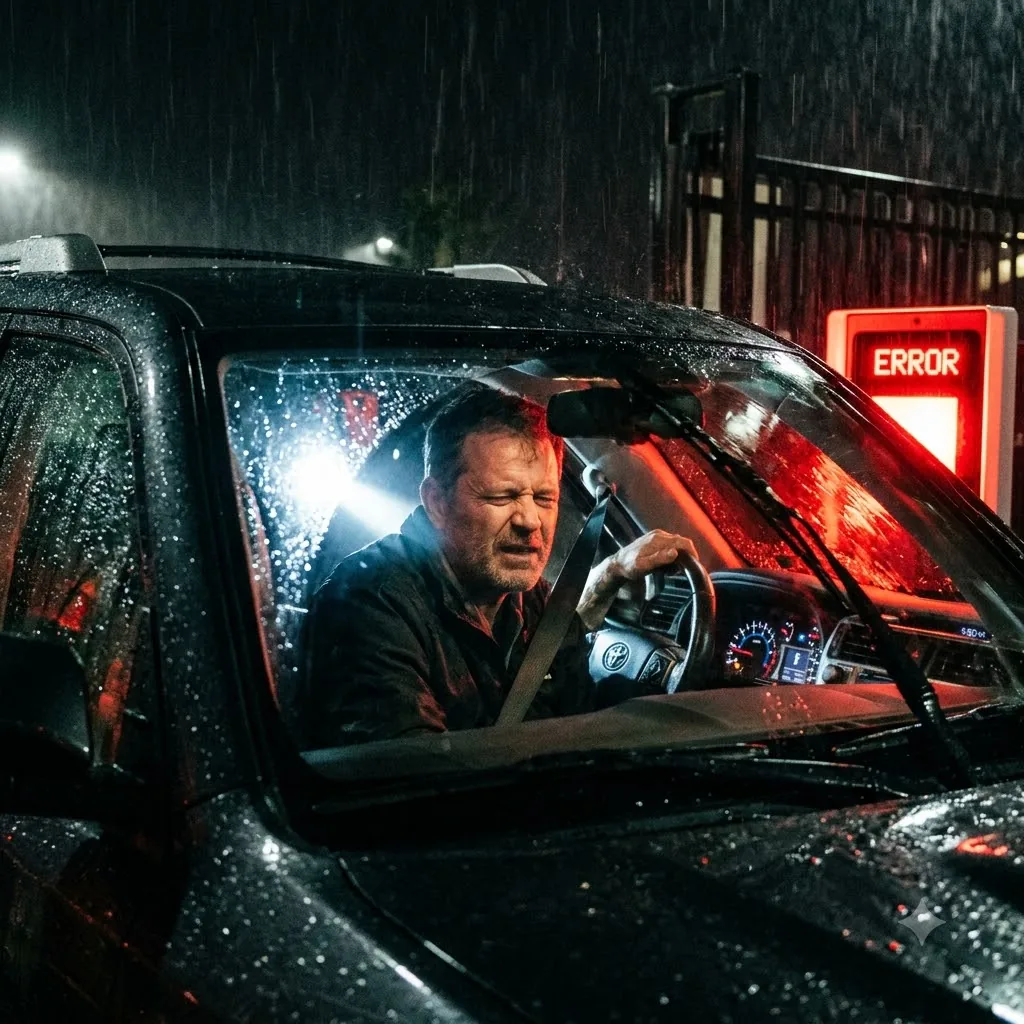
“My car didn’t hijack itself, Helen. The gate’s local network issued a lockdown command via Bluetooth override.” Marcus slid a page highlighting lines of code across the table. “And it wasn’t a misunderstanding. It was a failure in the biometric training data. Look at the failure rates. The system’s facial geometry mapping was trained on heavily skewed demographics. In low-light conditions, its error rate for residents with darker skin tones is sixty percent higher. It couldn’t read my face in the rain, so it defaulted to a Level Four threat.”
“We have a ten-year contract,” Helen said, her tone defensive, dismissing the papers without reading them. “The neighborhood insurance premiums dropped by thirty percent when we installed it. SentinelEye corporate assured me this morning that the neural net is just adjusting to local variables. It’s still learning.”
“Learning?” Marcus stared at her, exhaustion turning into a cold, heavy knot in his chest. He turned his gaze to Gary. “Gary drove a steel spike through my window and nearly fired chemical rounds into a sealed, disabled car because a screen told him to.”
Gary bristled, his shoulders hiking up. “I was following protocol! The system flagged a maximum mismatch. It analyzed your micro-expressions and determined you were preparing for a violent breach. I was acting in defense of the community.”
“I was crawling over the seats to open my trunk so I wouldn’t suffocate!” Marcus snapped.
“You triggered the secondary proximity alarm!” Gary retorted, his voice rising, defensive and trembling. “The system doesn’t lie, Marcus. It processes threat vectors we can’t even see with the naked eye.”
Gary genuinely believed it. Marcus realized it with a sickening jolt. Gary was terrified of him, a neighbor he had known for three years, purely because the machine insisted Marcus was a monster. The algorithm had become Gary’s absolute reality.
Marcus shook his head. He picked up the final page of the report-the raw output detailing the exact parameters that triggered the ‘Aggressive Posture’ flag. He took one single, slow step toward the folding table to hand the paper to Helen.
Above them, nestled in the acoustic ceiling tiles, the clubhouse’s newly installed SentinelEye dome camera whirred. A green laser swept down, tracking Marcus’s movement.
The LED ring around the lens snapped from neutral white to blood red.
Gary’s tablet erupted. The high-pitched siren wail sliced through the quiet clubhouse, identical to the alarm that had blared in the freezing rain.
Marcus stopped dead.
Gary recoiled violently in his metal folding chair, snatching the tablet. The screen flooded the dim room with a sickly yellow glow, reflecting a massive, pulsing warning triangle in Gary’s wide, dilated eyes.
“Gary?” Helen asked, her voice dropping to a nervous whisper.
“He’s escalating,” Gary breathed, his chest heaving. He looked at the screen, then at Marcus, then back to the screen. “Aggressive Posture Detected. Lethal Threat. It says… it says you’re initiating an attack.”
Marcus stood perfectly still. His boots were firmly planted on the linoleum. His hands were completely empty, save for the single piece of printer paper held loosely between his thumb and index finger. His shoulders were relaxed. He kept his breathing slow and even.
“Gary, look at me,” Marcus said, his voice deliberately soft, flat, and slow. “Look at my physical body. I am standing fifteen feet away. I am holding a piece of paper.”
“The algorithm sees the vector!” Gary shouted, his voice cracking into a frantic, reedy pitch. He dropped the tablet onto the table. His right hand dove to his tactical belt, his fingers wrapping around the grip of the pressurized pepper-ball launcher.
He drew the weapon, pointing the heavy steel barrel directly at Marcus’s chest. Gary’s hands were shaking so violently the barrel rattled in the air. “Step back! Disengage!”
Helen shrieked, pushing her chair back so hard it tipped over and crashed onto the floor. “Gary, stop! What are you doing? He isn’t doing anything!”
“The screen is red, Helen!” Gary screamed, tears of genuine terror welling in his eyes, his finger trembling inside the trigger guard. “It says he’s attacking! It says he’s going to kill us!”
Marcus didn’t move a muscle. He kept his empty hands visible, his eyes locked on the shaking barrel of the launcher, letting the silence of the room stretch to the breaking point beneath the blaring of the tablet’s automated lie.