Story code: ST-001125
Part 1: The Padlock on Elm Street
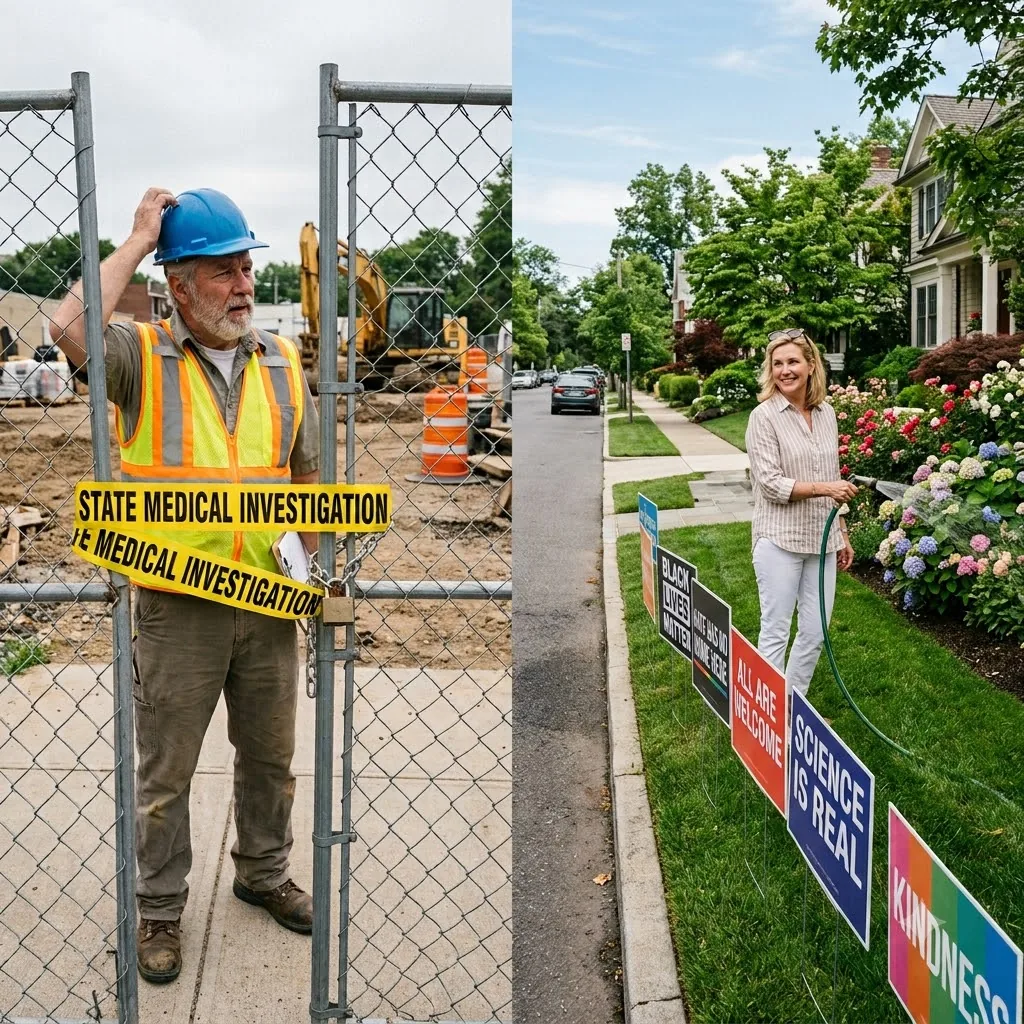
Marcus parked his truck against the curb, his boots hitting the pavement before the engine had fully ticked into silence. The chain-link fence around the Elm Street lot was supposed to be wide open for the foundation crew. Instead, a heavy steel padlock clamped the gates shut. Thick yellow tape woven through the wire mesh flapped in the morning breeze, reading CRIME SCENE DO NOT CROSS. A white placard zip-tied to the center of the gate bore the state seal in bold red lettering: STATE MEDICAL INVESTIGATION – ACCESS RESTRICTED.
He gripped the cold metal of the fence, the sharp edges of the chain-link biting into his palms. A fine mist of water drifted across his shoulder. He turned to see Eleanor Stanton on the manicured lawn of her restored Victorian directly across the street. She held a brass hose nozzle, casually sweeping water over a sprawling bed of hydrangeas. Her yard was planted with pristine signs declaring ‘In This House We Believe’ and ‘Housing Is A Human Right.’ Eleanor caught his eye. She did not look away, nor did she offer her usual performative wave. Instead, a slow, tight smile spread across her face. She gave a small, satisfied nod, shut off the water, and walked back up her porch steps.
Marcus pulled out his phone. He dialed Chloe, his site manager. The line rang three times.
“Pick up,” he muttered.
She answered on the fourth ring. A ragged gasp came through the speaker, followed by heavy, frantic breathing.
“Chloe, it is Marcus. I am at the site. It is locked down with police tape.”
Chloe let out a sharp sob. Her voice cracked, barely recognizable. “They came to my apartment.”
He told her to take a deep breath. She sobbed harder, the sound muffled as if she had pressed her hand over her mouth.
“Two officers and a detective,” she choked out. “They took my laptop. They took my phone. I am calling from my neighbor’s landline. They had a warrant for my medical records, Marcus. They took everything from my bedside drawer, even my daily planners.”
Marcus paced the length of the fence, his boots kicking up loose gravel. A police cruiser idled at the far end of the block, its exhaust a faint white plume in the chilly air. He instructed Chloe to calm down and explain exactly what kind of unit served the warrant.
“Fetal Homicide,” she whispered. The words barely made it through the speaker. “The warrant said State Fetal Homicide Task Force.”
Marcus stopped pacing. He looked back at Eleanor’s house. The heavy velvet curtains in the front bay window twitched. This project was his first affordable housing contract, designed as a modest four-plex for low-income families. The neighborhood association had fought it relentlessly for two years. Eleanor had been the absolute loudest voice at the zoning board, arguing about parking density and neighborhood character, all while wearing her progressive reform buttons. When the city finally approved the build, Eleanor had completely shifted tactics. She started bringing artisanal cookies to the dirt lot. She donated a pallet of sports drinks for the crew. She spent hours leaning on the fence, making soft, sympathetic small talk with Chloe.
“Tell me exactly what the detective said to you,” Marcus demanded, keeping his eyes on Eleanor’s window.
“He said they received a detailed report,” Chloe whispered, her voice trembling. “They tore apart the site trailer yesterday after you left. They brought dogs. The detective told me they had sworn testimony regarding my personal health timeline. They told me the site is now material evidence.”
Marcus gripped the phone so tightly his knuckles turned white. The sheer absurdity of it washed over him. A concrete pour for a low-income four-plex had been reclassified as a medical crime scene.
“We need a lawyer,” Marcus said. “Tell me where you are right now.”
“I am locked out of my own life,” Chloe said. “The detective showed me a heavily redacted printout. Someone has been tracking me for a month. Logging my movements, my symptoms, the days I called in sick. Someone handed them a complete dossier of my private life.”
Marcus stared at the Victorian house. Eleanor was standing on her front porch again. She had a cell phone raised, pointing the camera directly at him.
“They said the timeline proves I committed a felony,” Chloe continued, her breathing turning jagged again. “They said the site office is a potential recovery zone for biological evidence. They are going to dig up the foundation trenches.”
A sharp chirp of a police siren cut through the morning air. Marcus watched the idling cruiser at the end of the block suddenly accelerate, its tires squealing against the asphalt. It barreled down the street, slamming to a halt right behind Marcus’s truck.
“I will come get you,” Marcus said.
“You cannot,” Chloe said. “They told me not to leave the building. They told me an arrest warrant is pending the site excavation.”
Two officers stepped out of the cruiser. They did not look at the construction site. They looked straight at Marcus, their hands resting cautiously on their heavy utility belts.
“Marcus Vance,” the taller officer stated, stepping onto the curb. “End the call and place the device on the hood of your vehicle.”
Marcus lowered the phone from his ear. Eleanor leaned against her porch railing, taking a sip from a ceramic coffee mug, watching the officers flank him on both sides. The taller officer unclipped a pair of steel cuffs from his belt, the metallic ratcheting sound loud and distinct in the quiet neighborhood.
Marcus parked his truck against the curb, his boots hitting the pavement before the engine had fully ticked into silence. The chain-link fence around the Elm Street lot was supposed to be wide open for the foundation crew. Instead, a heavy steel padlock clamped the gates shut. Thick yellow tape woven through the wire mesh flapped in the morning breeze, reading CRIME SCENE DO NOT CROSS. A white placard zip-tied to the center of the gate bore the state seal in bold red lettering: STATE MEDICAL INVESTIGATION – ACCESS RESTRICTED.
He gripped the cold metal of the fence, the sharp edges of the chain-link biting into his palms. A fine mist of water drifted across his shoulder. He turned to see Eleanor Stanton on the manicured lawn of her restored Victorian directly across the street. She held a brass hose nozzle, casually sweeping water over a sprawling bed of hydrangeas. Her yard was planted with pristine signs declaring ‘In This House We Believe’ and ‘Housing Is A Human Right.’ Eleanor caught his eye. She did not look away, nor did she offer her usual performative wave. Instead, a slow, tight smile spread across her face. She gave a small, satisfied nod, shut off the water, and walked back up her porch steps.
Marcus pulled out his phone. He dialed Chloe, his site manager. The line rang three times.
“Pick up,” he muttered.
She answered on the fourth ring. A ragged gasp came through the speaker, followed by heavy, frantic breathing.
“Chloe, it is Marcus. I am at the site. It is locked down with police tape.”
Chloe let out a sharp sob. Her voice cracked, barely recognizable. “They came to my apartment.”
He told her to take a deep breath. She sobbed harder, the sound muffled as if she had pressed her hand over her mouth.
“Two officers and a detective,” she choked out. “They took my laptop. They took my phone. I am calling from my neighbor’s landline. They had a warrant for my medical records, Marcus. They took everything from my bedside drawer, even my daily planners.”
Marcus paced the length of the fence, his boots kicking up loose gravel. A police cruiser idled at the far end of the block, its exhaust a faint white plume in the chilly air. He instructed Chloe to calm down and explain exactly what kind of unit served the warrant.
“Fetal Homicide,” she whispered. The words barely made it through the speaker. “The warrant said State Fetal Homicide Task Force.”
Marcus stopped pacing. He looked back at Eleanor’s house. The heavy velvet curtains in the front bay window twitched. This project was his first affordable housing contract, designed as a modest four-plex for low-income families. The neighborhood association had fought it relentlessly for two years. Eleanor had been the absolute loudest voice at the zoning board, arguing about parking density and neighborhood character, all while wearing her progressive reform buttons. When the city finally approved the build, Eleanor had completely shifted tactics. She started bringing artisanal cookies to the dirt lot. She donated a pallet of sports drinks for the crew. She spent hours leaning on the fence, making soft, sympathetic small talk with Chloe.
“Tell me exactly what the detective said to you,” Marcus demanded, keeping his eyes on Eleanor’s window.
“He said they received a detailed report,” Chloe whispered, her voice trembling. “They tore apart the site trailer yesterday after you left. They brought dogs. The detective told me they had sworn testimony regarding my personal health timeline. They told me the site is now material evidence.”
Marcus gripped the phone so tightly his knuckles turned white. The sheer absurdity of it washed over him. A concrete pour for a low-income four-plex had been reclassified as a medical crime scene.
“We need a lawyer,” Marcus said. “Tell me where you are right now.”
“I am locked out of my own life,” Chloe said. “The detective showed me a heavily redacted printout. Someone has been tracking me for a month. Logging my movements, my symptoms, the days I called in sick. Someone handed them a complete dossier of my private life.”
Marcus stared at the Victorian house. Eleanor was standing on her front porch again. She had a cell phone raised, pointing the camera directly at him.
“They said the timeline proves I committed a felony,” Chloe continued, her breathing turning jagged again. “They said the site office is a potential recovery zone for biological evidence. They are going to dig up the foundation trenches.”
A sharp chirp of a police siren cut through the morning air. Marcus watched the idling cruiser at the end of the block suddenly accelerate, its tires squealing against the asphalt. It barreled down the street, slamming to a halt right behind Marcus’s truck.
“I will come get you,” Marcus said.
“You cannot,” Chloe said. “They told me not to leave the building. They told me an arrest warrant is pending the site excavation.”
Two officers stepped out of the cruiser. They did not look at the construction site. They looked straight at Marcus, their hands resting cautiously on their heavy utility belts.
“Marcus Vance,” the taller officer stated, stepping onto the curb. “End the call and place the device on the hood of your vehicle.”
Marcus lowered the phone from his ear. Eleanor leaned against her porch railing, taking a sip from a ceramic coffee mug, watching the officers flank him on both sides. The taller officer unclipped a pair of steel cuffs from his belt, the metallic ratcheting sound loud and distinct in the quiet neighborhood.