Story code: ST-001138
Part 1: The Drift Violation
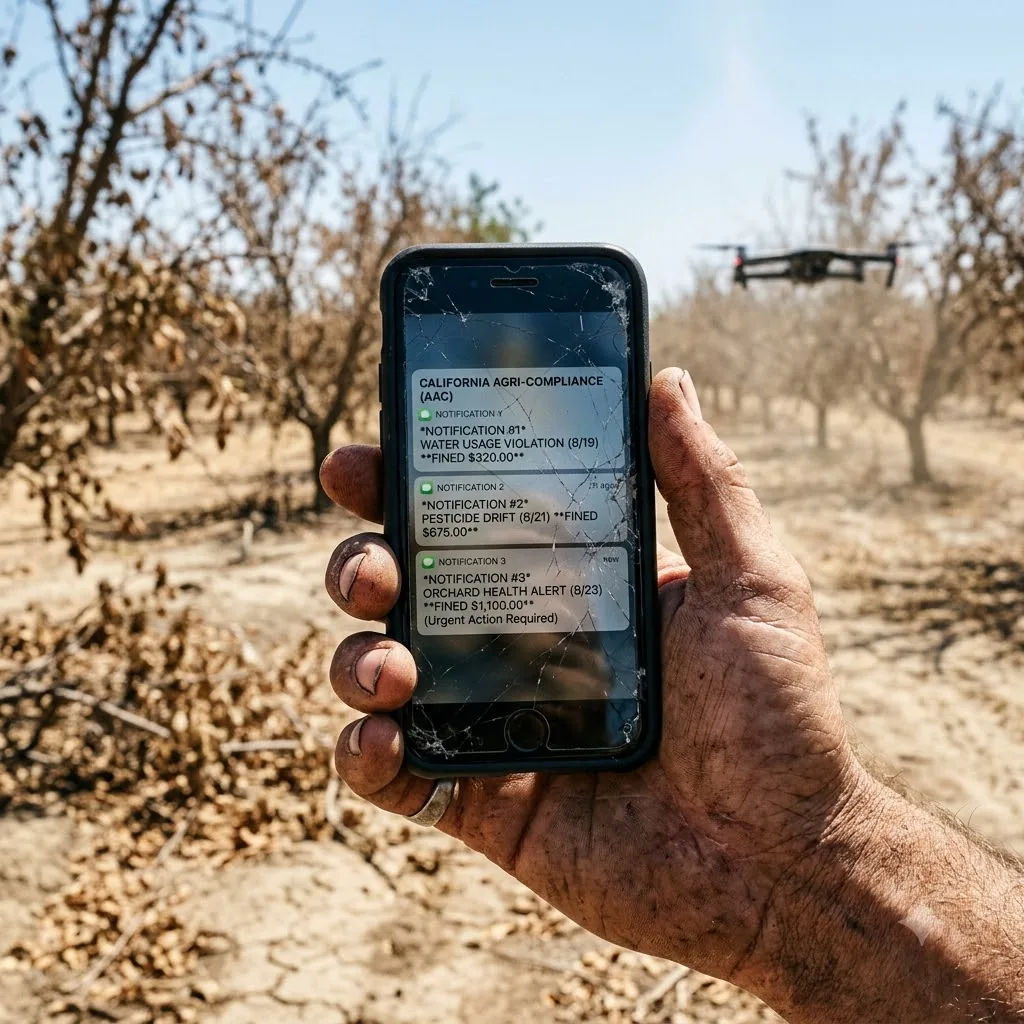
The afternoon sun baked the cracked earth of the almond orchard into a pale, hard crust, the heat radiating upward in shimmering, oppressive waves. Elias dragged his heavy steel-toed boot across the dry irrigation trench, the soil shattering like glass under his weight. He wiped a thick layer of grit and sweat from his eyes just as the high-pitched, mosquito-like whine of rotors cut through the dead, still air. A sleek white quadcopter dropped directly from the blinding glare of the sky, its camera gimbal swiveling with unnatural, mechanical precision to lock onto his exact coordinates.
It hovered exactly ten feet above the withering canopy of his oldest almond tree. The aggressive blast of displaced air from the rotors knocked a handful of brittle, brown leaves from the branches. They crumbled into a fine powder before they even hit the dirt. A second later, the heavy reinforced smartphone in Elias’s front pocket vibrated with a long, continuous pulse. He recognized that specific rhythm. It was the regulatory override tone. He did not want to look, but ignoring it would only trigger a non-compliance multiplier. The drone held its rigid position in the air, a blinking red LED on its underbelly indicating an active, high-speed uplink to the regional agricultural board.
Elias pulled the phone free, shielding the cracked screen from the harsh sunlight. The display glared with a high-priority red alert from the AgriCorp Compliance Portal, overriding his lock screen. Violation Notice: Excessive Particulate Drift. Fine Assessed: $14,500.00. He stared at the flashing numbers, his exhausted brain struggling to process the sheer absurdity of the data. The hot wind had blown natural dust from his dead, unwatered trees across the invisible property line, and an automated algorithm sitting in a server room hundreds of miles away had decided this was a severe, punishable offense.
There was no dispute button. There was no contact number for a human agent. There was only a flashing hyperlink demanding he wire the funds within three business days or face an immediate, automated property lien. AgriCorp had intentionally shut off the valley’s secondary water valves two months ago, citing emergency environmental conservation measures for all independent plots. Meanwhile, their own industrial mega-farms just two miles down the highway stayed violently, artificially green. They deliberately starved his trees, waited for the branches to turn brittle and snap in the dry summer winds, and then weaponized the resulting dust. It was a perfectly executed, closed-loop system designed for forced foreclosure.
Elias wiped the dusty screen with his thumb, frantically trying to scroll past the penalty warning to find a local office address, but the application locked his interface entirely until he tapped the biometric acknowledgement of the debt. The compliance drone shifted its angle, the motorized lens whirring loudly as it documented his frozen, defeated posture for the corporate archives. He refused to give them the satisfaction of a signature.
He shoved the phone back into his pocket, letting the screen time out. The drone immediately zipped upward, retreating rapidly toward the massive corrugated steel pumping station that sat on the ridge overlooking his property. That fortress-like station housed the main junction that controlled the shut-off valves for the entire western slope. Elias looked down at his heavy leather work belt. His hands were coated in a thick, permanent layer of grey dirt and dried tractor grease. He reached into the deepest leather pouch and wrapped his calloused fingers around the heavy, cold iron of a twenty-four-inch pipe wrench.
The sheer, dense weight of the tool grounded him in reality. They wanted to fine him for dust. They wanted to steal the land his grandfather had cleared by hand, using a digital stopwatch and a weather sensor. He decided in that exact moment to give them a tangible reason to write a citation. He turned away from the dying trees and started walking up the steep incline toward the pumping station. His boots kicked up thick clouds of the very particulate drift they had just charged him a year’s salary for.
The corporate facility was surrounded by a ten-foot chain-link fence, topped with motion-tracking cameras and razor wire, but the main access panel for the telemetry data sat exposed on the outside of the primary gate. Elias closed the distance to the humming metal box, his grip tightening on the iron handle. He raised the wrench high above his shoulder, aiming dead center at the reinforced padlock protecting the override switches. Before the heavy metal could connect, a deafening, synthesized siren erupted from the facility perimeter speakers, and a black armored security vehicle violently crested the ridge, its high-beam spotlights blinding him mid-swing.
The afternoon sun baked the cracked earth of the almond orchard into a pale, hard crust, the heat radiating upward in shimmering, oppressive waves. Elias dragged his heavy steel-toed boot across the dry irrigation trench, the soil shattering like glass under his weight. He wiped a thick layer of grit and sweat from his eyes just as the high-pitched, mosquito-like whine of rotors cut through the dead, still air. A sleek white quadcopter dropped directly from the blinding glare of the sky, its camera gimbal swiveling with unnatural, mechanical precision to lock onto his exact coordinates.
It hovered exactly ten feet above the withering canopy of his oldest almond tree. The aggressive blast of displaced air from the rotors knocked a handful of brittle, brown leaves from the branches. They crumbled into a fine powder before they even hit the dirt. A second later, the heavy reinforced smartphone in Elias’s front pocket vibrated with a long, continuous pulse. He recognized that specific rhythm. It was the regulatory override tone. He did not want to look, but ignoring it would only trigger a non-compliance multiplier. The drone held its rigid position in the air, a blinking red LED on its underbelly indicating an active, high-speed uplink to the regional agricultural board.
Elias pulled the phone free, shielding the cracked screen from the harsh sunlight. The display glared with a high-priority red alert from the AgriCorp Compliance Portal, overriding his lock screen. Violation Notice: Excessive Particulate Drift. Fine Assessed: $14,500.00. He stared at the flashing numbers, his exhausted brain struggling to process the sheer absurdity of the data. The hot wind had blown natural dust from his dead, unwatered trees across the invisible property line, and an automated algorithm sitting in a server room hundreds of miles away had decided this was a severe, punishable offense.
There was no dispute button. There was no contact number for a human agent. There was only a flashing hyperlink demanding he wire the funds within three business days or face an immediate, automated property lien. AgriCorp had intentionally shut off the valley’s secondary water valves two months ago, citing emergency environmental conservation measures for all independent plots. Meanwhile, their own industrial mega-farms just two miles down the highway stayed violently, artificially green. They deliberately starved his trees, waited for the branches to turn brittle and snap in the dry summer winds, and then weaponized the resulting dust. It was a perfectly executed, closed-loop system designed for forced foreclosure.
Elias wiped the dusty screen with his thumb, frantically trying to scroll past the penalty warning to find a local office address, but the application locked his interface entirely until he tapped the biometric acknowledgement of the debt. The compliance drone shifted its angle, the motorized lens whirring loudly as it documented his frozen, defeated posture for the corporate archives. He refused to give them the satisfaction of a signature.
He shoved the phone back into his pocket, letting the screen time out. The drone immediately zipped upward, retreating rapidly toward the massive corrugated steel pumping station that sat on the ridge overlooking his property. That fortress-like station housed the main junction that controlled the shut-off valves for the entire western slope. Elias looked down at his heavy leather work belt. His hands were coated in a thick, permanent layer of grey dirt and dried tractor grease. He reached into the deepest leather pouch and wrapped his calloused fingers around the heavy, cold iron of a twenty-four-inch pipe wrench.
The sheer, dense weight of the tool grounded him in reality. They wanted to fine him for dust. They wanted to steal the land his grandfather had cleared by hand, using a digital stopwatch and a weather sensor. He decided in that exact moment to give them a tangible reason to write a citation. He turned away from the dying trees and started walking up the steep incline toward the pumping station. His boots kicked up thick clouds of the very particulate drift they had just charged him a year’s salary for.
The corporate facility was surrounded by a ten-foot chain-link fence, topped with motion-tracking cameras and razor wire, but the main access panel for the telemetry data sat exposed on the outside of the primary gate. Elias closed the distance to the humming metal box, his grip tightening on the iron handle. He raised the wrench high above his shoulder, aiming dead center at the reinforced padlock protecting the override switches. Before the heavy metal could connect, a deafening, synthesized siren erupted from the facility perimeter speakers, and a black armored security vehicle violently crested the ridge, its high-beam spotlights blinding him mid-swing.