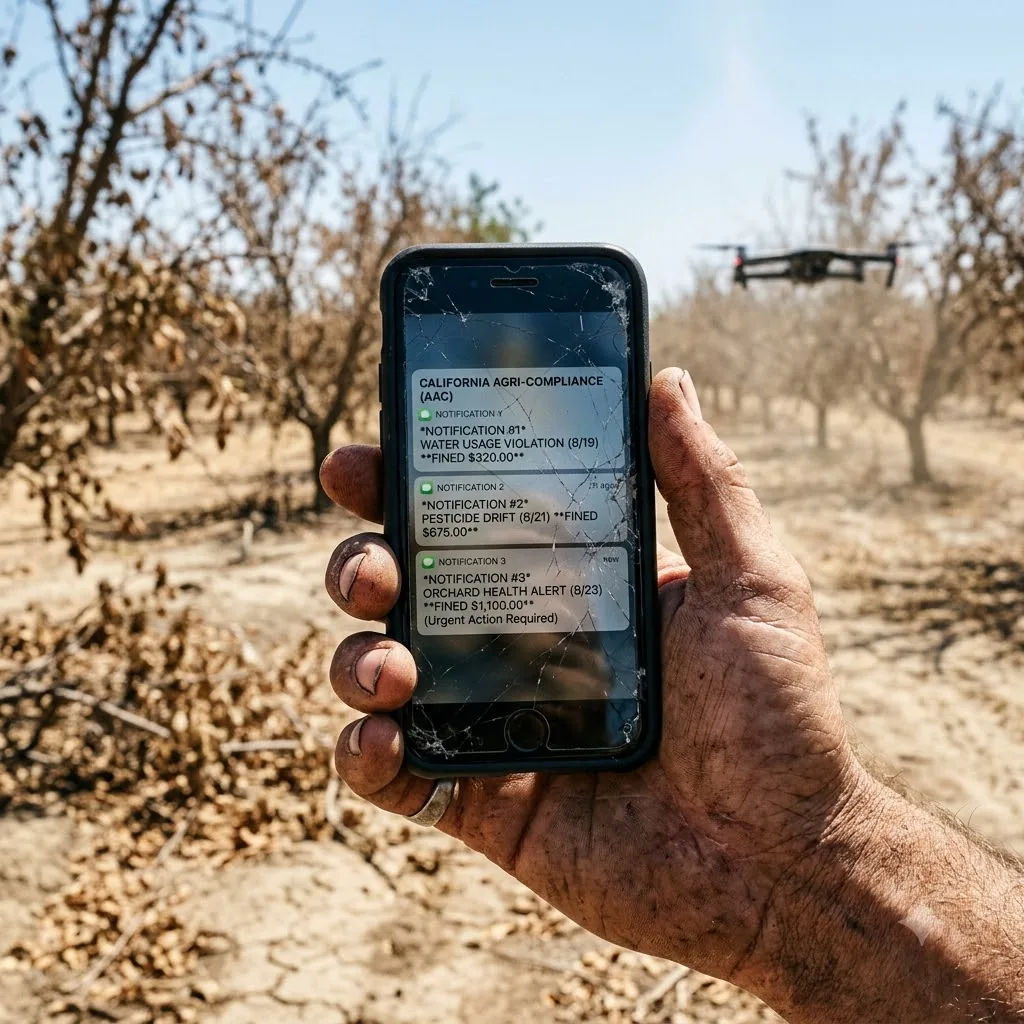
Story code: ST-001138
Part 3: The Easement Override
Elias sprinted through the skeletal rows of dead almond trees, his boots sliding in the loose, powdery earth. His lungs burned, but the countdown in his head drowned out the exhaustion. He had less than eighteen minutes before the automated system cut his residential power, taking his only industrial arc welder offline. He didn’t just need the welder to break the lock; he needed it to dictate the timeline.
He slammed his shoulder into the heavy wooden doors of his barn, splintering the dry rot near the latch. The interior was sweltering, thick with the smell of old motor oil and decades of accumulated dust. Elias bypassed the neatly organized hand tools and lunged for the back wall, where his grandfather’s massive, 220-volt Miller Thunderbolt arc welder sat beneath a canvas tarp. He hauled the heavy machine toward the center of the dirt floor, the thick rubber power cables trailing behind it like black serpents.
He needed the heavy-duty copper grounding clamp to complete a dead short, but the primary workbench drawer was jammed. Elias let out a frustrated growl, grabbed the iron handle with both hands, and yanked upward. The ancient tracks gave way. The drawer spilled its contents across the floor-rusted bolts, shattered spark plugs, and a heavy, wax-sealed oilcloth envelope that had been wedged in the very back.
Elias dropped to his knees to grab the clamp, but his calloused fingers brushed the brittle flap of the envelope. It crumbled, revealing a thick, yellowed parchment bearing the embossed seal of the 1912 County Water Authority. Elias froze. He remembered his grandfather carefully folding this exact document when Elias was just a boy, muttering about the difference between water rights and iron rights.
He pulled the parchment free, his eyes scanning the faded, typewritten ink. It wasn’t a water allocation contract. It was the original land grant charter. His eyes locked onto a specific, heavily underlined paragraph: *Easement in Perpetuity*. The charter explicitly granted the Vance estate absolute, undisturbed physical dominion over the secondary pneumatic manifold itself. Not the water flowing through it, but the physical iron infrastructure.
Elias read the final sentence, his heart hammering against his ribs. *Any foreign apparatus affixed to the Vance manifold shall constitute an illegal trespass, incurring a penalty of fifty dollars per diem, payable immediately upon discovery in legal tender.*
He didn’t need to smash the telemetry box anymore. He just needed to look inside it.
Elias shoved the folded parchment into his jacket pocket. He grabbed the welder’s stinger, clamped the positive electrode directly to the negative ground on his heavy steel anvil, and stepped back. He reached out and violently threw the 200-amp breaker.
The welder hummed angrily for a microsecond before a blinding, catastrophic flash of blue-white plasma erupted from the anvil. A split second later, the transformer on the utility pole outside the barn exploded with a deafening, shotgun-like crack. The orange glow of the barn’s overhead bulbs vanished instantly.
Total darkness.
*One.*
Elias bolted out the side door, his boots tearing into the dirt as he scrambled up the steep incline toward the pumping station.
*Four. Five.*
The hot wind whipped against his face. The grid was dead, meaning the primary power to the corporate lock was gone. The twelve-second mechanical delay on the facility’s backup generator had begun.
*Eight. Nine.*
He hit the chain-link perimeter fence, didn’t bother slowing down, and vaulted over the top wire, tearing the shoulder of his jacket. He landed hard, ignoring the sharp pain radiating up his knee, and lunged for the humming telemetry box mounted on the gate.
*Eleven.*
He grabbed the biometric lock. The blue LED was dead. Deprived of its magnetic charge, the internal failsafe had dropped. Elias yanked downward, and the heavy metal shackle popped open smoothly. He ripped the lock off, tossed it into the dirt, and swung the steel door wide open.
*Twelve.*
Deep inside the compound, the massive diesel generator coughed, choked, and roared to life. The ground vibrated as the backup current flooded the local system. Inside the open box, the sleek AgriCorp router booted up, its LEDs blinking rapidly as it reconnected to the mesh network. But it was too late. The door was already open.
Headlights suddenly washed over the chain-link fence. The black armored SUV crested the ridge, its tires locked in a skid as it halted violently in the dust. The compliance officer had been in the valley when the grid faulted.
The passenger door flew open. The officer stepped out, his previous robotic calm replaced by rigid, aggressive tension. His hand rested near his tactical belt, and the green light on his body camera was already recording.
“Step away from the panel, Vance!” the officer barked, closing the distance to the fence. “You just escalated a civil fine to a federal tampering felony. You are going to a cell.”
Elias didn’t raise his hands. He didn’t reach for a wrench. He simply stood in front of the open box, bathed in the glaring high-beams of the SUV, and pulled the yellowed parchment from his jacket.
“I didn’t tamper with anything,” Elias said, his voice deadly calm, carrying effortlessly over the hum of the diesel generator. He stepped aside, pointing into the illuminated interior of the box. “I was inspecting a trespass on my private property.”
The officer stopped on the other side of the fence, his eyes darting to the exposed hardware. “That is a corporate telemetry node, Vance.”
“It’s a digital flow meter,” Elias corrected, “and it isn’t just tapping the line. It is physically drilled, tapped, and bolted directly into the cast-iron pneumatic manifold. A manifold that my grandfather built.”
Elias flattened the 1912 charter against the chain-link fence, positioning it perfectly in the center of the officer’s body camera feed.
“Read it,” Elias commanded. “County Water Charter of 1912. It grants the Vance estate exclusive, undisturbed physical dominion over the iron manifold. The Agricultural Emergency Act allows you to restrict water, but it doesn’t nullify grandfathered property easements. Your automated meter is an illegal, physical trespass.”
The officer scoffed, reaching for his ruggedized tablet. “Ancient paperwork doesn’t override a Tier One corporate mandate. I’m initiating the foreclosure now.”
“Your AI compliance scanner just read the document,” Elias said, his eyes locked on the officer. “It knows Section Four. Any foreign apparatus affixed to the manifold incurs a compounding trespass penalty of fifty dollars per diem. You installed that meter two years ago today. Seven hundred and thirty days of compounded daily penalties.”
The officer tapped his screen to execute the foreclosure protocol.
Instead of the standard green confirmation, the tablet emitted a sharp, dissonant error tone. The screen flashed from green to a stark, locking red. The automated legal matrix, designed to ruthlessly process liability, had ingested the body-camera feed of the county charter, verified the physical installation of the meter, and calculated the compounding retroactive penalty.
Elias’s debt of thirty-two thousand dollars had just been mathematically eclipsed by a six-figure counter-claim.
The officer stared at his locked, glowing red screen, his thumb hovering uselessly over the glass. He looked up at Elias, the smug, corporate certainty completely entirely drained from his face.