Story code: ST-001142
Part 2: The Vacate Order
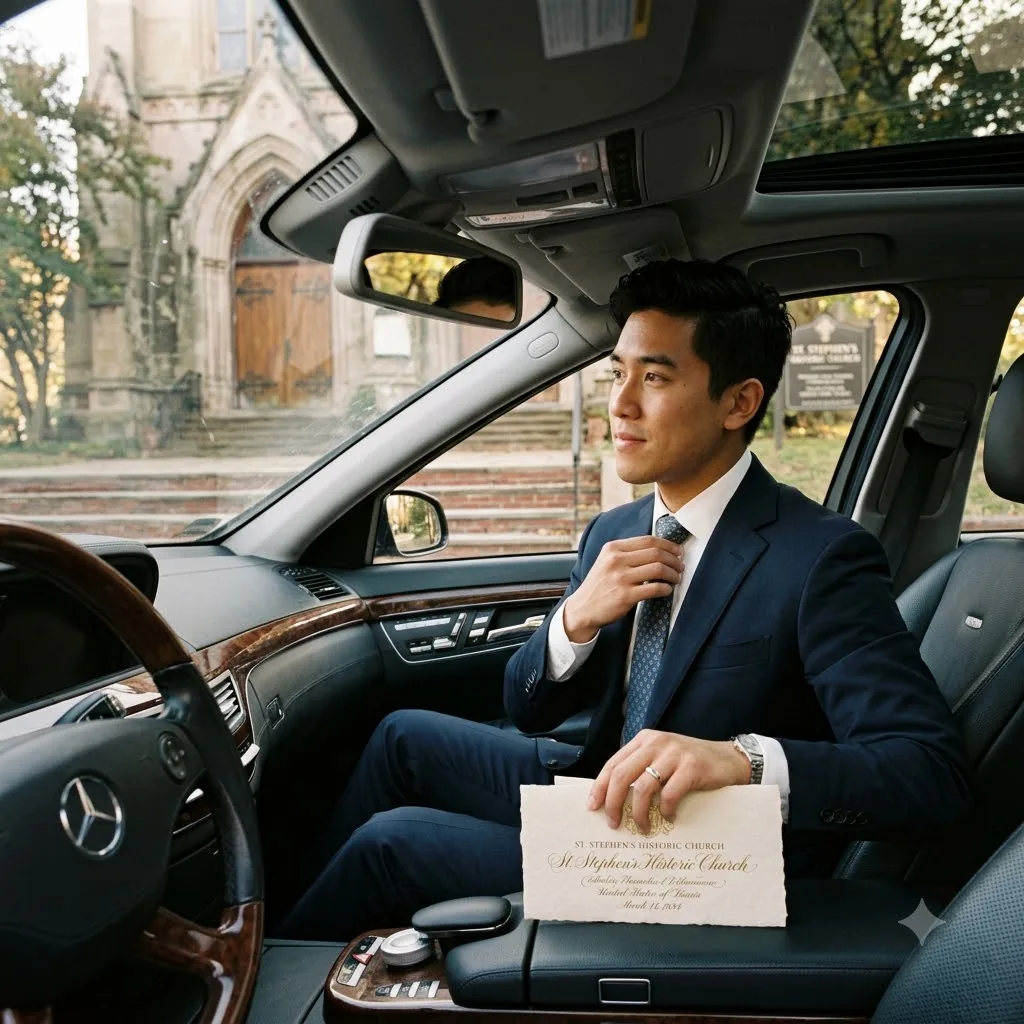
The heavy wooden doors of St. Jude yielded with a loud, groaning creak that echoed into the cavernous, dimly lit sanctuary. David stepped inside, immediately struck by the damp, musty chill that permeated the air. The ambient temperature in the church felt ten degrees colder than the street outside. Above him, water stains bloomed across the vaulted plaster ceiling like dark, bruised clouds, a testament to the leaking slate roof he was here to replace. He navigated down a narrow side corridor toward the parish hall, the floorboards groaning under his polished leather oxfords. He felt the weight of the gold-embossed envelope in his hand, a solid anchor of hope amidst the visible decay.
In the basement parish hall, a circle of folding metal chairs sat arranged beneath flickering fluorescent lights. Pastor Thomas stood at the head of the circle, flanked by five elderly community board members. The pastor was a tall, broad-shouldered man whose clerical collar looked slightly frayed at the edges. His eyes carried the heavy, exhausted weight of a man who had spent decades holding back a flood with a teaspoon.
David approached with a warm, measured smile, extending his free hand. “Pastor Thomas. Thank you for making the time to see me.”
The pastor shook his hand, his grip firm but cautious. “Mr. David Chen. We appreciate you coming down in person. Most developers just send us certified letters or eviction warnings.”
“That’s exactly what we want to change,” David said, taking a seat in one of the metal chairs. He placed the thick, cream-colored envelope on the scarred wooden folding table between them. He leaned forward, resting his forearms on his knees to close the physical distance. “I grew up in a neighborhood just like this. My parents ran a dry cleaner on Fourth Street. I know what it means when outside money comes in and tries to dictate the future of a community. Richard Vance and our entire executive team believe that St. Jude is the heartbeat of the Westside. We aren’t here to push you out. We’re here to give you the resources to stay.”
The board members exchanged hesitant, hopeful glances. An older woman tightly clutched a worn leather Bible in her lap, her shoulders relaxing just a fraction.
In David’s right ear, a burst of static signaled someone unmuting on the executive conference line. He kept his expression perfectly neutral, maintaining unbroken eye contact with the pastor.
“Is he in the room yet?” Richard Vance’s voice crackled through the earpiece, sounding distracted, as if he were eating lunch while he spoke.
“GPS shows him inside the building, sir,” Sterling, the chief of staff, replied crisply. “His mic is muted. He should be delivering the packet right now.”
David smiled warmly at the pastor, ignorant of the executives’ tone. “Inside this envelope are the preliminary grant outlines and the fast-tracked partnership agreements. This covers the roof repairs, the community youth center we discussed, and a sustaining endowment for your operational costs. We want to break ground on the plaza by spring, but the first step is making sure St. Jude is completely secure.”
Pastor Thomas looked down at the gold seal, his chest rising and falling in a deep, shaky breath. “If this is what you say it is, Mr. Chen, it is an absolute miracle. We were preparing to shutter the food pantry next month.”
“You won’t have to shutter anything,” David said softly. “Please. Take a look.”
The pastor reached out with trembling, weathered hands and picked up the heavy envelope. He slid his thumb under the flap, breaking the bright gold city planning seal.
In David’s ear, Vance laughed, a short, sharp bark of amusement. “God, I love this part. Sterling, did you make sure the city inspector signed off on the structural hazard report?”
David’s smile froze. He blinked, a cold prickle of unease suddenly crawling up the back of his neck. *Structural hazard report?*
“Yes, Richard,” Sterling replied over the earpiece. “The building is officially classified as a Level 4 severe public hazard as of this morning. The envelope contains the mandatory thirty-day vacate order and the city’s notice of eminent domain seizure for the land. We’ve offered them ten cents on the dollar for the parcel as a courtesy, which is more than they’ll get when the city condemns it outright.”
The blood drained from David’s face. The air in his lungs turned to ice. He stared at the envelope in the pastor’s hands, suddenly realizing he had never actually seen the paperwork inside. He had only seen the architectural renderings of the plaza. He had assumed St. Jude was the centerpiece of the development. Now, with horrifying clarity, he realized the plaza was going to be built *over* St. Jude.
“Wait,” David choked out, raising a hand. “Pastor, don’t-”
But Pastor Thomas had already pulled the thick stack of legal documents from the envelope. The paper was heavy, formal bond. The header was printed in bold, uncompromising black ink: *ORDER OF CONDEMNATION AND MANDATORY VACATE NOTICE.*
The pastor’s eyes scanned the first few lines. The hopeful, vulnerable light in his face shattered, instantly replaced by a devastating, hollow betrayal. The older woman next to him leaned over to look, letting out a sharp, wounded gasp.
“A miracle,” Pastor Thomas whispered, his voice trembling with a terrifying, quiet fury. He looked up, his eyes locking onto David’s with the intensity of a physical blow. He slowly slid the documents across the scarred table, turning them so the blazing red *SEIZURE* stamp faced David.
In David’s ear, Vance’s voice buzzed like a trapped hornet. “Chen, tap your mic if the papers are served. I have the demolition crews on standby to fence off the perimeter.”
David stared at the legal threat he had just personally, proudly delivered into the hands of a struggling congregation, the silence in the basement room suddenly thick, suffocating, and loaded with a devastating hostility.