Story code: ST-001152
Part 1: The Buffer Zone
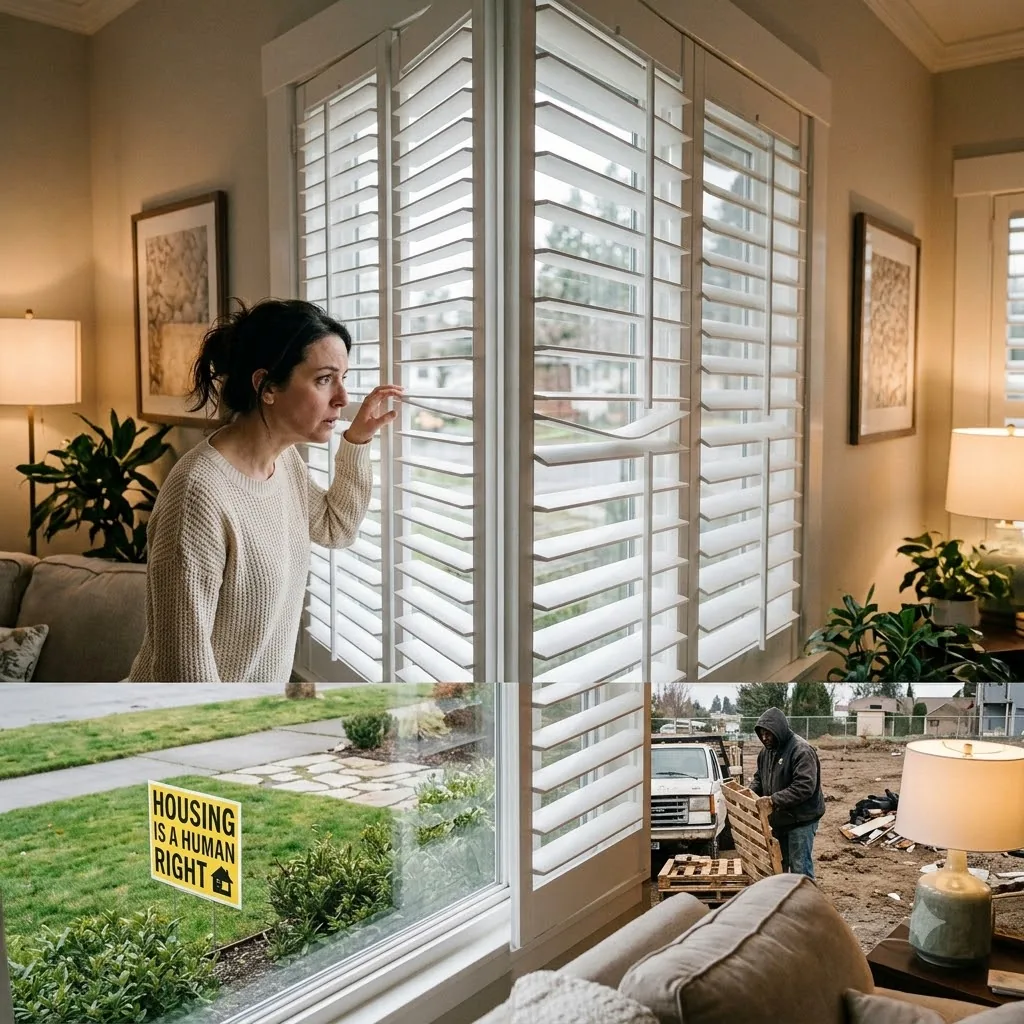
Eleanor pressed her fingertips against the cold glass of her bay window, her breath catching as the rusted flatbed truck idled loudly on the curb next to the vacant lot. A tall Black man in a faded canvas jacket swung down from the cab, immediately dragging a heavy stack of splintered wooden pallets toward the overgrown property line. It was not profiling to be observant, she reminded herself firmly, tightening the belt of her cashmere robe. She was simply an active, responsible member of the community.
Her manicured lawn sloped perfectly down to the sidewalk, interrupted only by the crisp, brightly colored yard sign planted near the mailbox. Housing is a Human Right, the bold letters declared, a testament to her progressive values and her undisputed standing in the neighborhood association. She had ordered it from a verified nonprofit just last month. But ideals belonged in designated zones, managed by appropriate city departments and well-funded charities, not dumped out of the back of a rattling truck at seven in the morning on a Tuesday.
She watched him heave another stack of pallets onto the damp grass of the empty lot. The heavy thud echoed through the quiet, affluent suburban street. Eleanor tapped her fingernail against the windowpane. There had been no permits posted on the streetlamp. She had checked the municipal registry just last week for any zoning variances, as was her habit as the block captain. The vacant lot was supposed to remain an undisturbed buffer of nature, an aesthetic breathing room between her property and the intersection, until a reputable commercial developer purchased it.
The man dragged a massive blue plastic tarp from the truck bed. He worked quickly, methodically, his heavy work boots crushing the wild ferns that Eleanor occasionally paid her own landscaper to trim back. She narrowed her eyes, squinting through the morning mist, trying to spot a logo on his jacket or a commercial decal on the truck doors. There was nothing to identify him. Just peeling white paint on the truck body and a license plate entirely obscured by dried mud.
She stepped away from the window and paced the length of her sprawling, granite-countertop kitchen. It was perfectly reasonable to feel a spike of anxiety. Anyone in her position would feel exactly the same way. The local news was overflowing with stories about unauthorized dumping, illegal scrappers, and transient camps ruining property values overnight. She poured herself a cup of French roast, her hands trembling slightly as the dark liquid splashed over the rim, and carried the mug back to her vantage point behind the sheer linen curtains.
He was back at the truck, wrestling a massive bundle of two-by-fours over the rusted tailgate. The raw wood clattered loudly against the metal, a harsh, abrasive sound that made Eleanor wince. Her husband was out of town at a dental conference, leaving her entirely alone to manage the sanctity and security of their home. She felt a profound, sudden sense of vulnerability. She told herself she was just a vulnerable woman, simply trying to protect her sanctuary from unpredictable elements.
She set her coffee down on the side table and retrieved her phone from the kitchen island. She unlocked the bright screen, her thumb hovering over the dial pad. The neighborhood watch group chat would definitely want to know about this disturbance. She opened the messaging app and began typing a careful, measured alert. She deleted the first draft immediately. She needed to sound entirely objective, just a concerned citizen reporting a potential code violation, to avoid giving anyone the wrong impression about her motives. She was, after all, the same woman who had organized the diversity bake sale last autumn. Her reputation was flawless.
As she typed a heavily revised message, a loud metallic scrape drew her eyes forcefully back to the window. The man was now unloading a wheelbarrow, along with several heavy-duty canvas bags that looked distinctly like they contained cement or industrial soil. He was not just dumping trash. He was preparing for something highly structural. He was building.
Eleanor felt a cold prickle of dread settle at the base of her neck. The rough wooden pallets were being arranged in a deliberate, raised square formation. He was creating a makeshift foundation. Right there, practically sharing a property line with her prized, award-winning rhododendrons.
She abandoned the text message entirely and walked out her front door, stepping onto her pristine slate porch. The morning air was sharp, damp, and biting. She crossed her arms tightly over her chest, hoping her physical presence would serve as an immediate deterrent. She walked down the path, stopping precisely at the edge of her lawn, right next to her Housing is a Human Right sign. She adjusted the wire frame of the sign, making sure it stood perfectly straight, presenting a shield of her unimpeachable morality to the street.
The man paused his heavy lifting. He stood up straight, rolling his shoulders back, and wiped his brow with the back of his thick forearm. He looked directly across the property line at her.
Eleanor froze, her manicured hand still resting on the top edge of the cardboard yard sign. She forced a tight, neighborly smile onto her face, the specific kind of smile that signaled both strained politeness and extreme, unyielding vigilance. She fully expected him to look away, to show the appropriate deference or guilt of someone caught trespassing or violating municipal codes.
Instead, he reached deep into his canvas jacket pocket and pulled out a thick, rolled-up sheaf of heavy architectural paper. He unrolled it with a sharp flick of his wrists, revealing a complex set of blueprints. He studied the detailed drawings for a long moment, then looked up, fixing his gaze on Eleanor’s yard sign, then looking down at the wooden foundation he was laying. A slow, knowing, utterly unbothered smile spread across his face.
He rolled up the heavy paper, tucked it securely under his arm, grabbed a heavy metal crowbar from the bed of the truck, and began walking purposefully across the overgrown weeds, heading straight for Eleanor.
Eleanor pressed her fingertips against the cold glass of her bay window, her breath catching as the rusted flatbed truck idled loudly on the curb next to the vacant lot. A tall Black man in a faded canvas jacket swung down from the cab, immediately dragging a heavy stack of splintered wooden pallets toward the overgrown property line. It was not profiling to be observant, she reminded herself firmly, tightening the belt of her cashmere robe. She was simply an active, responsible member of the community.
Her manicured lawn sloped perfectly down to the sidewalk, interrupted only by the crisp, brightly colored yard sign planted near the mailbox. Housing is a Human Right, the bold letters declared, a testament to her progressive values and her undisputed standing in the neighborhood association. She had ordered it from a verified nonprofit just last month. But ideals belonged in designated zones, managed by appropriate city departments and well-funded charities, not dumped out of the back of a rattling truck at seven in the morning on a Tuesday.
She watched him heave another stack of pallets onto the damp grass of the empty lot. The heavy thud echoed through the quiet, affluent suburban street. Eleanor tapped her fingernail against the windowpane. There had been no permits posted on the streetlamp. She had checked the municipal registry just last week for any zoning variances, as was her habit as the block captain. The vacant lot was supposed to remain an undisturbed buffer of nature, an aesthetic breathing room between her property and the intersection, until a reputable commercial developer purchased it.
The man dragged a massive blue plastic tarp from the truck bed. He worked quickly, methodically, his heavy work boots crushing the wild ferns that Eleanor occasionally paid her own landscaper to trim back. She narrowed her eyes, squinting through the morning mist, trying to spot a logo on his jacket or a commercial decal on the truck doors. There was nothing to identify him. Just peeling white paint on the truck body and a license plate entirely obscured by dried mud.
She stepped away from the window and paced the length of her sprawling, granite-countertop kitchen. It was perfectly reasonable to feel a spike of anxiety. Anyone in her position would feel exactly the same way. The local news was overflowing with stories about unauthorized dumping, illegal scrappers, and transient camps ruining property values overnight. She poured herself a cup of French roast, her hands trembling slightly as the dark liquid splashed over the rim, and carried the mug back to her vantage point behind the sheer linen curtains.
He was back at the truck, wrestling a massive bundle of two-by-fours over the rusted tailgate. The raw wood clattered loudly against the metal, a harsh, abrasive sound that made Eleanor wince. Her husband was out of town at a dental conference, leaving her entirely alone to manage the sanctity and security of their home. She felt a profound, sudden sense of vulnerability. She told herself she was just a vulnerable woman, simply trying to protect her sanctuary from unpredictable elements.
She set her coffee down on the side table and retrieved her phone from the kitchen island. She unlocked the bright screen, her thumb hovering over the dial pad. The neighborhood watch group chat would definitely want to know about this disturbance. She opened the messaging app and began typing a careful, measured alert. She deleted the first draft immediately. She needed to sound entirely objective, just a concerned citizen reporting a potential code violation, to avoid giving anyone the wrong impression about her motives. She was, after all, the same woman who had organized the diversity bake sale last autumn. Her reputation was flawless.
As she typed a heavily revised message, a loud metallic scrape drew her eyes forcefully back to the window. The man was now unloading a wheelbarrow, along with several heavy-duty canvas bags that looked distinctly like they contained cement or industrial soil. He was not just dumping trash. He was preparing for something highly structural. He was building.
Eleanor felt a cold prickle of dread settle at the base of her neck. The rough wooden pallets were being arranged in a deliberate, raised square formation. He was creating a makeshift foundation. Right there, practically sharing a property line with her prized, award-winning rhododendrons.
She abandoned the text message entirely and walked out her front door, stepping onto her pristine slate porch. The morning air was sharp, damp, and biting. She crossed her arms tightly over her chest, hoping her physical presence would serve as an immediate deterrent. She walked down the path, stopping precisely at the edge of her lawn, right next to her Housing is a Human Right sign. She adjusted the wire frame of the sign, making sure it stood perfectly straight, presenting a shield of her unimpeachable morality to the street.
The man paused his heavy lifting. He stood up straight, rolling his shoulders back, and wiped his brow with the back of his thick forearm. He looked directly across the property line at her.
Eleanor froze, her manicured hand still resting on the top edge of the cardboard yard sign. She forced a tight, neighborly smile onto her face, the specific kind of smile that signaled both strained politeness and extreme, unyielding vigilance. She fully expected him to look away, to show the appropriate deference or guilt of someone caught trespassing or violating municipal codes.
Instead, he reached deep into his canvas jacket pocket and pulled out a thick, rolled-up sheaf of heavy architectural paper. He unrolled it with a sharp flick of his wrists, revealing a complex set of blueprints. He studied the detailed drawings for a long moment, then looked up, fixing his gaze on Eleanor’s yard sign, then looking down at the wooden foundation he was laying. A slow, knowing, utterly unbothered smile spread across his face.
He rolled up the heavy paper, tucked it securely under his arm, grabbed a heavy metal crowbar from the bed of the truck, and began walking purposefully across the overgrown weeds, heading straight for Eleanor.