Story code: ST-001153
Part 1: The Shuttered Street
Elias twisted the brass key into the nursery’s front door just as Mrs. Gable, the baker next door, violently yanked down her window shade and flipped her heavy plastic sign to ‘Closed’. Her silhouette retreated into the dim interior of her shop, her face turned deliberately away from the morning sun and away from him. Elias paused with his hand still on his keys. It was a Tuesday at eight in the morning, their usual time to share a thermos of coffee on the sidewalk. He stepped toward her storefront and raised a hand, but the deadbolt clicked shut with a loud, metallic snap echoing across the quiet street.
He let his hand drop. The street felt entirely wrong. Mr. Henderson usually swept the pavement outside the hardware store by now, but that storefront remained shuttered tight. The morning commuters walking briskly toward the transit station seemed to veer toward the far curb as they approached Elias’s property. They stared straight ahead, their shoulders hunched. A heavy, suffocating silence hung over the block.
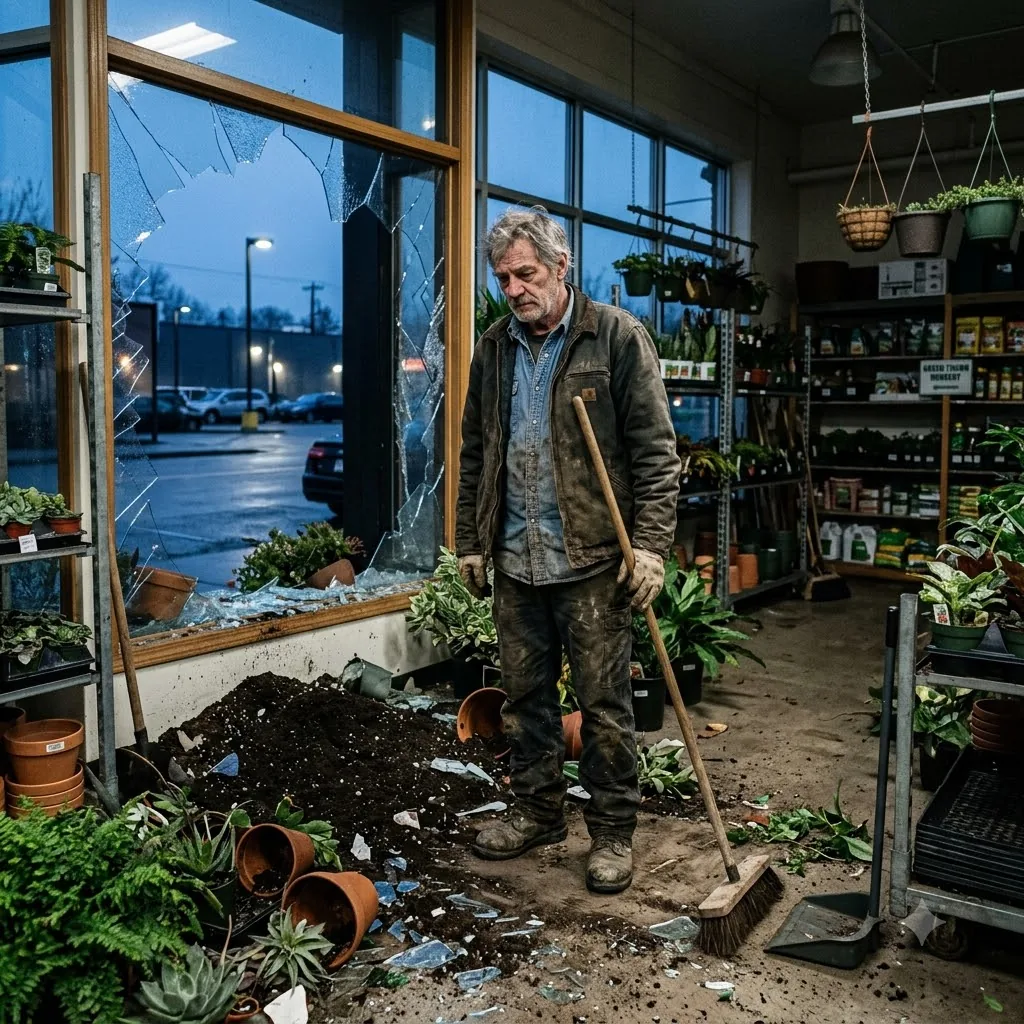
Elias turned back to his own business. The breath caught in his throat. The massive, custom-painted plate glass window of the Green Haven Nursery-the one he had painstakingly stenciled with gold leaf ten years ago-was gone. In its place was a jagged, gaping maw of shattered glass glinting viciously in the morning light. Thick shards covered the welcome mat. They glittered in the cracks of the sidewalk and dusted the leaves of the display ferns.
He stepped over the threshold, his boots crunching loudly in the dead quiet of the street. Inside, the devastation was localized but deliberate. A heavy, red clay brick rested dead center on the floor. It had pulverized a rare, imported terra cotta planter. Dark, nutrient-rich potting soil spilled across the reclaimed oak floorboards, mixing with the glittering shards of glass. The smell of damp earth and shattered foliage filled the air.
Elias knelt carefully, avoiding the sharp edges. He reached out and touched the brick. It was rough, coated in a fine layer of gray street dust. There was no note tied to it, no rock wrapped in a threat. It was simply an act of raw destruction. He brushed the dark soil from a crushed fern frond. His hands began to shake. He stood up and walked back to the shattered window frame, looking out at the neighborhood he had served for two decades.
Across the street, the local florist delivery driver sat in his idling van. Elias raised an arm to flag him down, needing someone to witness the vandalism, needing a normal human interaction to ground him. The driver locked eyes with Elias for a fraction of a second. The man’s face went completely pale. He immediately shifted the van into drive and sped away from the curb, leaving a cloud of exhaust in his wake.
Elias felt a cold knot tighten in his stomach. The vandalism was one thing. A random act of nighttime destruction was a risk every business owner accepted. The coordinated, terrified shunning by his neighbors was something else entirely. It was an infection that had spread overnight. They were looking at him as though he were a contagion.
He needed a broom. He needed to clear the sidewalk before someone got hurt. Routine was the only way to push back against the bizarre, tilting reality of the morning. He stepped carefully through the wreckage of the showroom, moving toward the back supply closet. The nursery was long and narrow, filled with dense rows of ficus, hanging pothos, and broad-leafed monsteras that usually brought him immense peace. Today, the shadows cast by the dense foliage felt oppressive. The damp air felt thick, heavy with an unspoken accusation.
He pushed through the swinging wooden doors into the back stockroom. The lights were off. The only illumination came from the cracks in the loading dock door. Elias reached for the light switch.
A figure detached itself from the deep shadows near the bags of fertilizer.
Elias stumbled backward, grabbing the handle of a metal trowel off the potting bench. His heart hammered against his ribs. The figure stepped into the sliver of light cutting through the room.
It was his daughter, Clara.
She looked entirely wrong. Her hair was disheveled, and she wore the same oversized gray sweater she had been wearing at dinner the night before. She was shivering violently, though the back room was warm. She did not say a word. She did not rush forward to hug him or ask about the shattered glass out front. Her eyes were wide, rimmed with red, locked onto his face with an expression of pure, unadulterated dread.
Elias dropped the trowel. It clattered against the concrete floor. He stepped toward her, raising his hands in a gesture of comfort. Clara took a sharp step back, mirroring his movement, keeping the distance between them. Her reaction stopped him dead in his tracks. His own daughter was looking at him the same way Mrs. Gable had.
Clara swallowed hard. She reached into the pocket of her sweater with a trembling hand. She pulled out a tablet. The screen glowed harshly in the dim light of the stockroom. She did not explain. She did not offer a comforting preamble or a warning. She simply stepped forward, thrusting her arm out, and shoved the glowing screen firmly against his chest.
Elias twisted the brass key into the nursery’s front door just as Mrs. Gable, the baker next door, violently yanked down her window shade and flipped her heavy plastic sign to ‘Closed’. Her silhouette retreated into the dim interior of her shop, her face turned deliberately away from the morning sun and away from him. Elias paused with his hand still on his keys. It was a Tuesday at eight in the morning, their usual time to share a thermos of coffee on the sidewalk. He stepped toward her storefront and raised a hand, but the deadbolt clicked shut with a loud, metallic snap echoing across the quiet street.
He let his hand drop. The street felt entirely wrong. Mr. Henderson usually swept the pavement outside the hardware store by now, but that storefront remained shuttered tight. The morning commuters walking briskly toward the transit station seemed to veer toward the far curb as they approached Elias’s property. They stared straight ahead, their shoulders hunched. A heavy, suffocating silence hung over the block.
Elias turned back to his own business. The breath caught in his throat. The massive, custom-painted plate glass window of the Green Haven Nursery-the one he had painstakingly stenciled with gold leaf ten years ago-was gone. In its place was a jagged, gaping maw of shattered glass glinting viciously in the morning light. Thick shards covered the welcome mat. They glittered in the cracks of the sidewalk and dusted the leaves of the display ferns.
He stepped over the threshold, his boots crunching loudly in the dead quiet of the street. Inside, the devastation was localized but deliberate. A heavy, red clay brick rested dead center on the floor. It had pulverized a rare, imported terra cotta planter. Dark, nutrient-rich potting soil spilled across the reclaimed oak floorboards, mixing with the glittering shards of glass. The smell of damp earth and shattered foliage filled the air.
Elias knelt carefully, avoiding the sharp edges. He reached out and touched the brick. It was rough, coated in a fine layer of gray street dust. There was no note tied to it, no rock wrapped in a threat. It was simply an act of raw destruction. He brushed the dark soil from a crushed fern frond. His hands began to shake. He stood up and walked back to the shattered window frame, looking out at the neighborhood he had served for two decades.
Across the street, the local florist delivery driver sat in his idling van. Elias raised an arm to flag him down, needing someone to witness the vandalism, needing a normal human interaction to ground him. The driver locked eyes with Elias for a fraction of a second. The man’s face went completely pale. He immediately shifted the van into drive and sped away from the curb, leaving a cloud of exhaust in his wake.
Elias felt a cold knot tighten in his stomach. The vandalism was one thing. A random act of nighttime destruction was a risk every business owner accepted. The coordinated, terrified shunning by his neighbors was something else entirely. It was an infection that had spread overnight. They were looking at him as though he were a contagion.
He needed a broom. He needed to clear the sidewalk before someone got hurt. Routine was the only way to push back against the bizarre, tilting reality of the morning. He stepped carefully through the wreckage of the showroom, moving toward the back supply closet. The nursery was long and narrow, filled with dense rows of ficus, hanging pothos, and broad-leafed monsteras that usually brought him immense peace. Today, the shadows cast by the dense foliage felt oppressive. The damp air felt thick, heavy with an unspoken accusation.
He pushed through the swinging wooden doors into the back stockroom. The lights were off. The only illumination came from the cracks in the loading dock door. Elias reached for the light switch.
A figure detached itself from the deep shadows near the bags of fertilizer.
Elias stumbled backward, grabbing the handle of a metal trowel off the potting bench. His heart hammered against his ribs. The figure stepped into the sliver of light cutting through the room.
It was his daughter, Clara.
She looked entirely wrong. Her hair was disheveled, and she wore the same oversized gray sweater she had been wearing at dinner the night before. She was shivering violently, though the back room was warm. She did not say a word. She did not rush forward to hug him or ask about the shattered glass out front. Her eyes were wide, rimmed with red, locked onto his face with an expression of pure, unadulterated dread.
Elias dropped the trowel. It clattered against the concrete floor. He stepped toward her, raising his hands in a gesture of comfort. Clara took a sharp step back, mirroring his movement, keeping the distance between them. Her reaction stopped him dead in his tracks. His own daughter was looking at him the same way Mrs. Gable had.
Clara swallowed hard. She reached into the pocket of her sweater with a trembling hand. She pulled out a tablet. The screen glowed harshly in the dim light of the stockroom. She did not explain. She did not offer a comforting preamble or a warning. She simply stepped forward, thrusting her arm out, and shoved the glowing screen firmly against his chest.