Story code: ST-001157
Part 1: The Refusal
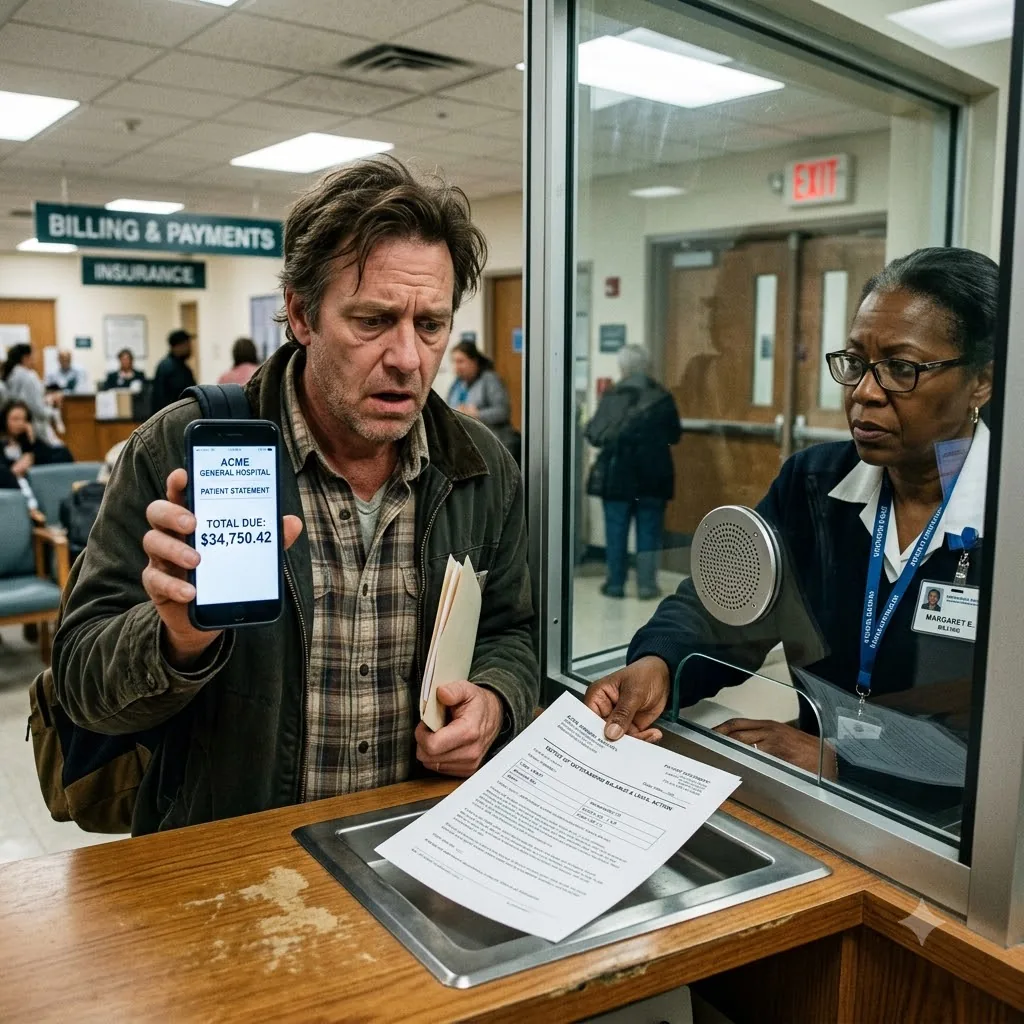
Marcus pushed the thick, rubber-banded stack of hundred-dollar bills through the metal slot at the base of the plexiglass window. The money caught on a loose screw in the transaction tray, tearing the paper band slightly, but he shoved the rest of it forward until it rested completely on the other side of the barrier.
“Forty-two thousand, five hundred,” Marcus said, keeping his voice strictly level, suppressing the frantic tremor in his hands. “The exact remaining balance for the out-of-network transfer fee. Count it, clear the account, and release Lily’s chart to the transport team.”
On the other side of the thick glass, Elaine, the senior billing administrator, did not reach for the cash. Her hands remained resting on her ergonomic keyboard. Yesterday, she had been a relentless collections hound, calling his cell phone three times during his daughter’s agonizing bone marrow biopsy to remind him that the hospital would not authorize the specialized pediatric ICU ambulance to Boston without payment in full. She had threatened to cancel the transport outright.
Now, staring at the physical culmination of two thousand GoFundMe donations, local community bake sales, and the total liquidation of his retirement account, Elaine simply stared at the towering stacks of green paper.
“Print the receipt, Elaine,” Marcus said, tapping the thick glass with a knuckle. “The transport crew is downstairs in the loading bay. Boston is expecting her by nightfall. The weather is clear for the drive right now.”
Elaine blinked, her eyes darting from the cash to her dual monitors. She tapped a single key. A heavy silence settled over the small financial counseling office, broken only by the hum of the fluorescent lights and the distant, rhythmic beeping of a telemetry monitor down the hall. Marcus could hear his own heartbeat in his ears.
“I am unable to process this transaction, Mr. Vance,” Elaine said. Her voice lacked the sharp, demanding edge it had carried for the past three weeks. It sounded hollow, mechanical, and entirely rehearsed.
Marcus planted both hands on the ledge, leaning his weight into the counter. “You demanded payment in full. You explicitly stated personal checks take a week to clear, and wire transfers take three business days. You told me cash or a cashier’s check was the only way to get her out of this building today.”
Elaine shifted her gaze to a spot on the wall just over his left shoulder, avoiding eye contact completely. “My previous statements regarding acceptable payment methods are no longer applicable to your daughter’s file.”
“Take the money,” Marcus ordered, his voice dropping an octave, the desperation clawing at the edges of his control. “My daughter has acute myeloid leukemia. Her white blood cell count is plummeting. She has a bed waiting at a facility that can actually handle her specific complications. The ambulance is literally idling in the bay with the meter running. Take the cash.”
Elaine finally moved. She reached past the pile of hundred-dollar bills, her sleeve brushing the torn paper band, and grabbed her computer mouse. She clicked twice. The heavy, industrial laser printer in the corner of her cubicle whirred to life.
Marcus watched the paper slide into the output tray. He looked back at Elaine, searching her face for any sign of basic human empathy, or at least the greed that usually drove the hospital’s billing department. There was only a rigid, terrified sort of tension in her jaw. Her shoulders were locked tight. She was following instructions that came from far above her pay grade.
She stood up, retrieved the single sheet of paper from the printer, and returned to the window. She did not speak. She folded the paper in half, then in half again, creating a small, stiff square.
“Elaine, I am not leaving this window until you release her records,” Marcus stated. “I will break this glass.”
Elaine slid the folded square of paper through the metal slot. It bumped directly into the stack of money, stopping halfway across the threshold.
“The hospital administration has placed a hard hold on Lily Vance’s medical records and physical transfer,” Elaine said, reading from a script on her screen rather than looking at him. “This hold supersedes all financial clearances. We are formally denying your request for a medical transfer.”
Marcus grabbed the folded paper, his fingers brushing the cold metal of the tray. “You do not have the right to keep her here.”
“We are acting in accordance with state regulations,” Elaine stated quietly.
Marcus unfolded the paper. It was not a hospital policy document. It was not a medical chart or a standard denial of care form. It was a photocopy of a specific state legal statute, the text highlighted in a thick, glaring strip of yellow ink.
He read the highlighted paragraph once, his vision blurring slightly at the edges. He read it a second time. The words made zero sense in the context of a hospital billing dispute. They belonged in a courtroom, in a criminal proceeding, in a nightmare completely separate from pediatric oncology. It was a legal mechanism to seize control.
He looked up from the page, his lungs tightening. Elaine was already reaching up to the metal track above her window.
“Tell me who authorized this,” Marcus demanded, crushing the statute in his fist.
Marcus pushed the thick, rubber-banded stack of hundred-dollar bills through the metal slot at the base of the plexiglass window. The money caught on a loose screw in the transaction tray, tearing the paper band slightly, but he shoved the rest of it forward until it rested completely on the other side of the barrier.
“Forty-two thousand, five hundred,” Marcus said, keeping his voice strictly level, suppressing the frantic tremor in his hands. “The exact remaining balance for the out-of-network transfer fee. Count it, clear the account, and release Lily’s chart to the transport team.”
On the other side of the thick glass, Elaine, the senior billing administrator, did not reach for the cash. Her hands remained resting on her ergonomic keyboard. Yesterday, she had been a relentless collections hound, calling his cell phone three times during his daughter’s agonizing bone marrow biopsy to remind him that the hospital would not authorize the specialized pediatric ICU ambulance to Boston without payment in full. She had threatened to cancel the transport outright.
Now, staring at the physical culmination of two thousand GoFundMe donations, local community bake sales, and the total liquidation of his retirement account, Elaine simply stared at the towering stacks of green paper.
“Print the receipt, Elaine,” Marcus said, tapping the thick glass with a knuckle. “The transport crew is downstairs in the loading bay. Boston is expecting her by nightfall. The weather is clear for the drive right now.”
Elaine blinked, her eyes darting from the cash to her dual monitors. She tapped a single key. A heavy silence settled over the small financial counseling office, broken only by the hum of the fluorescent lights and the distant, rhythmic beeping of a telemetry monitor down the hall. Marcus could hear his own heartbeat in his ears.
“I am unable to process this transaction, Mr. Vance,” Elaine said. Her voice lacked the sharp, demanding edge it had carried for the past three weeks. It sounded hollow, mechanical, and entirely rehearsed.
Marcus planted both hands on the ledge, leaning his weight into the counter. “You demanded payment in full. You explicitly stated personal checks take a week to clear, and wire transfers take three business days. You told me cash or a cashier’s check was the only way to get her out of this building today.”
Elaine shifted her gaze to a spot on the wall just over his left shoulder, avoiding eye contact completely. “My previous statements regarding acceptable payment methods are no longer applicable to your daughter’s file.”
“Take the money,” Marcus ordered, his voice dropping an octave, the desperation clawing at the edges of his control. “My daughter has acute myeloid leukemia. Her white blood cell count is plummeting. She has a bed waiting at a facility that can actually handle her specific complications. The ambulance is literally idling in the bay with the meter running. Take the cash.”
Elaine finally moved. She reached past the pile of hundred-dollar bills, her sleeve brushing the torn paper band, and grabbed her computer mouse. She clicked twice. The heavy, industrial laser printer in the corner of her cubicle whirred to life.
Marcus watched the paper slide into the output tray. He looked back at Elaine, searching her face for any sign of basic human empathy, or at least the greed that usually drove the hospital’s billing department. There was only a rigid, terrified sort of tension in her jaw. Her shoulders were locked tight. She was following instructions that came from far above her pay grade.
She stood up, retrieved the single sheet of paper from the printer, and returned to the window. She did not speak. She folded the paper in half, then in half again, creating a small, stiff square.
“Elaine, I am not leaving this window until you release her records,” Marcus stated. “I will break this glass.”
Elaine slid the folded square of paper through the metal slot. It bumped directly into the stack of money, stopping halfway across the threshold.
“The hospital administration has placed a hard hold on Lily Vance’s medical records and physical transfer,” Elaine said, reading from a script on her screen rather than looking at him. “This hold supersedes all financial clearances. We are formally denying your request for a medical transfer.”
Marcus grabbed the folded paper, his fingers brushing the cold metal of the tray. “You do not have the right to keep her here.”
“We are acting in accordance with state regulations,” Elaine stated quietly.
Marcus unfolded the paper. It was not a hospital policy document. It was not a medical chart or a standard denial of care form. It was a photocopy of a specific state legal statute, the text highlighted in a thick, glaring strip of yellow ink.
He read the highlighted paragraph once, his vision blurring slightly at the edges. He read it a second time. The words made zero sense in the context of a hospital billing dispute. They belonged in a courtroom, in a criminal proceeding, in a nightmare completely separate from pediatric oncology. It was a legal mechanism to seize control.
He looked up from the page, his lungs tightening. Elaine was already reaching up to the metal track above her window.
“Tell me who authorized this,” Marcus demanded, crushing the statute in his fist.