Story code: ST-001163
Part 1: The Code Red
The mechanical shriek of the district emergency alert severed the heavy, sweltering rhythm of the grape harvest. Mateo dropped his rusted shears, yanking the vibrating phone from his denim pocket with dirt-stained fingers to stare at the glowing block letters. DISTRICT ALERT: CODE RED LOCKDOWN IN PROGRESS AT OAK CREEK ELEMENTARY. ACTIVE THREAT.
The crushing heat radiating from the California soil vanished, replaced by an ice-water plunge in his veins. Seven-year-old Leo was in room twelve, right next to the main entrance. Mateo did not tell the foreman he was leaving, nor did he look back at the half-filled bin of green grapes. He left his bucket in the dust, sprinted through the endless rows of twisting vines, and threw himself into his dented Ford pickup. The engine roared to life with a desperate, whining grind.
He tore down the dirt access road, a plume of thick white dust billowing behind him and coating the rearview mirror. The valley blurred into streaks of dry brown grass and blinding midday sun. His calloused hands gripped the cracked leather steering wheel until his knuckles went stark white. Every pulse in his ears hammered with the same relentless command to drive faster. He swung the truck onto the paved county highway without braking, the rear tires fishtailing violently before catching traction. He slammed the accelerator to the floorboards. The speedometer needle shook as it climbed past eighty. He kept his eyes fixed on the horizon, praying to a silent sky for his boy.
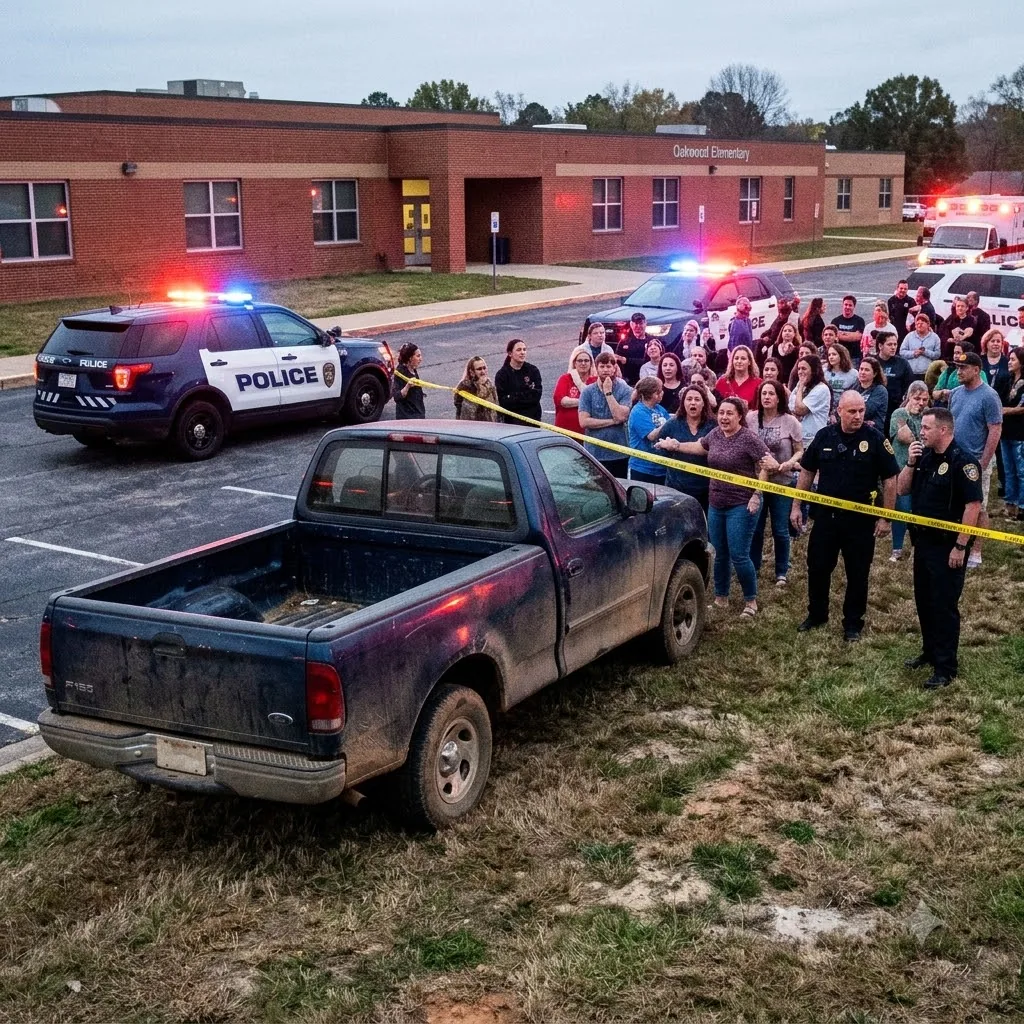
Traffic thickened a mile from the school. A line of stopped cars stretched down the two-lane road. Mateo swerved onto the dirt shoulder, tires kicking up gravel as he bypassed a dozen stalled sedans. He abandoned the truck the moment the front bumper kissed the chain-link boundary of the elementary school’s outer athletic fields. Leaving the keys in the ignition and the driver-side door hanging open, he sprinted the remaining quarter mile on foot.
The flashing strobe of red and blue emergency lights painted the pale concrete of the school façade in frantic, overlapping pulses. A chaotic perimeter had already formed at the edge of the staff parking lot. Cars were abandoned at jagged angles on the grass medians. A swell of terrified parents pressed against a hastily strung line of yellow police tape. The sheer volume of the panic hit Mateo like a physical blow.
He shoved his way into the crushing mass of bodies. A mother in a blue grocery store apron clawed at her own hair, sobbing a string of broken prayers into her hands. Two men in work boots shoved against a metal barricade, shouting demands at the grim-faced local officers who stood with their hands resting on their holstered weapons. The officers yelled back, ordering everyone to remain clear of the tactical entry points. Sirens wailed in the distance, growing louder by the second, layering over the raw, wordless screams of the crowd.
Through the gaps in the shifting bodies, Mateo could see the heavy glass doors of the main entrance. They were completely shattered. Glittering shards covered the concrete landing, sparkling cruelly in the afternoon light. His breath caught in his throat. Room twelve was a mere twenty feet down that hallway. Leo was in there. Leo, who hated loud noises and always tried to hide under the nearest table.
He pushed harder, ignoring the elbows digging into his ribs and the frantic shoves of other parents. He needed to get to the front of the line. He needed to tell them his boy was in the first classroom. He needed to find a way inside.
Mateo broke through the final row of parents, his chest colliding with the rigid yellow tape. A local city deputy stepped forward, raising a hand in a strict command to step back. Mateo opened his mouth, ready to scream his son’s name and beg the officer to let him through. He raised his hands, preparing to surrender to a brief search, ready to do anything to get past the barrier.
His voice died in his throat.
Stepping out from the shadow of the local police cruiser, moving to reinforce the barricade line right where Mateo stood, was a second wave of law enforcement. They did not wear the dark blue of the county sheriff or the city police. They wore olive drab tactical vests over flat green uniforms. Mateo’s outstretched hands froze mid-air as his eyes locked onto the bold, golden-yellow letters stamped across the chest of the approaching agent, recognizing the immediate threat of federal immigration enforcement.
The mechanical shriek of the district emergency alert severed the heavy, sweltering rhythm of the grape harvest. Mateo dropped his rusted shears, yanking the vibrating phone from his denim pocket with dirt-stained fingers to stare at the glowing block letters. DISTRICT ALERT: CODE RED LOCKDOWN IN PROGRESS AT OAK CREEK ELEMENTARY. ACTIVE THREAT.
The crushing heat radiating from the California soil vanished, replaced by an ice-water plunge in his veins. Seven-year-old Leo was in room twelve, right next to the main entrance. Mateo did not tell the foreman he was leaving, nor did he look back at the half-filled bin of green grapes. He left his bucket in the dust, sprinted through the endless rows of twisting vines, and threw himself into his dented Ford pickup. The engine roared to life with a desperate, whining grind.
He tore down the dirt access road, a plume of thick white dust billowing behind him and coating the rearview mirror. The valley blurred into streaks of dry brown grass and blinding midday sun. His calloused hands gripped the cracked leather steering wheel until his knuckles went stark white. Every pulse in his ears hammered with the same relentless command to drive faster. He swung the truck onto the paved county highway without braking, the rear tires fishtailing violently before catching traction. He slammed the accelerator to the floorboards. The speedometer needle shook as it climbed past eighty. He kept his eyes fixed on the horizon, praying to a silent sky for his boy.
Traffic thickened a mile from the school. A line of stopped cars stretched down the two-lane road. Mateo swerved onto the dirt shoulder, tires kicking up gravel as he bypassed a dozen stalled sedans. He abandoned the truck the moment the front bumper kissed the chain-link boundary of the elementary school’s outer athletic fields. Leaving the keys in the ignition and the driver-side door hanging open, he sprinted the remaining quarter mile on foot.
The flashing strobe of red and blue emergency lights painted the pale concrete of the school façade in frantic, overlapping pulses. A chaotic perimeter had already formed at the edge of the staff parking lot. Cars were abandoned at jagged angles on the grass medians. A swell of terrified parents pressed against a hastily strung line of yellow police tape. The sheer volume of the panic hit Mateo like a physical blow.
He shoved his way into the crushing mass of bodies. A mother in a blue grocery store apron clawed at her own hair, sobbing a string of broken prayers into her hands. Two men in work boots shoved against a metal barricade, shouting demands at the grim-faced local officers who stood with their hands resting on their holstered weapons. The officers yelled back, ordering everyone to remain clear of the tactical entry points. Sirens wailed in the distance, growing louder by the second, layering over the raw, wordless screams of the crowd.
Through the gaps in the shifting bodies, Mateo could see the heavy glass doors of the main entrance. They were completely shattered. Glittering shards covered the concrete landing, sparkling cruelly in the afternoon light. His breath caught in his throat. Room twelve was a mere twenty feet down that hallway. Leo was in there. Leo, who hated loud noises and always tried to hide under the nearest table.
He pushed harder, ignoring the elbows digging into his ribs and the frantic shoves of other parents. He needed to get to the front of the line. He needed to tell them his boy was in the first classroom. He needed to find a way inside.
Mateo broke through the final row of parents, his chest colliding with the rigid yellow tape. A local city deputy stepped forward, raising a hand in a strict command to step back. Mateo opened his mouth, ready to scream his son’s name and beg the officer to let him through. He raised his hands, preparing to surrender to a brief search, ready to do anything to get past the barrier.
His voice died in his throat.
Stepping out from the shadow of the local police cruiser, moving to reinforce the barricade line right where Mateo stood, was a second wave of law enforcement. They did not wear the dark blue of the county sheriff or the city police. They wore olive drab tactical vests over flat green uniforms. Mateo’s outstretched hands froze mid-air as his eyes locked onto the bold, golden-yellow letters stamped across the chest of the approaching agent, recognizing the immediate threat of federal immigration enforcement.