Story code: ST-001165
Part 4: The Safe Version
The gavel fell with a hollow, frantic clatter. Dr. Lin struck the wooden block three times, his face slick with sweat under the gymnasium lights. He muttered into his microphone that the emergency session was suspended pending further review, his voice barely audible over the sudden roar of the crowd. The mob of parents and reporters, previously united in their outrage against David, instantly pivoted. Camera operators hoisted their heavy rigs, abandoning David at the podium to swarm the blue velvet table.
David didn’t stay to watch the feeding frenzy. He turned his back on the flashing lenses and walked out the same double doors he had entered. No security guards followed him. No one shouted his name. He stepped out into the crisp afternoon air, got into his sedan, and drove home.
By Thursday morning, the physical barricades were gone. The red LED on the east entrance card reader clicked over to a welcoming green when David swiped his badge. The heavy metal door swung open easily. The hallway was quiet, smelling of floor wax and stale coffee.
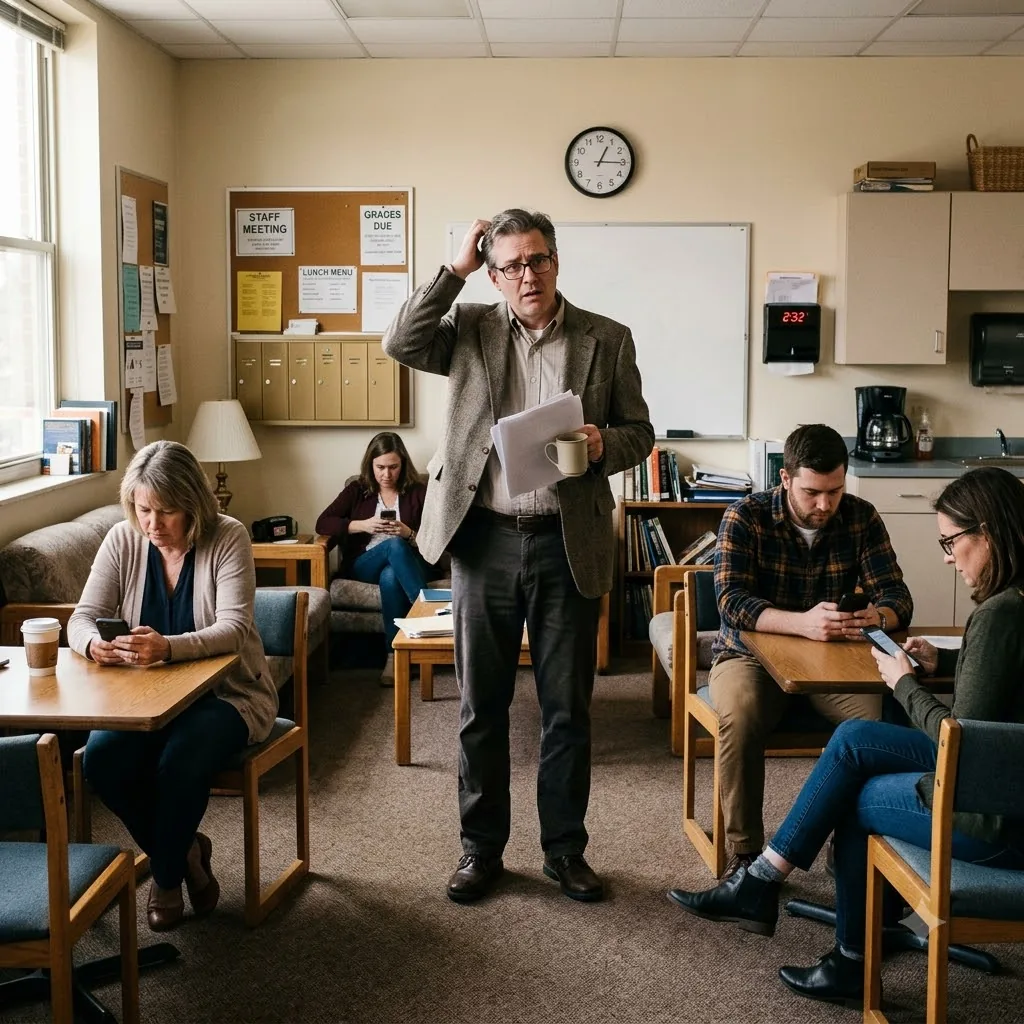
Inside the faculty lounge, Elena and Marcus were standing by the percolator. When David walked in, they didn’t freeze or storm out like they had forty-eight hours ago. Instead, they offered tight, pathetic smiles, murmuring weak greetings before suddenly finding reasons to be somewhere else. They had seen the news. Everyone had seen the news. David poured his coffee black and walked to Room 204 in silence.
He sat at his desk and wiggled his mouse. The monitor woke up. The stark red suspension banner had vanished, replaced by his standard desktop background. He clicked open his inbox. Among the hundreds of unread messages-a mix of half-hearted apologies from strangers and leftover vitriol from algorithms that hadn’t updated yet-sat a single email from the district human resources department.
*Subject: Employment Status.*
*Mr. Evans, the motion regarding your termination has been formally withdrawn. Your network privileges and classroom access are fully restored. Please review the attached updated social media guidelines for faculty. Thank you, District Administration.*
There was no phone call from Principal Hayes. No apology from Dr. Lin for threatening his pension. Marcus Vance had simply vanished back into whatever corporate crisis firm had spawned him. The district had quietly dropped the guillotine, swept up the mess, and expected David to simply boot up his smartboard and teach first period.
David stared at the sterile, two-sentence email. The cruiser was no longer parked at the end of his street, and the death threats flooding his phone had slowed to a trickle, but the knot in his stomach hadn’t loosened. It had hardened into something cold and heavy.
He looked down at his desk. The AP History primary source packets were still sitting exactly where he had left them on Tuesday morning, perfectly aligned next to his keyboard. The top sheet was the 1886 anarchist pamphlet.
For fourteen years, David had operated on a fundamental assumption: the classroom was a shared space of trust. He challenged his students, exposed them to the raw, unfiltered, often ugly realities of human history, and in return, they engaged in good faith. They debated. They learned.
Tyler Miller hadn’t engaged in good faith. Tyler had sat in the third row, looked David in the eye, and intentionally laid a trap to destroy him for digital clout. And when the trap snapped shut, the adults in the building-the colleagues he ate lunch with, the principal who had hired him-had locked the doors and handed over the rope.
David picked up the primary source packet. The paper felt strangely heavy in his hands. He looked at the highlighted quote he had read aloud. He had survived the fire, but he suddenly understood exactly what had been burned away. You couldn’t teach the truth in a room where everyone was waiting for you to bleed.
He pushed his chair back, stood up, and walked to the storage closet at the back of the room. He pulled out three empty cardboard banker’s boxes and carried them to the front.
Methodically, David began to pack. He took the 1886 pamphlets and dropped them into the first box. He moved to the filing cabinets and pulled the folders containing the unedited diaries of Civil War soldiers, the transcripts of the Salem Witch Trials, and the uncensored photographs of the Triangle Shirtwaist Factory fire. Every piece of history that required nuance, every document that required context, every lesson that demanded a baseline of mutual trust between teacher and student-he took them all down.
He stripped the bulletin boards of controversial historical quotes. He emptied the display trays of supplementary reading materials. The vibrant, chaotic, intellectually demanding ecosystem he had spent over a decade building was dismantled in less than forty minutes, packed tightly into corrugated cardboard and sealed with packing tape.
David carried the boxes to the back closet, stacked them in the darkest corner, and shut the door.
When the warning bell rang, echoing through the linoleum corridors, David walked back to his desk. He reached onto the bottom shelf of his bookcase and pulled out the state-approved textbook. It was heavy, glossy, and entirely safe. He dropped it squarely in the center of his desk. He would keep his job, and he would keep his pension, but as he listened to the sound of footsteps filling the hallway, David knew he would never truly teach again.